Artwork
Infanta Margarita Teresa in a Pink Dress
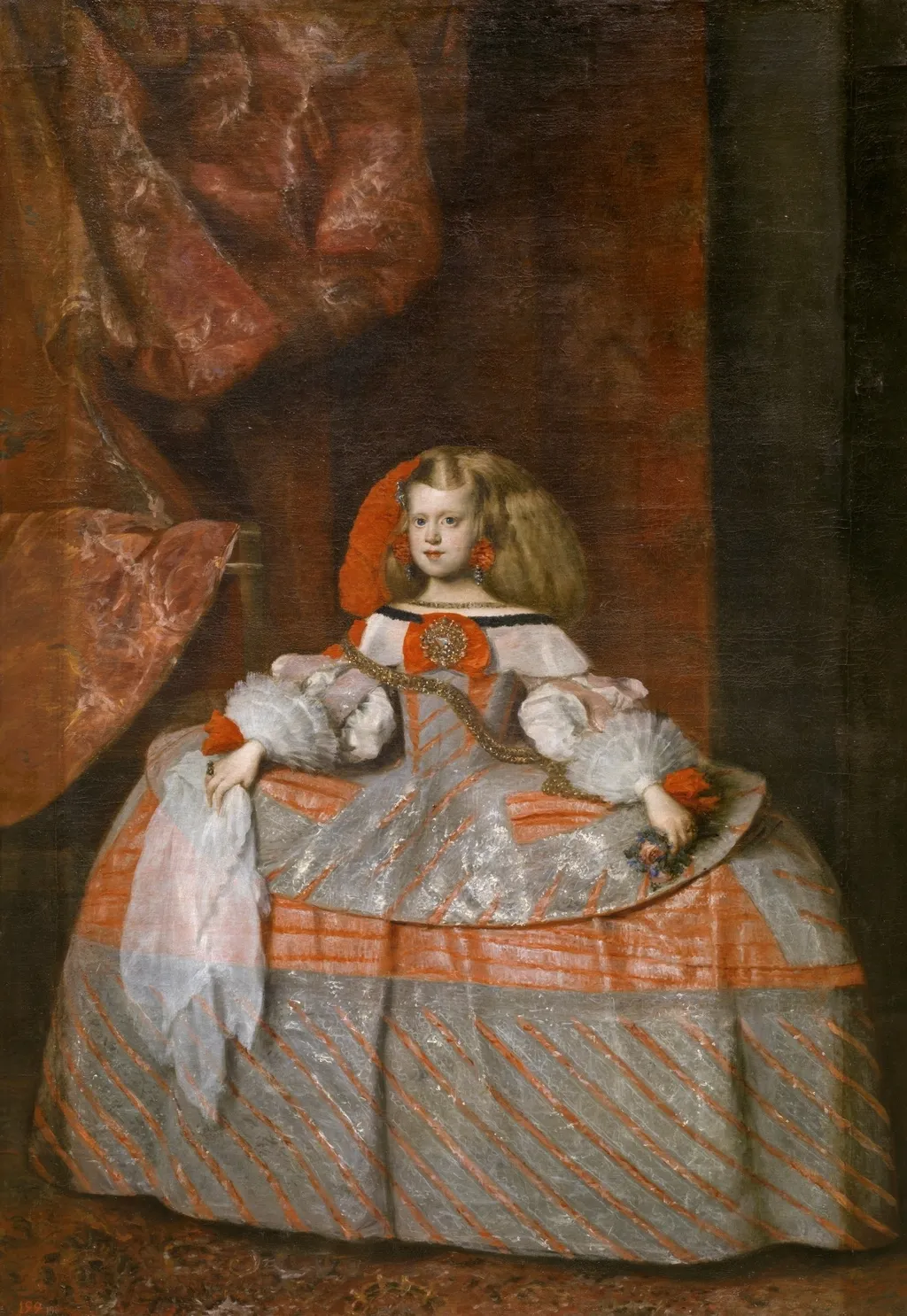
Infanta Margarita Teresa in a Pink Dress is an oil painting by the Early Baroque Italian artist Juan Bautista Martínez del Mazo. It dates from 1665 and is held in the collection of the Museo del Prado.
About this work
Subject & Meaning
The painting is noted for its delicate brushwork, particularly in rendering fabric, and was admired by Impressionists for its lightness of touch.
The painting portrays Margaret Theresa of Spain, daughter of King Philip IV by his second wife Mariana of Austria, depicted in a pink dress with silver-threaded velvet trim, a hoop skirt supported by a guardinfante, and holding a bouquet and a batiste handkerchief. Her profile reflects Habsburg physical traits including a long face, pronounced lower lip, and golden hair. The work was long misidentified as a portrait of her half-sister Maria Theresa of Spain, a misidentification that persisted in the Prado's 1872 catalog by Pedro de Madrazo.
Contemporary scholarship, including technical analysis by the Museo del Prado, rejects Velázquez's involvement and attributes the entire painting to his pupil Juan Bautista Martínez del Mazo, dating it to around 1665. It was created as part of diplomatic portraiture sent to the Austrian court to facilitate her marriage to Emperor Leopold I. The painting is noted for its delicate brushwork, particularly in rendering fabric, and was admired by Impressionists for its lightness of touch.
Technique & Style
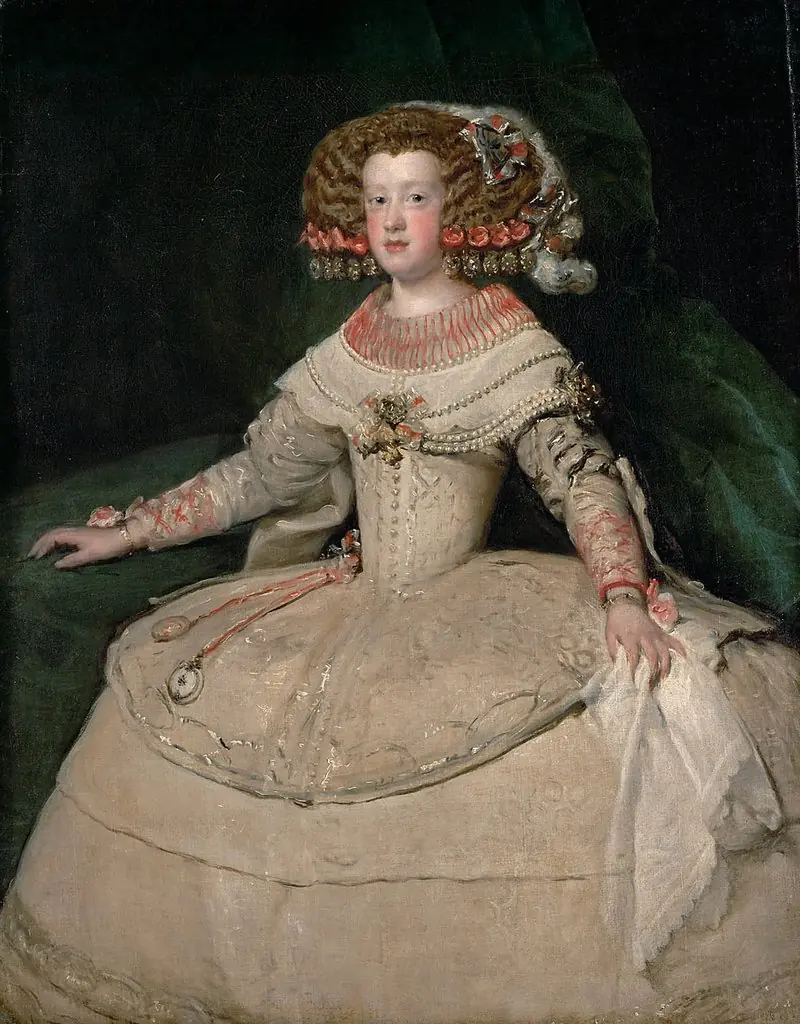
The painting is executed in oil on canvas, measuring 212 × 147 cm in a vertical format. It is a full-length portrait in which the young infanta stands before a large red curtain backdrop. She wears an ample court dress in silvery grey with salmon-pink highlights, supported by a guardainfante, and holds a semi-transparent veil in one hand and a rose in the other.
The handling is noted for its remarkably light, fluid brushwork, particularly in the rendering of the fabrics, which was singled out for admiration by the Impressionists and later painters. Technical analyses carried out at the Prado, including X-ray examination, have supported the view that the work was painted entirely by Juan Bautista Martínez del Mazo, likely after Velázquez's death, with the face apparently executed last rather than first as Velázquez typically practised.
History & Provenance
The Infanta Margarita Teresa in a Pink Dress was painted around 1665 by Juan Bautista Martínez del Mazo, as documented in multiple sources.
It was created as a portrait of Margaret Theresa of Spain, daughter of King Philip IV and Mariana of Austria, and was later identified as such after earlier misidentifications of her as María Teresa of Austria. The work was initially attributed to Diego Velázquez, based on the belief that he painted the dress and left the head unfinished, with Juan Bautista del Mazo completing it after Velázquez's death; however, technical studies by the Museo del Prado have since rejected this collaboration and now attribute the painting entirely to Mazo.
The painting has been part of the Museo del Prado's collection since its acquisition, having previously been displayed in the museum's collection and cataloged under various attributions, including in an 1872 catalogue by Pedro de Madrazo. It was later recognized as a significant work admired by Impressionists for its light brushwork, particularly in rendering textiles, and was considered by some to represent the culmination of Velázquez's technique in depicting fabric, though later analysis suggested Mazo's authorship.
The provenance of the work traces to the Spanish royal court, where it was commissioned as part of diplomatic efforts involving the Infanta's marriage to Emperor Leopold I of Austria. It remained in the possession of the Spanish Crown and was eventually housed in the Museo del Prado, where it has been displayed in the museum's collection, including in Hall 012, as recorded in the museum's catalog and external documentation.
The painting is held in the Museo del Prado, Madrid, where it carries inventory number P01192.
It has not been recorded as traveling in major temporary exhibitions since its attribution was reassigned to Juan Bautista Martínez del Mazo; the most recent exhibition history focuses on its permanent display in the museum’s Spanish seventeenth-century galleries.
Context
The painting’s authorship and reception have shifted markedly over time. Long attributed to Velázquez as his final, unfinished work and completed by his son-in-law Juan Bautista Martínez del Mazo, recent technical studies at the Museo del Prado have reassigned the work entirely to Mazo, aligning with curatorial consensus that rejects any collaboration. Earlier scholarship often praised the sumptuous dress and fabric effects as quintessential Velázquez, while noting the head and hands as weaker, attributing them to Mazo; these distinctions have been overturned by radiographic evidence and pigment analysis.
Its place in art history was shaped by 19th‑century viewers, especially the Impressionists, who admired its light, fluid brushwork and delicate handling of textiles. The portrait’s misidentification as Infanta María Teresa until 1872 further conditioned reception, obscuring its role in Velázquez’s late series of Margarita Teresa portraits commissioned for political diplomacy and marriage negotiations between Madrid and Vienna. Once correctly identified, it entered the canon as a key example of Mazo’s mature style and of Habsburg court portraiture in the later 17th century.
Legacy
From the late nineteenth century onward, the painting’s reputation was transformed by Impressionist admiration for its delicate handling of textiles and luminous surfaces. Critics and artists valued its seemingly effortless brushwork and atmospheric color, seeing it as a pinnacle of Spanish portraiture’s technical refinement.
In the twentieth century, scholarly reassessment shifted focus from Diego Velázquez to its current attribution to Juan Bautista Martínez del Mazo, reframing its legacy within Mazo’s oeuvre rather than as Velázquez’s putative final work. Technical studies at the Museo del Prado supported this reattribution, reinforcing the painting’s status as a masterpiece of Mazo’s mature style.
Overview
The portrait, titled Infanta Margarita Teresa in a Pink Dress, is an oil painting on canvas dating from around 1660. It depicts Margaret Theresa, the young daughter of King Philip IV of Spain, and is currently displayed in the Prado Museum in Madrid.
Own this work as a print
Artist & collection
Artist
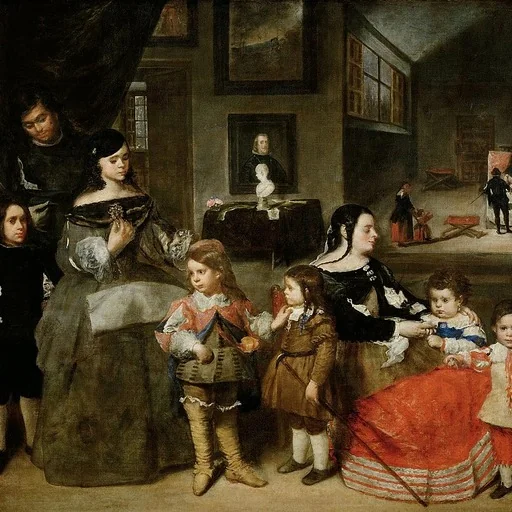
Juan Bautista Martínez del Mazo
Juan Bautista Martínez del Mazo (c.1612 – February 10, 1667) was a Spanish Baroque portrait and landscape painter, the most distinguished of the followers of his father-in-law Velázquez, whose style he imitated more closely than did any…

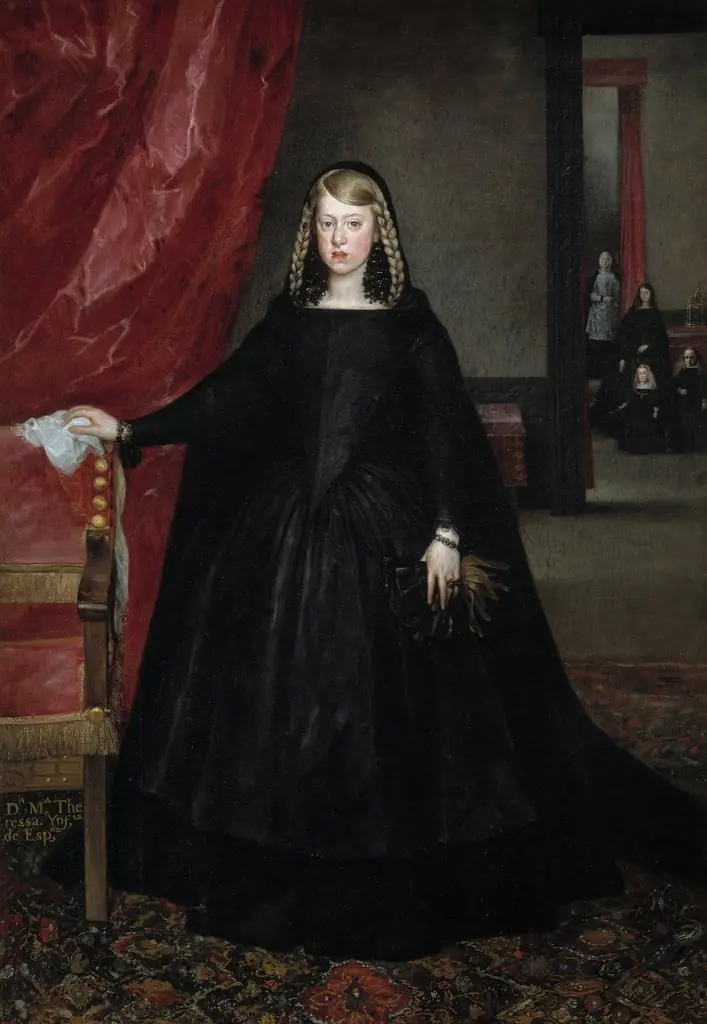
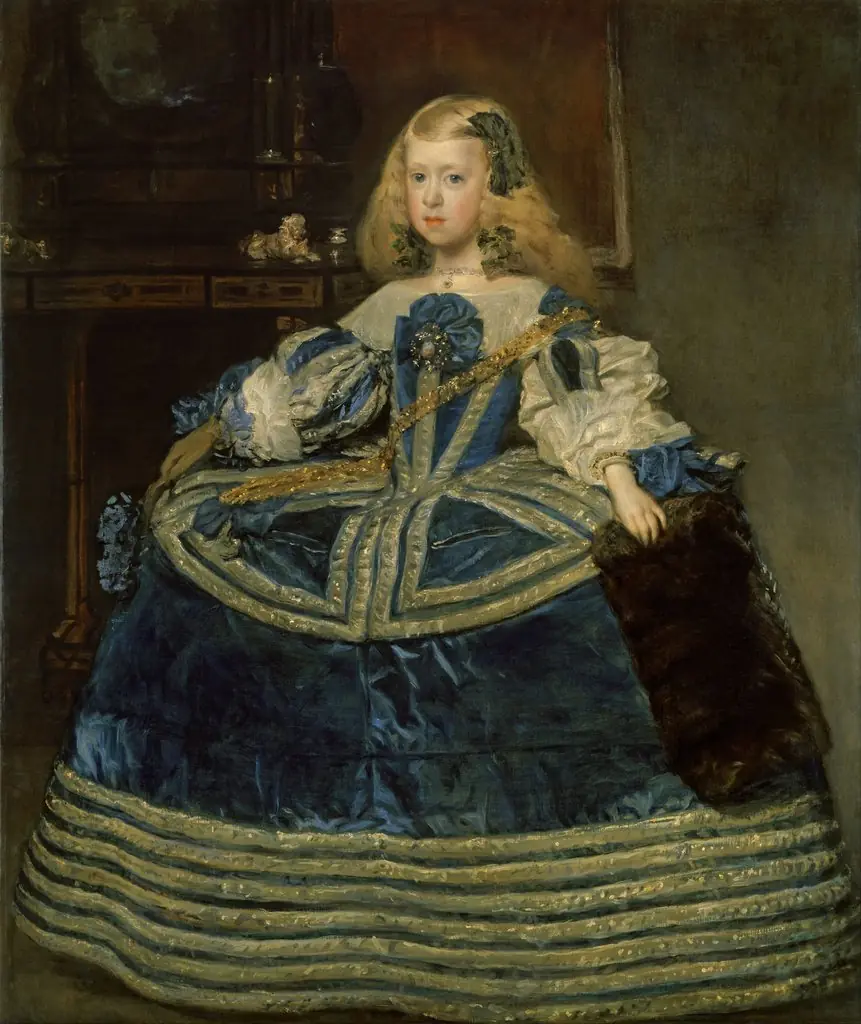
- Infanta Margarita Teresa in a Blue Dress
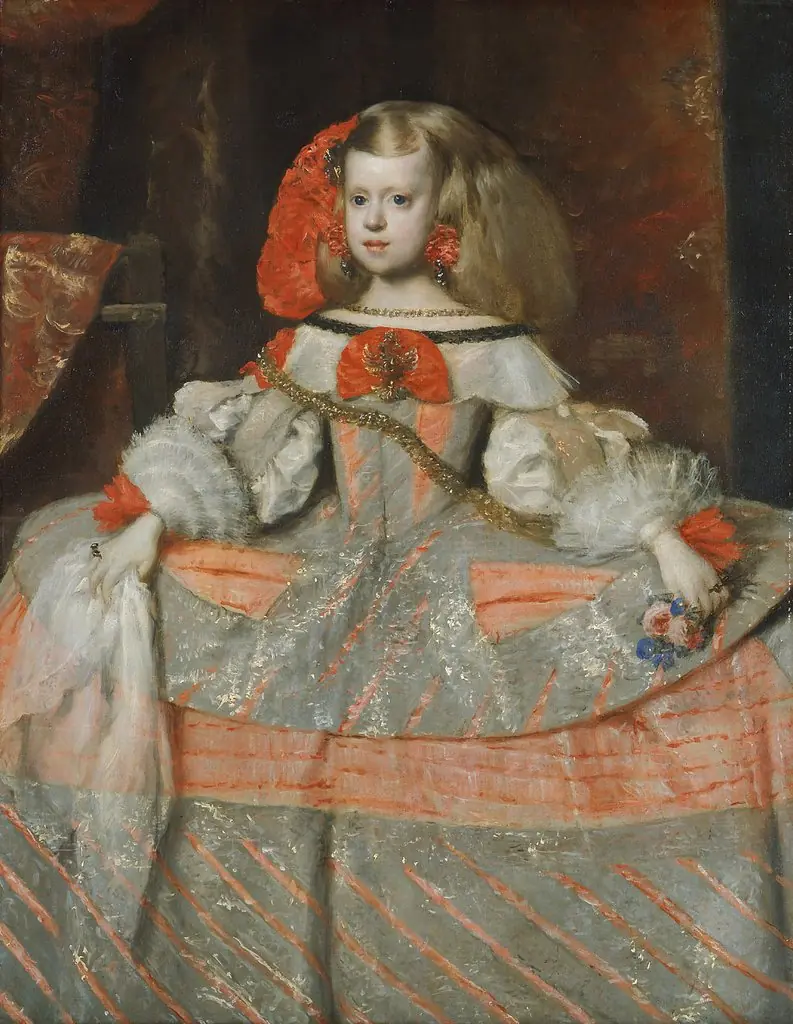 Infanta Margarita Teresa (1651-1673)
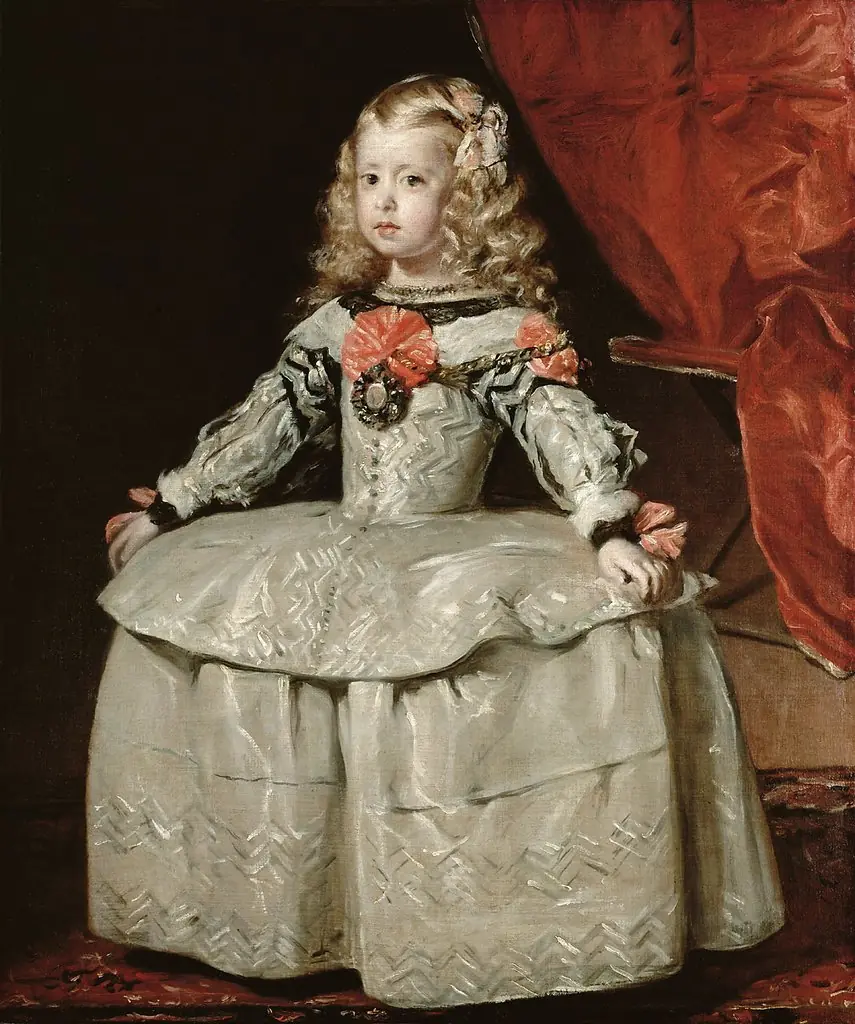 Infanta Margaret Theresa in a White and Silver Dress
 The Infanta Margarita
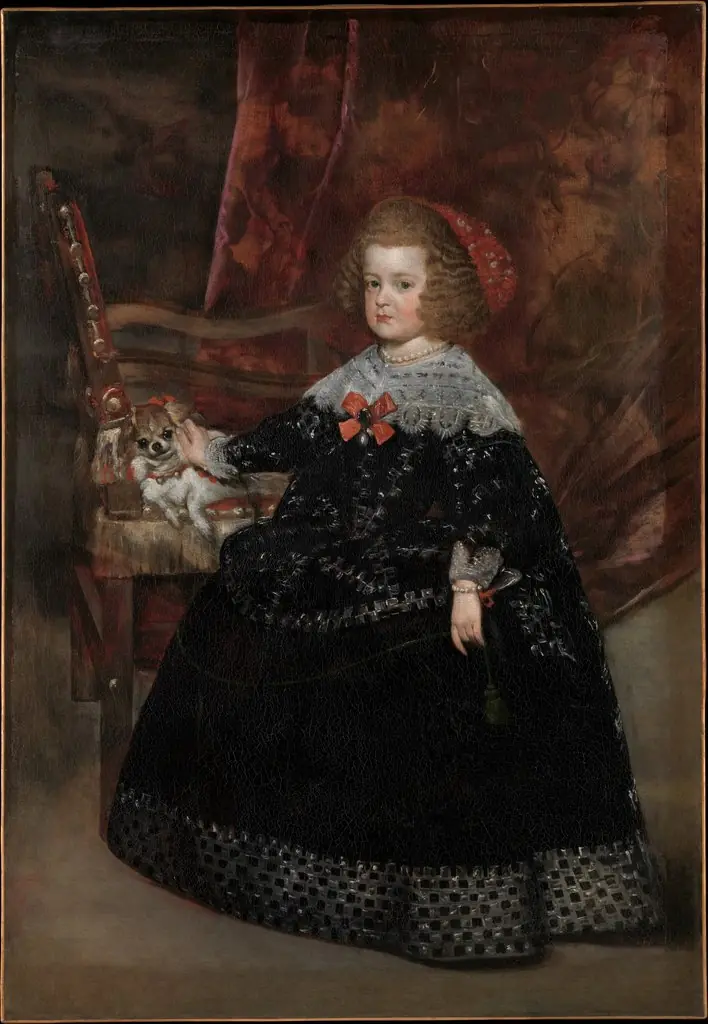
 Portrait of the Infanta Maria Theresa of Spain
 Infanta Maria Theresa
 Portrait of the Infanta Maria Teresa
 Infanta Margarita Teresa
 Retrato de la infanta María Teresa de España
 A Spanish Infanta in 17th Century Costume
 Portrait of an infanta