Artwork
Watching the Hunt in Aranjuez
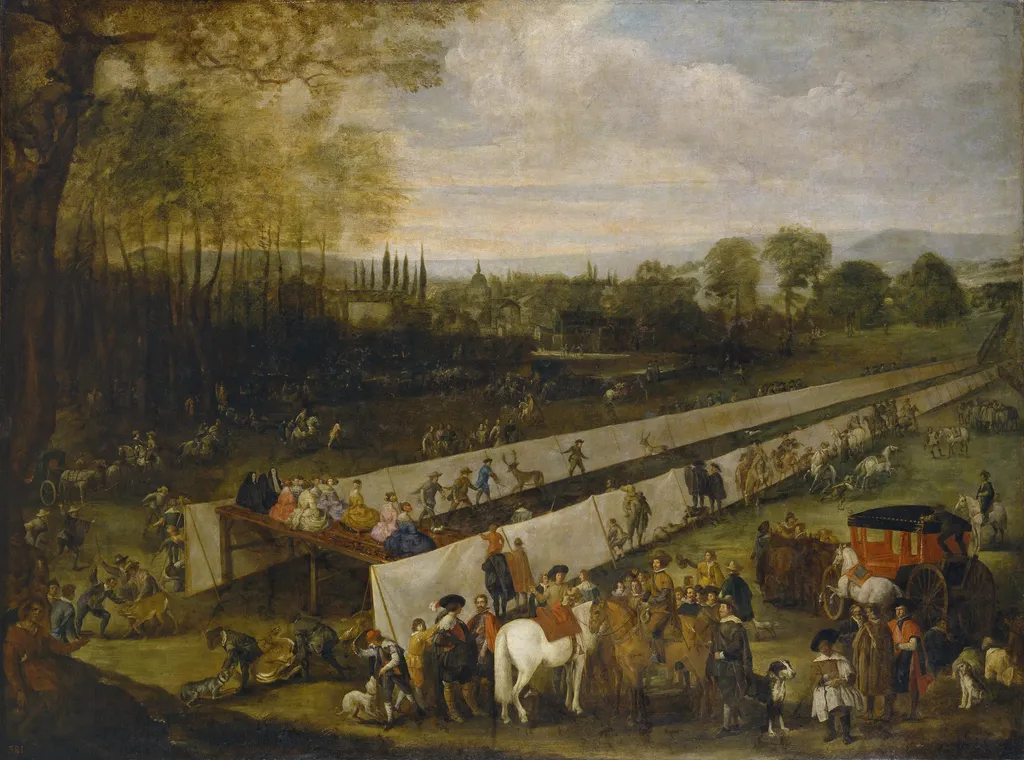
Watching the Hunt in Aranjuez is an oil painting by the Early Baroque Italian artist Juan Bautista Martínez del Mazo. It dates from 1633 and is held in the collection of the Museo del Prado.
About this work
Subject & Meaning
La pintura muestra una cacería de ciervos en los alrededores del palacio de Aranjuez, con la corte de Felipe IV en pleno acto.
La pintura muestra una cacería de ciervos en los alrededores del palacio de Aranjuez, con la corte de Felipe IV en pleno acto. Aparecen la reina Isabel de Francia, sus damas y tres religiosas en primer plano, mientras en el campo se sitúan el rey, su hermano el cardenal Fernando de Austria, sirvientes y un enano negro; uno de los perros de caza se identifica con el que acompaña al príncipe Baltasar Carlos en el cuadro de Velázquez. La escena simboliza el pasatiempo de la nobleza y la capacidad del monarca para controlar la naturaleza, reflejando la jerarquía y el espectáculo de la corte del siglo XVII.
History & Provenance
Juan Bautista Martínez del Mazo executed this oil on canvas in 1633, though some records suggest a date near 1640. The work appeared in the 1666 inventory of the Royal Alcázar of Madrid, was moved by Elisabeth Farnese to the Royal Palace of El Pardo in 1714, and returned to the Alcázar site after the 1734 fire. During the Peninsular War, Joseph Bonaparte removed it from El Pardo to France; after his fall it was sold to Alexander Baring, 1st Baron Ashburton, and later passed through the collections of Charles Sedelmeyer and Marcell Nemes.
The Museo del Prado in Madrid acquired the work in 1934 from the dealer A. S. Drey of Munich, using funds from the legacy of the Count of Cartagena. The painting was featured in the exhibition "Splendors of Spain," as noted in its catalogue.
Context
Watching the Hunt in Aranjuez, painted by Juan Bautista Martínez del Mazo in 1633, exemplifies Baroque court patronage and the popularity of aristocratic hunting scenes in mid-17th-century Spain. Art historians recognize the influence of Velázquez on Mazo's composition, noting the inclusion of a black dwarf and a recognizable hunting dog that links the work to royal portraiture of Philip IV's reign. The painting's provenance, from the Royal Alcázar of Madrid through Joseph Bonaparte's collection to its acquisition by the Museo del Prado in 1934, highlights its movement across European elite circles.
Scholarship on the piece, including Valdovinos Cruz's 2001 catalogue, situates it within the broader discourse on Spanish Baroque leisure imagery and royal ceremonial practice.
Overview
Juan Bautista Martínez del Mazo completed Watching the Hunt in Aranjuez in 1633, an oil painting that captures a lively outdoor event. This work by the Spanish Baroque artist depicts a gathering of figures observing a hunting expedition within the royal site of Aranjuez. The detailed composition, now housed in the Museo del Prado in Madrid, showcases Mazo’s skill in rendering both landscape and human activity.
Technique & Style
Executed in oil paint, the artwork demonstrates a meticulous attention to detail, evident in the finely rendered textures of the elaborate clothing worn by the figures and the nuanced expressions on their faces. As a follower and son-in-law of Diego Velázquez, Mazo integrated elements of his master's approach, particularly in the handling of light and atmosphere, while developing his own distinct touch in depicting both landscapes and portraiture.
Own this work as a print
Artist & collection
Artist
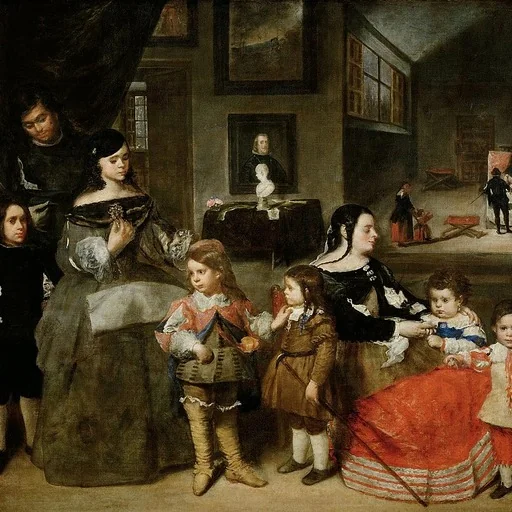
Juan Bautista Martínez del Mazo
Juan Bautista Martínez del Mazo (c.1612 – February 10, 1667) was a Spanish Baroque portrait and landscape painter, the most distinguished of the followers of his father-in-law Velázquez, whose style he imitated more closely than did any…

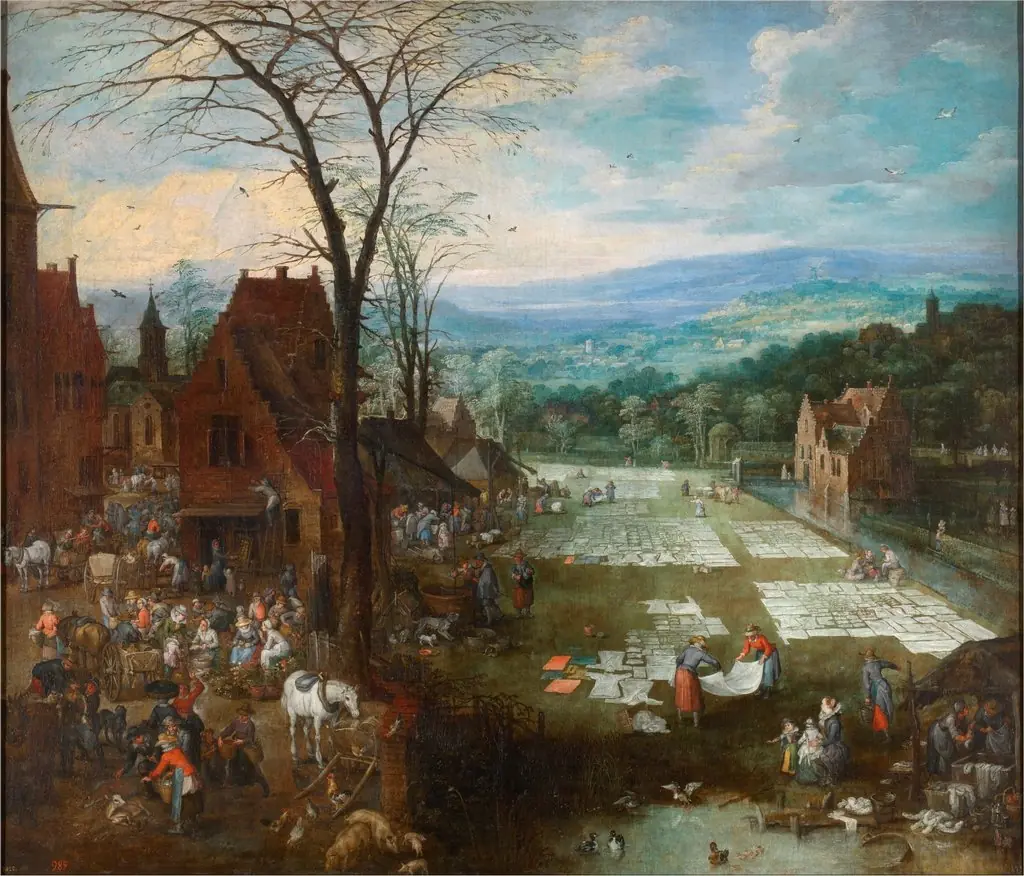
- Flemish Market and Washing Place
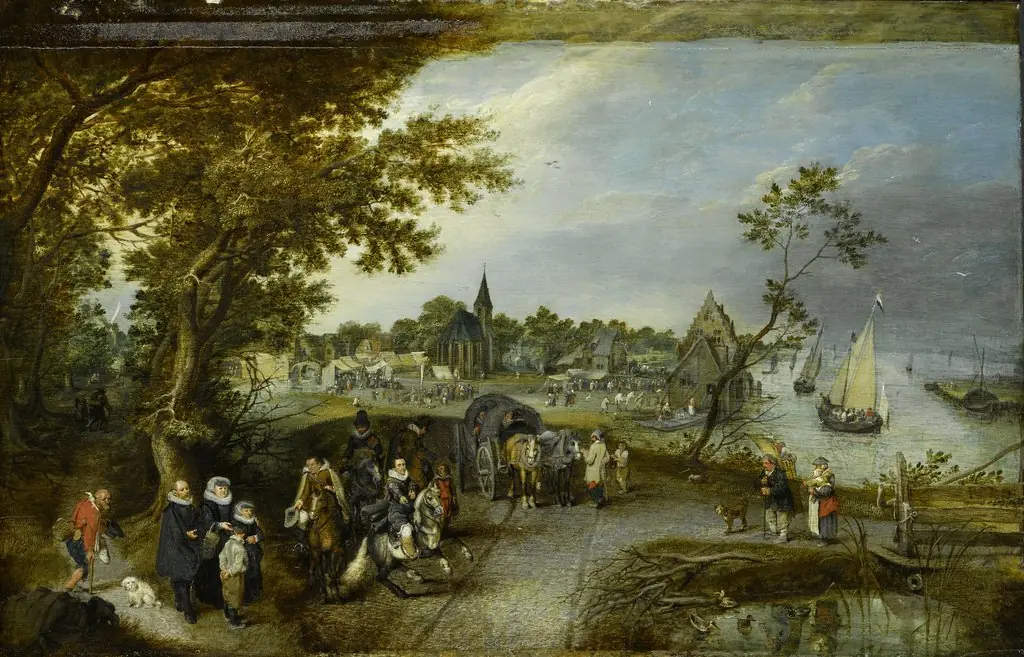 Landscape with figures and a village kermis
 The Antwerp Castle
 Winterlandschaft am Wasser
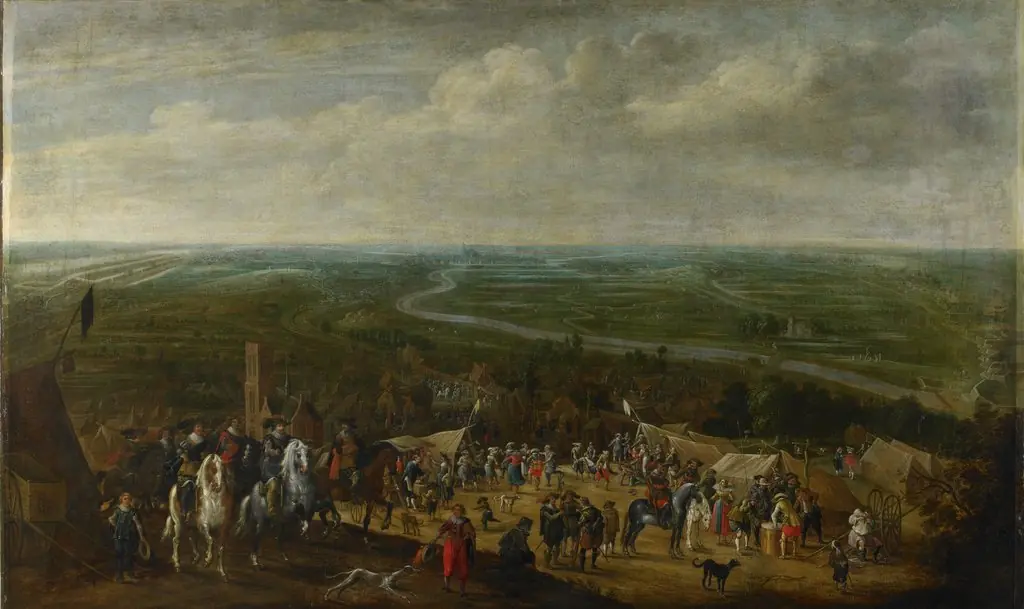 Prince Frederik Hendrik at the siege of 's-Hertogenbosch, 1629
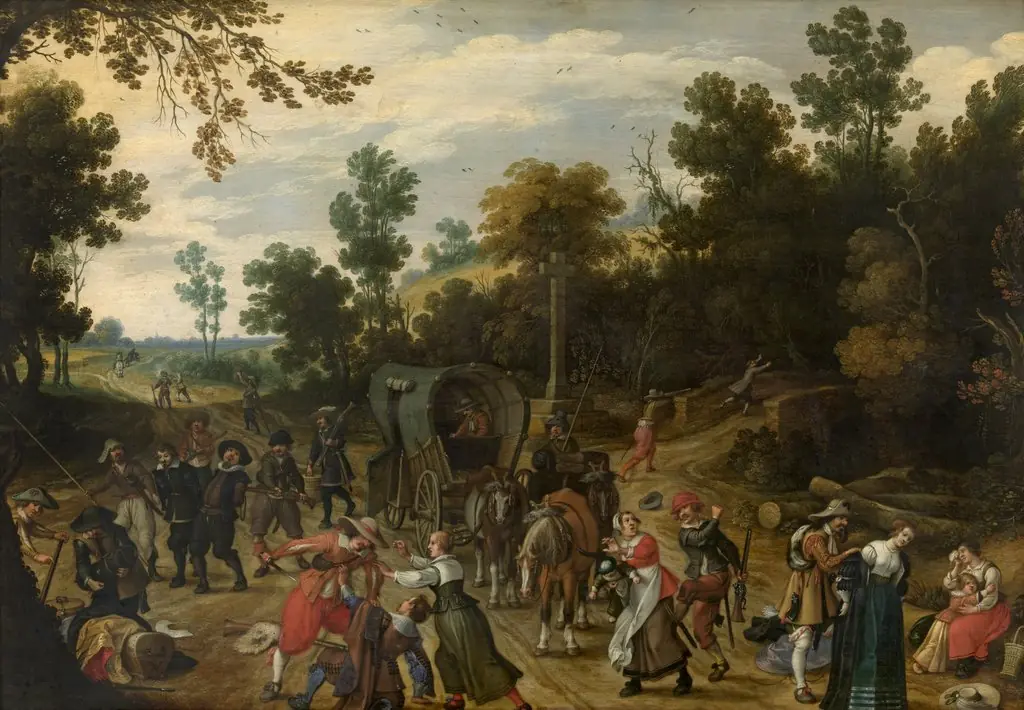 Landschap met overval op reizigers
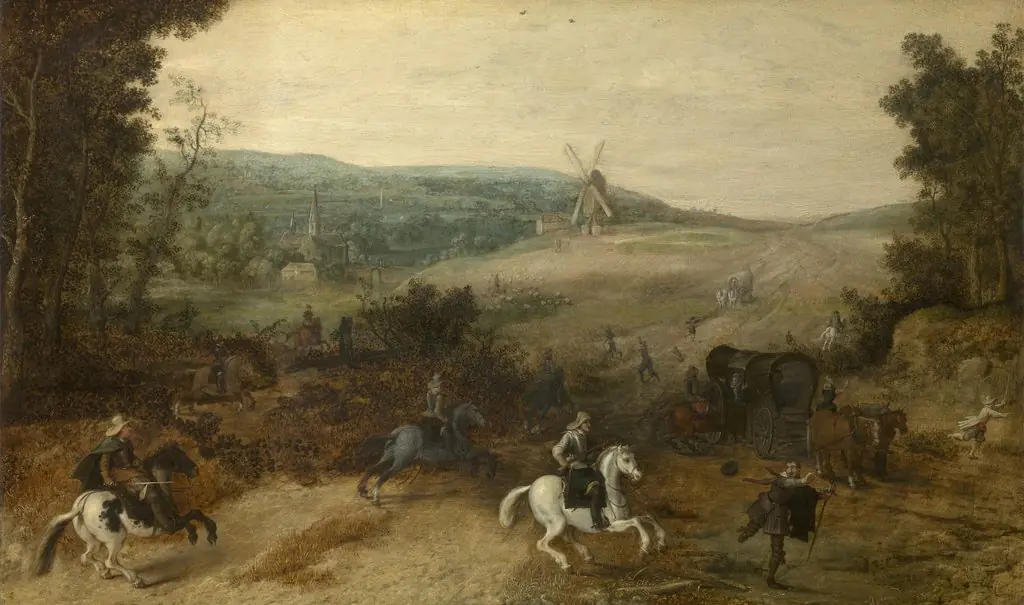 Landscape with Travellers Attacked by Robbers
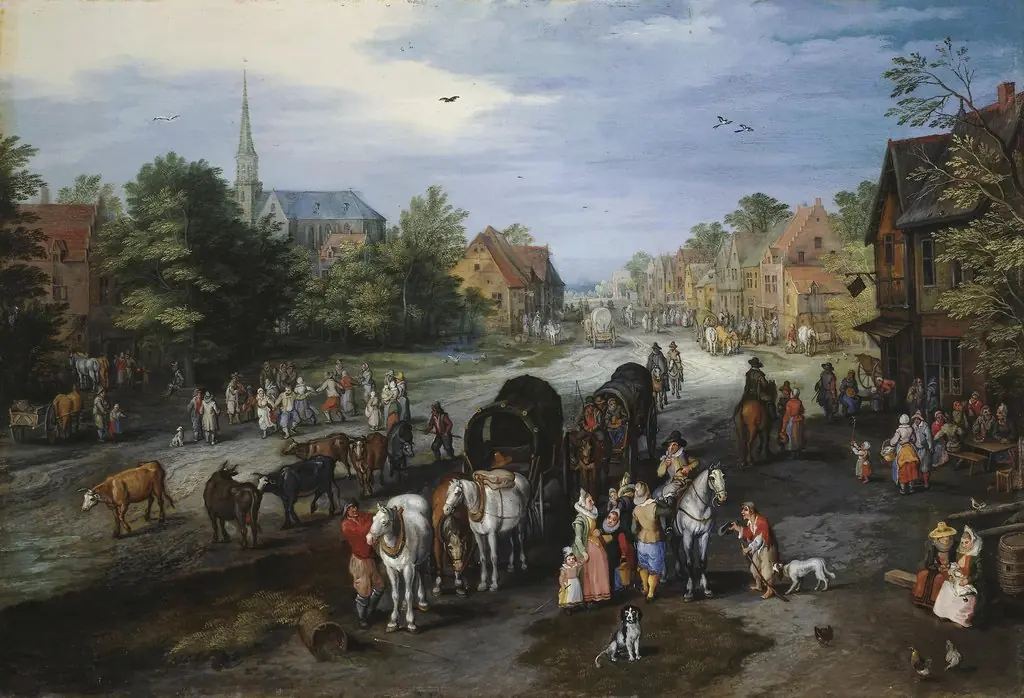 View of the Village of Schelle (Village street)
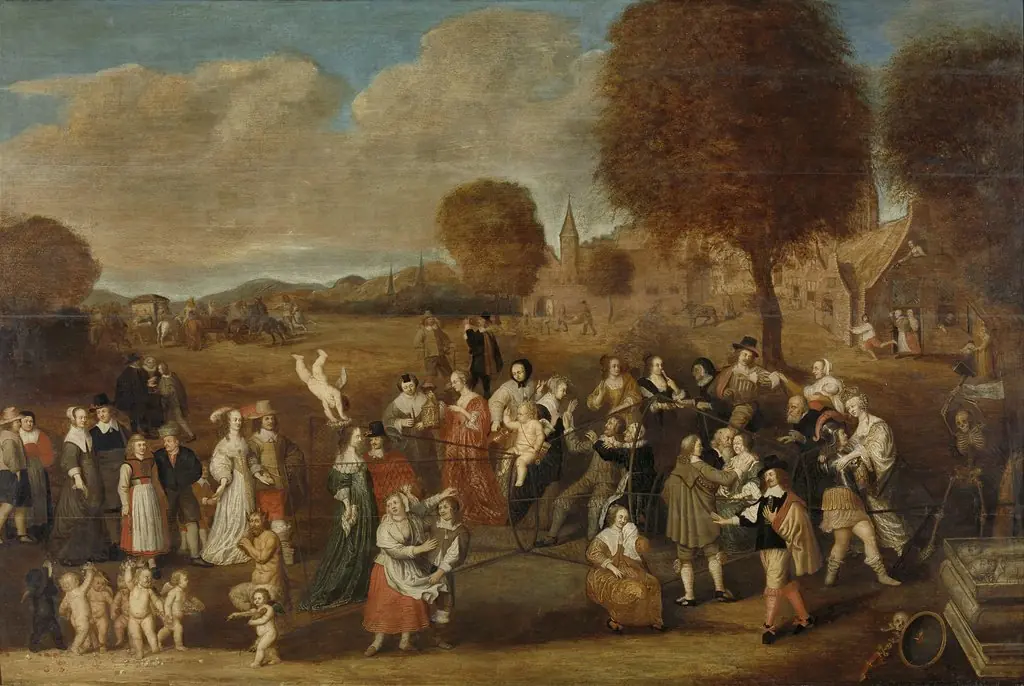 The marriage trap: an allegory of marriage
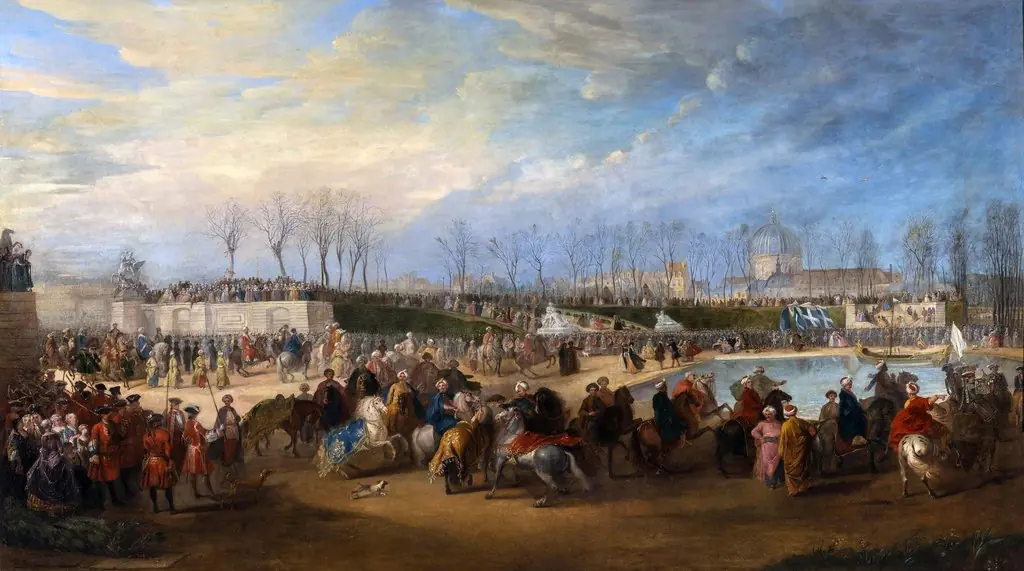 Mehemet Effendi, ambassadeur turc arrive aux Tuileries, 21 mars 1721
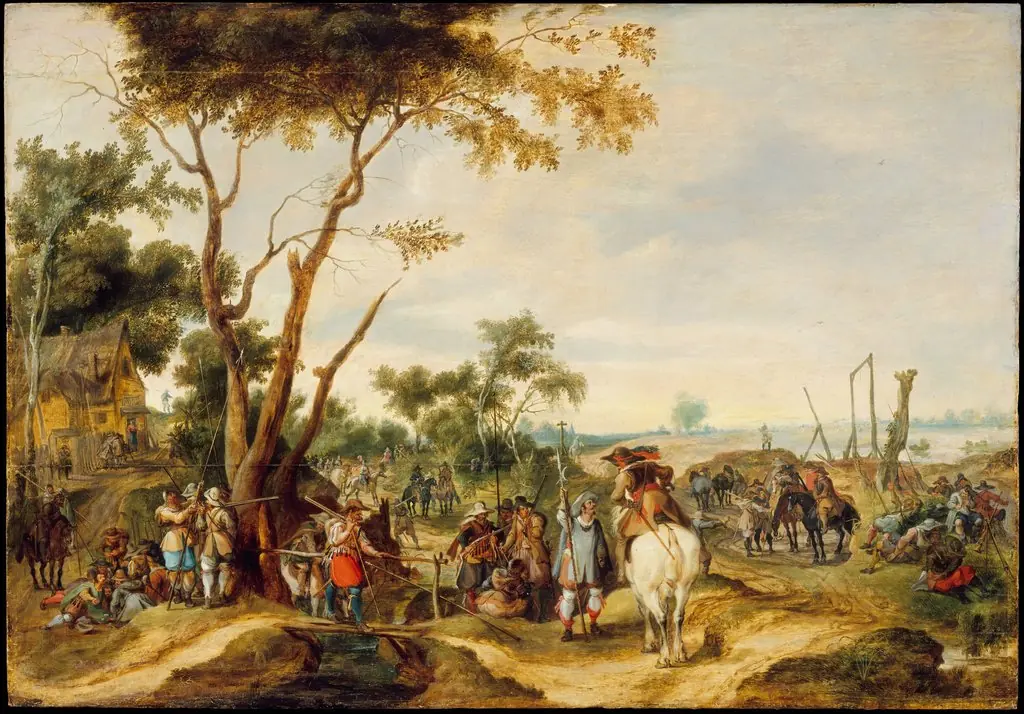 Soldiers Bivouacking
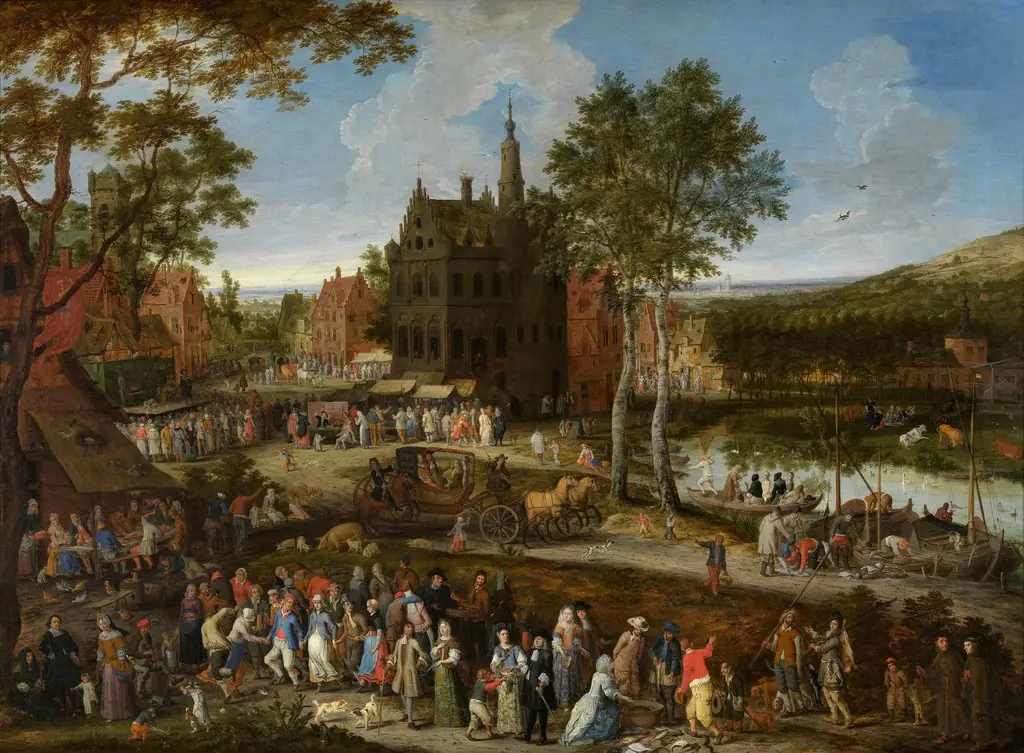 Kermis in a Flemish village