Artwork
Don Gaspar de Guzmán (1587–1645), Count-Duke of Olivares
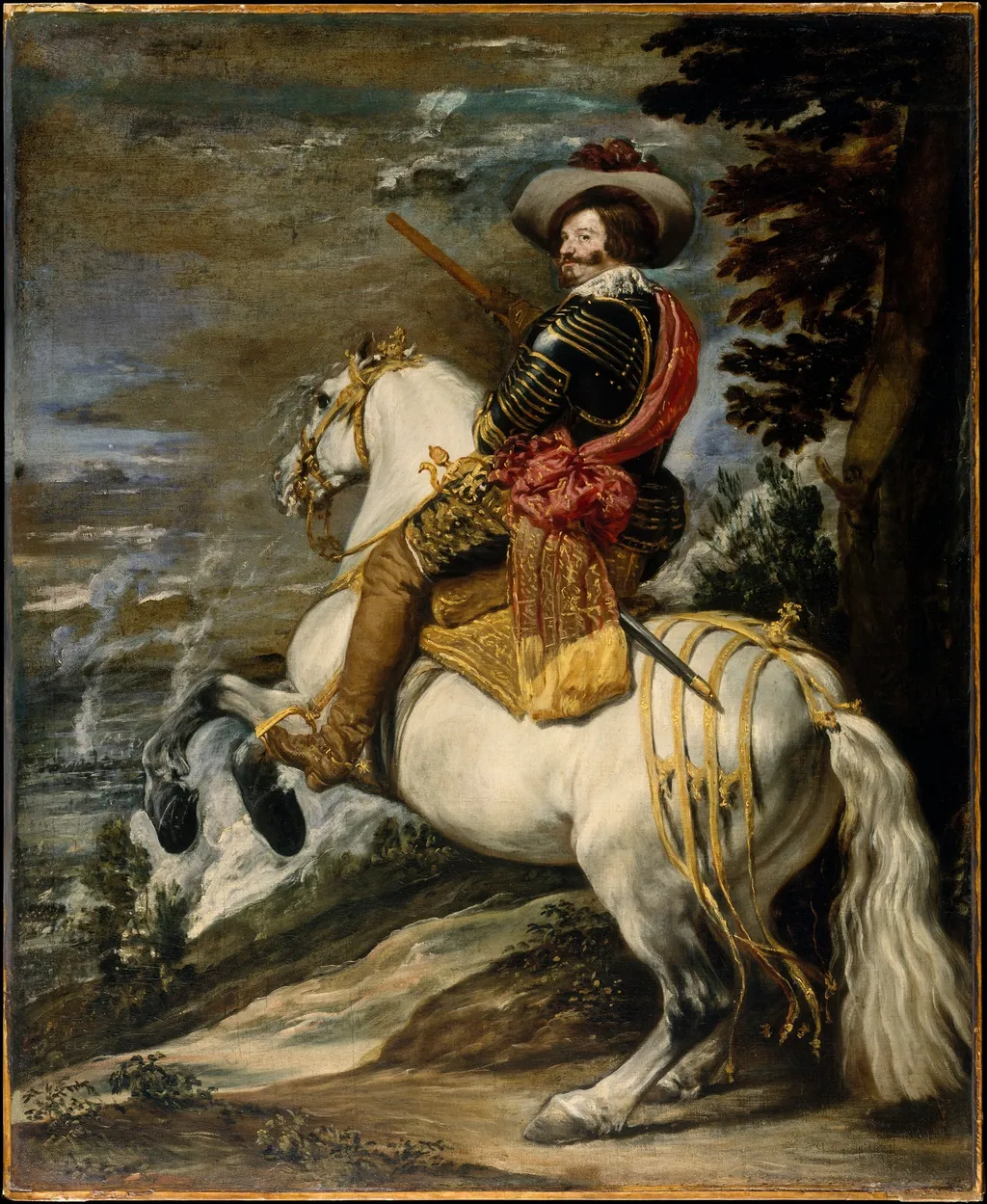
Don Gaspar de Guzmán (1587–1645), Count-Duke of Olivares is an oil painting by the Early Baroque Italian artist Juan Bautista Martínez del Mazo. It dates from 1636 and is held in the collection of the Metropolitan Museum of Art. This oil painting depicts Don Gaspar de Guzmán, the Count-Duke of Olivares (1587–1645), in a formal equestrian portrait.
About this work
Subject & Meaning
The painting portrays Gaspar de Guzmán, Count-Duke of Olivares, the powerful Spanish royal favorite and chief minister to King Philip IV.
The painting portrays Gaspar de Guzmán, Count-Duke of Olivares, the powerful Spanish royal favorite and chief minister to King Philip IV. Depicted in the equestrian portrait format, the subject is shown on horseback, a convention historically reserved for rulers and military leaders to convey authority, nobility, and command. The work belongs to the broader iconographic tradition of equestrian state portraiture, presenting the sitter not merely as an individual but as a figure of political and aristocratic stature.
By rendering Olivares in this elevated genre, the painting associates him with the prestige of sovereign imagery, reinforcing his position as one of the most influential statesmen of seventeenth-century Spain.
Technique & Style
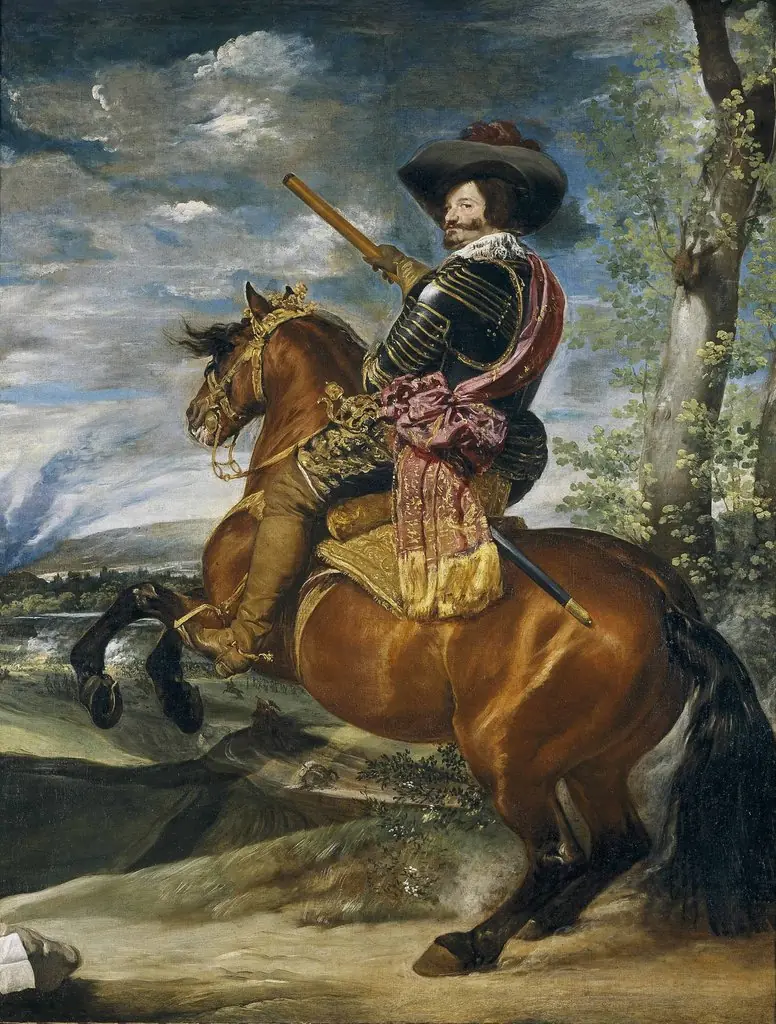
Executed in 1636, this equestrian portrait is an oil painting on canvas measuring 127.6 by 104.1 centimeters. The work is attributed to Juan Bautista Martínez del Mazo, with some sources also citing Diego Velázquez as a creator, suggesting a collaborative effort or direct reliance on Velázquez's compositions. Specifically, the piece is noted as being based on the famous Equestrian Portrait of the Count-Duke of Olivares.
Stylistically, it functions within the genre of formal portraiture, capturing the subject, Gaspar de Guzmán, mounted on horseback. The work is currently held in the collection of the Metropolitan Museum of Art.
History & Provenance
The equestrian portrait of Gaspar de Guzmán, Count-Duke of Olivares, was executed in 1636 by Juan Bautista Martínez del Mazo using oil on canvas. While Martínez del Mazo is the primary credited creator, the work is also associated with Diego Velázquez, reflecting the collaborative nature of the royal workshop. The painting measures 127.6 by 104.1 centimeters and is based on Velázquez's famous Equestrian Portrait of the Count-Duke of Olivares, serving as a derivative or workshop version of that iconic image.
It is currently held in the collection of the Metropolitan Museum of Art, where it has been exhibited in the context of Velázquez's influence.
Overview
This oil painting depicts Don Gaspar de Guzmán, the Count-Duke of Olivares (1587–1645), in a formal equestrian portrait. The powerful statesman is shown mounted on a white horse, adorned in elaborate armor and a feathered hat. The composition emphasizes his commanding presence, set against a dramatic backdrop of a stormy sky and rugged terrain, conveying a sense of authority and gravity.
Own this work as a print
Artist & collection
Artist
Juan Bautista Martínez del Mazo
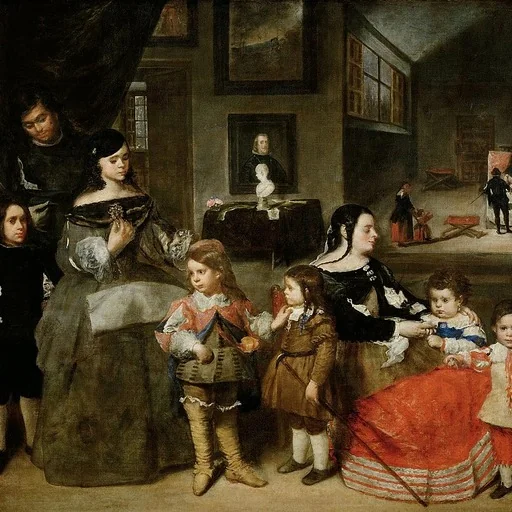
Juan Bautista Martínez del Mazo (c.1612 – February 10, 1667) was a Spanish Baroque portrait and landscape painter, the most distinguished of the followers of his father-in-law Velázquez, whose style he imitated more closely than did any…

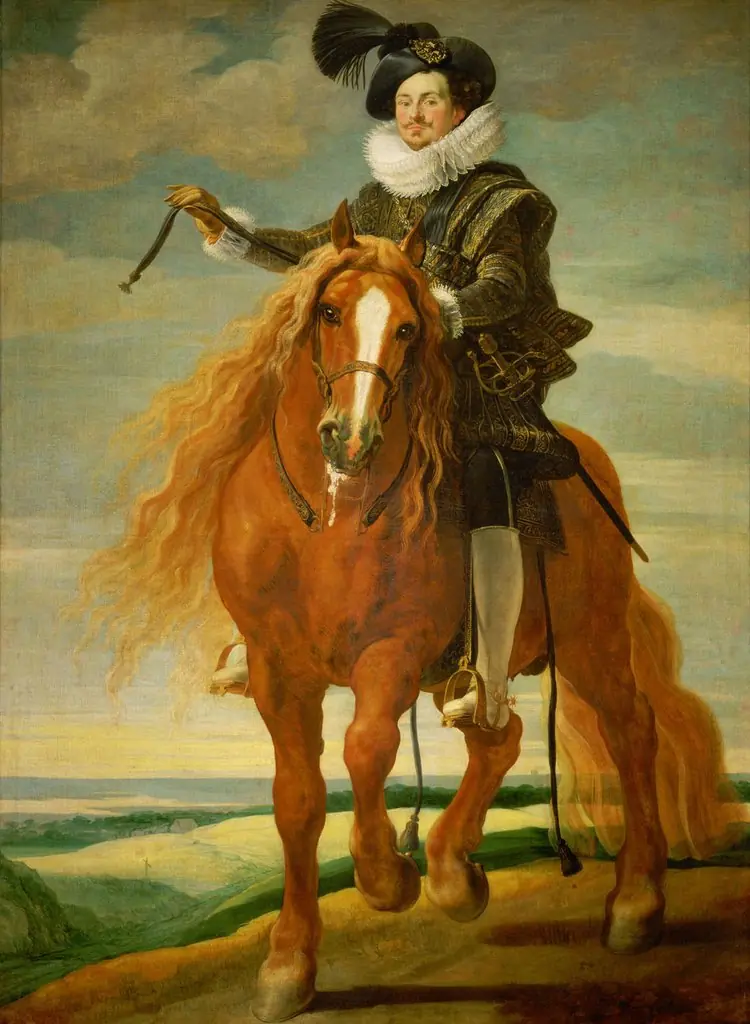 Equestrian portrait of Don Diego Messia Felipe de Guzmán, Marquis of Leganés
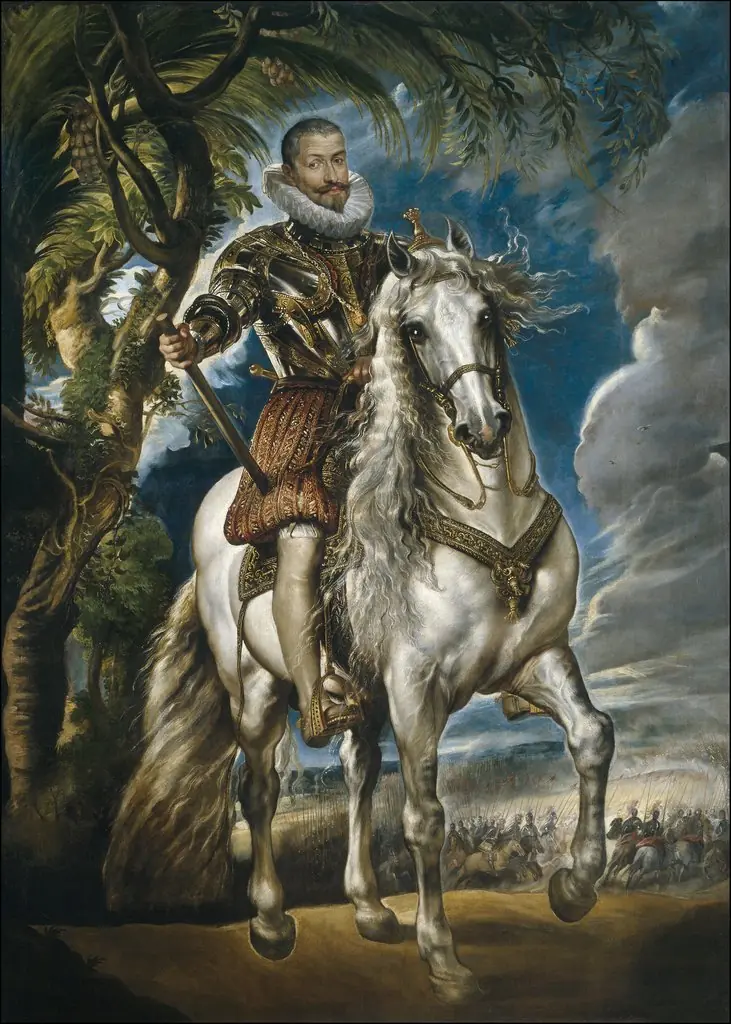 Equestrian Portrait of the Duke of Lerma
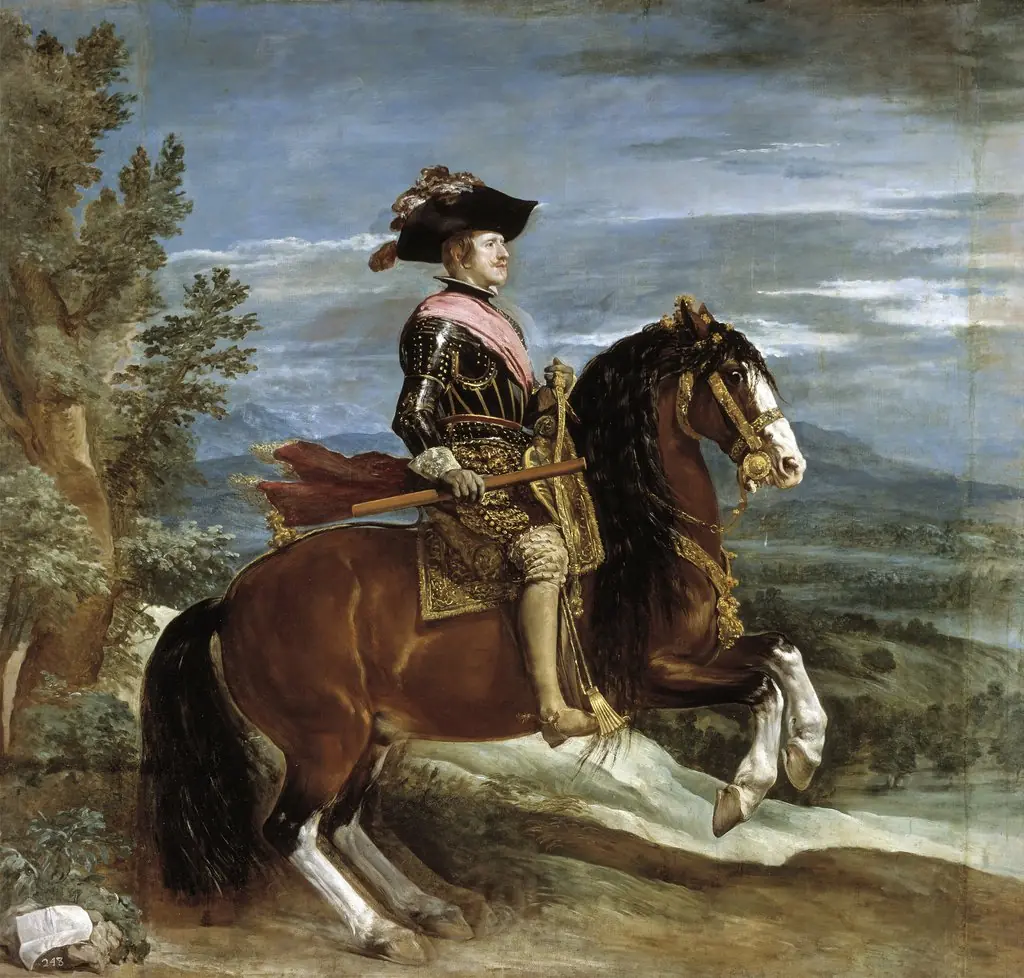 Equestrian Portrait of Philip IV
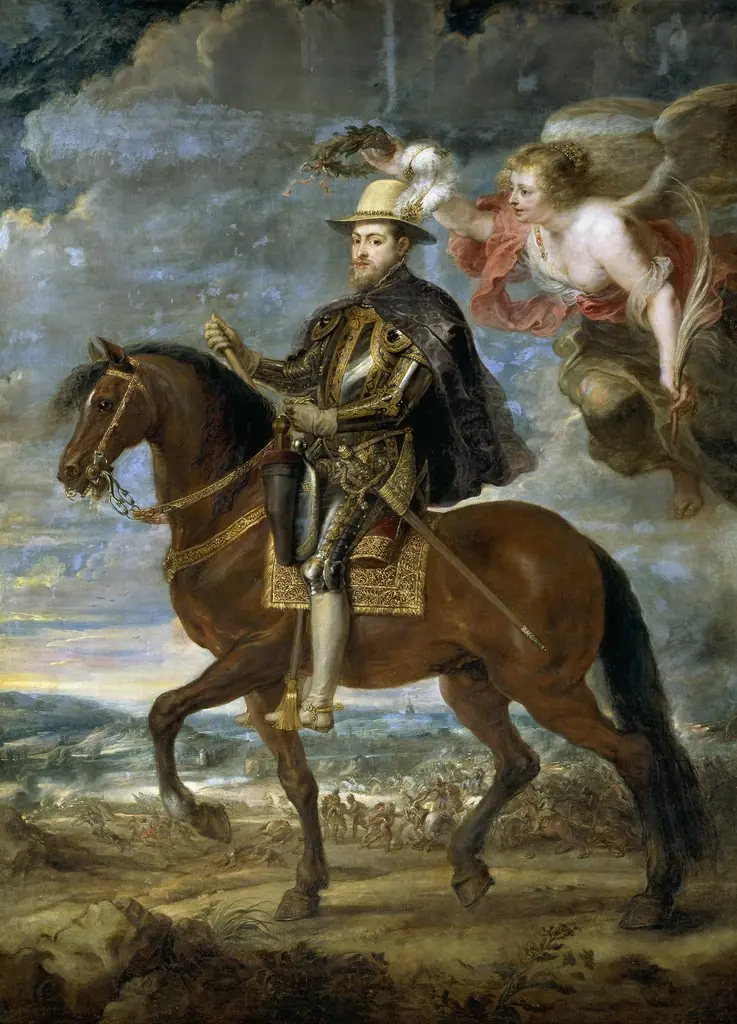 Philip II on Horseback
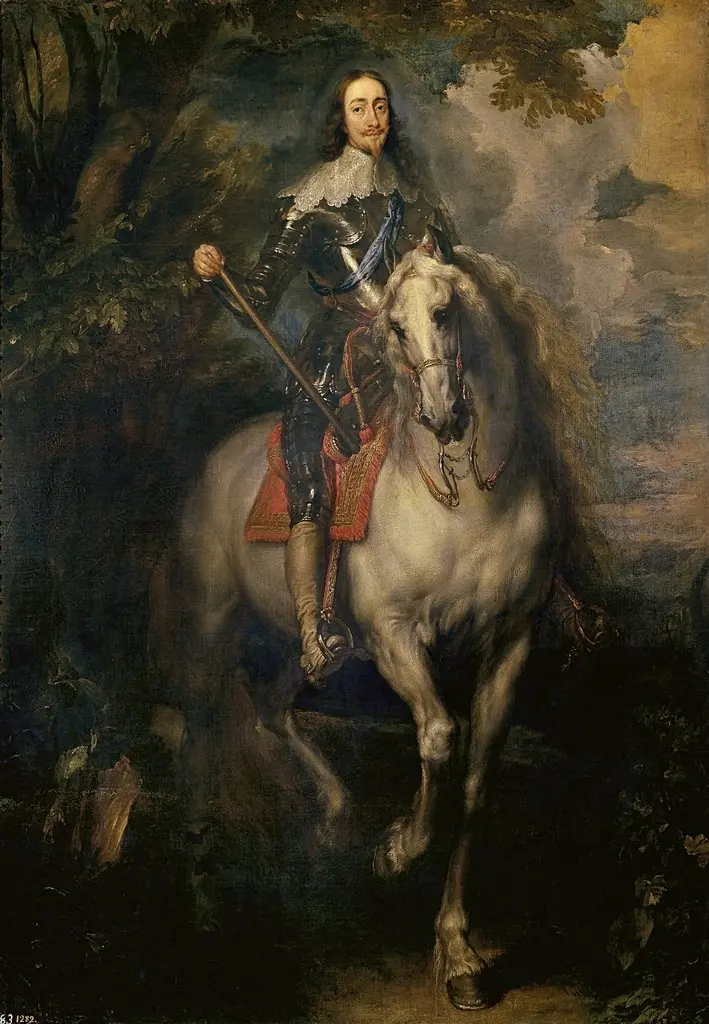 Equestrian portrait of Charles I of England
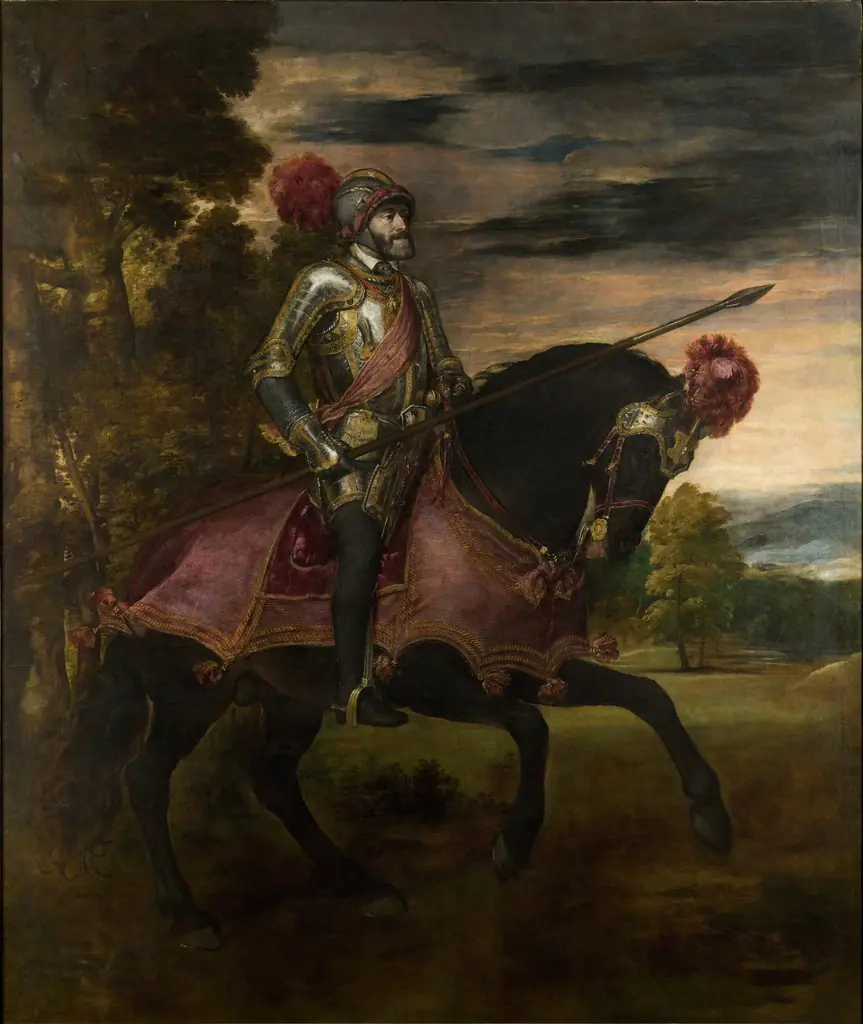 Equestrian Portrait of Charles V
 Ruiterportret van Maximiliaan Emmanuel van Beieren
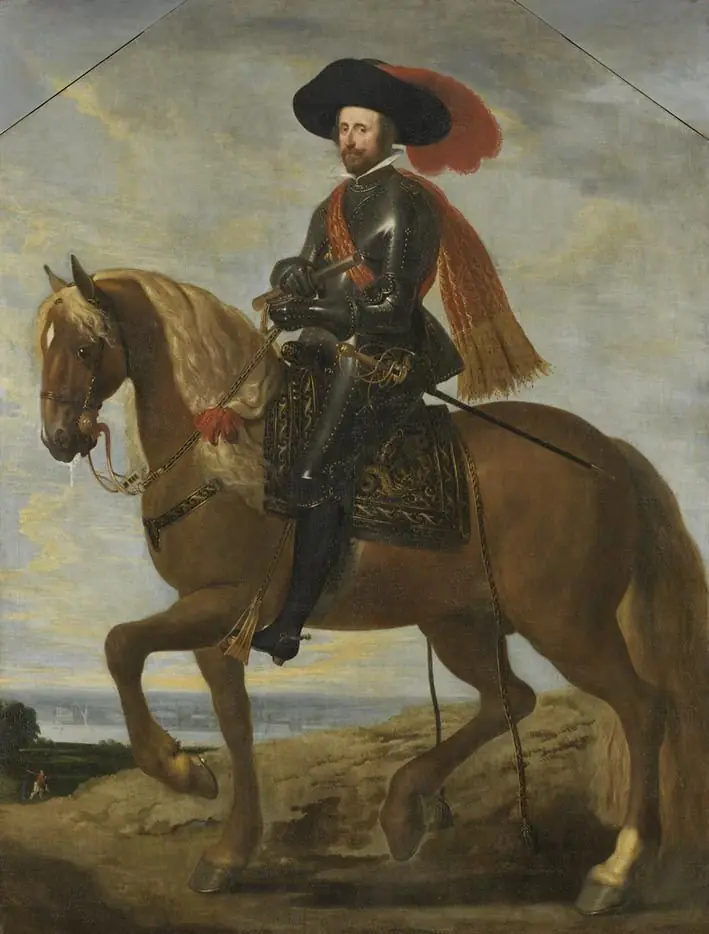 Equestrian portrait of Wolfgang Wilhelm von Pfalz-Neuburg
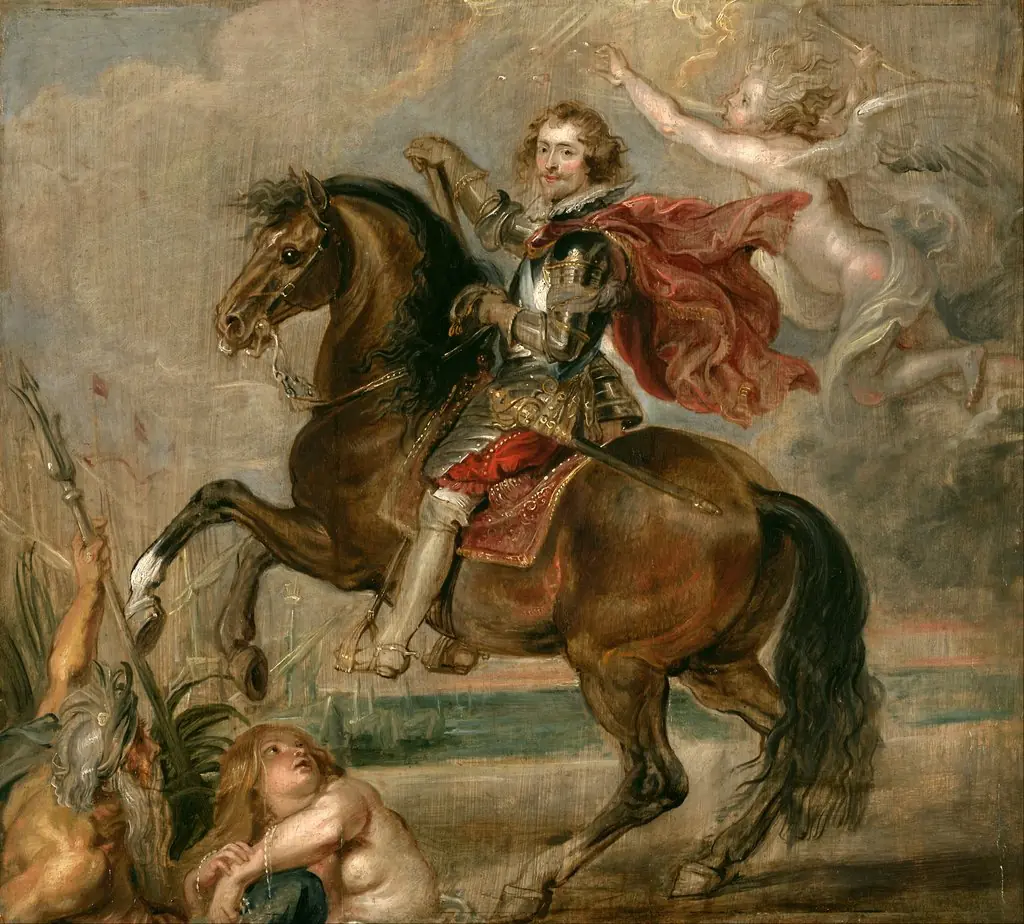 Equestrian Portrait of the Duke of Buckingham
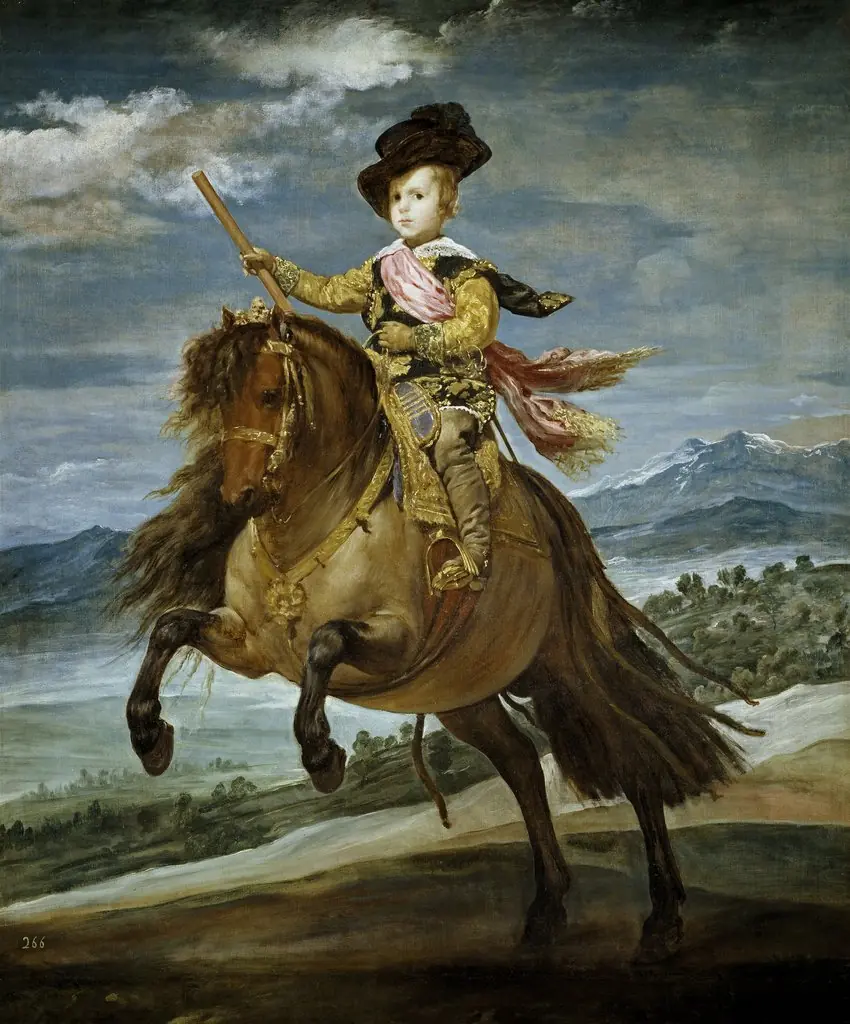 Equestrian Portrait of Prince Balthasar Charles
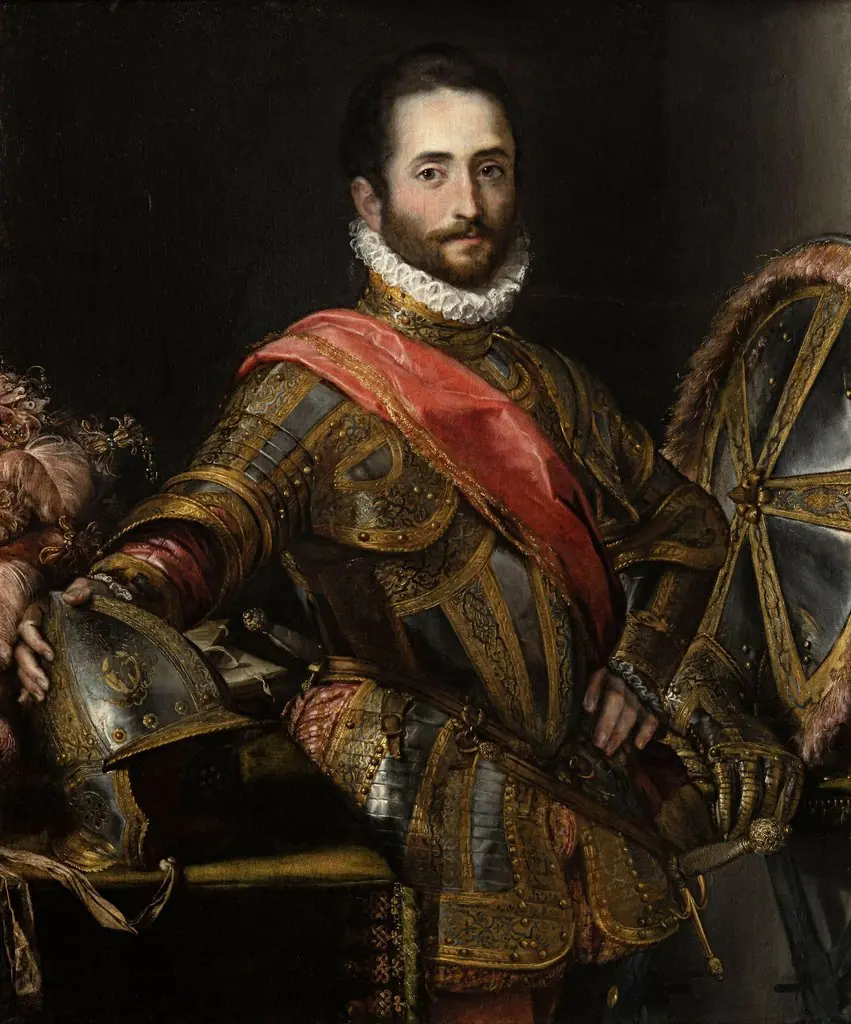 Portrait of Francesco Maria II della Rovere
- Equestrian Portrait of the Count-Duke of Olivares