Artwork
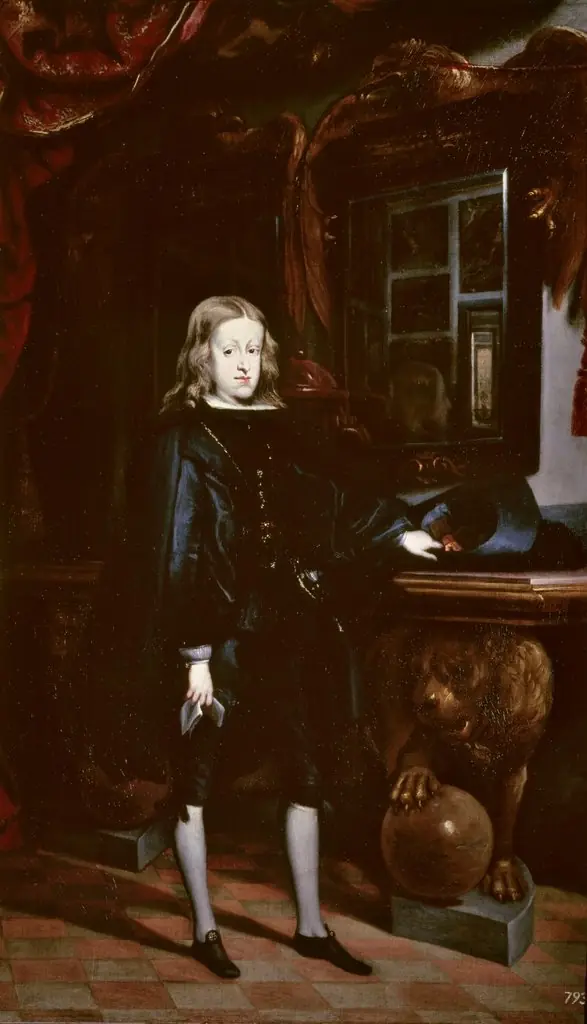
Charles II as a child
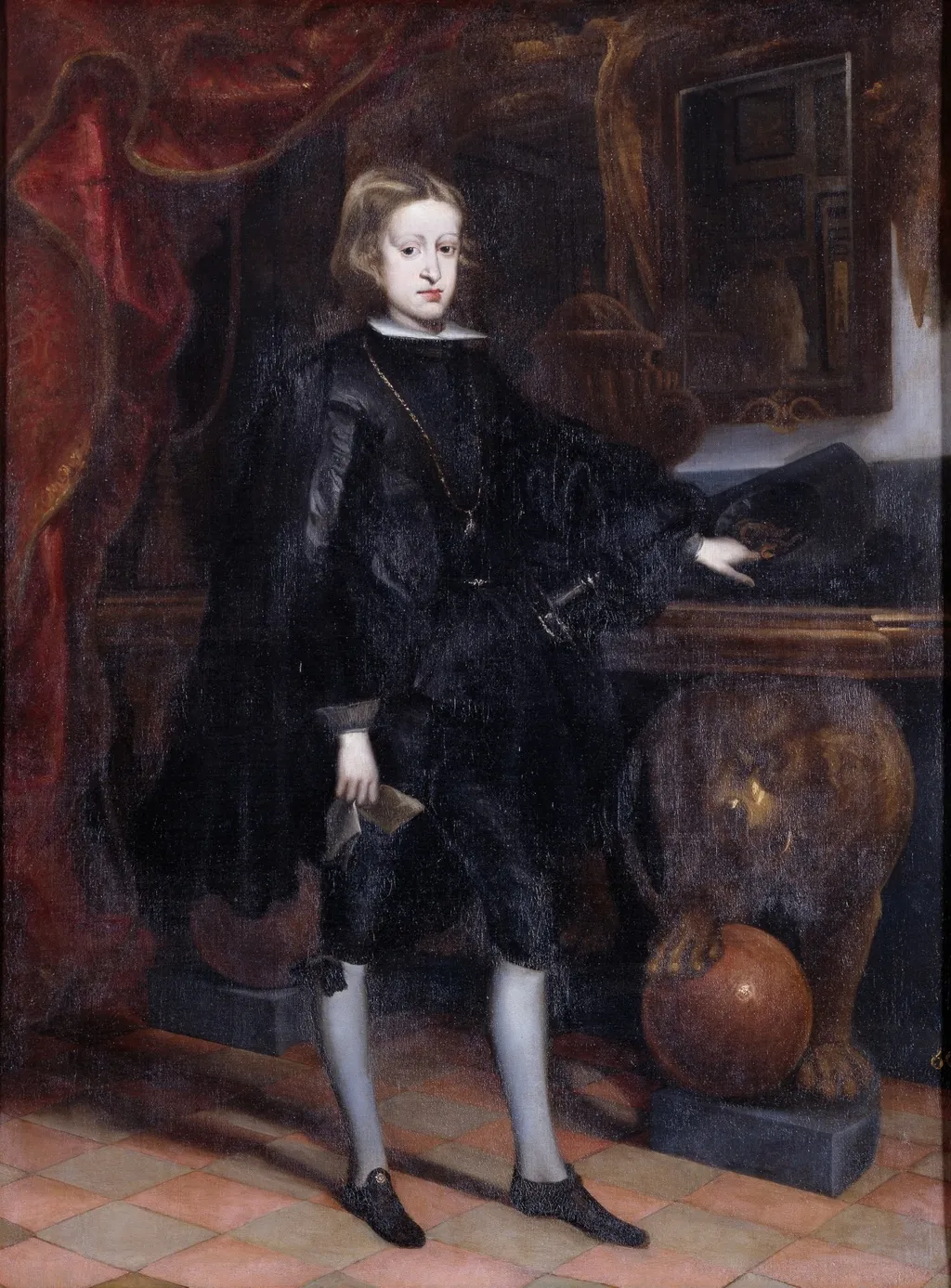
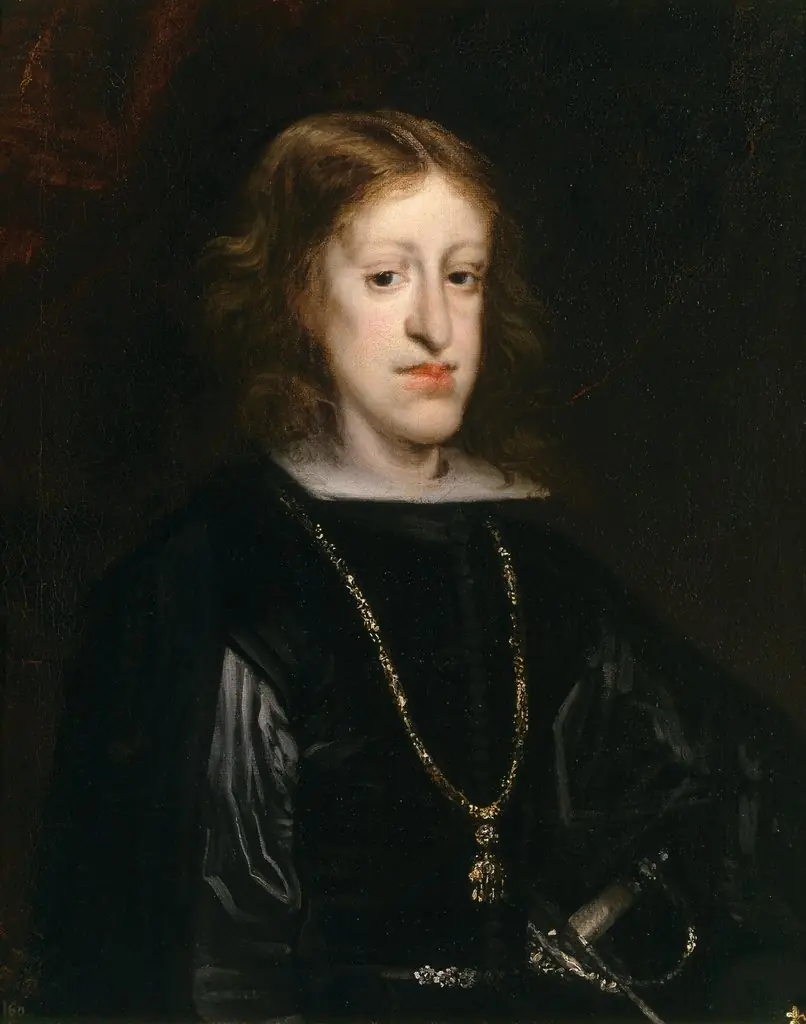
Charles II as a child is an oil painting by the Early Baroque Italian artist Juan Carreño de Miranda. It dates from 1675 and is held in the collection of the Museo del Prado.
About this work
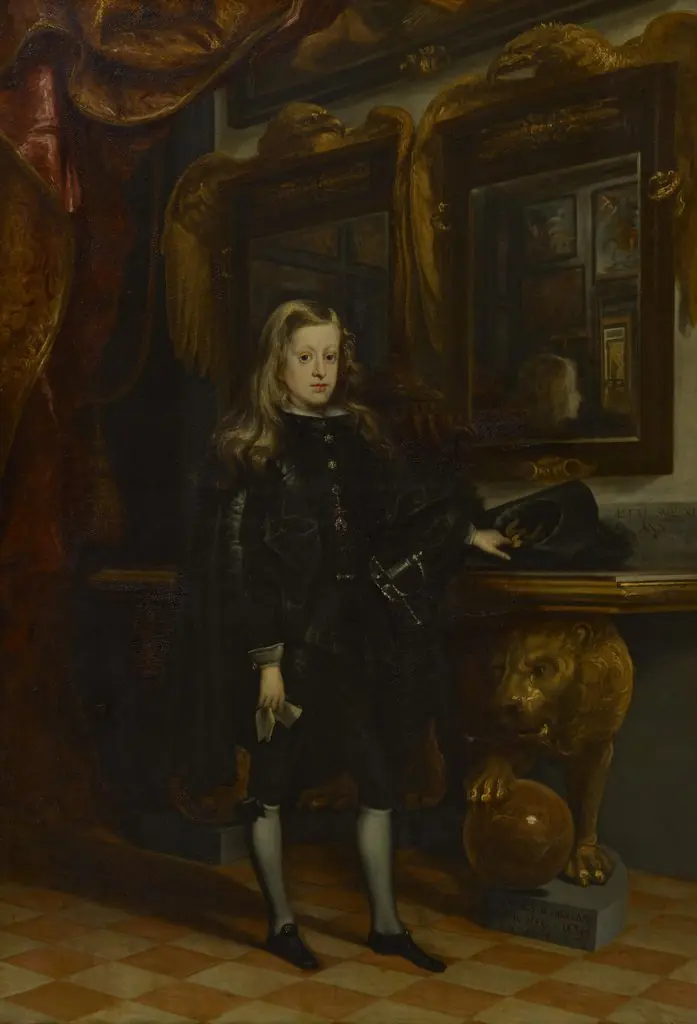
The painting depicts a young boy in a black outfit, standing in front of a table with a red curtain behind him.
The painting depicts a young boy in a black outfit, standing in front of a table with a red curtain behind him. He has light-colored hair and is wearing a white collar and black shoes. His right hand rests on the table, while his left hand holds a piece of paper.
The boy's attire and the setting suggest a formal portrait, possibly of a member of royalty or nobility. The use of dark colors and the simple composition create a sense of solemnity and dignity.
This painting is a representation of Charles II as a child, created by Juan Carreño de Miranda in 1675. To learn more about the artist's techniques, explore the use of chiaroscuro, impasto, and glazing.
Subject & Meaning
The painting portrays the young Charles II of Spain, rendered as a child in royal attire that emphasizes his dynastic legitimacy. The work functions as a symbolic assertion of succession and Habsburg authority during a period of political instability in Spain. Its composition underscores the heir's status through careful attention to courtly dress and regal posture.
The subject is presented with attributes of monarchy that convey both innocence and inherited power, reflecting contemporary notions of divine right and lineage. The portrait's significance lies in its role as a visual proclamation of dynastic continuity amid the complexities of the Spanish Habsburg succession.
Technique & Style
The painting is executed in oil on canvas, dated 1675, and attributed to Juan Carreño de Miranda.
Handling emphasizes a polished, courtly realism, with smooth transitions in the modeling of the child’s face and costume. The figure is rendered with delicate chiaroscuro to articulate youthful features and the elaborate silver-threaded silk garments. Jewels and lace are described with fine, controlled brushwork, contrasting with broader, blended passages in the flesh tones.
Technical examination confirms stable oil paint and canvas support without major condition issues reported in the Prado’s records.
History & Provenance
The oil-on-canvas portrait titled Charles II as a child was created in 1675 by the Spanish artist Juan Carreño de Miranda. The work depicts Charles II of Spain and measures 167 cm in height by 125 cm in width. It is currently held in the collection of the Army Museum, which is part of the Museo del Prado in Madrid.
While the painting is attributed to Carreño de Miranda, specific details regarding the original commission or the chain of ownership prior to its arrival at the Army Museum are not provided in the available records.
The portrait of Charles II as a child, painted by Juan Carreño de Miranda in 1675, is held by the Army Museum (Museo del Ejército). According to the Wikidata record, the work is also associated with the Museo del Prado collection under inventory designation P007000, though its stated location is the Army Museum. The oil-on-canvas painting measures 167 cm in height by 125 cm in width and depicts the young Charles II of Spain. No exhibition history beyond its institutional holdings is documented in the available sources.
Overview
This oil painting, created in 1675 by Juan Carreño de Miranda, portrays Charles II of Spain during his childhood. It is part of the collection at the Museo del Prado.
Context
As a royal portrait from the 17th century, it reflects the artistic traditions of the time, including the representation of youthful royalty in formal settings. The artist's choice of a simple yet dignified backdrop underscores the subject's status.
Legacy
While specific impact details are not provided, as part of the Museo del Prado's collection, the painting contributes to the historical and artistic record of Charles II's portrayal in art, offering insights into 17th-century Spanish royal portraiture.
Own this work as a print
Artist & collection