Artwork
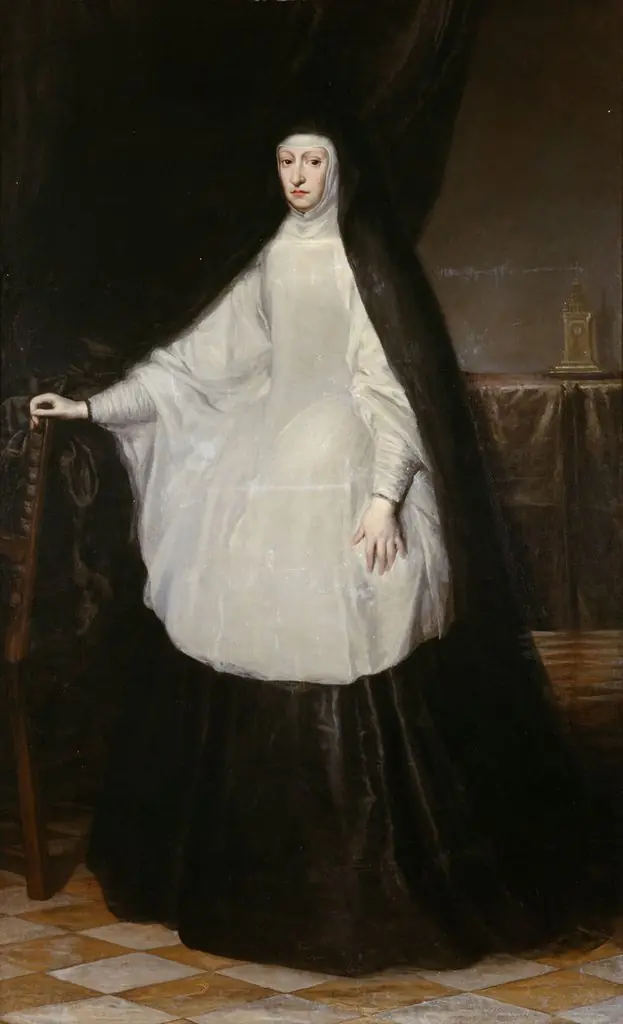
Queen Mariana de Austria as a Widow
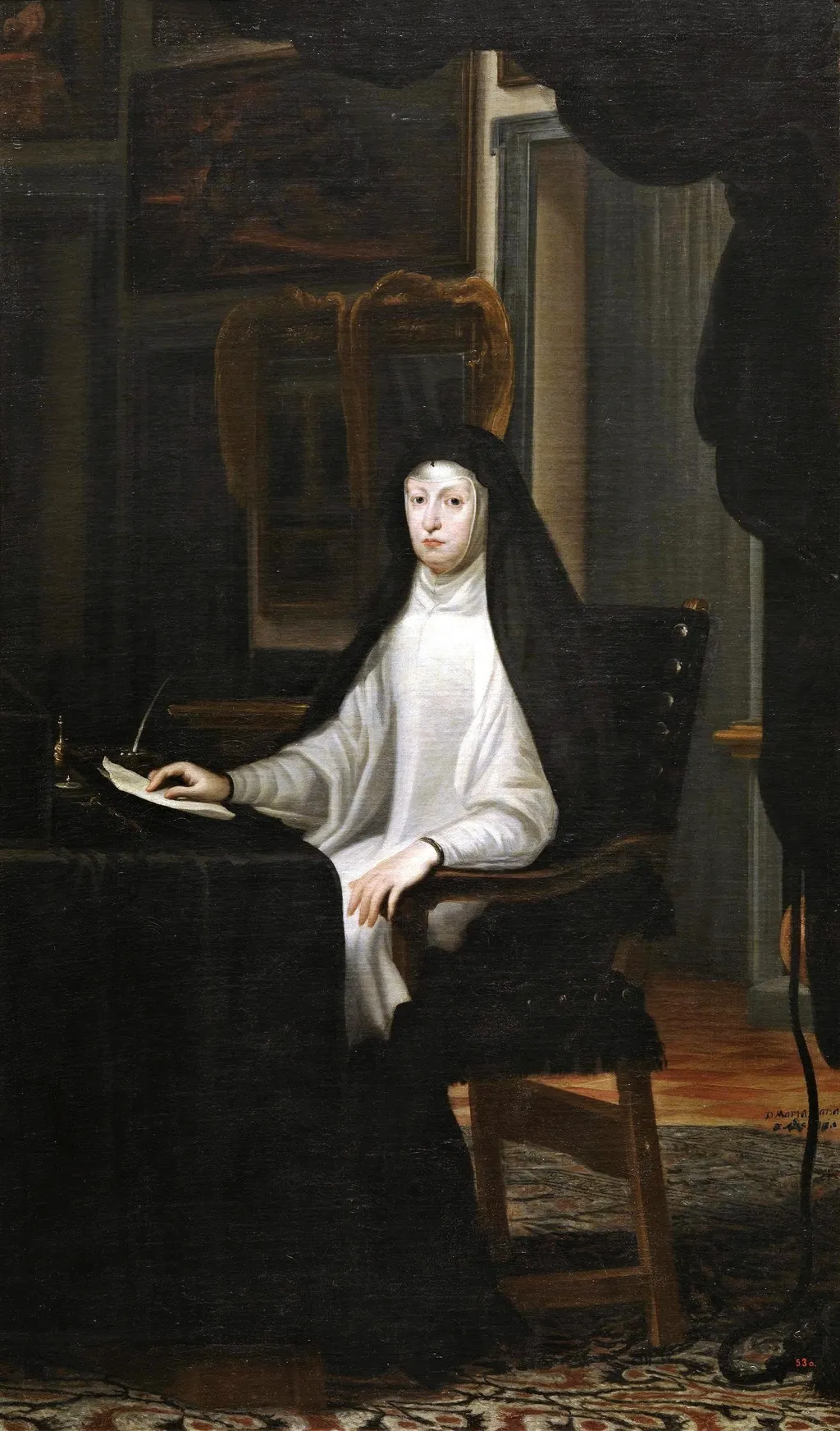
Queen Mariana de Austria as a Widow is an oil painting by the Early Baroque Italian artist Juan Carreño de Miranda. It dates from 1669 and is held in the collection of the Museo del Prado.
About this work
Subject & Meaning
The painting shows Mariana of Austria in the mourning dress of a widow, symbolizing her role as regent after the death of her husband, King Philip IV of Spain.
The painting shows Mariana of Austria in the mourning dress of a widow, symbolizing her role as regent after the death of her husband, King Philip IV of Spain. She is depicted in a black veil and simple attire reminiscent of monastic habits, a visual cue for her status as a grieving queen and political steward of the realm. The composition places her within the reflective setting of the Hall of Mirrors in the Alcázar of Madrid, linking her personal authority to the grandeur of the Spanish court.
This portrait functions as both a commemorative image of royal mourning and a statement of regency, emphasizing her continued political influence during the minority of Charles II.
Technique & Style
Juan Carreño de Miranda employed oil paint on canvas to render Queen Mariana de Austria as a Widow in 1669. The work measures 211 cm in height and 125 cm in width, reflecting the formal dimensions recorded for the painting. It portrays Mariana of Austria in mourning attire resembling that of nuns, framed within the Hall of Mirrors at the Alcázar of Madrid.
The composition emphasizes regal dignity through restrained color and precise rendering of fabric textures, characteristic of Baroque portraiture. The painting is housed in the Museo del Prado in Madrid, Spain.
The artwork's handling and condition are not detailed in the provided sources.
Stylistically, the piece exemplifies courtly realism, combining naturalistic representation with symbolic elements of widowhood through somber drapery and muted tones.
History & Provenance
The painting Queen Mariana de Austria as a Widow was commissioned after the queen's widowhood and executed by Juan Carreño de Miranda in 1669, shortly after her husband Philip IV died; it was painted when she was approximately 31 years old and serving as regent of Spain. The work is an oil on canvas portrait measuring 211 cm by 125 cm, depicting Mariana of Austria in mourning attire within the Hall of Mirrors at the Alcázar of Madrid. The painting entered the collection of the Museo del Prado in Madrid, where it remains on display, and has been part of exhibitions such as "Velázquez".
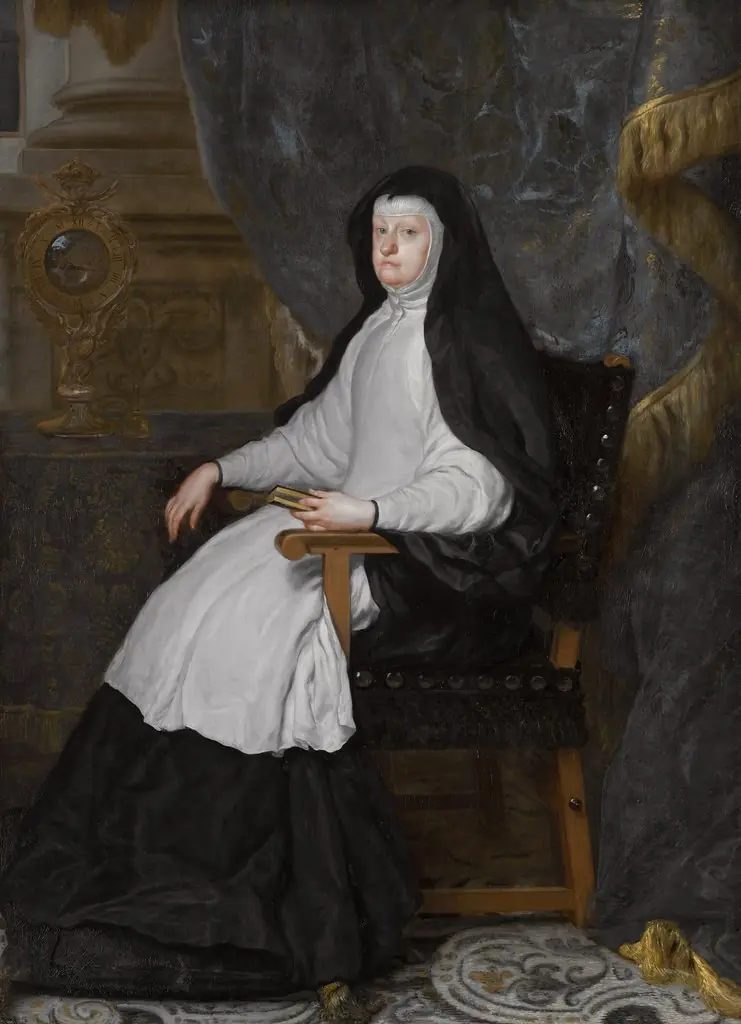
Additional versions of the subject by the same artist are held in the Museum of Fine Arts in Vienna, the Real Academia de Bellas Artes de San Fernando in Madrid, and the Museo de Bellas Artes de Bilbao.
The painting has long been held in the Museo del Prado in Madrid, where it remains part of the museum's collection. According to the Wikidata record, its exhibition history includes a show titled "Velázquez," and the work is catalogued within the Prado's holdings alongside other portraits of Mariana of Austria by Carreño de Miranda.
The Spanish-language source confirms that the canvas is housed at the Museo del Prado in Madrid, Spain, and notes that the museum also holds related versions of the widow portrait of Mariana of Austria, with further versions located at the Kunsthistorisches Museum in Vienna, the Real Academia de Bellas Artes de San Fernando in Madrid, and the Museo de Bellas Artes de Bilbao.
Context
Painted in 1669, Queen Mariana de Austria as a Widow is recognized as one of the most renowned works by the Spanish artist Juan Carreño de Miranda. Created four years after the death of her husband, Philip IV, the portrait captures the queen in widow's weeds resembling monastic habits during her tenure as regent for Charles II. This depiction marks a significant shift from Diego Velázquez's earlier portrayal of Mariana as a young bride seventeen years prior.
The work exemplifies Carreño's status as a leading court painter after his 1669 appointment, offering a distinct visual document of the queen's political role and personal mourning. Multiple versions of this specific composition exist, with others held in Vienna, Bilbao, and the Real Academia de Bellas Artes de San Fernando.
Overview
Juan Carreño de Miranda’s oil portrait, painted in 1669, presents Queen Mariana of Austria in the years following her husband’s death. The work is part of the collection of Madrid’s Museo del Prado and exemplifies the courtly portraiture of late‑seventeenth‑century Spain.
Artist & collection

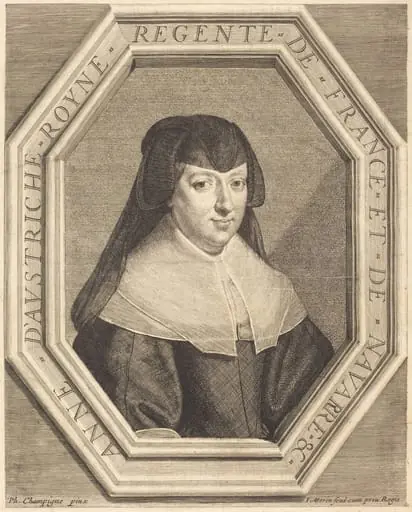 Anne of Austria
 Erzherzogin Maria Anna, Königin von Spanien, als Witwe
 Saint Teresa of Avila
 Elizabeth Throckmorton, Canoness of the Order of the Dames Augustines Anglaises
 Erzherzogin Margarete (1567-1633), Tochter von Maximilian II. als Nonne in ganzer Figur
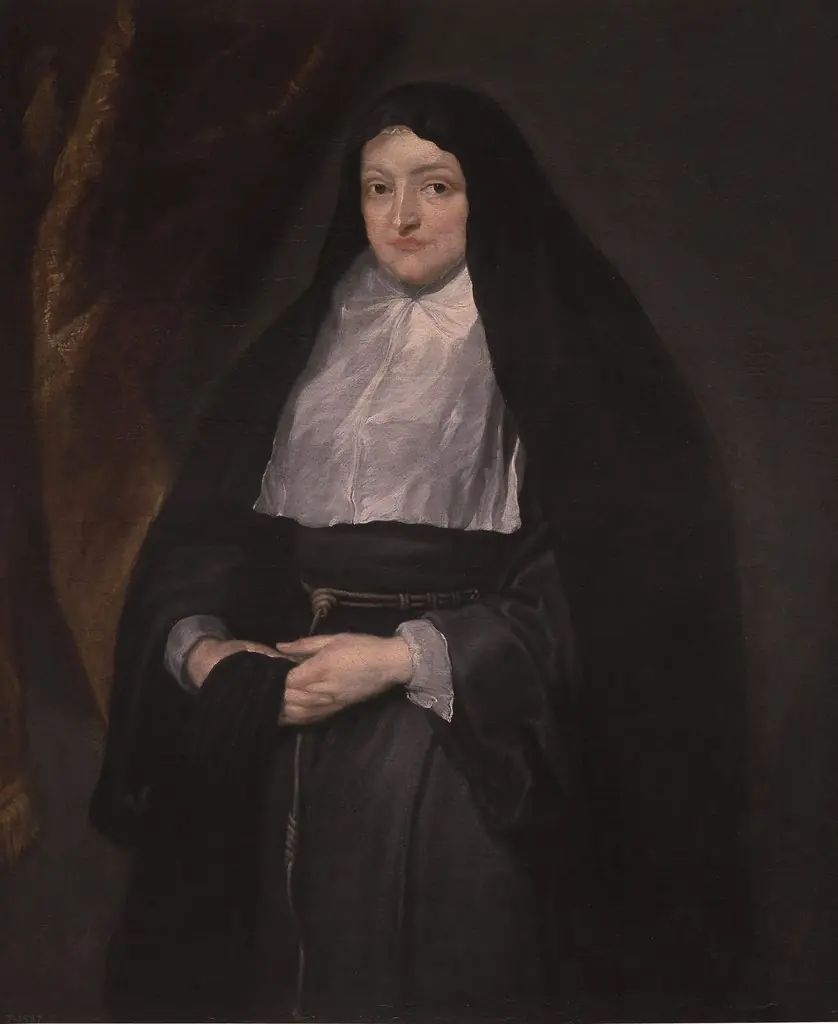 Portrait of Isabel Clara Eugenia as a nun
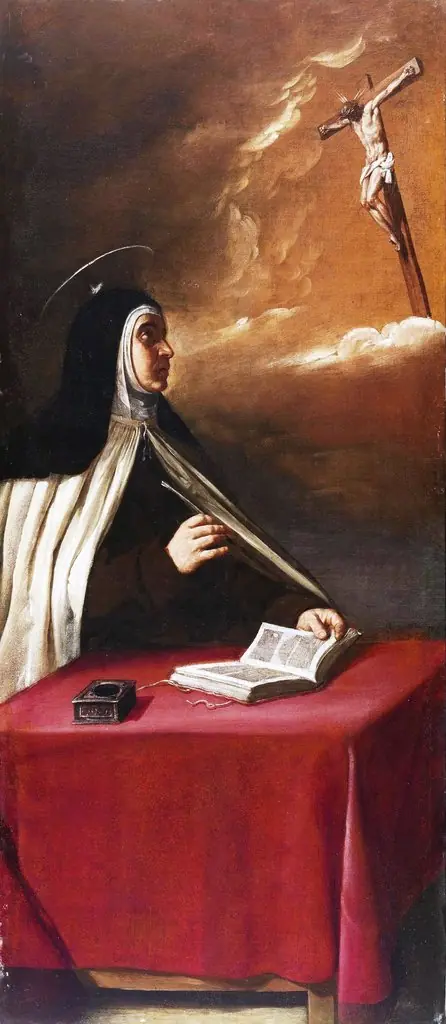 The crucified Christ appears to Saint Teresa of Avila
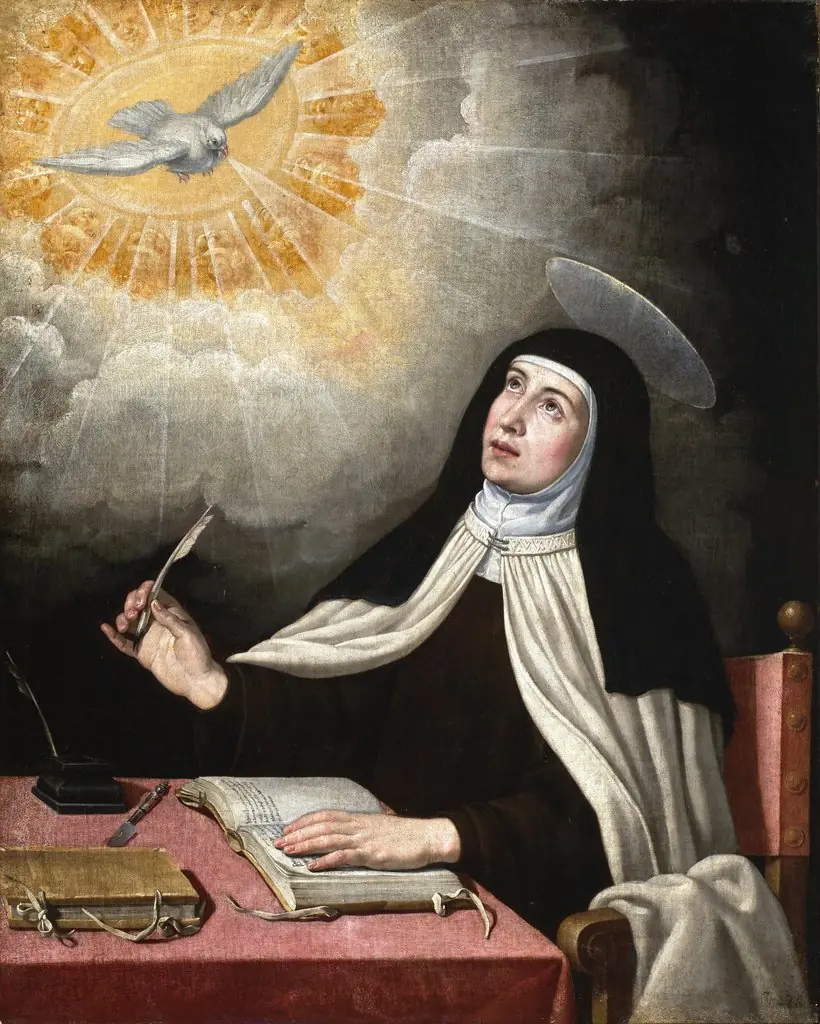 Santa Teresa de Jesús
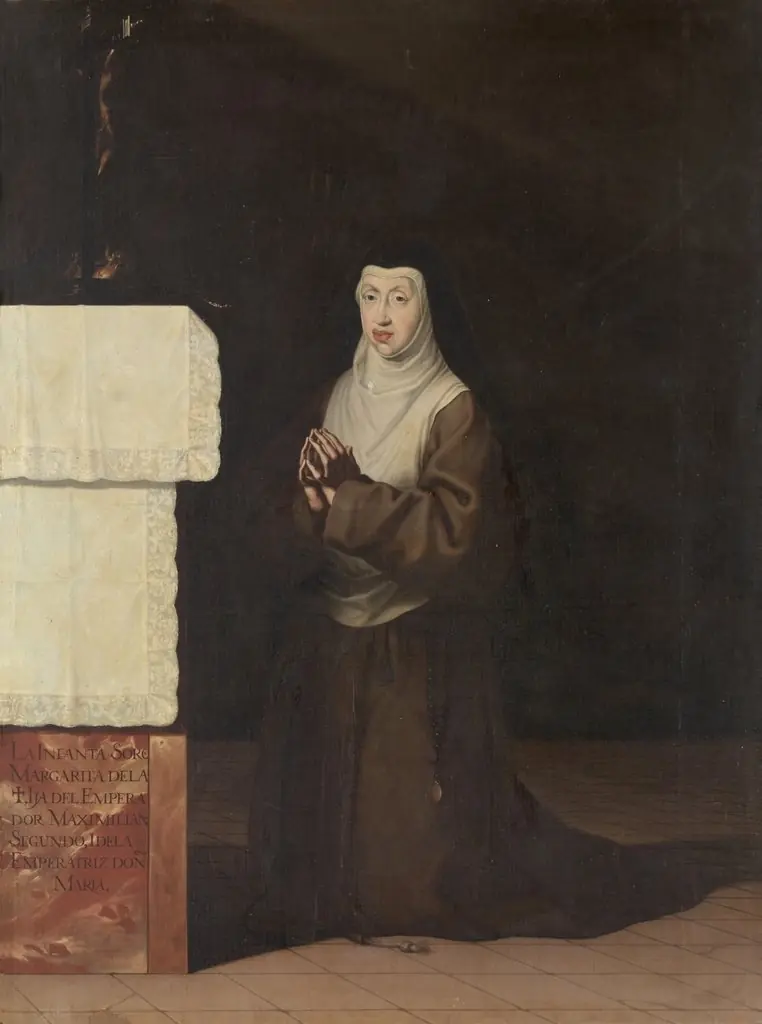 La infanta sor Margarita de la Cruz, archiduquesa de Austria