Artwork
Charles II of Spain
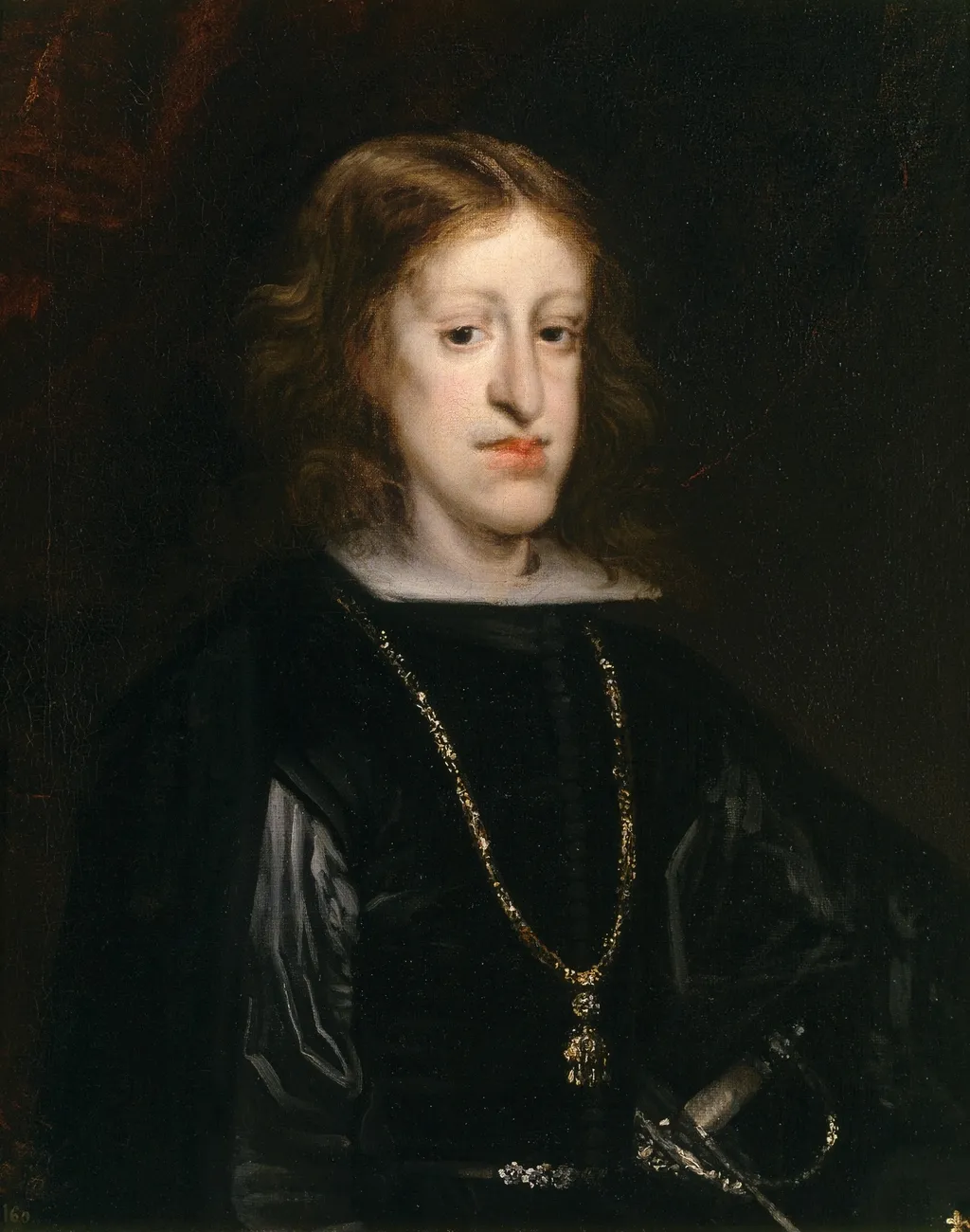
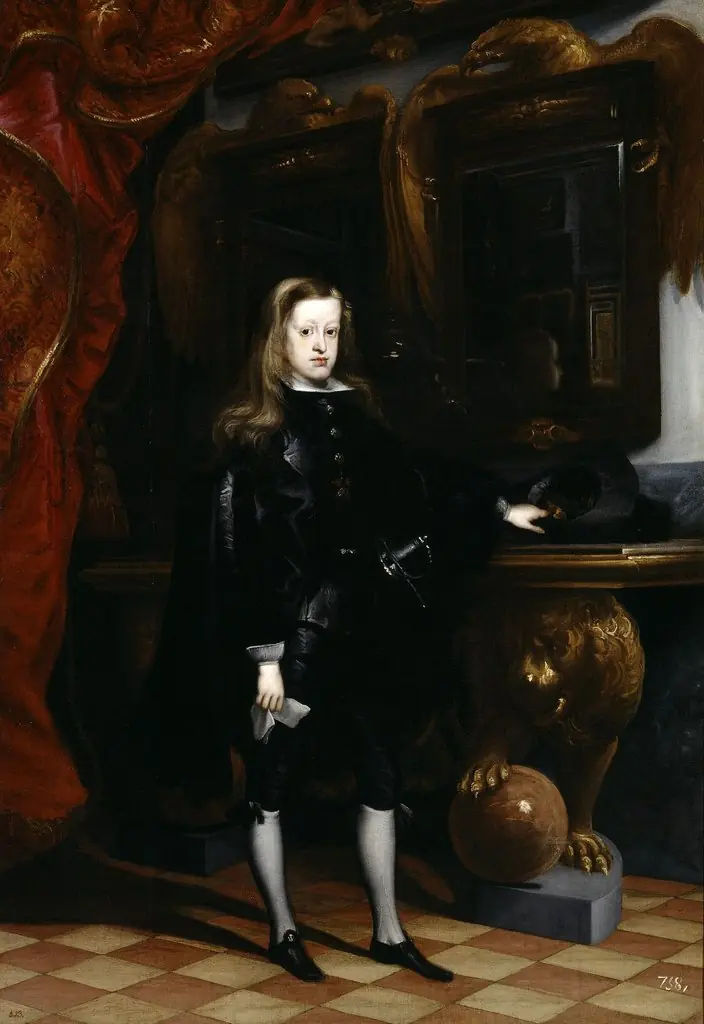
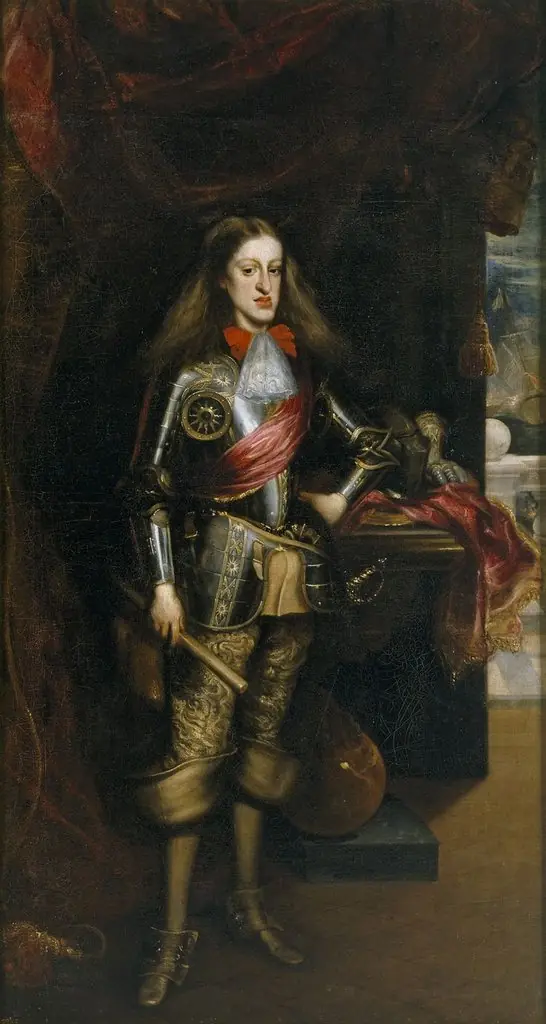
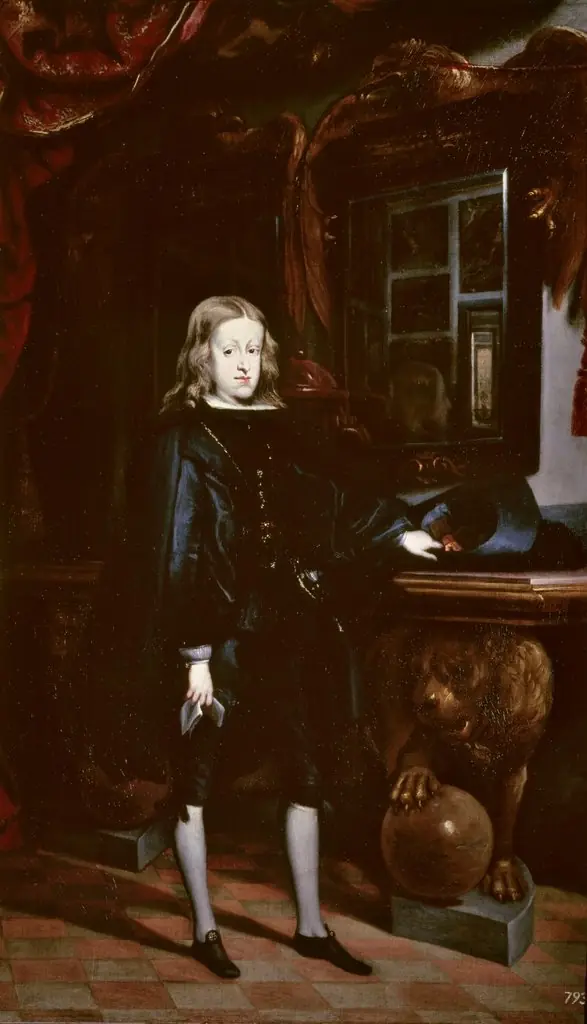
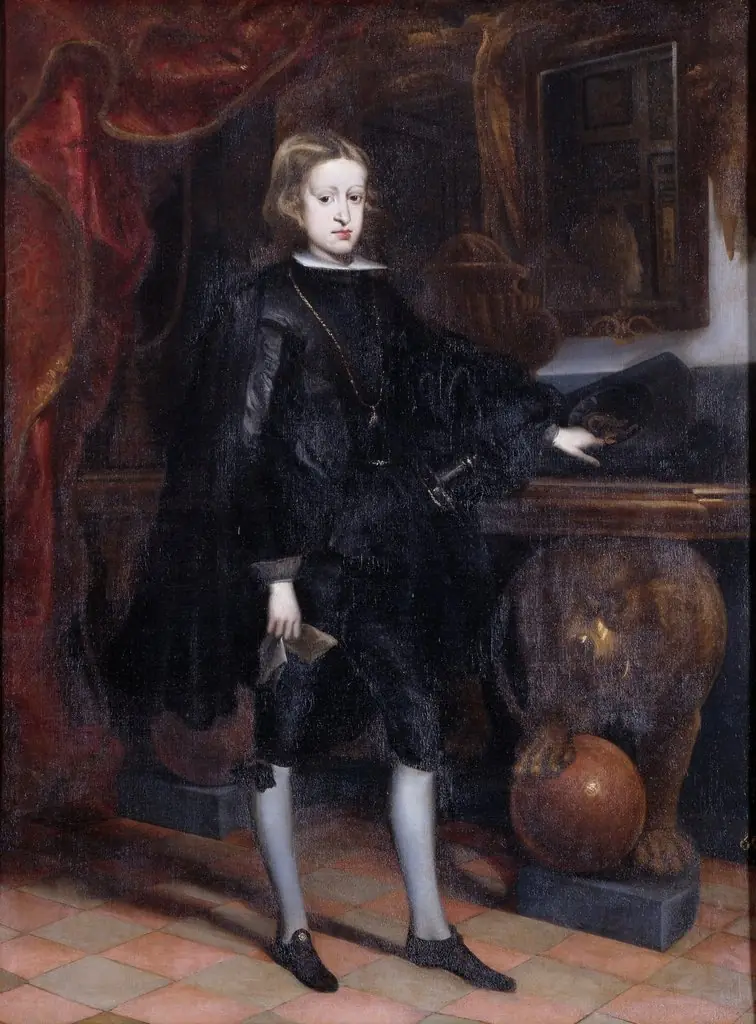
Charles II of Spain is an oil painting by the Early Baroque Italian artist Juan Carreño de Miranda. It is held in the collection of the Museo del Prado.
About this work
Subject & Meaning
Subtle indications of drapery in the upper corner further frame the subject, emphasizing the personal yet formal nature of this official image.
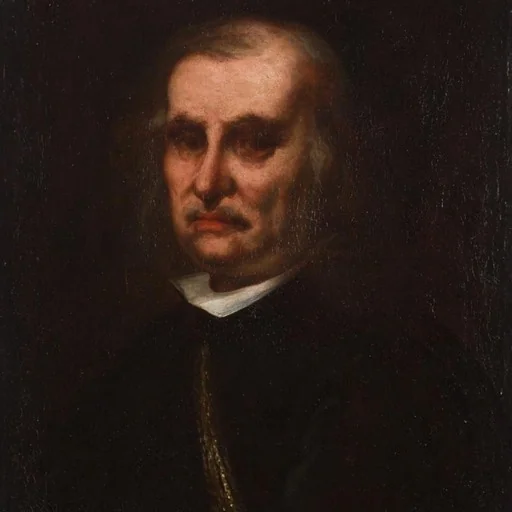
The painting depicts Charles II of Spain in a half-length format, dressed in a sober black suit that contrasts with a dark background. This austere presentation limits royal symbols to the Golden Fleece hanging from a chain and the hilt of a sword, which introduces a focal point of light in the lower section. The composition deliberately echoes earlier portraits of Philip IV by Velázquez, utilizing a reduced chromatic palette of blacks and grays to direct attention toward the monarch's face.
Art historians have interpreted the king's expression variously as melancholic, tired, or simply adhering to the royal ideal of impassivity. The work represents a synthesis of influences, combining the structural legacy of Velázquez with the Venetian attention to metallic luster and fabric texture seen in the royal collections. Subtle indications of drapery in the upper corner further frame the subject, emphasizing the personal yet formal nature of this official image.
Technique & Style
The painting is executed in oil on canvas. It depicts Charles II of Spain wearing a black three-quarter costume, a sword, and the Golden Fleece, set against a dark background with subtle drapery. The work shows the influence of Velázquez in its austere composition and restrained palette of black and gray, while also reflecting Van Dyck and Venetian coloristic effects in the rendering of fabrics and metal surfaces.
Carreño applied varying degrees of finish, with highly detailed facial features and hair contrasting with loosely suggested clothing, particularly the sleeves. Technical study of the piece includes a preparatory drawing at the Real Academia de Bellas Artes de San Fernando, noted for its immediate execution and sfumato treatment of the king’s features.
History & Provenance
Juan Carreño de Miranda painted Charles II of Spain around 1680 as a portrait for the Spanish court. The work entered the royal collection through Mariana de Neoburgo, wife of Charles II, and was displayed at the Palacio Real de La Granja before moving to the Museo del Prado in the nineteenth century. The painting shows the king in half-length, dressed in black, with the Order of the Golden Fleece and a sword, set against a dark background; its composition follows the model of Velázquez’s late portraits of Philip IV but adds a distinctive light on the sword hilt.
A preparatory drawing for the portrait is held by the Real Academia de Bellas Artes de San Fernando, noted for its immediacy and use of sfumato to render the king’s lanky jaw and flowing hair. The Prado dates the canvas to 1680 based on comparative age with another portrait dated before August 1677.
The painting has been held at the Museo del Prado in Madrid since the nineteenth century, where it entered from the Spanish royal collection. It is catalogued under the inventory designation P00648. According to the Wikidata record, the work was previously owned by Elisabeth Farnese and Charles III of Spain.
Its earlier provenance can be traced through the royal collections: the painting belonged to Mariana of Neuburg, queen consort of Charles II, and was documented at the Royal Palace of La Granja in 1741. It remained there until its transfer to the Prado in the nineteenth century.
The painting has been copied repeatedly over the centuries, with surviving copies held at the Museo Lázaro Galdiano and the Instituto Valencia de Don Juan, among other collections.
Context
Scholars identify this work as a key example of Juan Carreño de Miranda's mature style as court painter, noting its deliberate alignment with the official portrait typology established by Velázquez for Philip IV. The composition adopts the austere half-length format and reduced chromatic palette of black and grey characteristic of Velázquez's late reign portraits, though Carreño introduces distinct elements such as the sword hilt to provide luminous contrast.
Art historical analysis highlights the influence of Van Dyck and Venetian painting, particularly in the rendering of fabric reflections and metallic luster. While some interpreters perceive melancholy or fatigue in the monarch's expression, others argue this reflects the required royal ideal of impassivity. The work demonstrates Carreño's personal technique, utilizing varied finishes where the face is highly detailed while clothing is suggested through vigorous, less controlled brushstrokes compared to his predecessor.
Legacy
The portrait of Charles II of Spain by Juan Carreño de Miranda, painted around 1680 and housed in the Museo del Prado, has been widely reproduced and studied as a key example of late Baroque royal portraiture. Its composition, featuring the king in black attire with the Order of the Golden Fleece, influenced later depictions of Spanish monarchs and contributed to the standardized image of Charles II in historical scholarship. The work's technical approach, blending Venetian coloristic effects with the compositional austerity of Velázquez's court portraits, was noted for its nuanced handling of light and texture, particularly in the rendering of fabric and metal.
The painting's legacy is further underscored by its role in shaping artistic interpretations of royal identity in 17th‑century Spain and by its presence in numerous copies across European collections.
Overview
Juan Carreño de Miranda’s oil portrait of Charles II of Spain, executed in 1690, presents the monarch in a solemn pose. The work is part of the Prado Museum’s collection and exemplifies late‑Baroque court portraiture, focusing on regal authority through restrained composition and controlled lighting.
Own this work as a print
Artist & collection