Artwork
Christ presented in the Temple
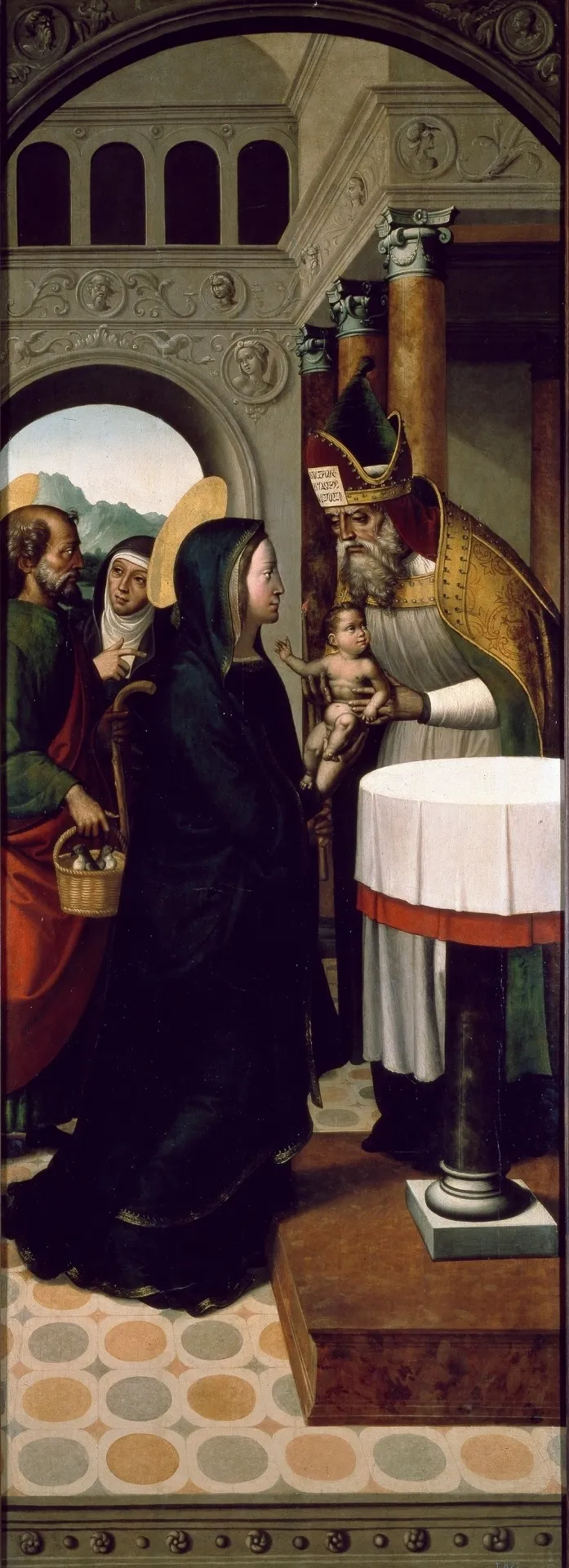
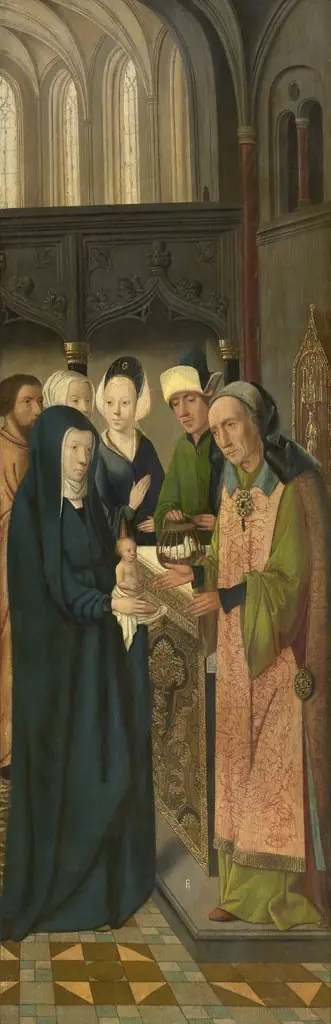
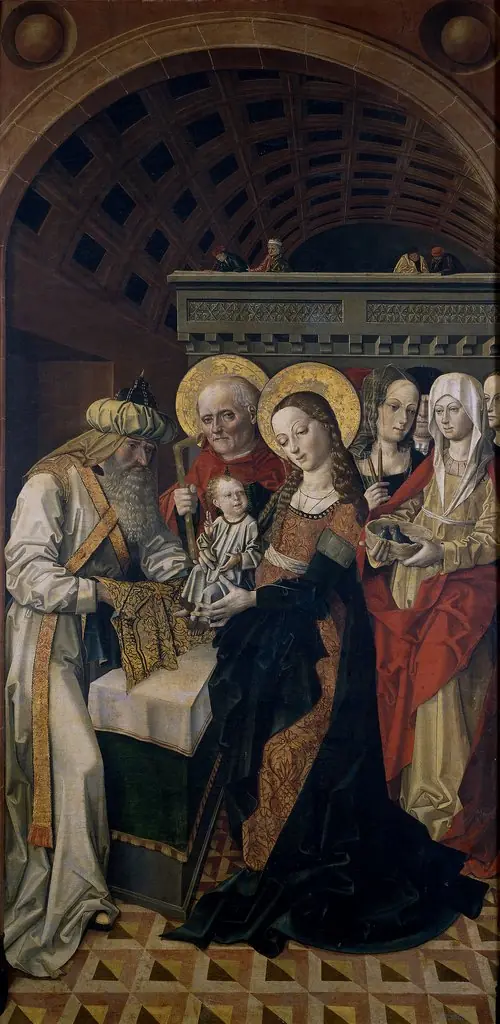
Christ presented in the Temple is an oil painting by the Mannerist artist Juan Correa de Vivar. It dates from 1530 and is held in the collection of the Museo del Prado.
About this work
Subject & Meaning
The inclusion of a basketry element references the offering of a pair of turtledoves, a traditional sacrifice for firstborn sons.
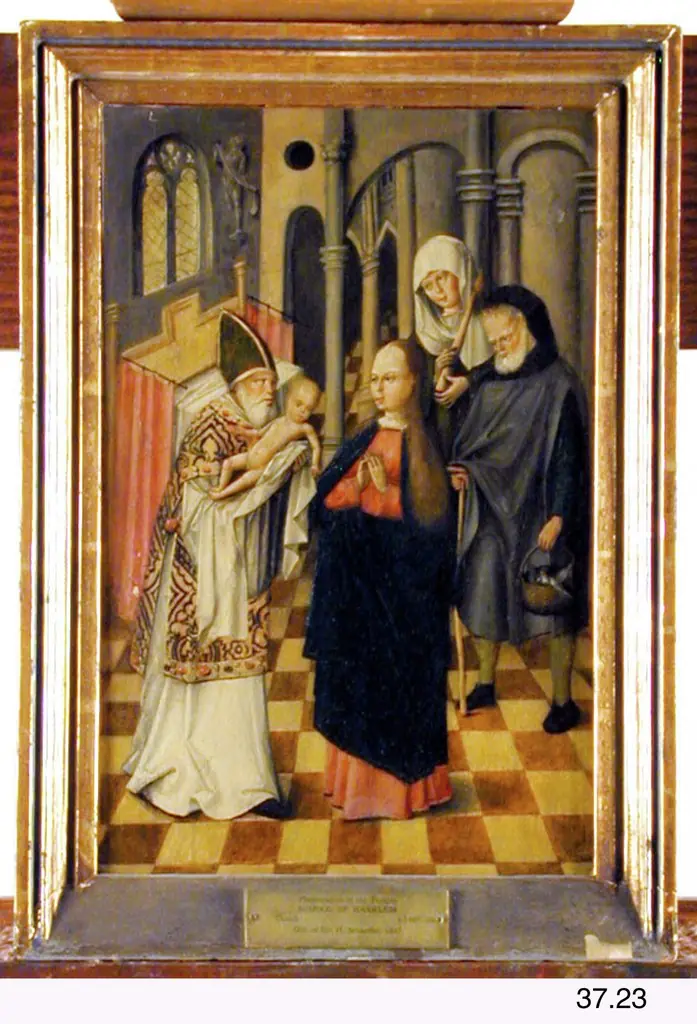
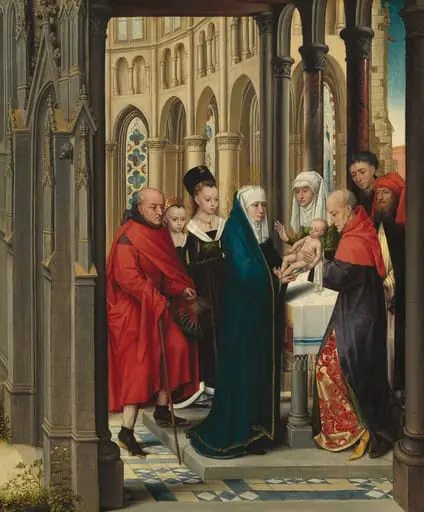
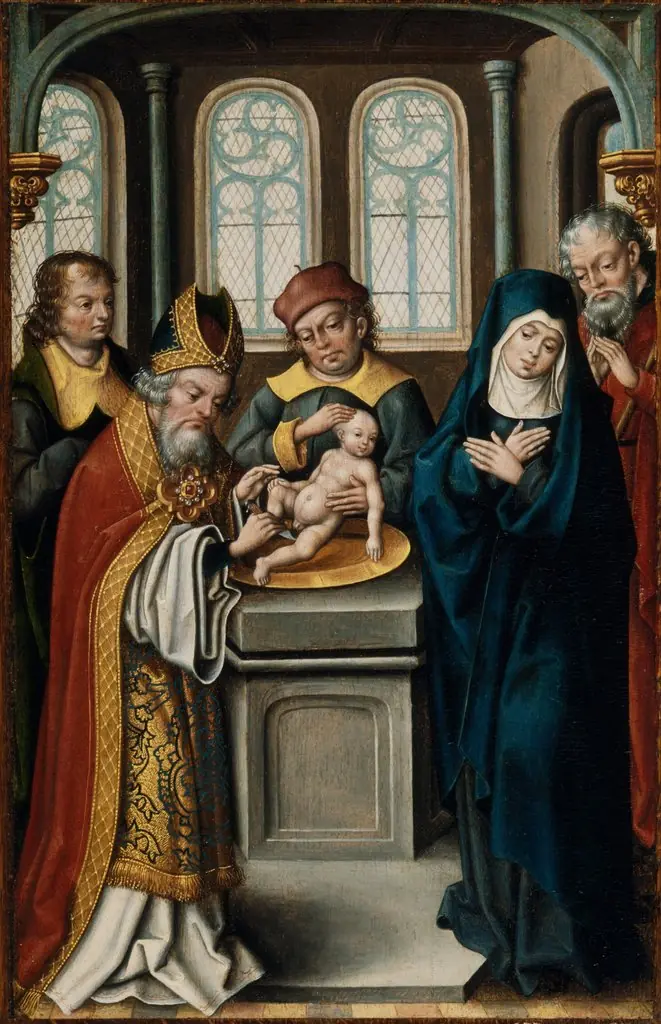
The painting portrays the moment of the Presentation of Jesus at the Temple, a scene rich in religious symbolism. Jesus is shown being presented by Mary and Joseph, fulfilling the Jewish law of purification and offering, which underscores themes of sacrifice and divine recognition. The inclusion of a basketry element references the offering of a pair of turtledoves, a traditional sacrifice for firstborn sons.
This iconography emphasizes Jesus' role as the Messiah foretold in scripture and his early connection to Jewish tradition.
Technique & Style
Juan Correa de Vivar painted Christ presented in the Temple in oil on wood panel around 1530-1533. The work measures 219 cm in height and 78 cm in width, depicting the Presentation of Jesus at the Temple with a basketry element. It belongs to the religious genre and was created using oil paint on a wooden support.
The painting's formal qualities reflect early 16th-century Spanish religious art, with a focus on devotional imagery and precise material execution. Its condition and handling are noted within the Museo del Prado's collection, where it remains housed.
History & Provenance
Juan Correa de Vivar painted "Christ presented in the Temple" in 1530 as an oil on panel work measuring 219 cm in height and 78 cm in width. The painting entered the collection of the Museo del Prado and later the Museo de la Trinidad, institutions that have jointly held it since its inception. Its subject depicts the Presentation of Jesus at the Temple, a scene rendered in religious art with basketry elements.
Juan Correa de Vivar painted Christ presented in the Temple in 1530, an oil on panel work measuring 219 cm by 78 cm. The painting belongs to the collections of the Museo del Prado and the Museo de la Trinidad and is housed in the Museo del Prado. It has been exhibited in various Prado exhibitions focusing on Spanish Renaissance religious art.
Overview
Juan Correa de Vivar’s oil on canvas, dated to 1530, portrays the biblical Presentation of Jesus at the Temple. The composition gathers several figures within an interior space that resembles a church, with a tiled floor, carved wall panels and an altar draped in white. The work is part of the collection of the Museo del Prado in Madrid.
Context
The Presentation of Jesus was a popular subject in Spanish art, reflecting Counter‑Reformation emphasis on biblical narratives that reinforced church doctrine. Correa de Vivar’s treatment aligns with contemporary devotional imagery, offering viewers a visual meditation on the themes of dedication, sacrifice, and the fulfillment of prophecy.
Artist & collection