Artwork
Pilatos lavándose las manos
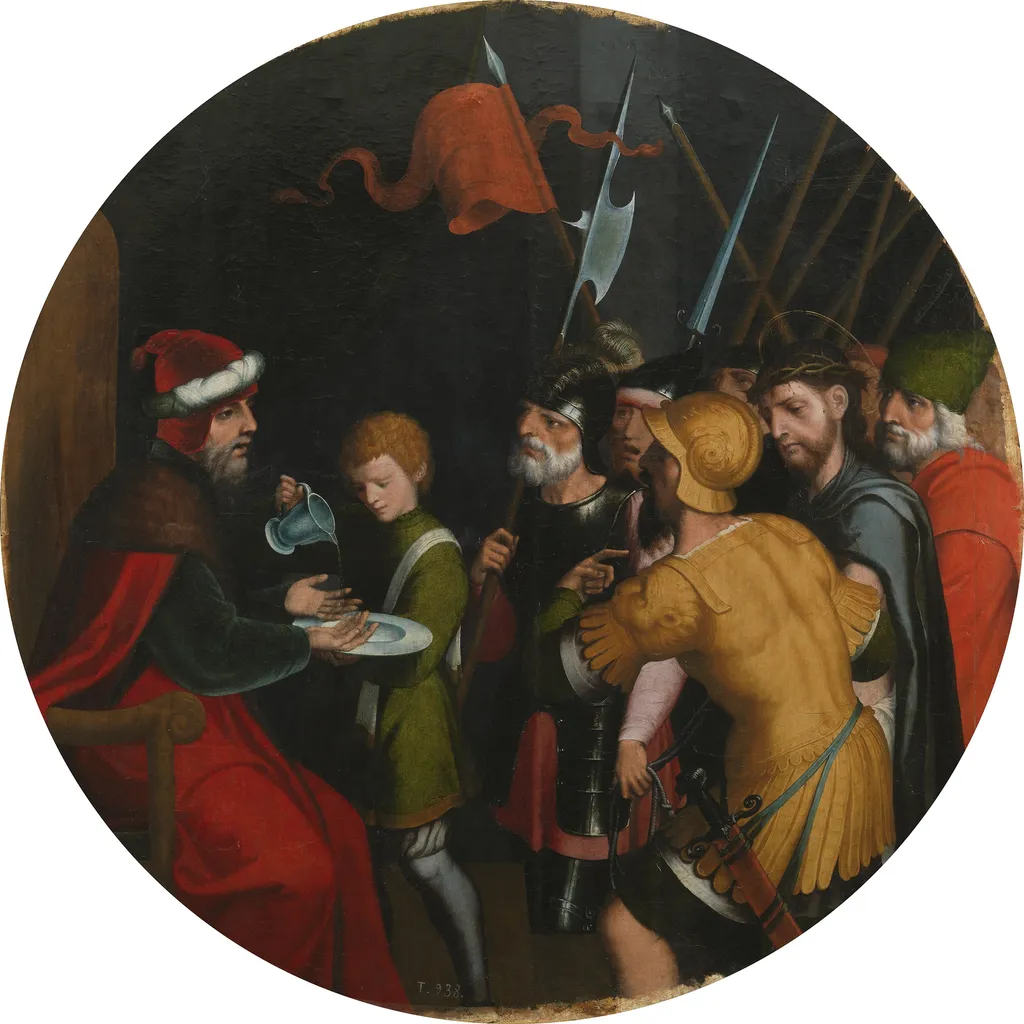
Pilatos lavándose las manos is a tempera painting by the Mannerist artist Juan Correa de Vivar. It dates from 1540 and is held in the collection of the Museo del Prado.
About this work
Subject & Meaning
These martial elements contrast with the ritual of hand-washing, potentially emphasizing the intersection of civic authority and military power in the scene.
The painting depicts the biblical episode of Pontius Pilate washing his hands to symbolize his refusal of responsibility for the execution of Jesus. While the title and narrative context explicitly reference this act of moral absolution, the visual composition includes specific details of body armor and a sword. These martial elements contrast with the ritual of hand-washing, potentially emphasizing the intersection of civic authority and military power in the scene.
The work, created in 1540 by Juan Correa de Vivar, serves as a visual meditation on the theme of innocence proclaimed through a public gesture of cleansing.
Technique & Style
Pilatos lavándose las manos is executed in tempera on a square pine panel measuring 87 cm on each side, a support and medium consistent with mid-sixteenth-century Spanish panel painting practice. The square format and use of a wooden support rather than canvas align with Correa de Vivar's working methods of the period.
The composition incorporates body armor and a sword among its depicted elements, suggesting careful rendering of metallic surfaces and reflective materials within the tempera technique. Tempera on pine typically produces a matte finish with crisp, linear detail, and the work's 1540 date places it within the early phase of Correa de Vivar's mature production.
History & Provenance
Juan Correa de Vivar created the tempera painting Pilatos lavándose las manos in 1540. Executed on pine wood, the work measures 87 by 87 centimeters. The painting's ownership history includes a period in the collection of the Museo de la Trinidad. It is currently held in the collection of the Museo del Prado.
Juan Correa de Vivar's 1540 tempera painting Pilatos lavándose las manos is part of the Museo del Prado collection and is recorded under inventory number P000668. The work has been displayed in exhibitions at the Museo del Prado, including those focusing on Spanish Renaissance art.
Overview
Created in 1540 by Spanish painter Juan Correa de Vivar, this tempera work is part of the Museo del Prado collection. The composition centers on a group of men assembled around a central figure in a vivid red robe, who holds a plate and a cup. The scene is rendered in muted tones, punctuated by a bright red banner in the background.
Context
During the mid‑1500s, Spanish art frequently depicted biblical or historical narratives with a focus on moral gravity. Although the exact episode represented here is not identified, the inclusion of armor and a ceremonial figure aligns with contemporary visual conventions for scenes of justice, loyalty, or martyrdom.
Own this work as a print
Artist & collection

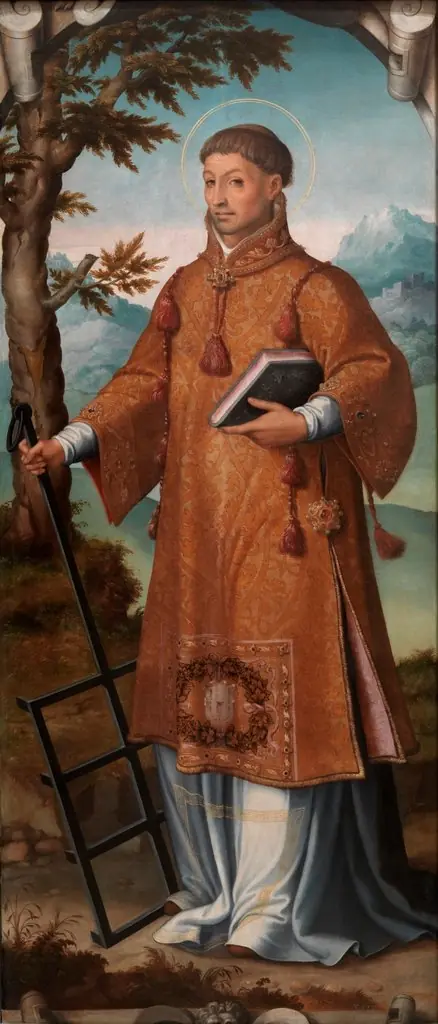
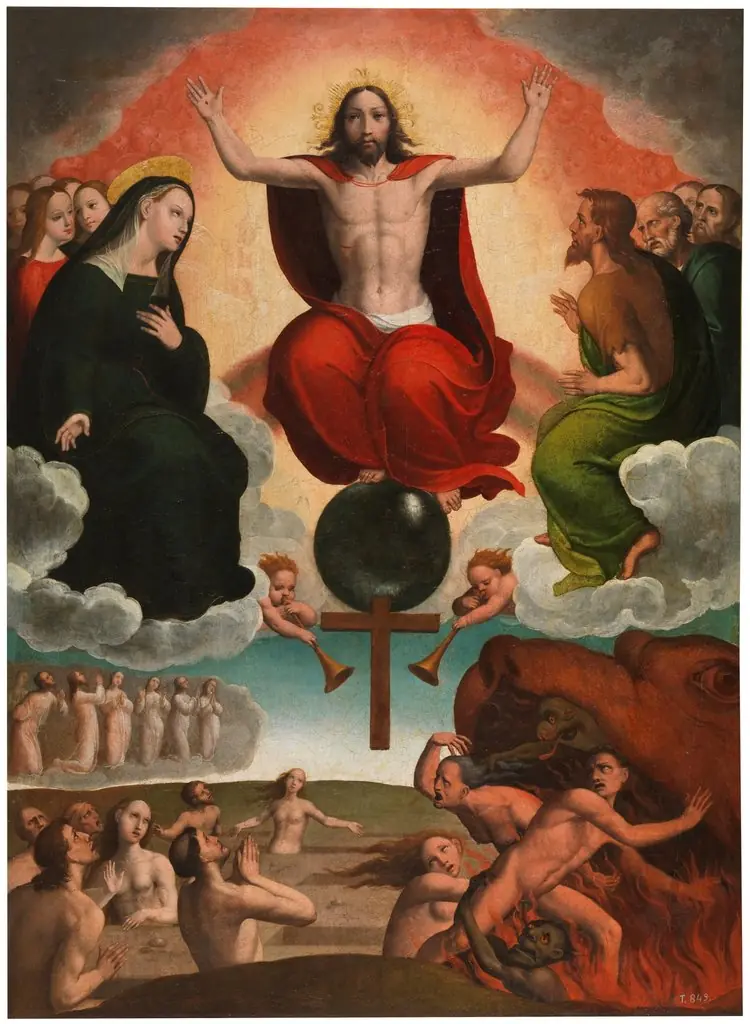
- Pilate washing his Hands
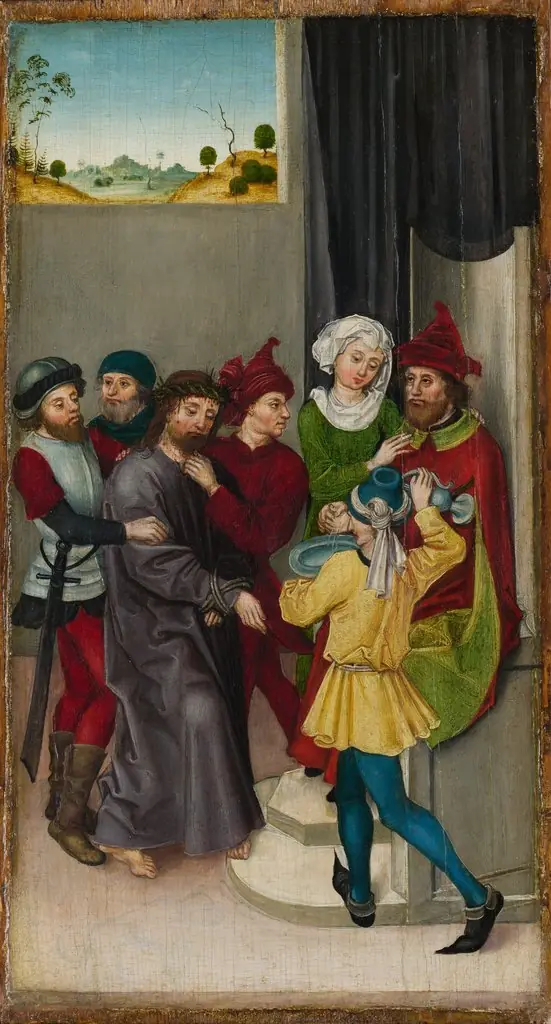 Christ before Pilate; The Resurrection
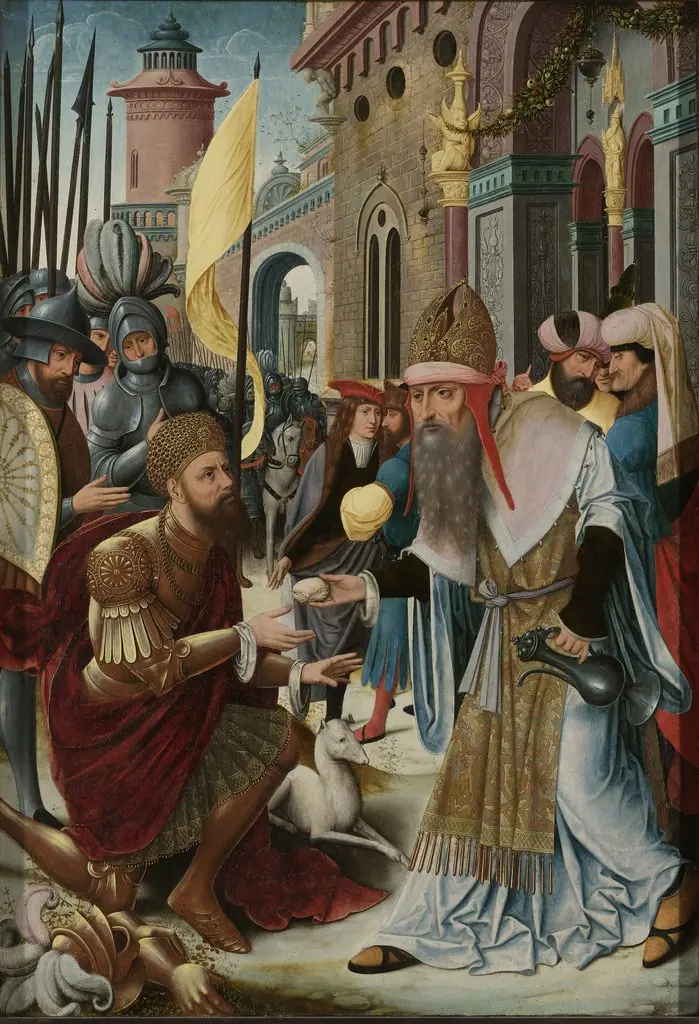 Left wing of an altarpiece with the meeting of Abraham and Melchizedek (inner wing) and Synagoga (outer wing)
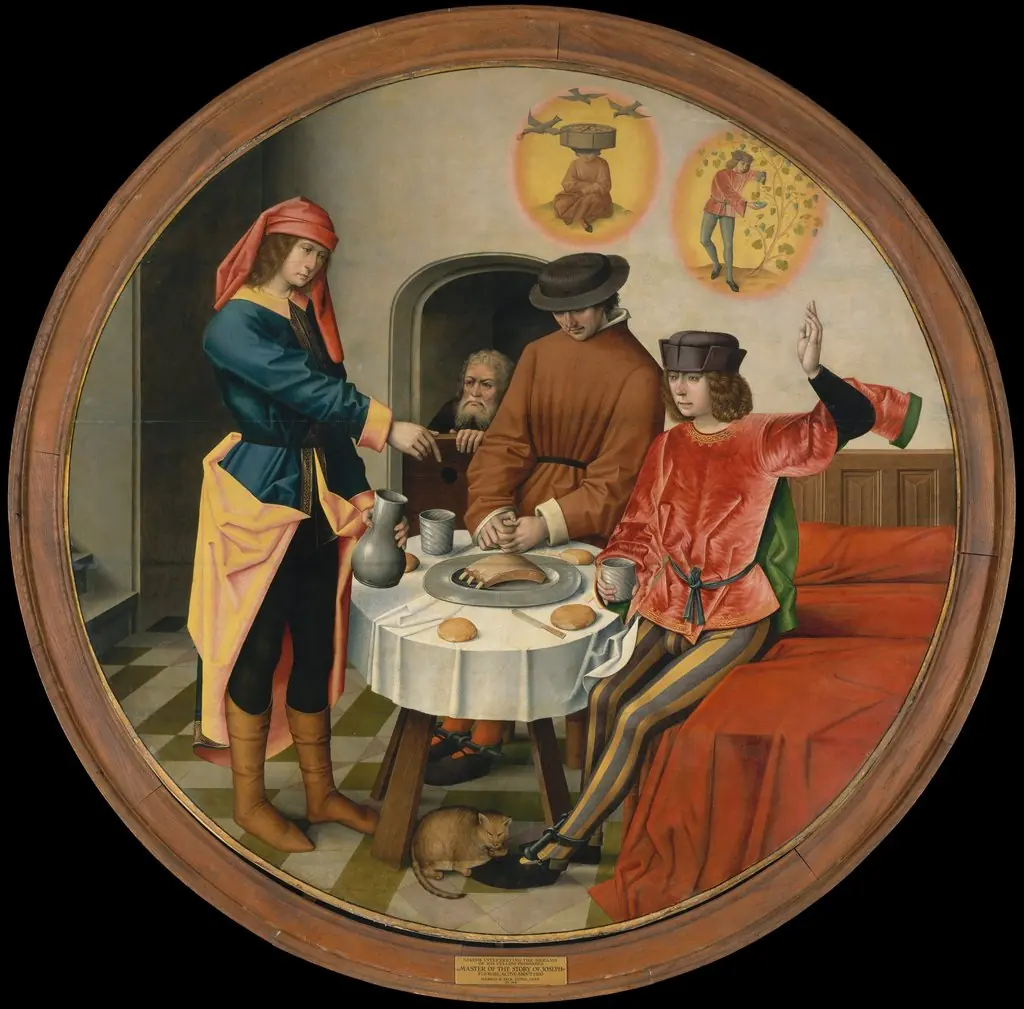 Joseph Interpreting the Dreams of His Fellow Prisoners
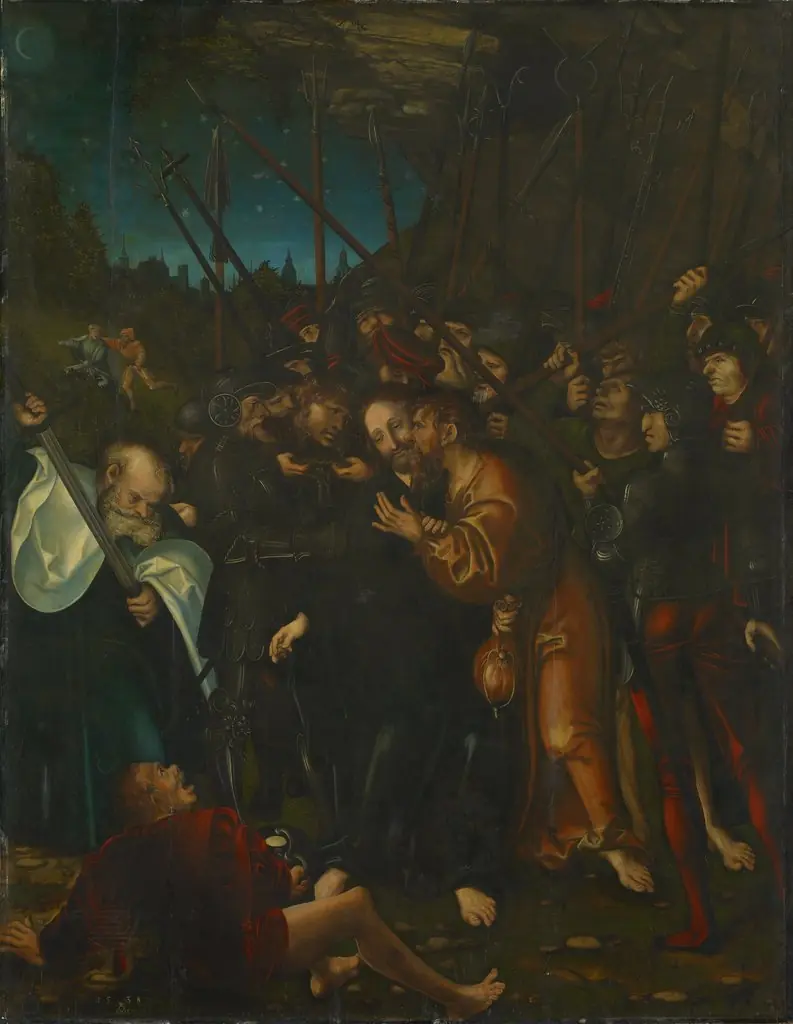 Christ's Arrest
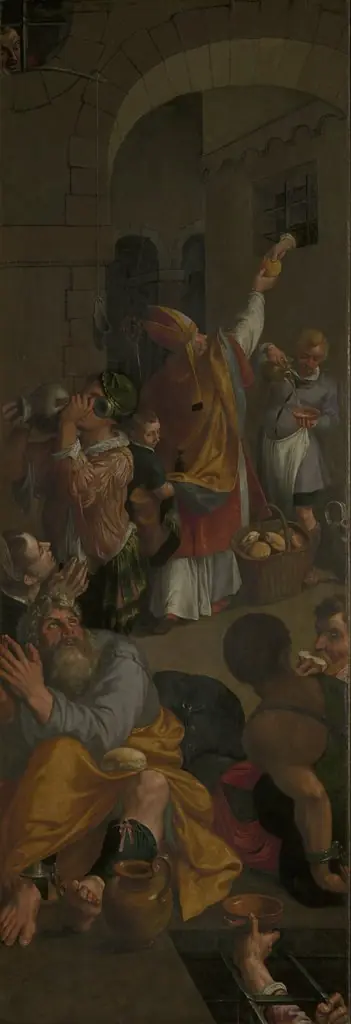 Saint Eligius visits the prisoners
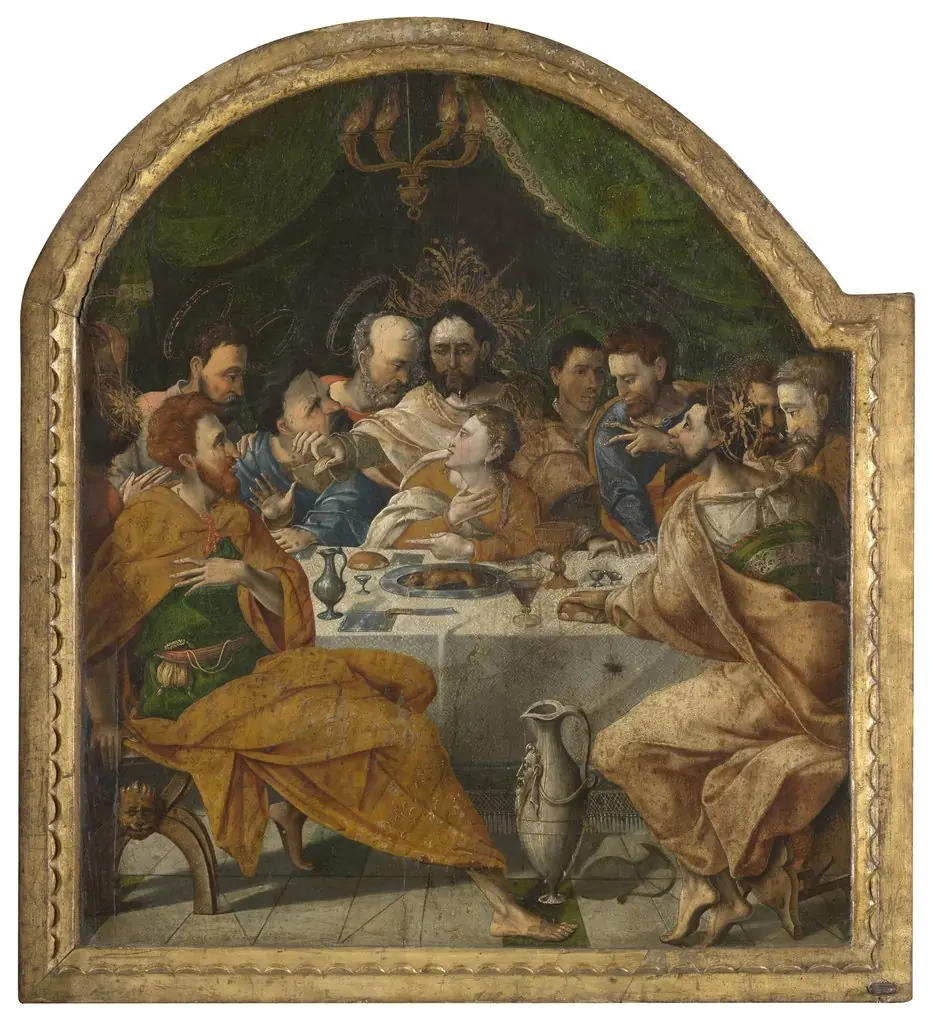 The Last Supper
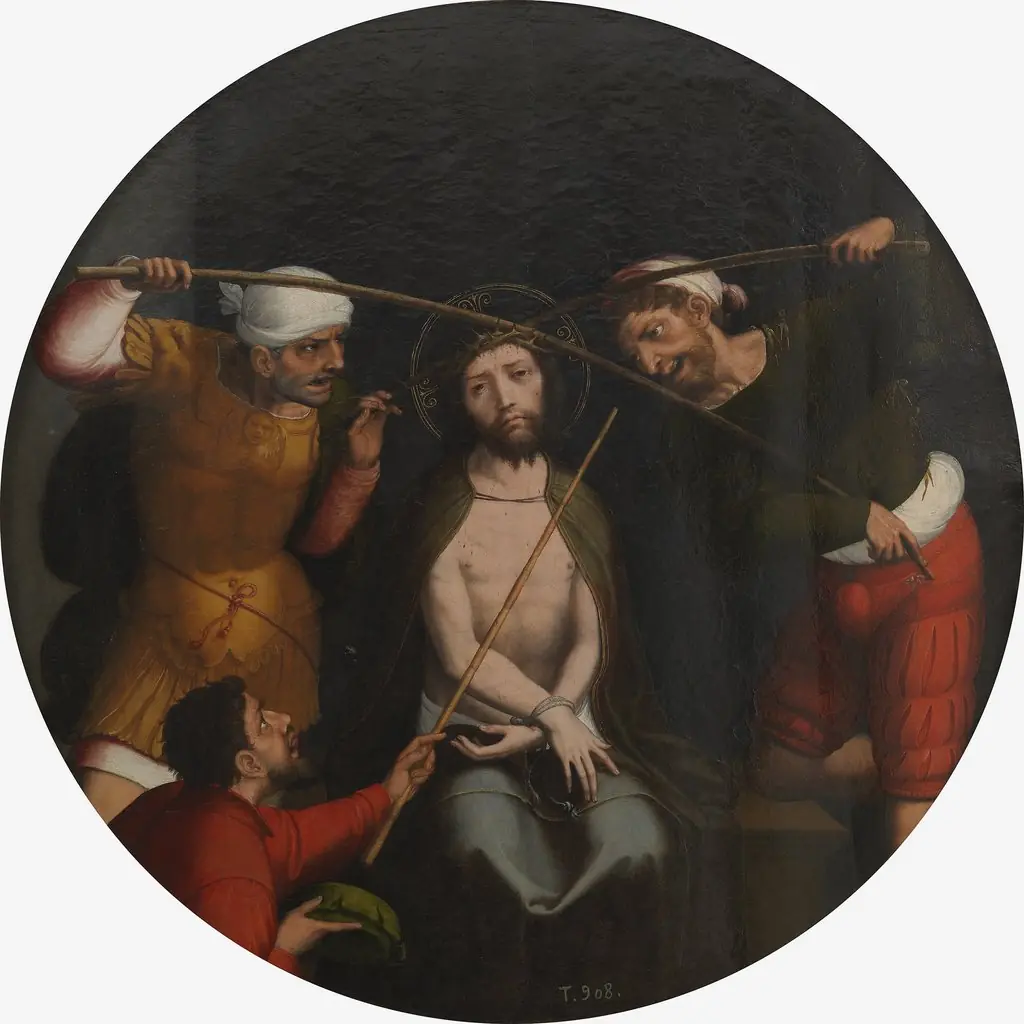 The Crowning with Thorns
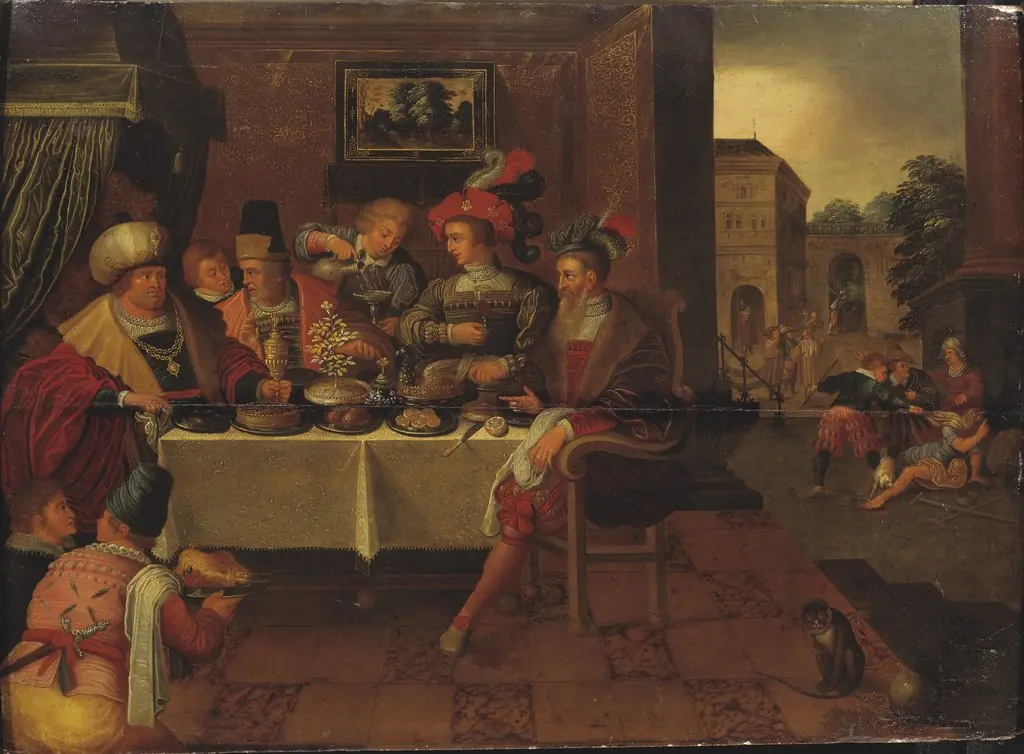 The Rich Man and Lazarus
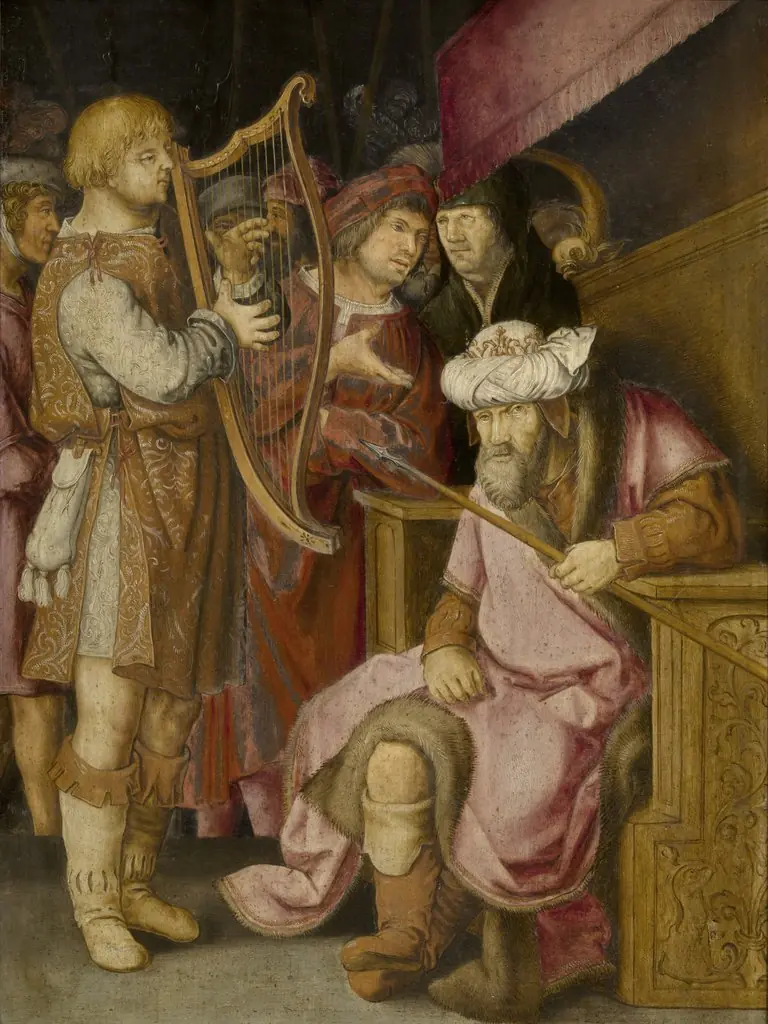 David Playing his Harp for Saul
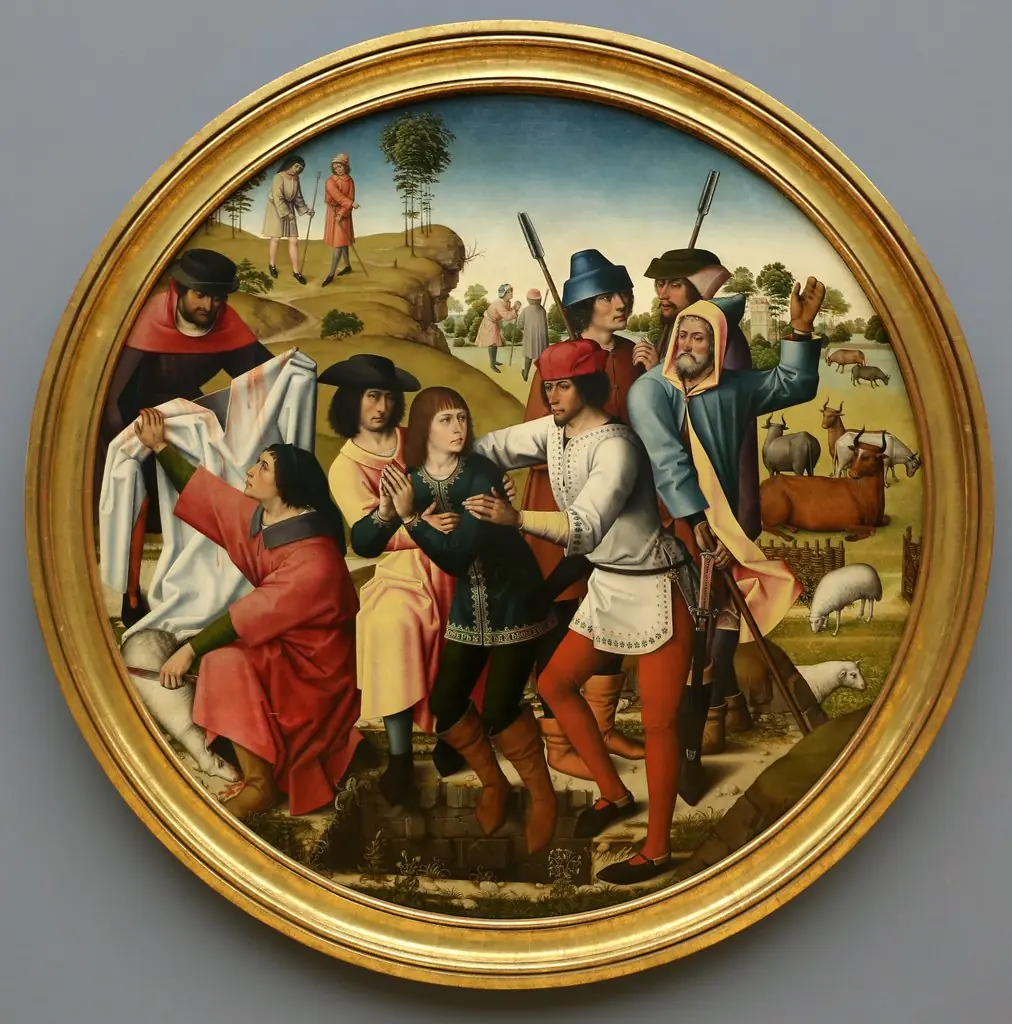 Joseph's Brothers Throw Him Into the Pit
 The adoration of the magi