Artwork
Niagara Falls
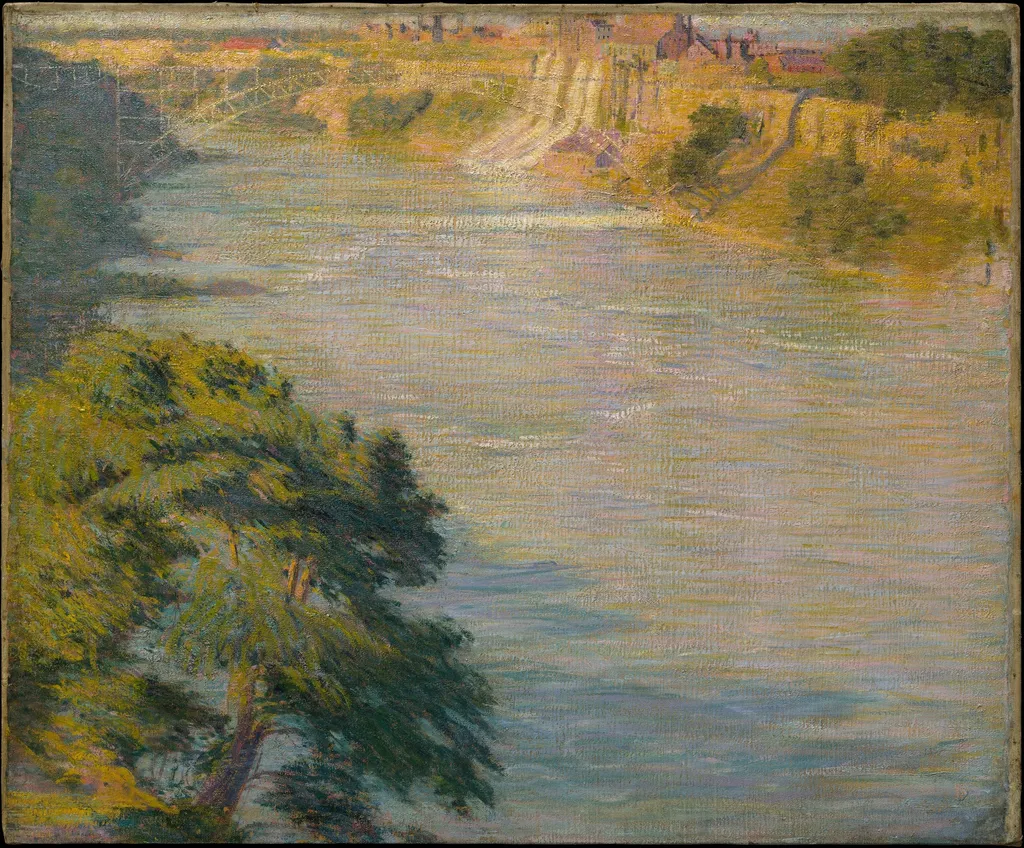
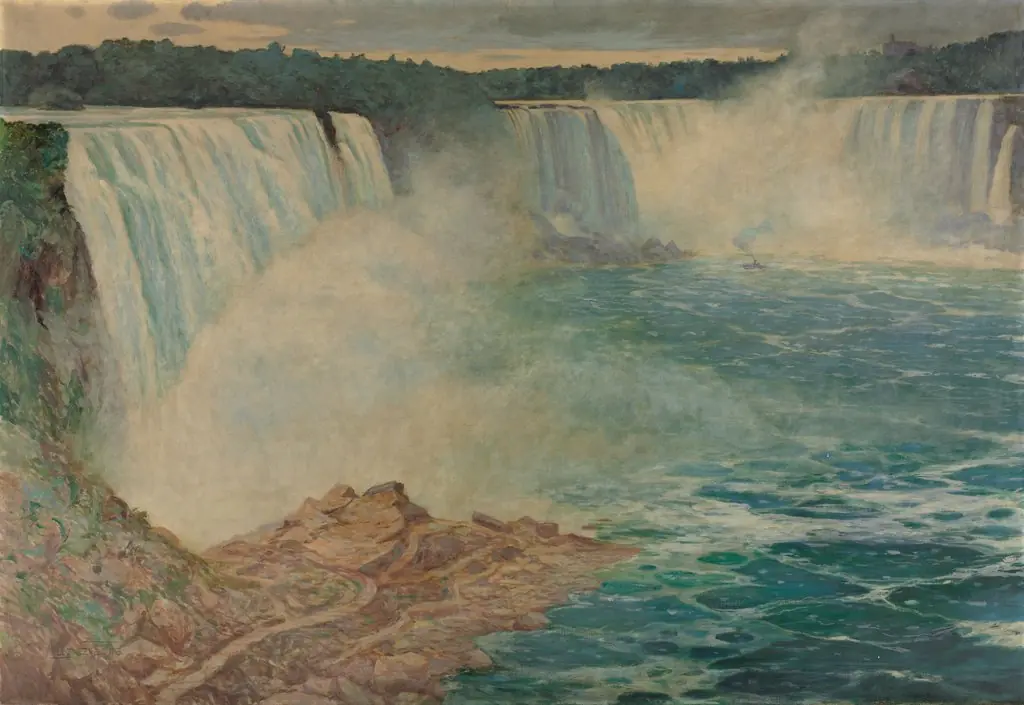
Niagara Falls is an oil painting by the American Impressionist artist Philip Leslie Hale. It dates from 1902 and is held in the collection of the Metropolitan Museum of Art.
About this work
Subject & Meaning
The canvas presents the famous cataract within a composed vista that includes a foreground tree and a bridge, situating the waterfall amid a broader landscape context. By framing the falls with these elements, the work conveys the grandeur and sublime character of the site, reflecting early twentieth‑century American interest in capturing iconic natural scenery through a refined, representational approach. The painting thus functions both as a topographical record and as an artistic meditation on the power of the falls, using the surrounding flora and structures to enhance the sense of depth and narrative within the scene.
Technique & Style
Stylistically, the piece functions as a landscape painting that depicts the waterfall alongside natural elements such as trees and a bridge.
Philip Leslie Hale's Niagara Falls, executed in 1902, is an oil painting on canvas support. The work measures 63.5 centimeters in height and 76.2 centimeters in width. Stylistically, the piece functions as a landscape painting that depicts the waterfall alongside natural elements such as trees and a bridge.
The medium of oil paint allows for the rendering of these specific landscape features within the composition. The artwork is currently held in the collection of the Metropolitan Museum of Art.
History & Provenance
Philip Leslie Hale painted Niagara Falls in 1902, an oil on canvas work measuring 63.5 × 76.2 cm. The painting is classified as a landscape and depicts a tree, bridge, and waterfall. It was created in the early 20th century and remains in the collection of the Metropolitan Museum of Art, which acquired the work shortly after its completion. No documentation of a specific commission or sale prior to museum acquisition is recorded in the available sources.
The work’s creation history is thus defined by Hale’s authorship, the 1902 date, and its subsequent inclusion in the museum’s holdings.
Philip Leslie Hale's 1902 oil painting Niagara Falls is held in the collection of the Metropolitan Museum of Art in New York. The work, executed on canvas, measures 63.5 cm in height and 76.2 cm in width. While the museum holds the piece, the provided sources do not list a specific inventory or accession number for the artwork.
Furthermore, the available documentation does not contain details regarding the painting's exhibition history or specific dates it has been displayed to the public. The collection entry identifies the subject matter as a landscape featuring a tree, a bridge, and a waterfall, consistent with the title.
Context
Philip Leslie Hale's 1902 oil on canvas, Niagara Falls, measures 63.5 × 76.2 cm and portrays a tree, a bridge and the waterfall within a landscape composition. The work is classified as a painting and is part of the Metropolitan Museum of Art's collection, indicating its acceptance into a major institutional narrative of American art. Its dimensions and detailed rendering reflect the early twentieth‑century interest in natural scenery as a subject for nuanced interpretation.
The painting’s presence in a prominent museum context underscores its significance within Hale’s oeuvre and the broader development of landscape painting in the United States.
Overview
Philip Leslie Hale's Niagara Falls, painted in 1902, is an oil on canvas work representative of American Impressionism. This landscape captures the renowned natural wonder, incorporating a waterfall, a bridge, and surrounding trees. The painting is part of the permanent collection at The Metropolitan Museum of Art, offering insight into early 20th-century American landscape painting and the artist's distinctive approach to the genre.
Own this work as a print
Artist & collection

Artist
Philip Leslie Hale (1865–1931) was an American Impressionist artist, writer and teacher. His work was part of the painting event in the art competition at the 1932 Summer Olympics.