Artwork
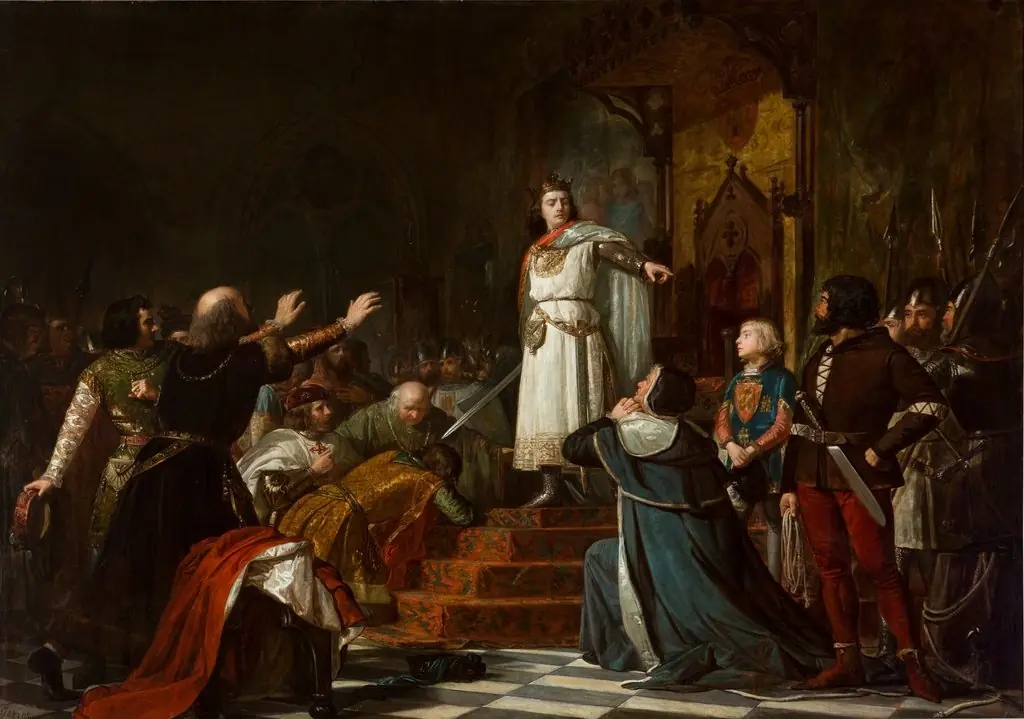
Ausias March leyendo sus trovas al Príncipe de Viana
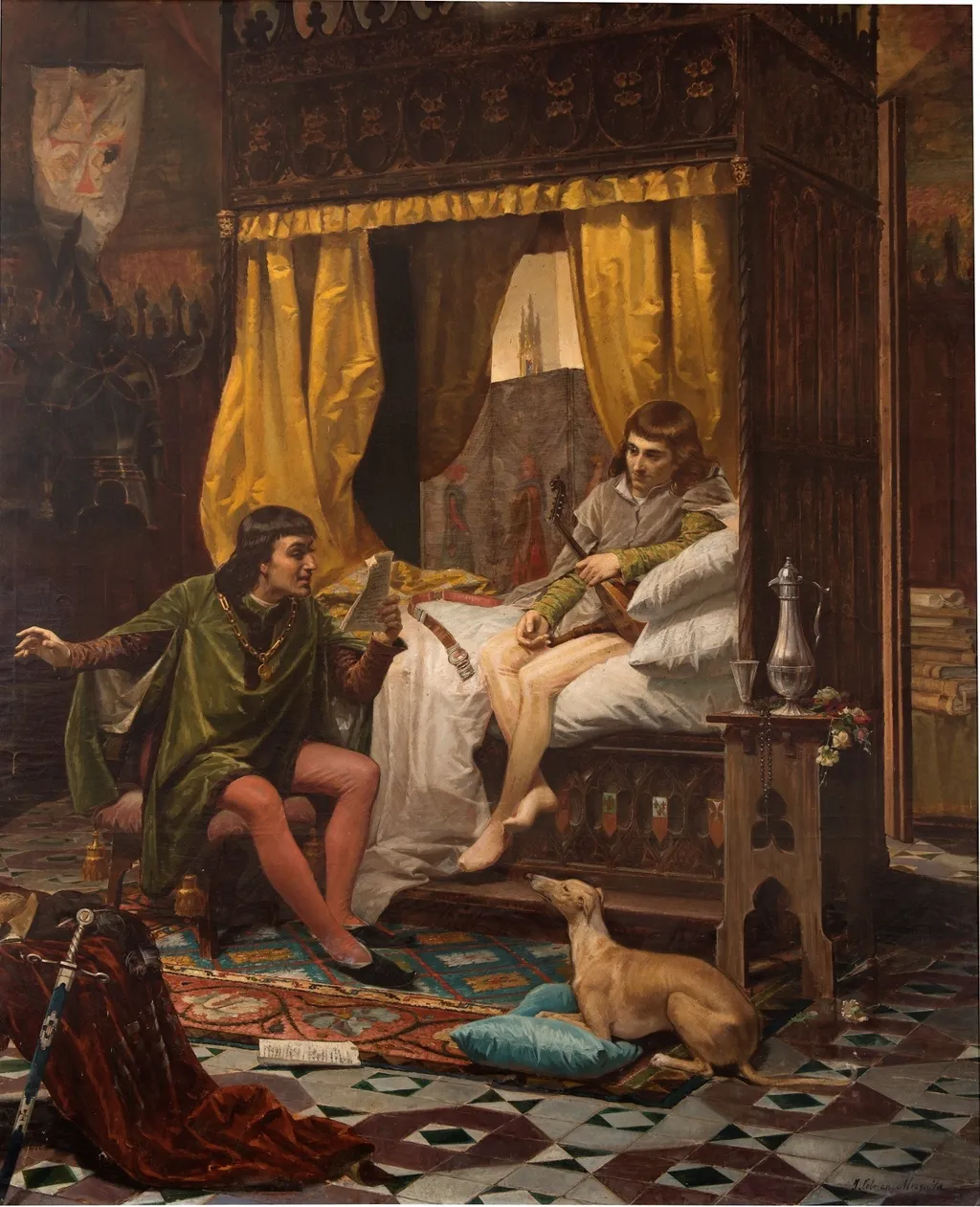
Ausias March leyendo sus trovas al Príncipe de Viana is an oil painting by the Post-Impressionist artist Julio Cebrián Mezquita. It dates from 1892 and is held in the collection of the Museo del Prado.
About this work
Technique & Style
The canvas measures 359 cm in height by 295 cm in width, giving the work a markedly vertical orientation suited to its multi-figure, narrative composition.
Ausias March leyendo sus trovas al Príncipe de Viana is executed in oil paint on canvas, a standard support for late nineteenth-century Spanish academic painting. The canvas measures 359 cm in height by 295 cm in width, giving the work a markedly vertical orientation suited to its multi-figure, narrative composition.
The iconographic elements recorded for the painting include a sword, a book, and a bed, suggesting a carefully arranged interior scene in which attributes of courtly and literary life are deployed as compositional anchors. The handling is consistent with the academic oil technique of the period, in which oil-bound pigments are built up on a primed canvas to model figures and drapery.
No specific information about the painting's current condition, surface state, or stylistic classification beyond its medium and dimensions is documented in the available sources.
History & Provenance
The work was created in 1884 by Julio Cebrián y Mezquita as an oil painting on canvas, commissioned to portray the poet Ausias March reciting verses before the Prince of Viana. It entered the collection of the Museo del Prado and was subsequently displayed at the University of Santiago de Compostela, where it remains part of the institutional holdings.
The painting measures 359 cm by 295 cm and depicts a sword, a book, and a bed alongside the central figure.
Its provenance is documented from its inception, with records indicating ownership by the Museo del Prado following its creation.
Context
The painting was created in 1884 by Julio Cebrián Mezquita, depicting the poet Ausias March reading verses before the Prince of Viana, and is part of the Museo del Prado's collection displayed at the University of Santiago de Compostela, reflecting historical engagements with literary themes in 19th-century Spanish art
Scholarly interpretations highlight its narrative complexity and symbolic use of objects such as the sword and book, situating it within broader discussions of Romantic-era historical consciousness in Spain
Overview
Created in 1892 by Spanish painter Julio Cebrián Mezquita, this oil on canvas is part of the Prado Museum’s collection. The composition captures an interior scene illuminated by a single source of light, revealing a richly appointed chamber with dark wooden walls, gilded trim, and heavy drapery that frames a distant, muted landscape.
Subject & Meaning
The work presents two male figures within the same room. One, dressed in green, is seated on the floor absorbed in a small book, while the other reclines on a bed covered with white linens, a sword held loosely in his hand. A dog lies nearby, and a table bears a pitcher and glass, suggesting a moment of quiet leisure or contemplation.
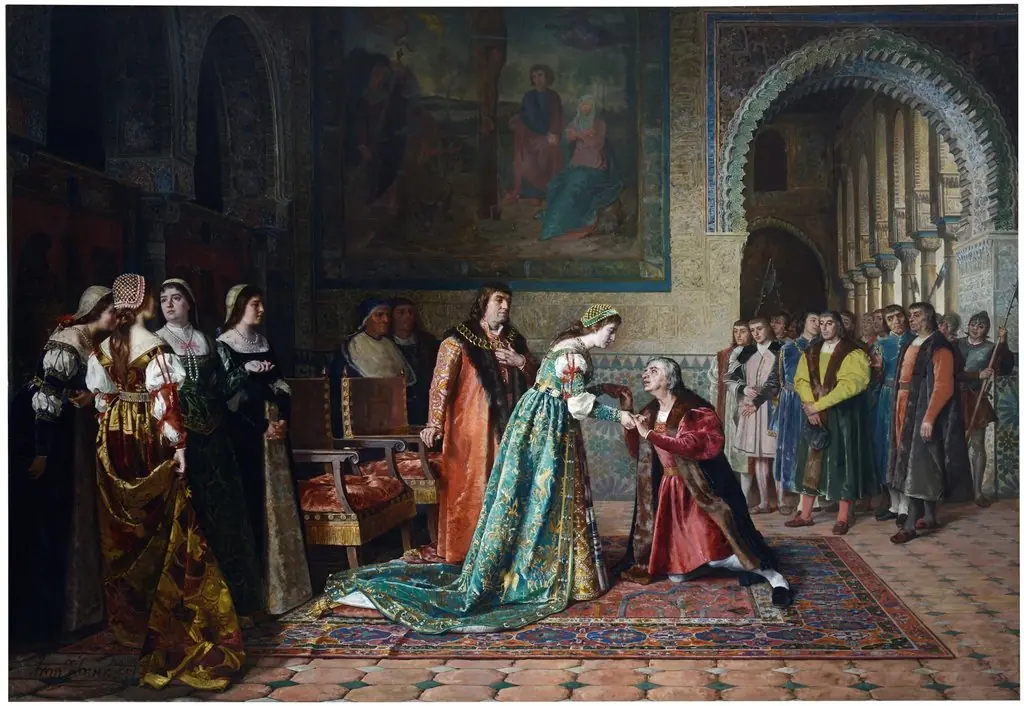
Own this work as a print
Artist & collection

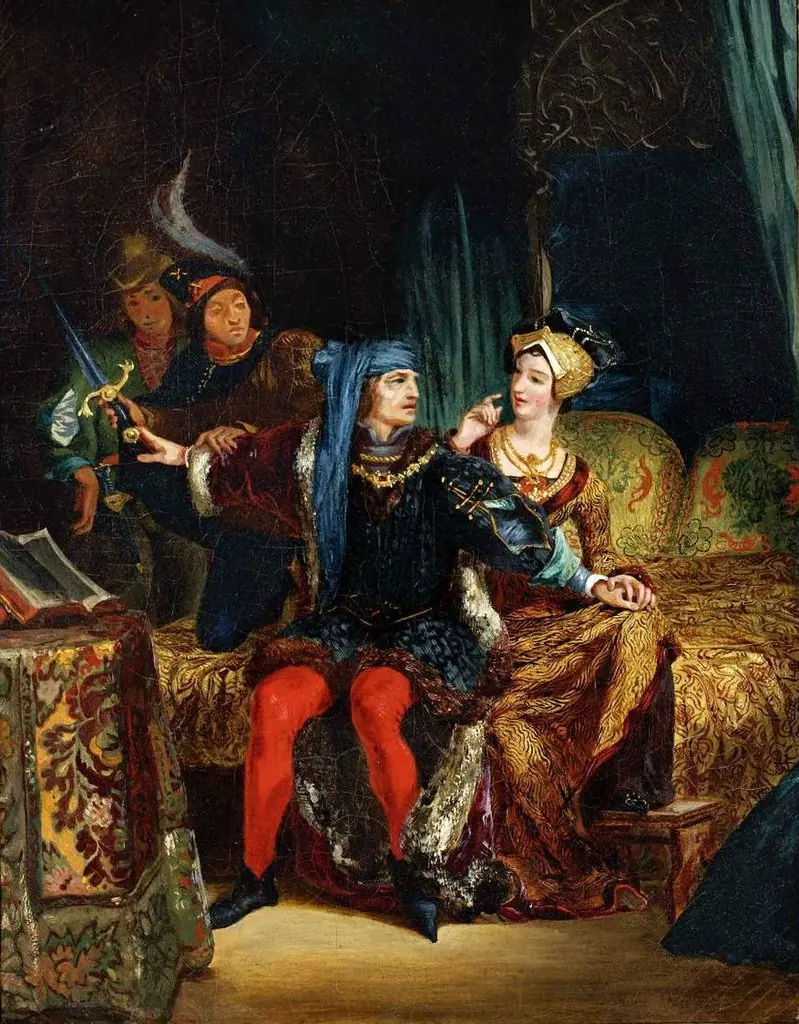 Charles VI et Odette de Champdivers
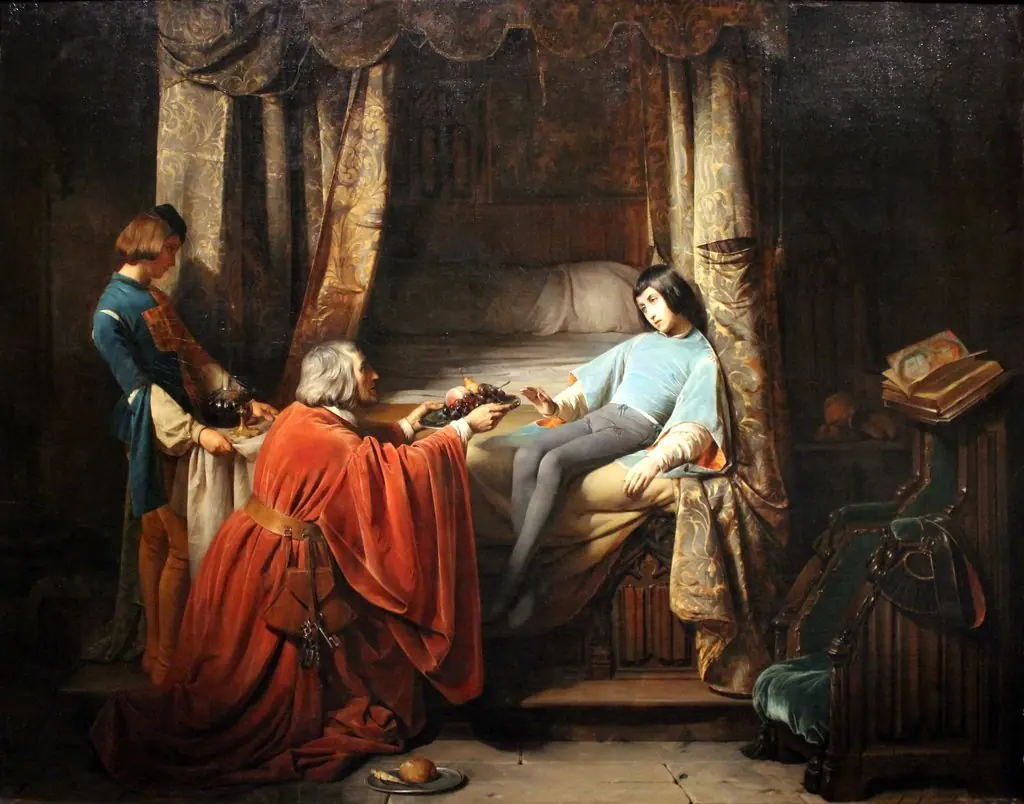 Le Jeune Gaston, dit l'ange de Foix
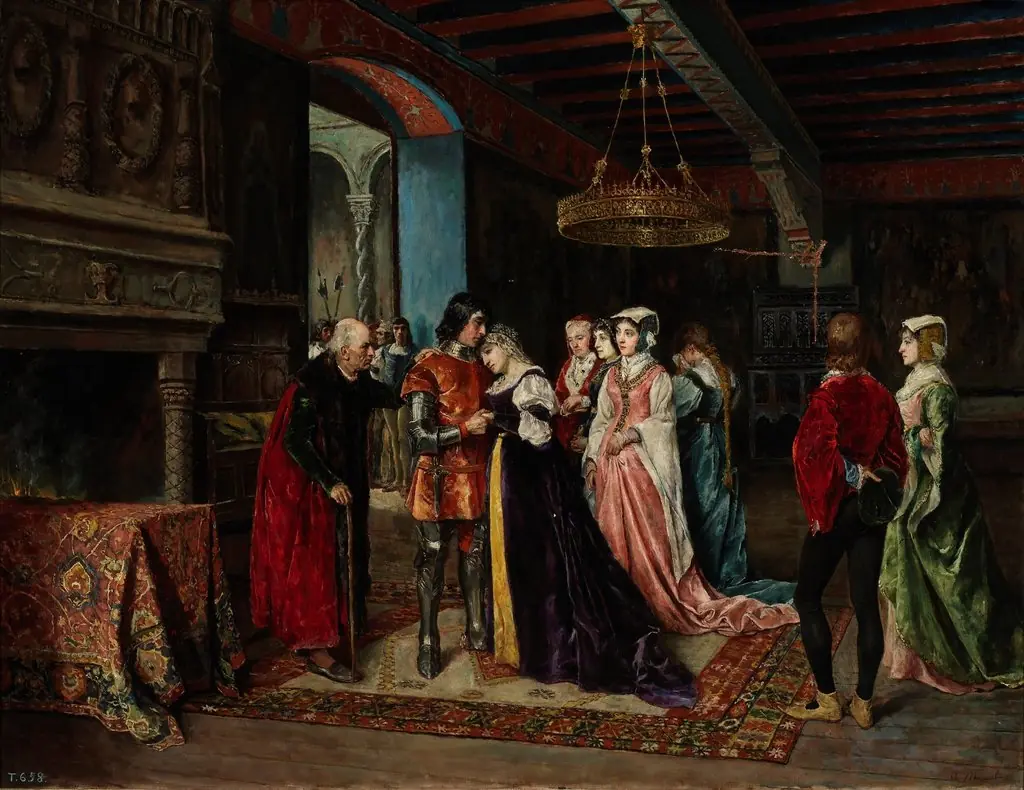 La despedida
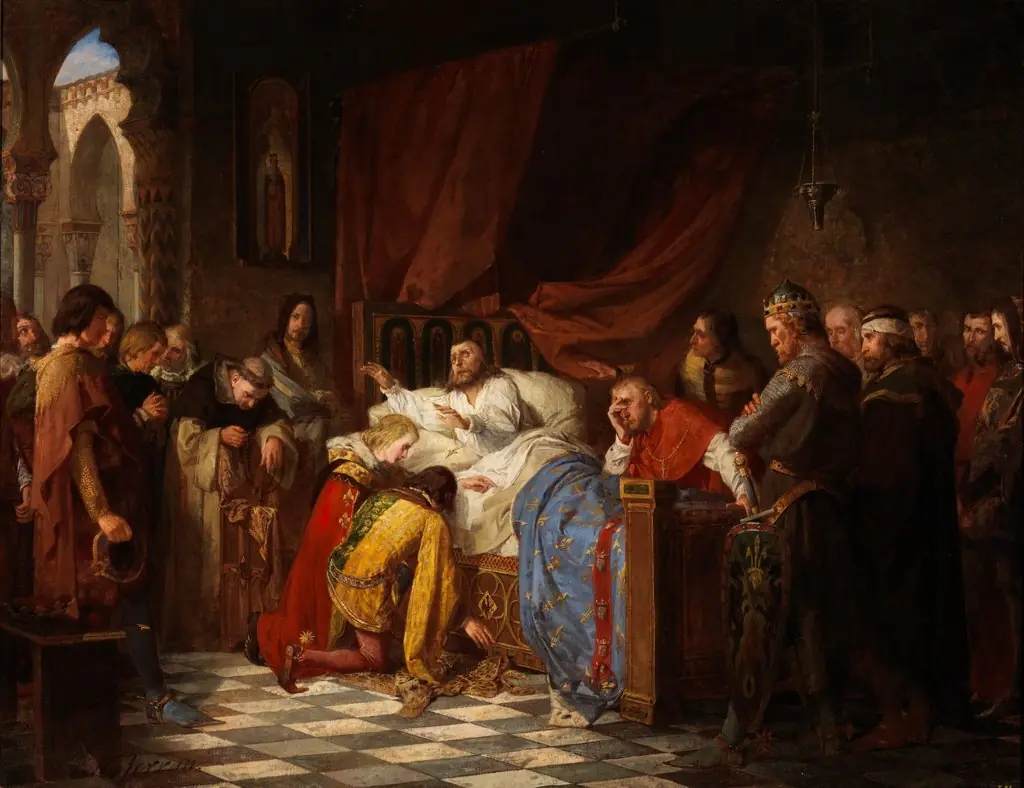 Felipe III de Francia moribundo bendiciendo a sus hijos
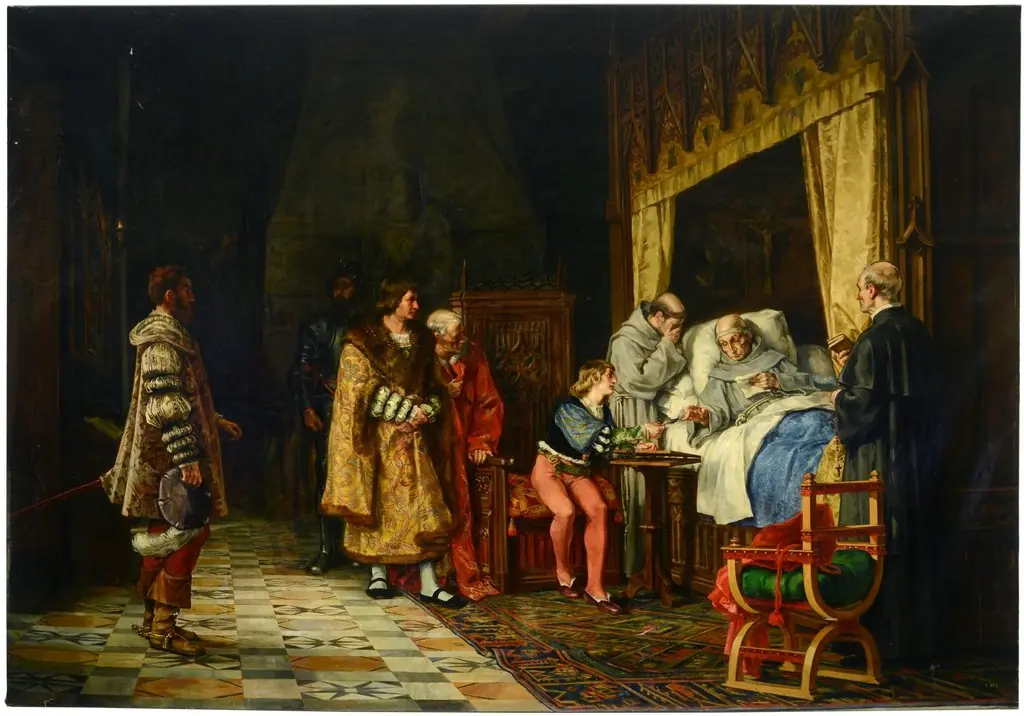 Mensaje de Carlos I al cardenal Cisneros (1517)
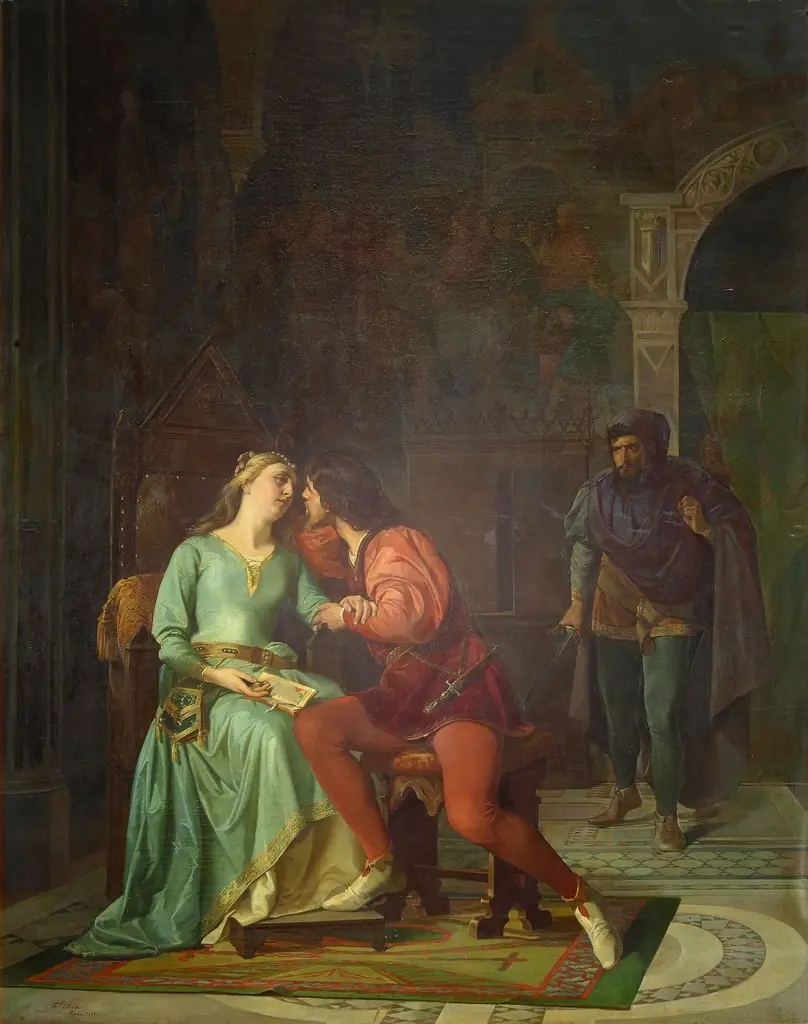 Francisca de Rímini
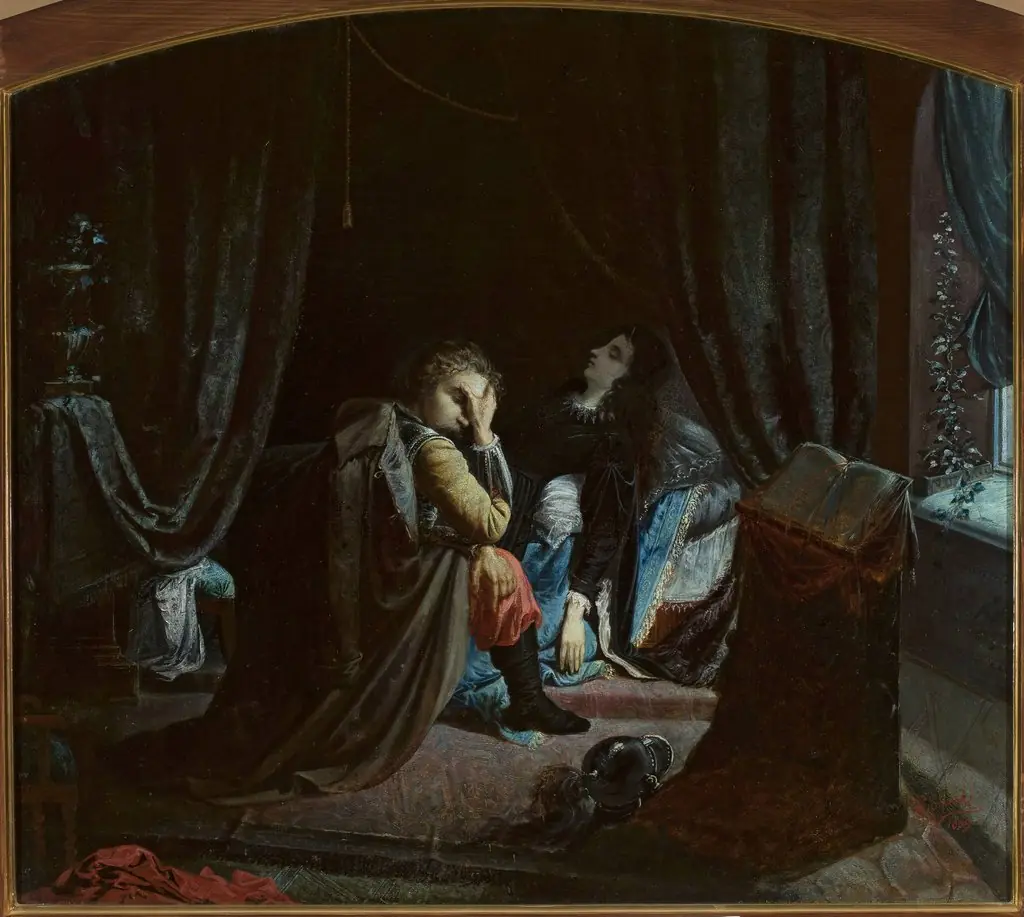 Death of Maria, illustriation to the poem by A. Malczewski
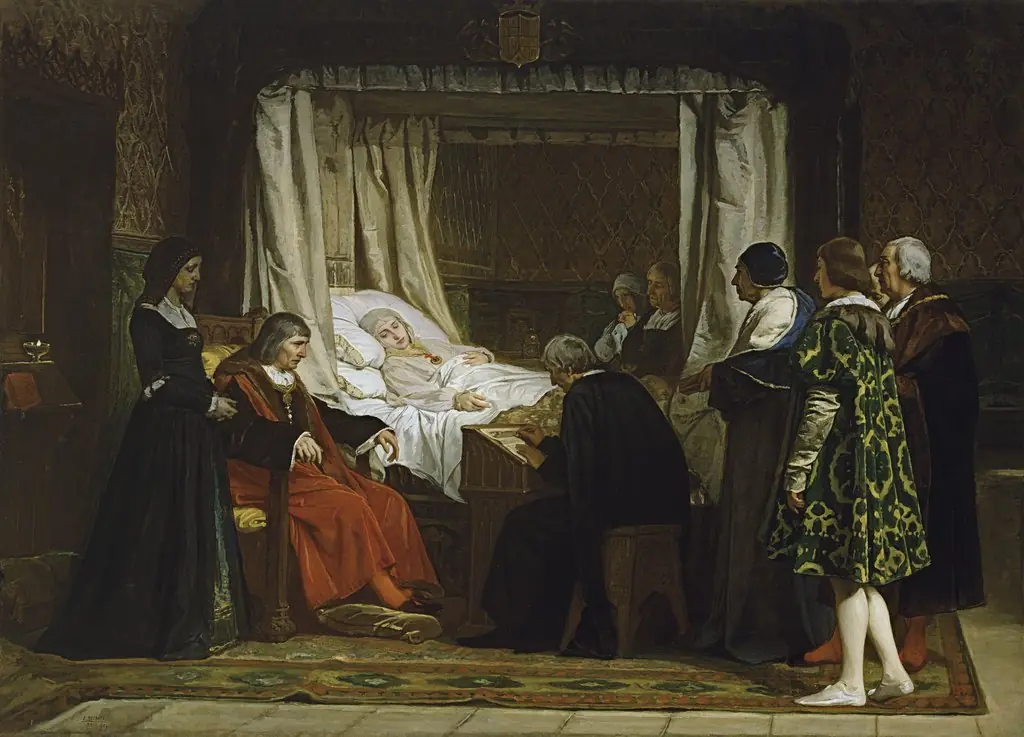 Queen Isabel la Católica dictating her last will and testament
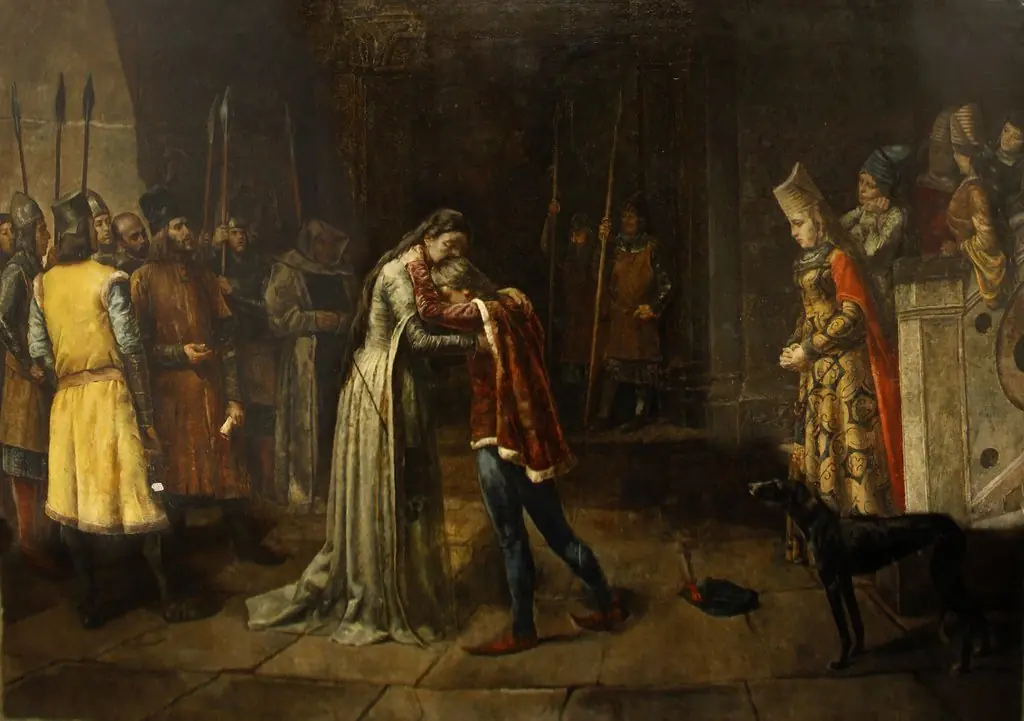 La última despedida
 Episodio del reinado de don Enrique III de Castilla llamado el Doliente cuando al día siguiente de haber tenido que empeñar su gabán para comer corrige el orgullo y desmanes de los señores y ricoshomes de Castilla