Artwork
Democritus
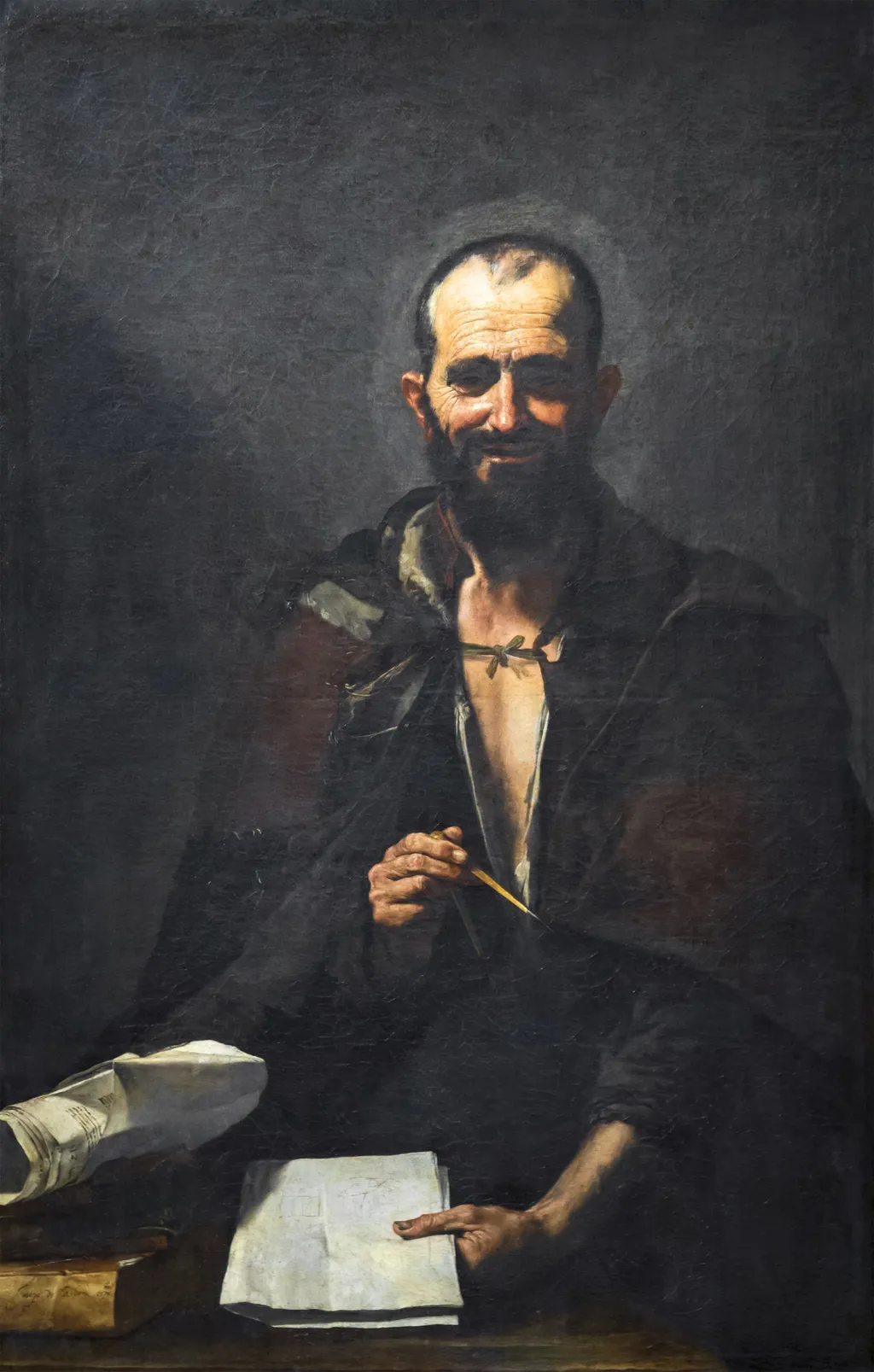
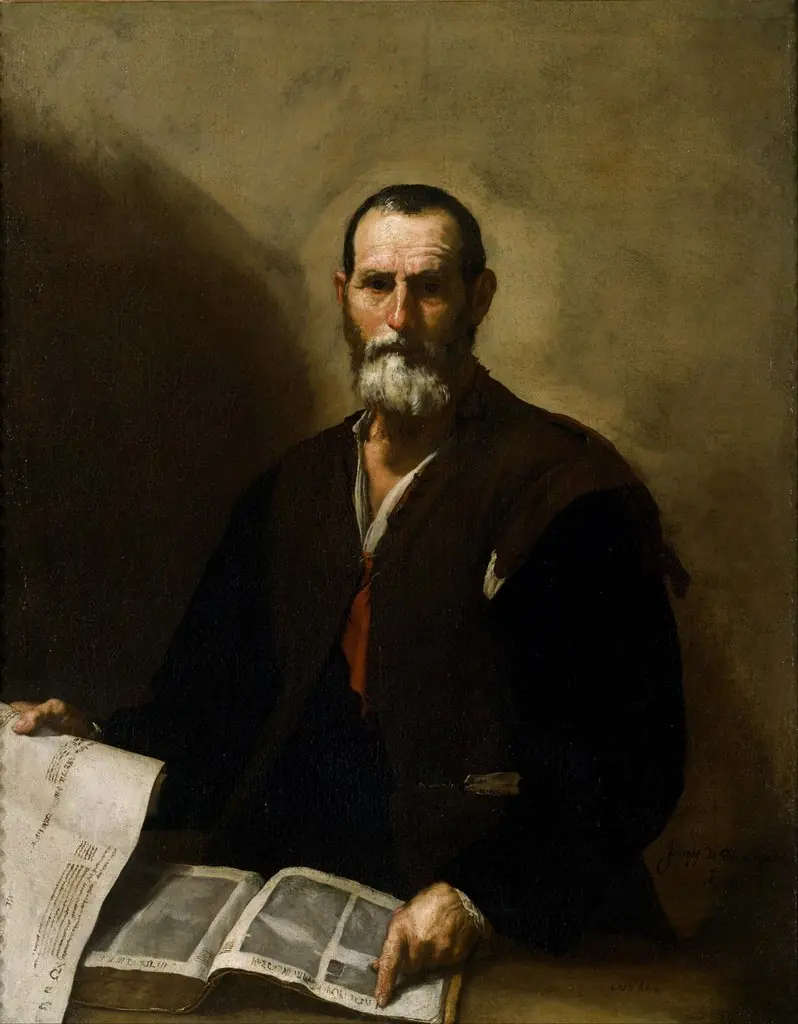
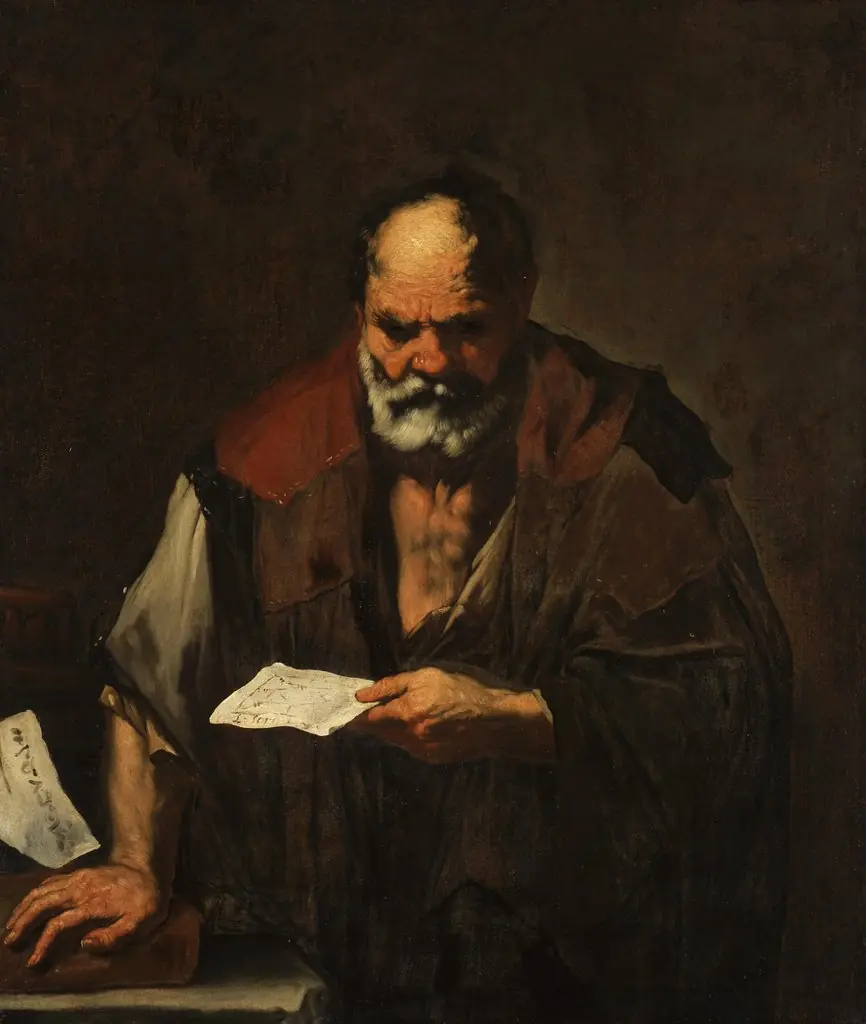
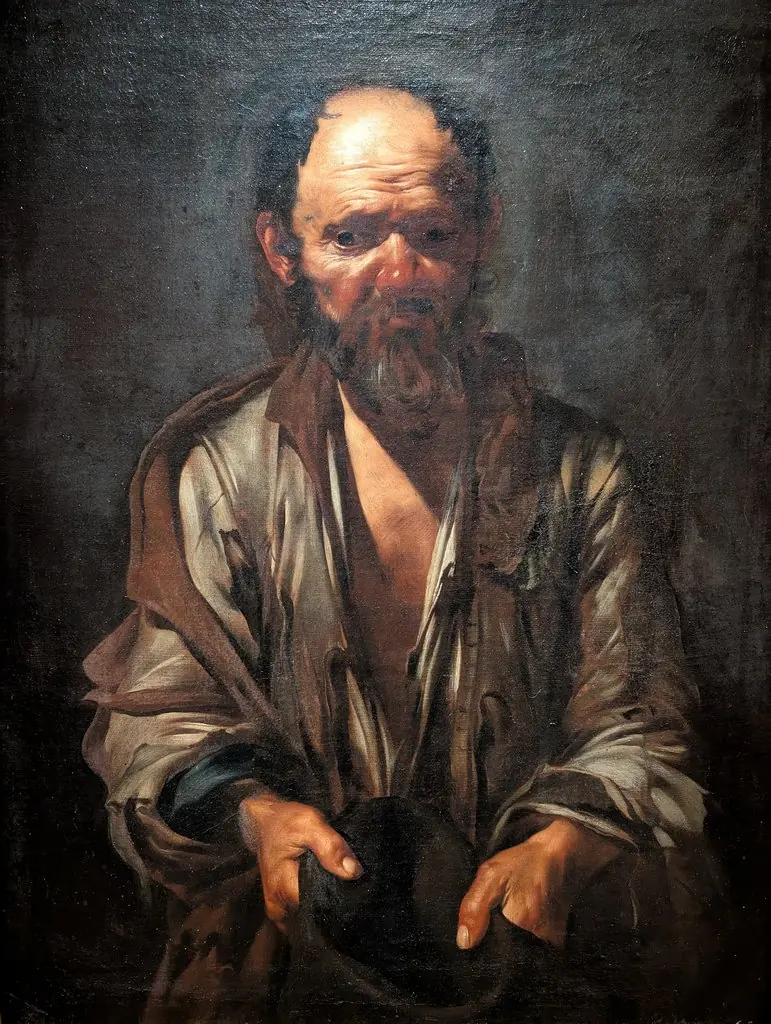
Democritus is an oil painting by the Early Baroque Italian artist Jusepe de Ribera. It dates from 1630 and is held in the collection of the Museo del Prado.
About this work
Subject & Meaning
The painting depicts the ancient Greek philosopher Democritus, traditionally nicknamed "the laughing philosopher" due to his association with cheerfulness and mirth.
Ribera portrays him as a ragged, half-length figure holding a compass in his right hand and sheets of paper with geometric diagrams in his left, attributes that initially suggested Archimedes but are now widely linked to Democritus’s reputation for rational inquiry and scientific curiosity. The philosopher’s pronounced smile, deeply lined face, and bony hands anchor the composition, while raking light from the left and a subtle highlight around the head isolate the figure against a neutral background, underscoring his contemplative yet earthy humanity.
Scholarly reassessment since 1962 has favored Democritus over Archimedes, emphasizing the comic tradition tied to his image and the painting’s place within Ribera’s early series of "Ragged Philosophers" commissioned by the Duke of Alcalá.
Technique & Style
The composition focuses on the philosopher's smiling expression and the geometric symbols held in his left hand, while the right hand grips a compass.
Executed in 1630, *Democritus* is an oil painting on canvas measuring 125 by 81 centimeters. The work depicts a half-length figure dressed in beggar's rags, rendered with intense naturalism that highlights deep facial wrinkles and bony, long-fingered hands. Light enters from the left, bathing the subject and creating a halo of lighter paint around the head against a neutral background to enhance perspective and realism. The composition focuses on the philosopher's smiling expression and the geometric symbols held in his left hand, while the right hand grips a compass. The canvas has been cropped on the right side, and the artist's signature and date appear on the spine of a book in the lower right corner. Ribera likely used an anonymous street model to capture the vitality and Mediterranean humanity of the figure.
History & Provenance
Painted by Jusepe de Ribera in 1630, the work is signed and dated on the spine of a book in the lower right, reading "Jusepe de Ribera español / F 1630". Scholars have linked it to a series of philosopher paintings commissioned by Fernando Afán de Ribera, Duke of Alcalá, Ribera's principal patron between 1629 and 1631, and it may correspond to a lost work known as Philosopher with Compass once in the duke's collection. Traditionally identified as Archimedes because of the compass and geometric papers, the figure was reattributed to Democritus in 1962 by Delphine Fitz Darby, who pointed to the philosopher's frank smile and his reputation as "the philosopher who laughs".
The earliest documented record places the painting at El Escorial in 1764, where it hung in the royal apartments. It was transferred to the Museo del Prado in 1837, where it remains in the collection.
The work is held in the Museo del Prado, Madrid, where it is inventoried as oil on canvas, 125 × 81 cm.
It first appears in documentary records at the Monastery of El Escorial in 1764 before entering the Prado’s collection in 1837.
Context
Traditionally identified as Archimedes due to the compass and geometric papers, the work was reattributed to Democritus in 1962 by Delphine Fitz Darby, who cited the subject's smile as the defining trait of the "laughing philosopher." Scholars regard this canvas as the earliest entry in Ribera's series of "Ragged Philosophers," a genre he helped popularize in seventeenth-century Italy and Spain by depicting thinkers in beggar's attire. This approach mirrored Caravaggio's use of common folk as models for sacred figures, establishing a precedent for realistic, unidealized portraits of intellectuals. Art historian Nicola Spinosa describes the figure as a genuine portrait of a Neapolitan peasant, capturing ancient Greco-Levantine features within a context of Mediterranean vitality. The painting is further noted for its naturalistic rendering of deep wrinkles and bony hands, illuminated by a light source from the left against a neutral background.
Legacy
The painting’s legacy rests on its role in shaping the genre of philosophical portraiture in Spanish Baroque art. By portraying Democritus as a laughing philosopher, Ribera helped cement the image of the philosopher as a figure of mirth rather than solemn contemplation, influencing later depictions of thinkers in art. The work’s realistic rendering of age, expression, and material detail set a standard for naturalism in portraiture, inspiring artists in both Spain and Italy. Its inclusion in major museum collections, particularly the Museo del Prado, has ensured continued scholarly attention and public visibility, contributing to broader recognition of Ribera’s innovative approach to genre and philosophical subject matter.
Own this work as a print
Artist & collection
Artist
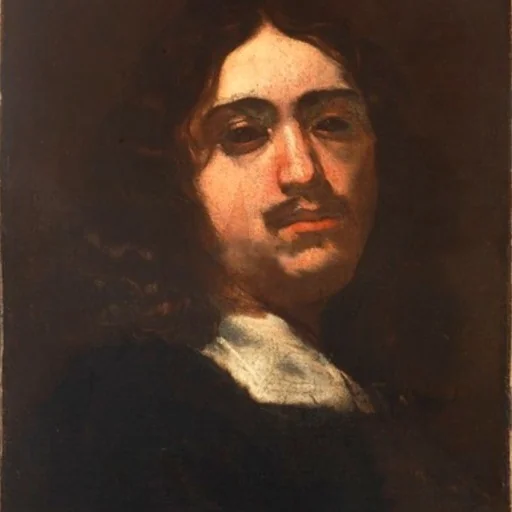
Jusepe de Ribera (Valencian:; baptised 17 February 1591 – 3 November 1652) was a Spanish painter and printmaker.