Artwork
Jacob Blessing the Sons of Joseph
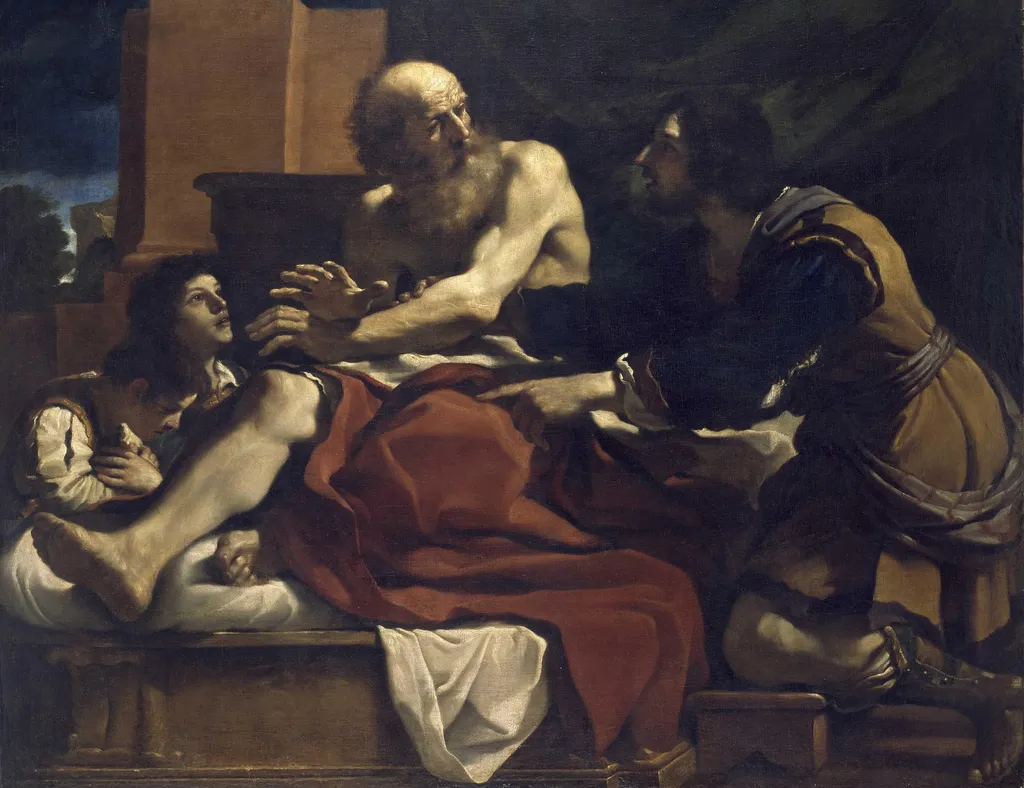
Jacob Blessing the Sons of Joseph is an oil painting by the Early Baroque Italian artist Guercino. It dates from 1638 and is held in the collection of the National Gallery of Ireland.
About this work
Subject & Meaning
Christian interpreters have also seen the blessing as a prefiguration of the Church's future, with Jacob's crossed hands echoing a sacramental gesture.
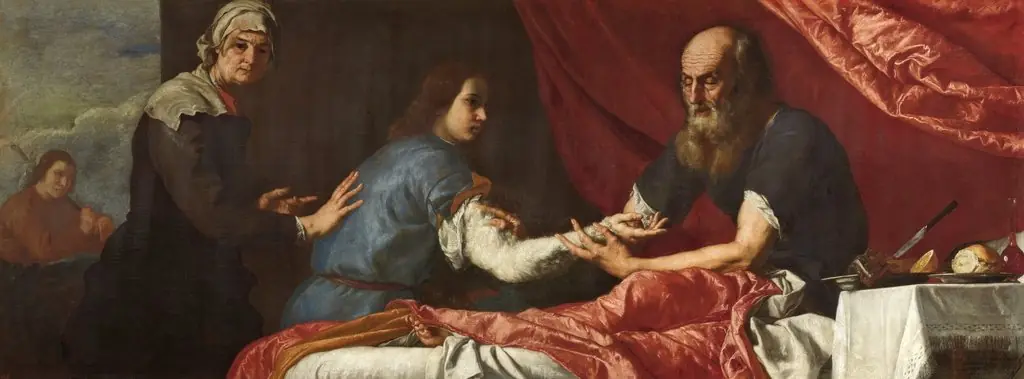
The painting depicts the Old Testament episode from Genesis 48, in which the aged patriarch Jacob blesses his grandsons Manasseh and Ephraim in the presence of their father Joseph. Joseph had brought his two sons to receive the patriarchal blessing, but Jacob deliberately crossed his hands to lay his right hand on the younger Ephraim rather than the firstborn Manasseh, prefiguring Ephraim's future superiority. When Joseph protested and tried to intervene, Jacob firmly overruled him.
Guercino captures the precise moment of tension: Joseph reaches out to pull at his father, Manasseh reacts with visible dismay at being denied the primary blessing, and Ephraim stands quietly in shadow with hands joined and head bowed in meek acceptance. The warm, golden light bathing Jacob's face suggests the last light of day, reinforcing the sense of a deathbed scene and the passage of generations.
Beneath the biblical narrative, the composition has been read as an allegory of the three ages of man and the vanity of earthly ambition. Christian interpreters have also seen the blessing as a prefiguration of the Church's future, with Jacob's crossed hands echoing a sacramental gesture.
Technique & Style
Executed in oil on canvas, the painting measures 170 by 211.5 cm. The work underwent extensive restoration and technical study at the Getty Museum between 2016 and 2018. Stylistically, the composition exemplifies the artist's mature expressivity around 1620, utilizing a warm, earthy palette and an instinctive brushwork that predates his later classical idealism. The scene is defined by dramatic chiaroscuro reminiscent of Baroque theater, where focused beams of light sculpt the figures and heighten emotional tension against deep shadows. A crepuscular glow filters through a brick architectural element in the background, illuminating the patriarch's face and the reactive expressions of the surrounding figures. The arrangement relies on a complex interplay of diagonal lines and intersecting gazes to guide the viewer through the narrative moment.
History & Provenance
The painting was created around 1620 for the cardinal Jacopo Serra, papal legate at Ferrara, and later passed to Giulio Cesare Sacchetti after Serra's death in 1623. It was seen by Diego Velázquez in 1629 during a visit to Italy. The work remained in the family collection until it was gifted by Don Juan Alfonso Enriquez de Cabrera to the church of San Pascual Bailón in Madrid, where it was later viewed by Antonio Ponz. In 1803 it entered the collection of Manuel Godoy, but after his fall from power and exile in 1808 the painting disappeared from public record until 1843, when it appeared in the collection of John Rushout, 2nd Baron Northwick, and was sold in 1859. Its whereabouts remained unknown until 1932, when Hermann Voss rediscovered it in Paris; it was purchased in 1934 by Denis Mahon for £120 and subsequently loaned to the National Gallery of Ireland in 1997. The painting was finally donated to the National Gallery of Ireland in 2008 via the British Fund for the National Gallery of Ireland, and underwent restoration at the Getty Museum between 2016 and 2018.
Jacob Blessing the Sons of Joseph is held by the National Gallery of Ireland in Dublin. The painting was formally presented to the institution in 2008 by collector Denis Mahon, following a long-term loan period that began in 1997. Prior to this acquisition, Mahon had purchased the work in Paris in 1934 for £120. The artwork underwent extensive restoration and study between 2016 and 2018 at the Getty Museum in Los Angeles before returning to its permanent home. While the National Gallery of Ireland holds the original, a copy created before 1808 is maintained by the National Trust at Ickworth House in Suffolk.
Context
Scholarship identifies the work as a pivotal example of Guercino's stylistic maturity around 1620, capturing a fleeting, emotionally charged narrative moment. Art historian Wolfgang Stechow noted the artist's infallible instinct for selecting the most transitory phase of the biblical episode, utilizing dramatic chiaroscuro and theatrical lighting to heighten the tension between the figures. The composition reflects the artist's pre-Roman phase, characterized by an instinctive brushwork and earthy palette before his later shift toward classical idealism. Carlo Cesare Malvasia documented the painting in his 1674 *Felsina pittrice* as a significant commission for Cardinal Jacopo Serra, establishing its early critical recognition. The work is further interpreted as an allegory of the three ages of man and the vanity of earthly ambitions, with the patriarch's gesture symbolizing the passage of time and spiritual hope.
Legacy
The painting's reputation was significantly shaped by its rediscovery in Paris in 1932 by art historian Hermann Voss, who identified it as the work described by Carlo Cesare Malvasia. Acquired two years later by the collector Denis Mahon for £120, the piece gained prominence through his scholarly advocacy before being placed on long-term loan to the National Gallery of Ireland in 1997 and formally presented in 2008. Recent restoration work conducted at the Getty Museum between 2016 and 2018 further solidified its status, leading to its current recognition in Dublin as a masterpiece of the Bolognese painter. The work is now celebrated for its dramatic composition and emotional intensity, representing the full expressive maturity of Guercino at age thirty.
Own this work as a print
Artist & collection
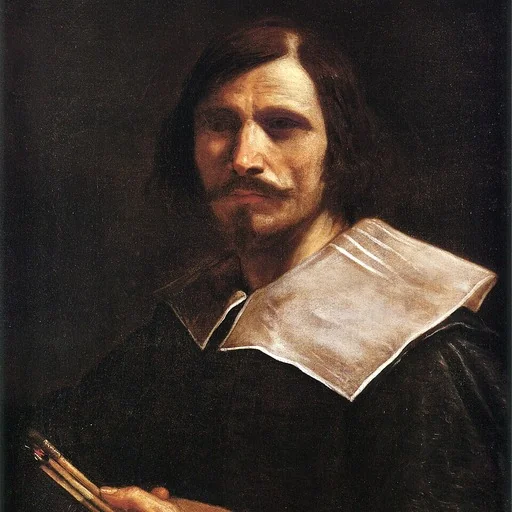
Artist
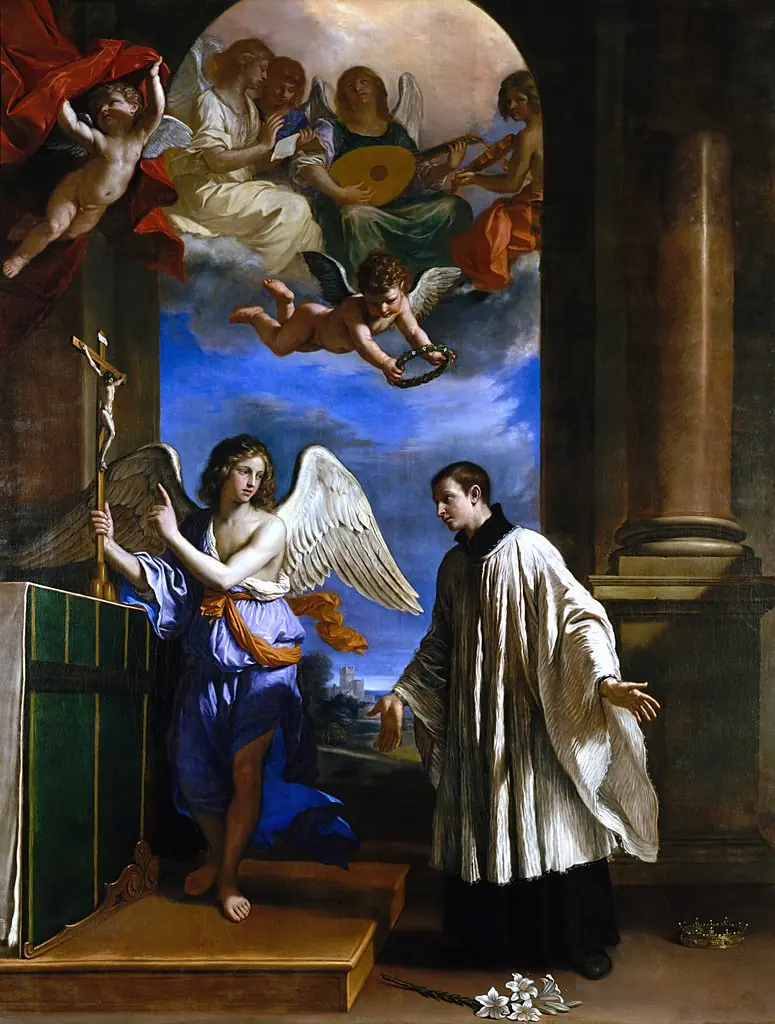
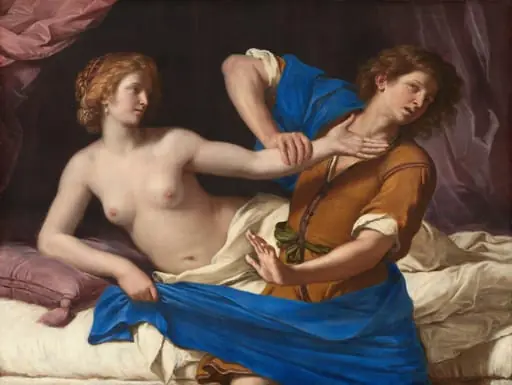
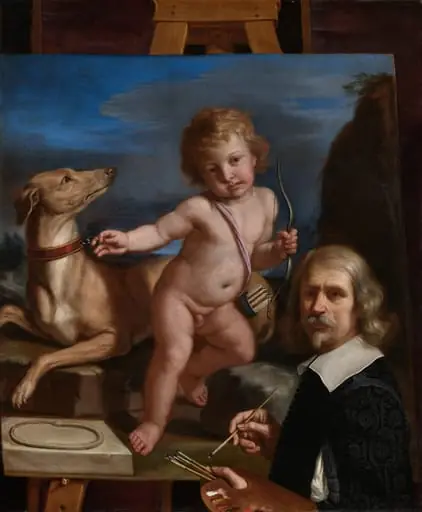
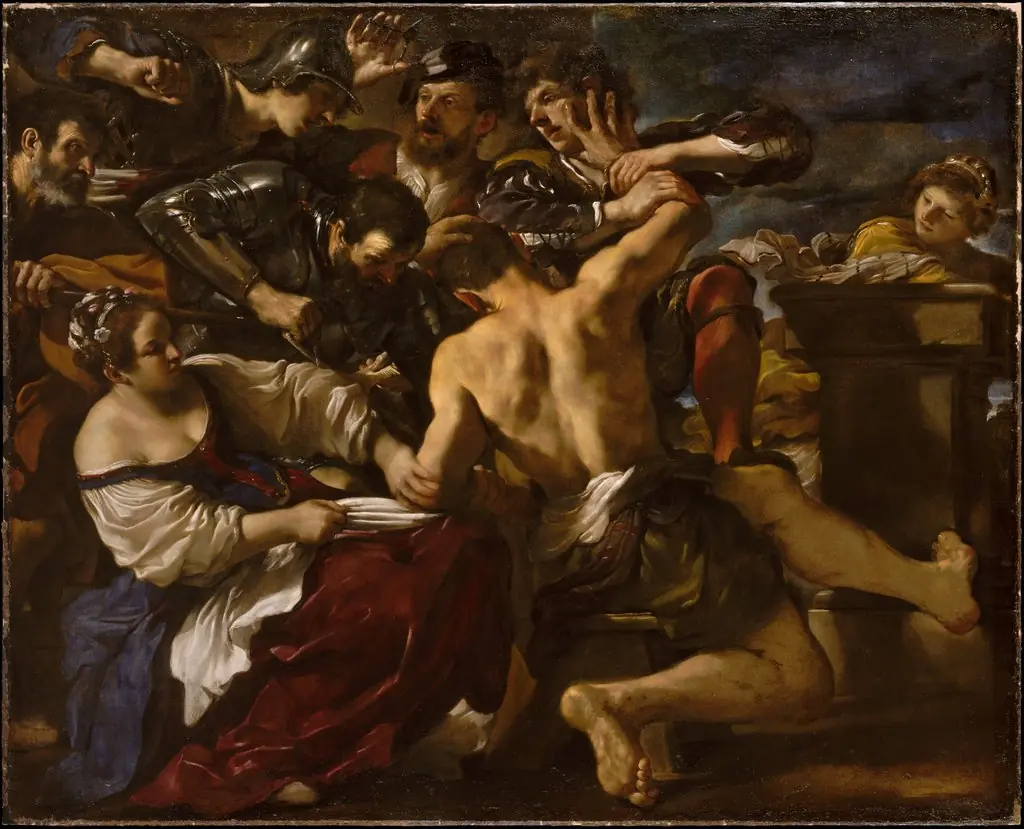
Giovanni Francesco Barbieri (8 February 1591 – 22 December 1666), better known as (il) Guercino (Italian pronunciation: ), was an Italian Baroque painter and draftsman from Cento in the Emilia region, who was active in Rome and Bologna.