Artwork
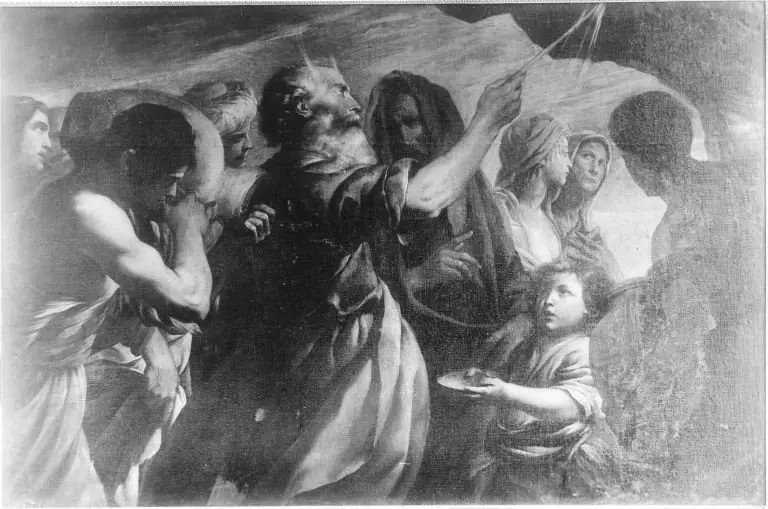
Martyrium des hl. Bartholomäus
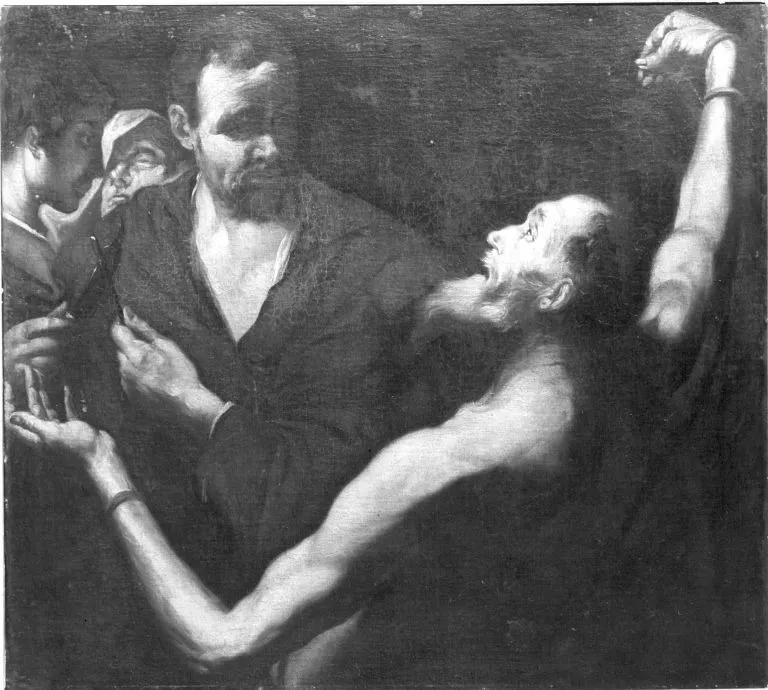
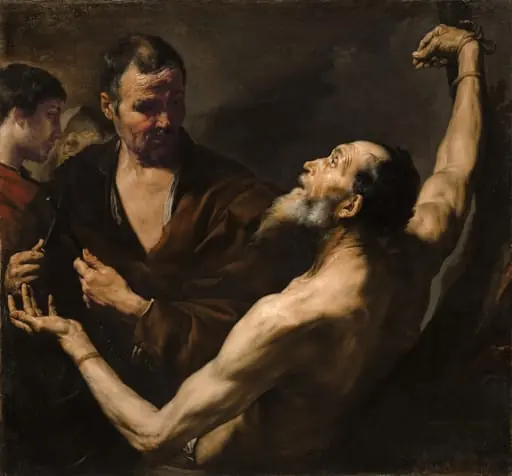
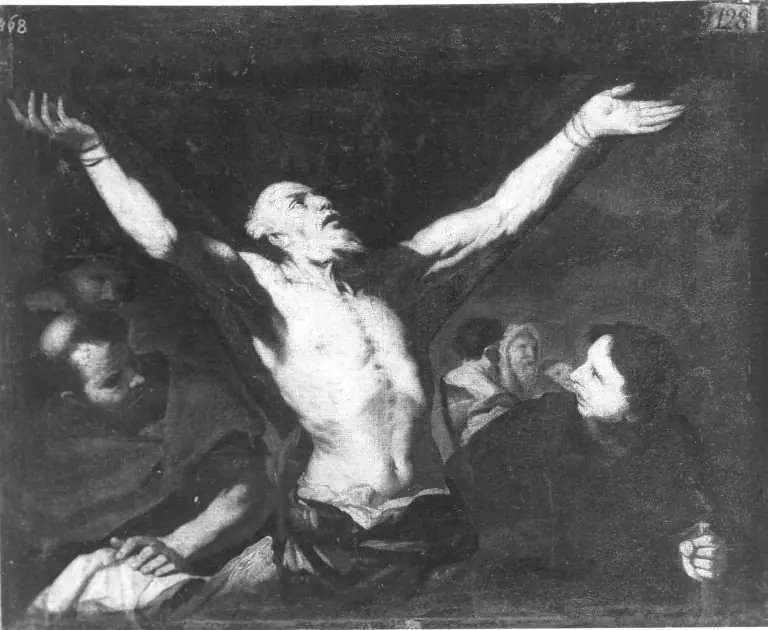
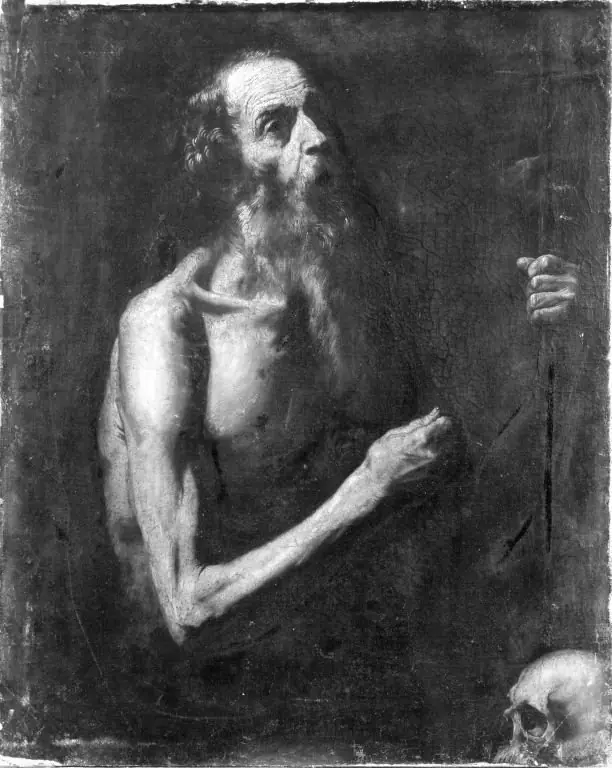
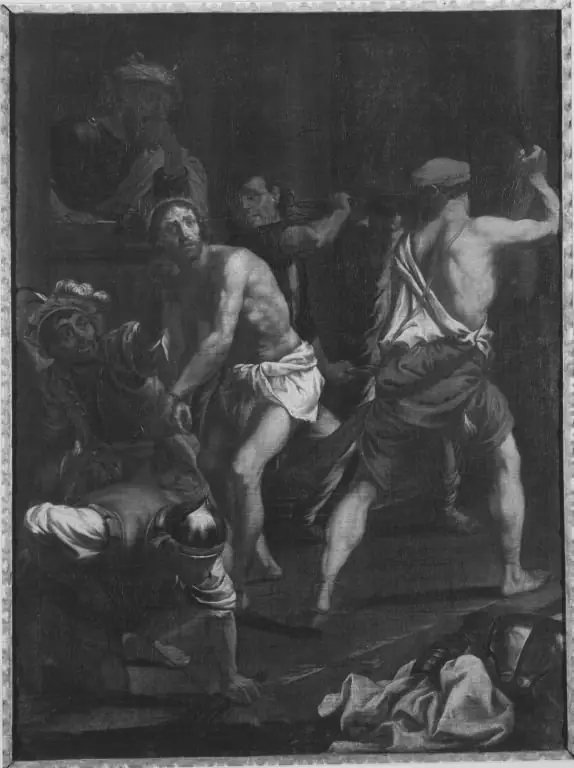
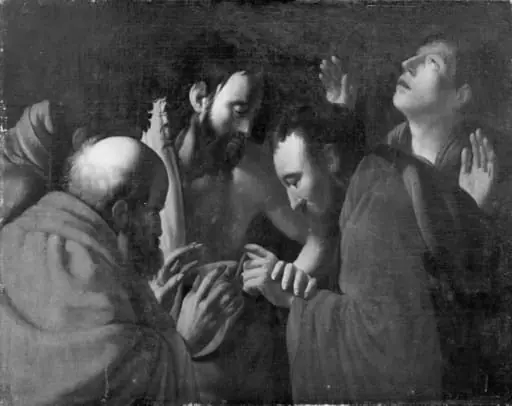
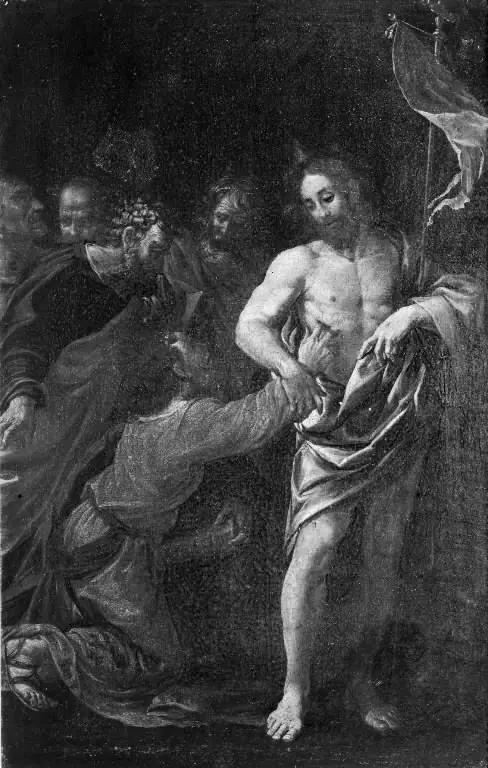
Martyrium des hl. Bartholomäus is an unspecified painting by the Early Baroque Italian artist Jusepe de Ribera. It dates from 1621 and is held in the collection of the Bavarian State Painting Collections.
About this work
Subject & Meaning
The composition underscores themes of sacrifice and divine fortitude, reflecting Counter-Reformation ideals of martyrdom as a testament to religious conviction.
The work portrays the martyrdom of Saint Bartholomew, a biblical apostle tradition holds that he was flayed alive for his faith. In this depiction Ribera emphasizes the saint’s serene endurance amid extreme suffering, using stark chiaroscuro to heighten the spiritual drama. The composition underscores themes of sacrifice and divine fortitude, reflecting Counter-Reformation ideals of martyrdom as a testament to religious conviction.
Technique & Style
The painting is executed in oil on canvas, a common technique among early 17th-century European masters that allowed for rich color modulation and chiaroscuro effects. Ribera's handling demonstrates a vigorous brushwork combined with a stark, almost sculptural modeling of the figure, emphasizing the martyrdom of Saint Bartholomew in a manner characteristic of the Baroque style. The composition is tightly framed, with dramatic lighting that isolates the saint against a dark background, creating a powerful emotional intensity.
The work measures 100.5 cm in height by 111.3 cm in width, confirming its substantial scale within the Alte Pinakothek's collection.
History & Provenance
The Martyrium des hl. Bartholomäus was created by Jusepe de Ribera in 1621. It is a religious painting that forms part of the Bavarian State Painting Collections and is held at the Alte Pinakothek, where its ownership history is recorded. The work measures 100.5 cm in height by 111.3 cm in width.
No further details about its commission, intermediate ownership, or chain of custody before entering the Bavarian State Painting Collections are documented in the available sources.
The painting is held by the Alte Pinakothek in Munich, where it forms part of the Bavarian State Painting Collections. Dated 1621, the work measures 100.5 cm in height by 111.3 cm in width.
No specific inventory or accession number is recorded in the available sources, and no exhibition history is documented for the work.
Overview
Jusepe de Ribera, a Spanish artist who built his career in Italy, painted this canvas in 1621. The work belongs to the early Italian Baroque period and is now preserved in the Alte Pinakothek in Munich. Ribera's long residence in Naples shaped his artistic identity, and he emerged as a dominant presence in that city's creative community.
Context
Ribera operated within the broader Spanish Baroque tradition, connected to contemporaries such as Diego Velázquez and Francisco de Zurbarán, though his Italian base distinguished his trajectory. Religious imagery dominated his output, reflecting both Counter-Reformation devotional demands and his own sustained engagement with themes of bodily sacrifice and spiritual transcendence.
Artist & collection
Artist
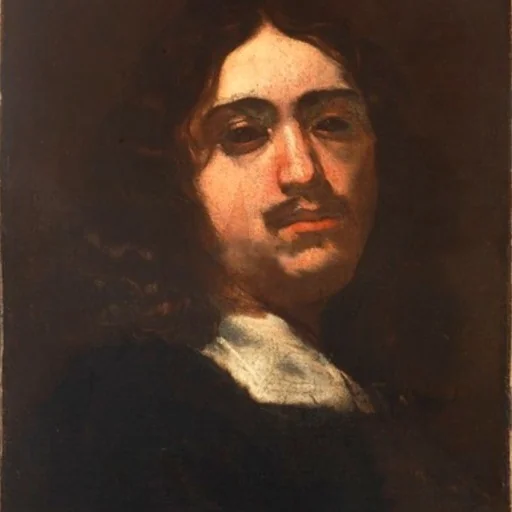
Jusepe de Ribera (Valencian:; baptised 17 February 1591 – 3 November 1652) was a Spanish painter and printmaker.