Artwork
Penitent Saint Jerome
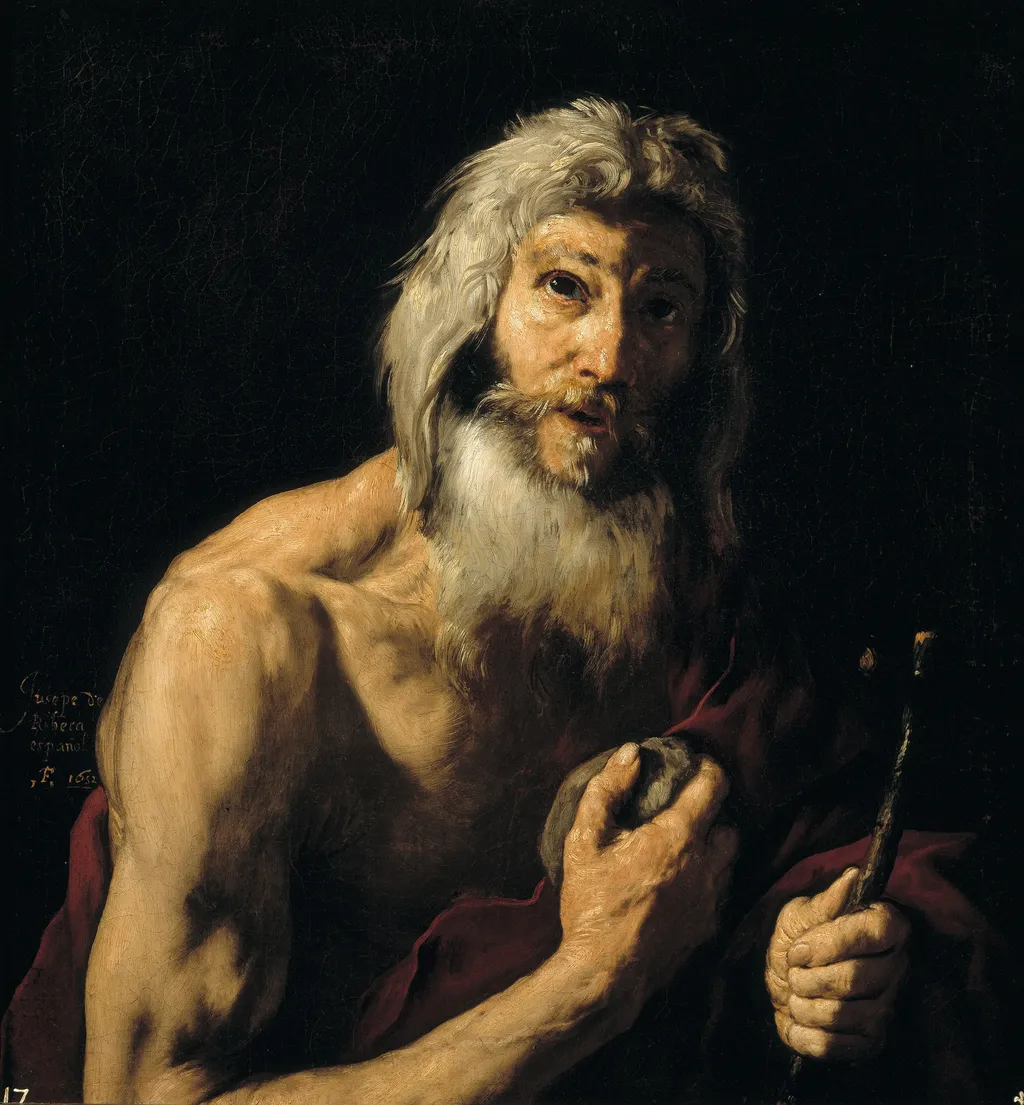
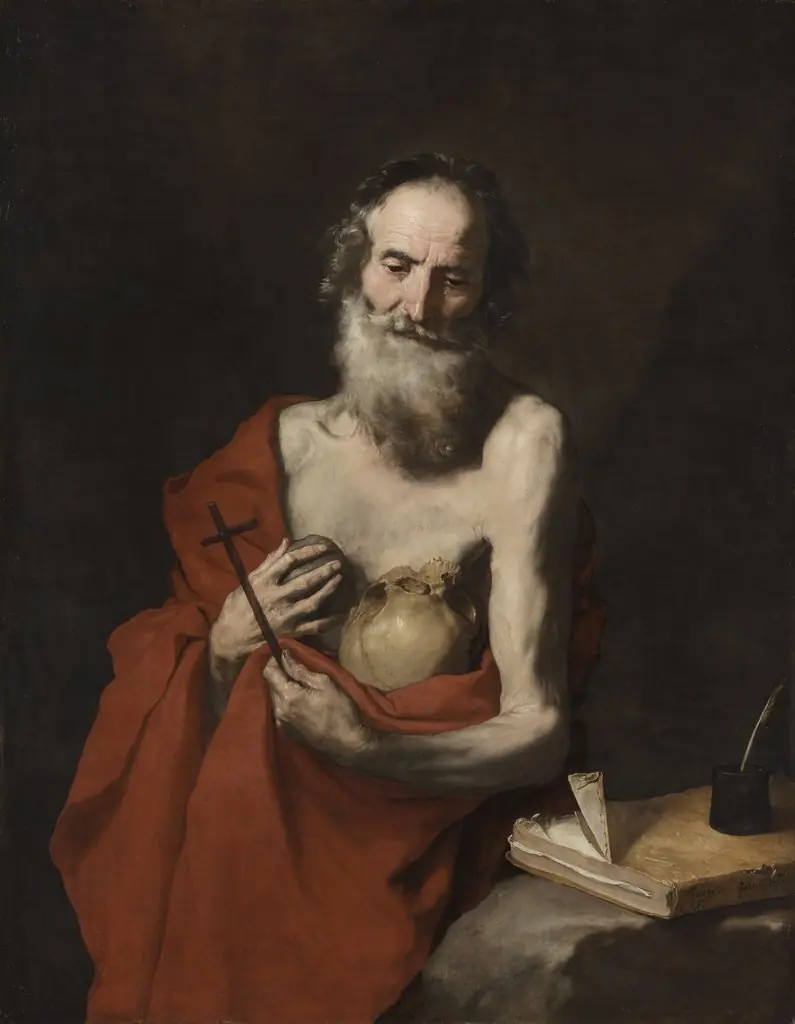
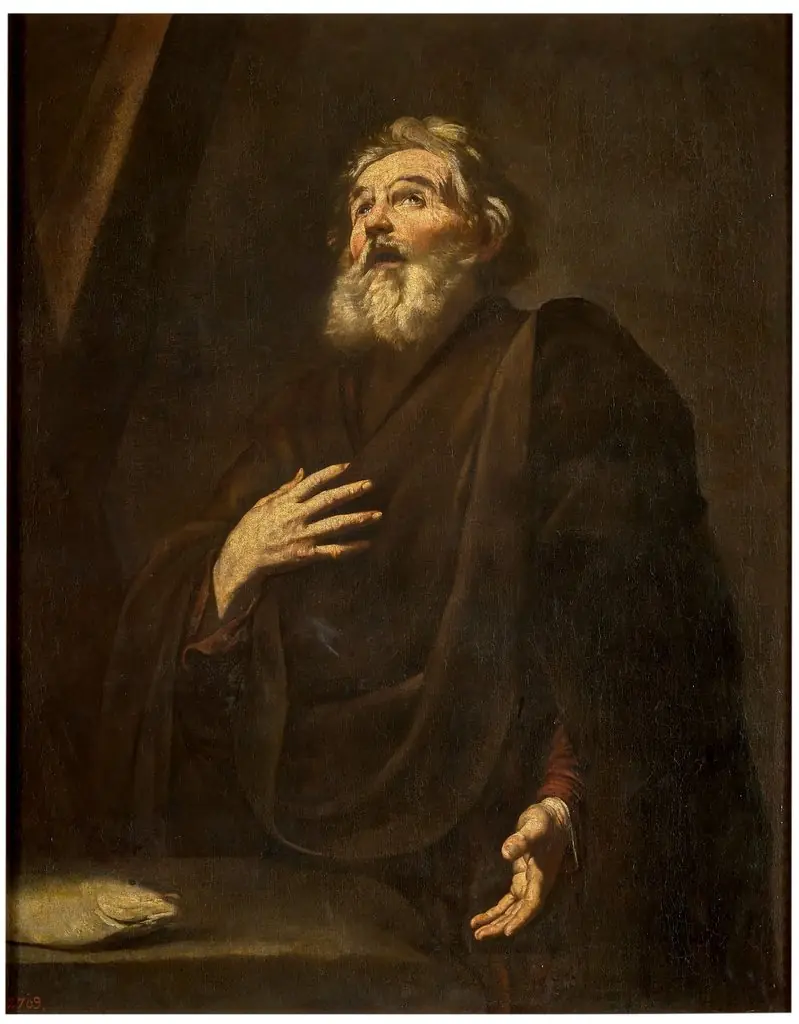
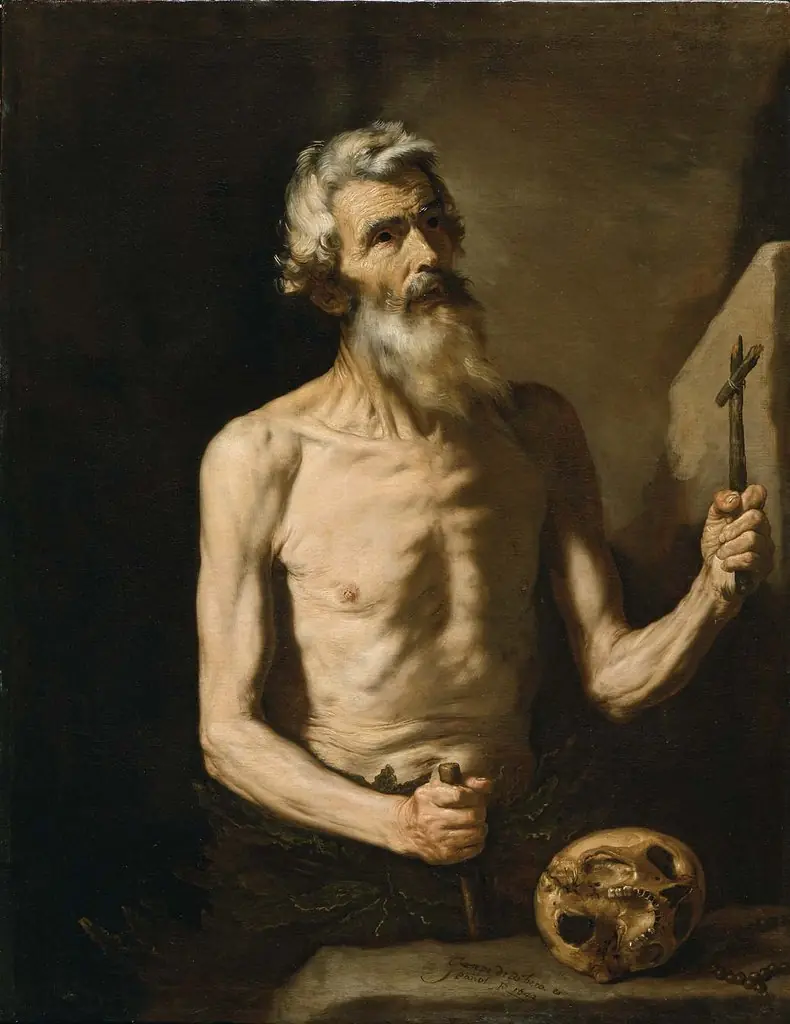
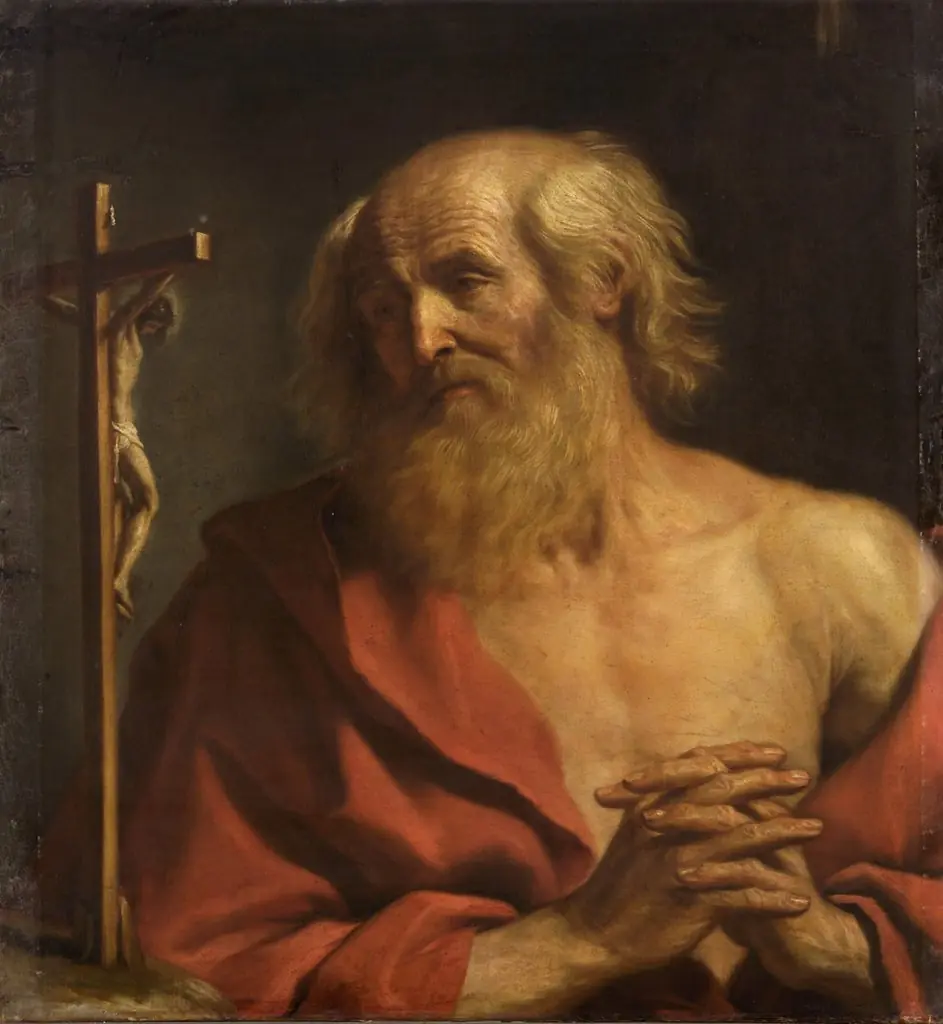
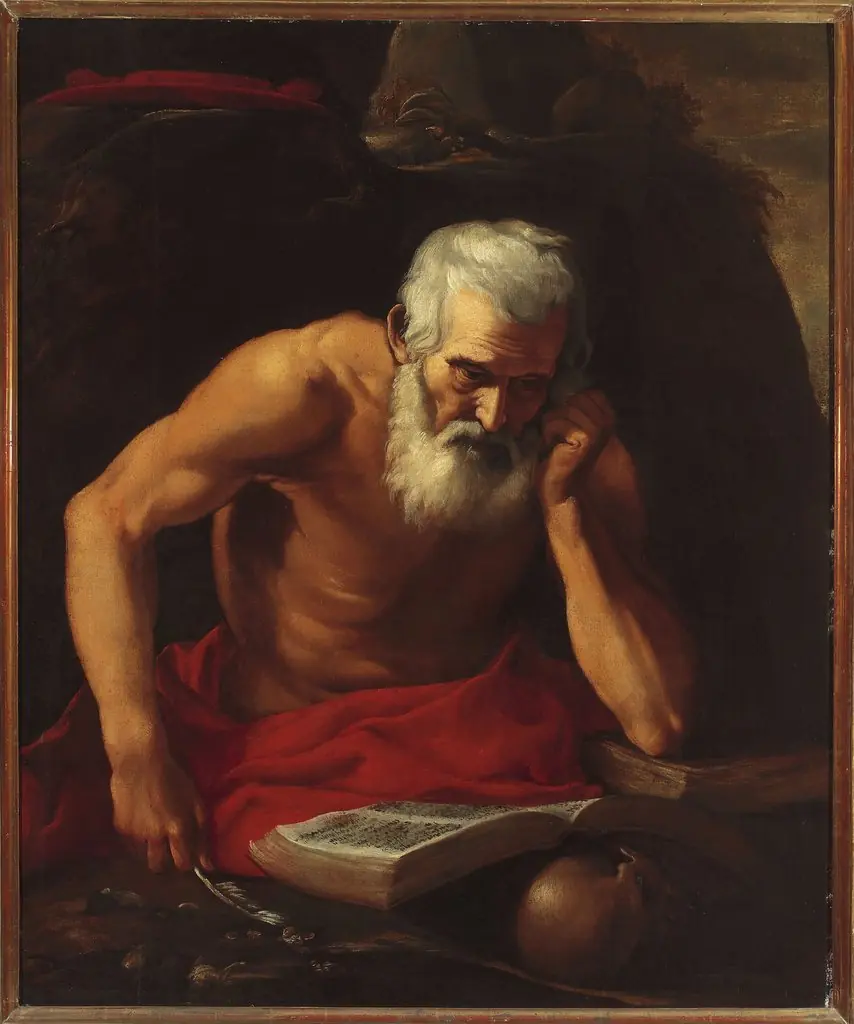
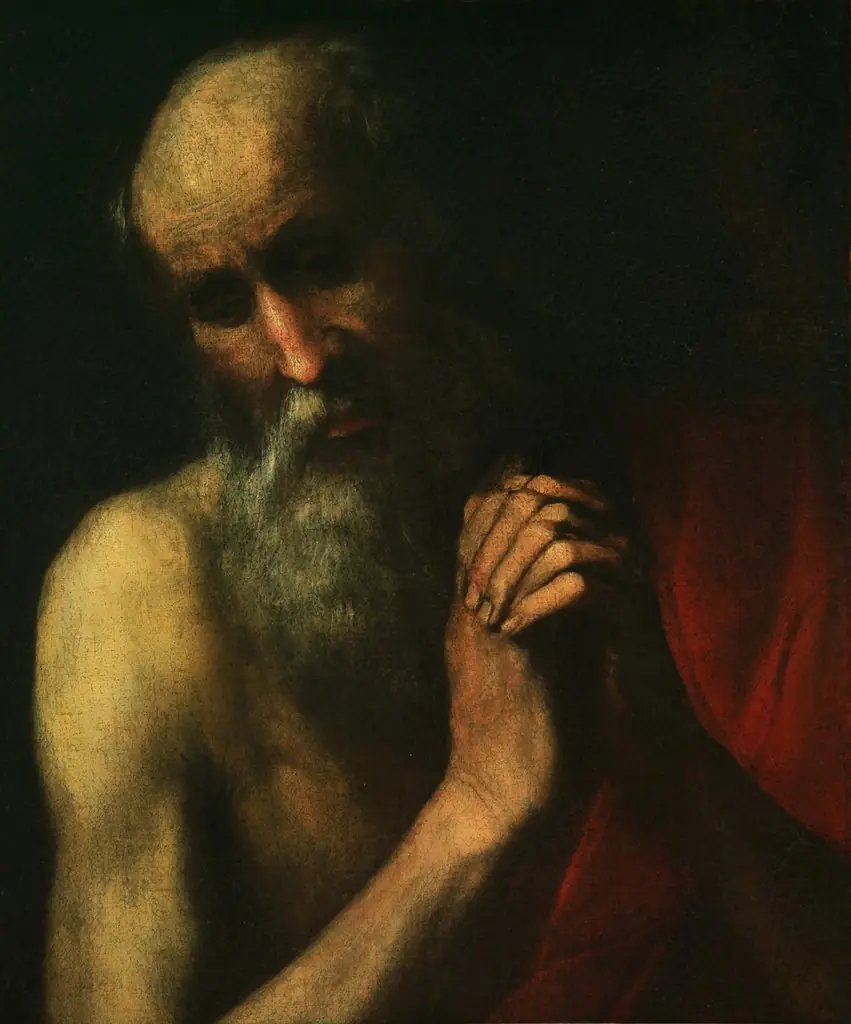
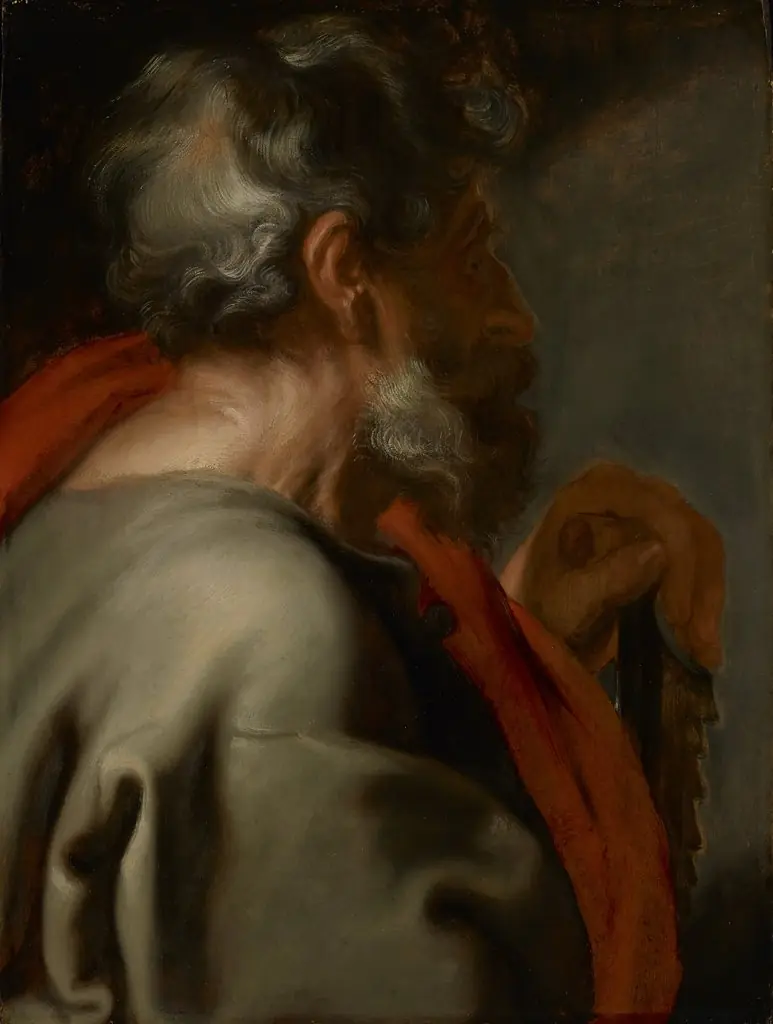
Penitent Saint Jerome is an oil painting by the Early Baroque Italian artist Jusepe de Ribera. It dates from 1652 and is held in the collection of the Museo del Prado.
About this work
Subject & Meaning
The painting depicts Saint Jerome, one of the early Christian Church Fathers and author of the Vulgate Bible, shown in penitential devotion.
The painting depicts Saint Jerome, one of the early Christian Church Fathers and author of the Vulgate Bible, shown in penitential devotion. Ribera's image belongs to a long devotional tradition of portraying the saint as a hermit-scholar who withdrew from worldly life to do penance in the wilderness, often depicted half-nude, emaciated, and gazing at a crucifix or skull as emblems of mortality and redemption.
According to the work's cataloguing, the saint is shown alongside a cross, the central Christian symbol of Christ's sacrifice and the instrument of salvation that Jerome contemplates in his repentance. The cross functions both as an attribute identifying the figure and as the focal point of his spiritual meditation, reinforcing the painting's theme of penitential conversion and the renunciation of earthly vanity in favor of eternal truth.
Technique & Style
Jusepe de Ribera executed Penitent Saint Jerome in 1652 using oil paint applied to a canvas support. The work measures 77.2 cm in height and 71.8 cm in width. As a religious painting, the composition focuses on the figure of Saint Jerome accompanied by a cross, characteristic of the artist's devotional output during this period.
The handling of the medium and the formal arrangement align with the stylistic conventions of Ribera's late career religious works held in the Museo del Prado.
History & Provenance
Jusepe de Ribera created the oil-on-canvas painting Penitent Saint Jerome in 1652. The work depicts the saint holding a cross and was executed in oil paint. Historical records indicate the painting was once part of the collection of Elisabeth Farnese and later owned by Ferdinand VII of Spain before entering the holdings of the Museo del Prado in Madrid.
The artwork measures 77.2 cm in height and 71.8 cm in width. While the specific commission details are not recorded in the available sources, the established date of 1652 places the creation of this religious subject within the final decade of Ribera's life.
The painting is held in the collection of the Museo del Prado in Madrid. Its dimensions are recorded as 77.2 cm in height and 71.8 cm in width. Historical ownership of the work includes Elisabeth Farnese and Ferdinand VII of Spain. The provided sources do not contain specific inventory numbers or details regarding the artwork's exhibition history.
Overview
Jusepe de Ribera painted Penitent Saint Jerome in 1652, employing oil on canvas. The work is part of the Prado Museum’s collection in Madrid and exemplifies the early Italian Baroque aesthetic that Ribera helped disseminate while working in Naples.
Context
Ribera, a central figure of Spanish Baroque alongside Diego Velázquez and Francisco de Zurbarán, was known for his dramatic naturalism. Penitent Saint Jerome illustrates his commitment to portraying religious subjects with visceral intensity, aligning with Counter‑Reformation demands for emotionally compelling imagery.
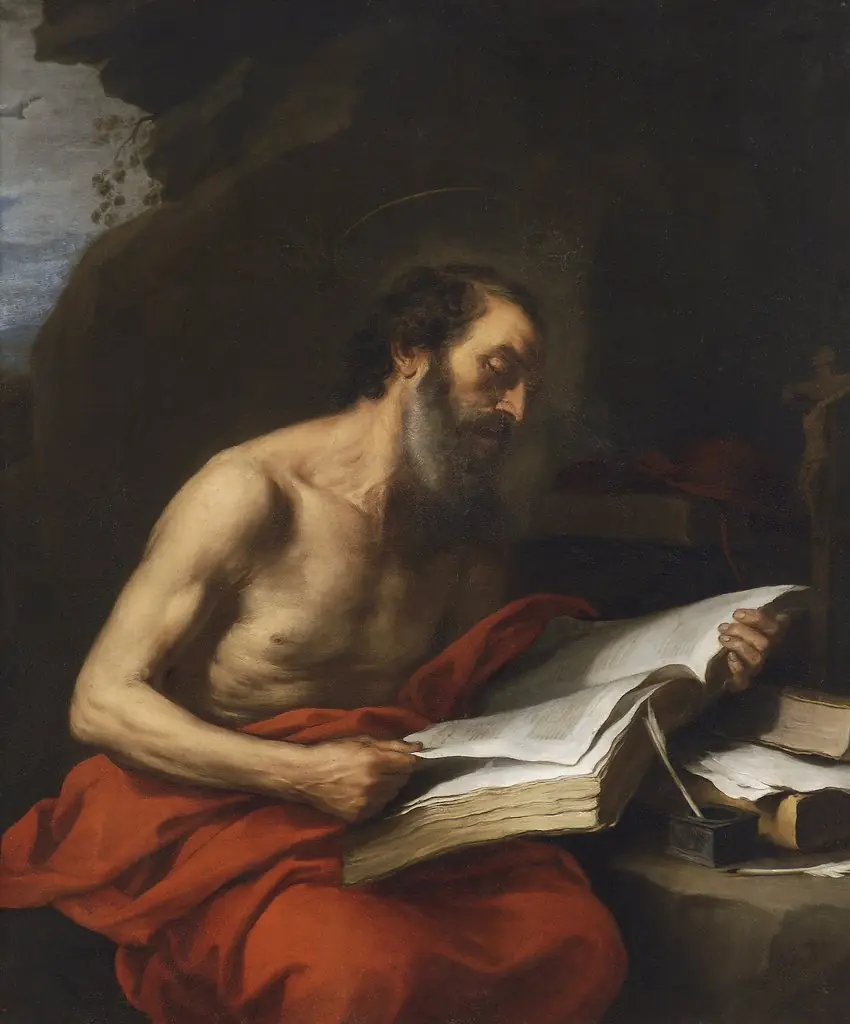
Own this work as a print
Artist & collection
Artist
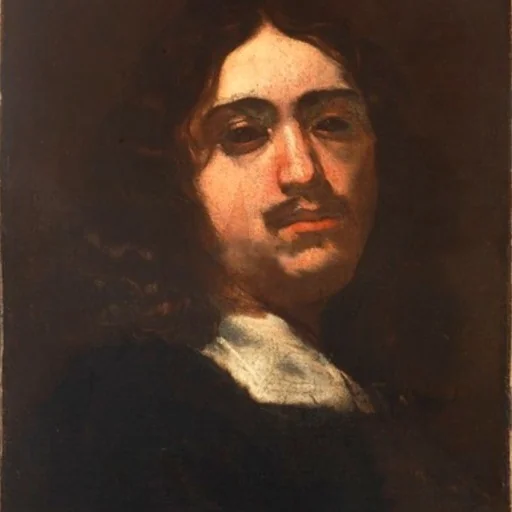
Jusepe de Ribera (Valencian:; baptised 17 February 1591 – 3 November 1652) was a Spanish painter and printmaker.