Artwork
Luring the Sun Goddess Amaterasu Out of a Cave; Death of the Historical Buddha (Nehan-zu)
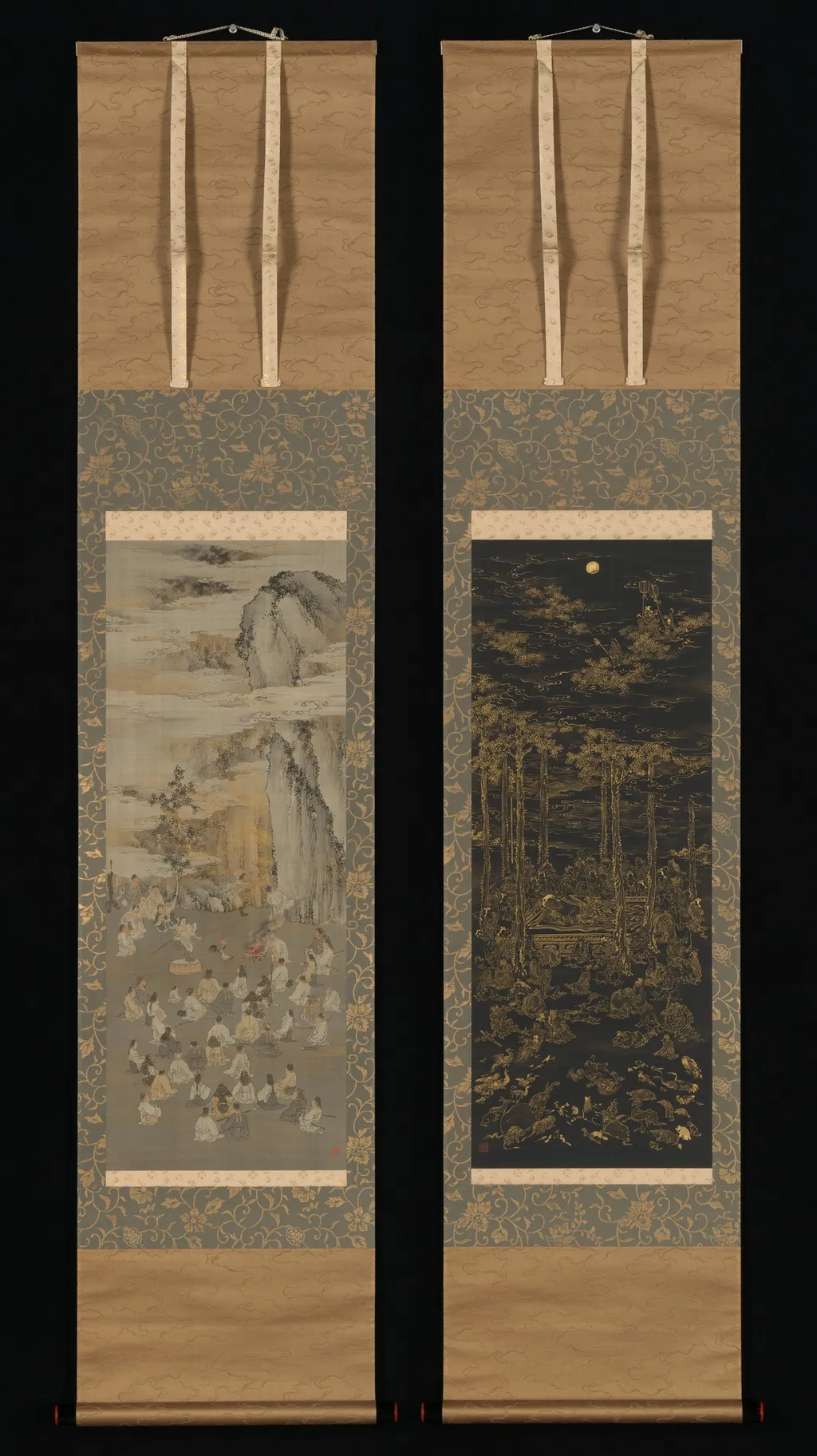
Luring the Sun Goddess Amaterasu Out of a Cave; Death of the Historical Buddha (Nehan-zu) is an unspecified painting by the Japonisme artist Kono Bairei. It dates from 1892 and is held in the collection of the Metropolitan Museum of Art.
About this work
Subject & Meaning
The painting combines two distinct narratives indicated by its title: the Shinto myth of the sun goddess Amaterasu being lured from her heavenly cave, and the Buddhist Nehan-zu scene depicting the death of the historical Buddha. A cave is depicted, providing the visual setting for the Amaterasu episode, while the title's reference to Nehan-zu signals the presence of a reclining Buddha figure surrounded by mourners. Together, these motifs juxtapose the return of light after concealment with the Buddha's passage into parinirvana, evoking themes of renewal, impermanence, and the harmonious interplay of Shinto and Buddhist beliefs in Meiji-era Japan.
History & Provenance
This painting was created by Kōno Bairei in 1892 in Japan. It is held in the collection of the Metropolitan Museum of Art, which lists the work as part of its holdings. No further details about its commission, intermediate ownership, or acquisition history are documented in the available sources.
Overview
Kōno Bairei, a Kyoto-based artist, created Luring the Sun Goddess Amaterasu Out of a Cave; Death of the Historical Buddha (Nehan-zu) in 1892.
Kōno Bairei, a Kyoto-based artist, created Luring the Sun Goddess Amaterasu Out of a Cave; Death of the Historical Buddha (Nehan-zu) in 1892. This painting, characterized by its landscape elements and japonisme aesthetic, is notable for its dual composition. It is currently held in the collection of The Metropolitan Museum of Art. The work reflects Bairei's artistic versatility beyond his renowned kacho-e specialization during Japan's Meiji period.
Technique & Style
Bairei's painting exhibits characteristics of the japonisme style, integrating Japanese aesthetic principles with a broader artistic sensibility. The composition is presented across two panels, each framed by a decorative border of swirling gold patterns against a dark ground. While known for his bird-and-flower (kacho-e) paintings, Bairei demonstrates his skill in landscape, employing a nuanced approach to light and shadow to differentiate the two narrative sections. His connection to the Maruyama-Shijo school is evident in his refined brushwork.
Context
Kōno Bairei was an influential painter and illustrator active in Kyoto during the Meiji period (1868-1912), a time of significant cultural transformation in Japan. He was associated with the Maruyama-Shijo school, known for its blend of traditional Japanese and Western painting techniques. While celebrated for his mastery of kacho-e, this work demonstrates his broader engagement with diverse subjects and styles, including the emerging interest in japonisme, which saw Japanese art influencing Western aesthetics.
Artist & collection

Artist
Kōno Bairei (幸野 楳嶺; March 3, 1844 – February 20, 1895) was a Japanese painter, book illustrator, and art teacher.

- 秋冬景山水図|Landscapes of Autumn and Winter
 Landscapes with Figures
 Shichirigahama and Enoshima
 山本梅逸筆 四季山水図|Landscapes of the Four Seasons
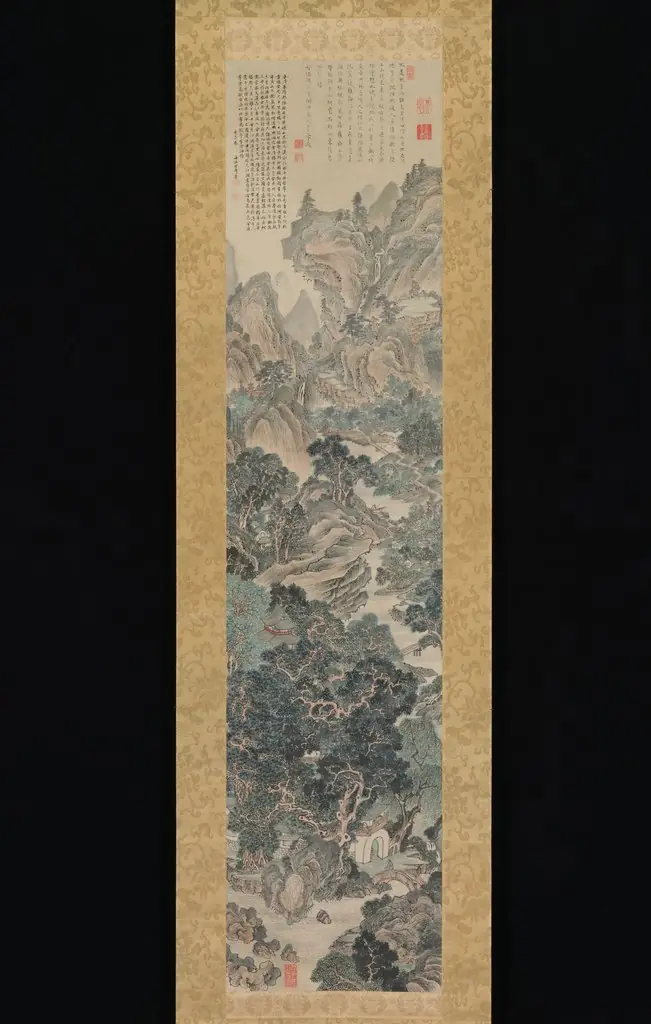 Landscape in the Blue-and-Green Manner
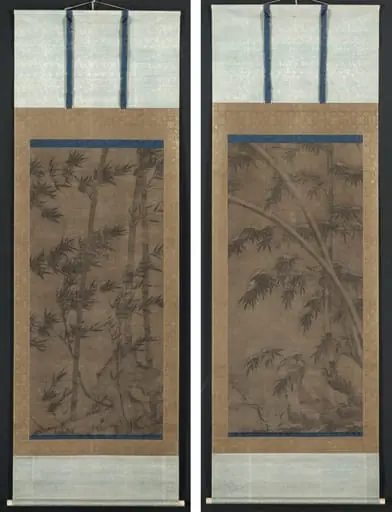 Bamboo in Four Seasons: Summer and Winter
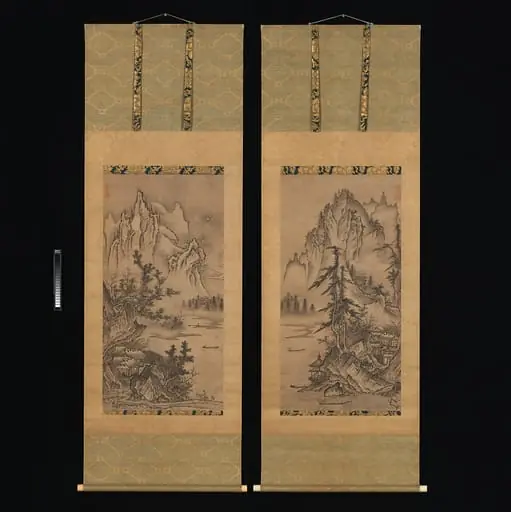 啓孫筆 四季山水図|Landscapes of the Four Seasons
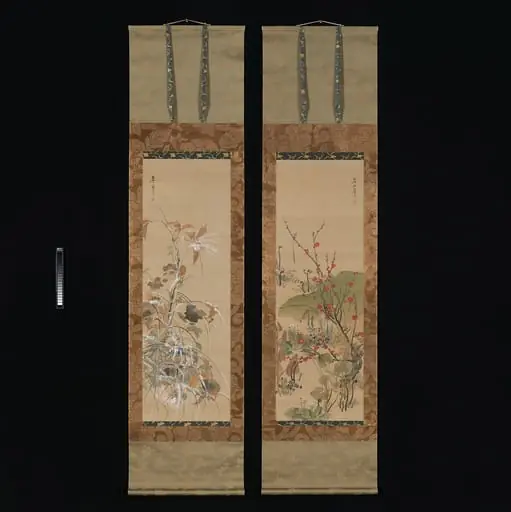 池田孤邨筆 四季花鳥画|Flowers and Birds of the Four Seasons
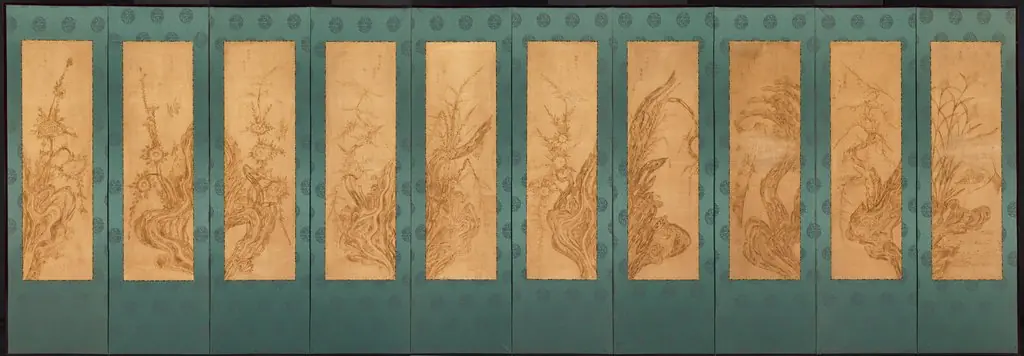 Birds and Flowers
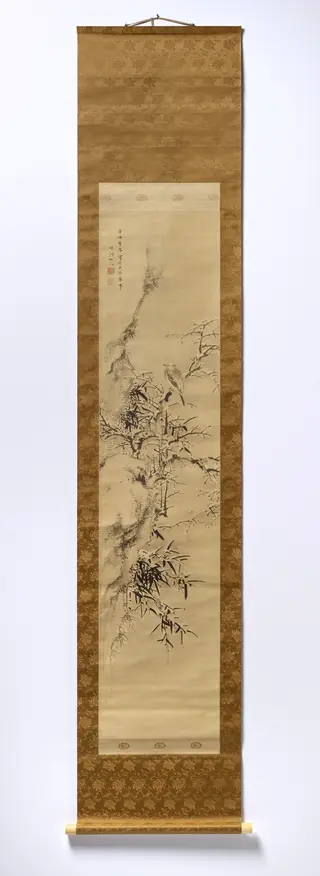 Bird in Snow
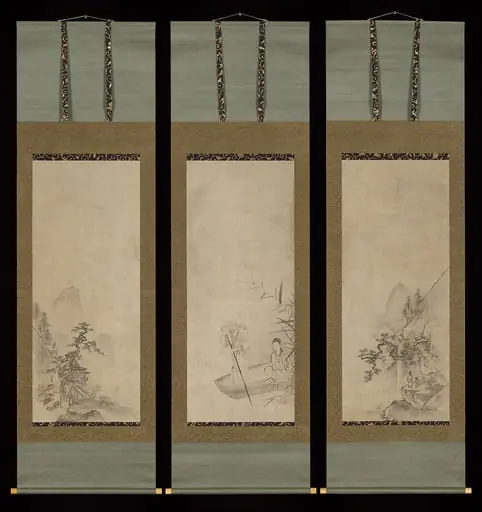 Untitled
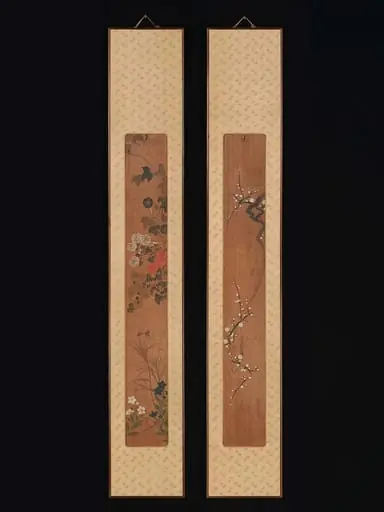 尾形光琳筆 梅花・秋草図|Flowers of Spring and Autumn