Artwork
Shakyamuni Emerging from the Mountains, with Dragon and Tiger
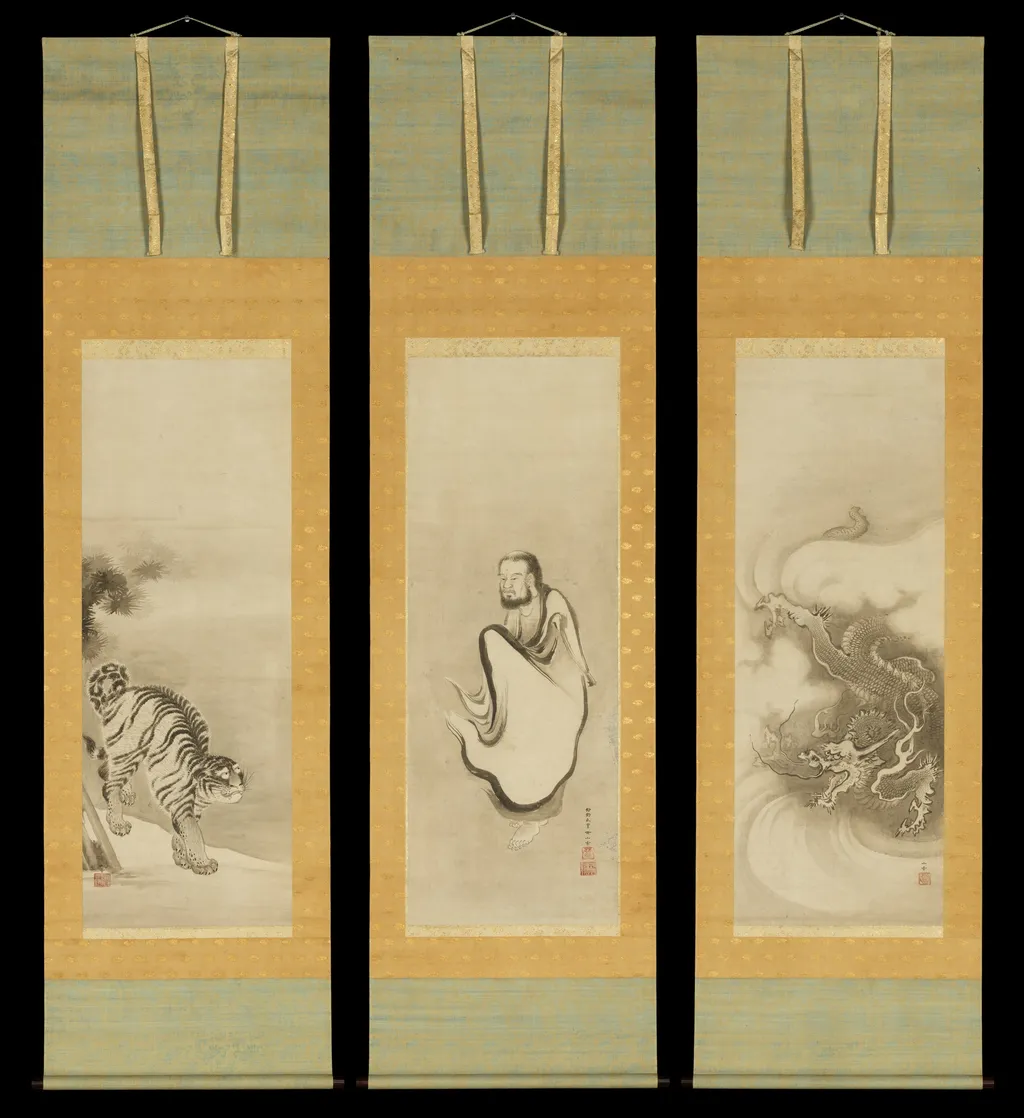
Shakyamuni Emerging from the Mountains, with Dragon and Tiger is an unspecified painting by the Kanō school artist Kanō Sansetsu. It dates from 1637 and is held in the collection of the Metropolitan Museum of Art.
About this work
Technique & Style
Shakyamuni Emerging from the Mountains, with Dragon and Tiger is an ink-on-paper painting created by Kanō Sansetsu in 1637 in Japan.
Shakyamuni Emerging from the Mountains, with Dragon and Tiger is an ink-on-paper painting created by Kanō Sansetsu in 1637 in Japan. The work depicts the historical Buddha Shakyamuni emerging from a stylized landscape, accompanied by symbolic dragon and tiger motifs, reflecting a Zen-inspired compositional balance and restrained brushwork characteristic of early Edo-period Kanō school aesthetics. The painting’s handling emphasizes fluid ink lines and subtle gradations of wash, contributing to a meditative visual rhythm.
Its formal qualities include asymmetrical spatial arrangement, minimalistic detailing, and a muted tonal palette that aligns with Buddhist iconographic traditions.
The artwork is executed on a hanging scroll format, a traditional support used for devotional display in Japanese Zen temples and later collected by Western institutions. It is housed in the Metropolitan Museum of Art, where it remains part of their Asian art collection.
History & Provenance
Shakyamuni Emerging from the Mountains, with Dragon and Tiger was created in 1637 by Kanō Sansetsu, as recorded in the work's canonical dating. The painting originated in Japan during that year. It is now held in the collection of the Metropolitan Museum of Art, where it is currently located.
No further details about an earlier ownership chain, commission, or intermediate provenance prior to the museum's acquisition are documented in the available sources.
The painting Shakyamuni Emerging from the Mountains, with Dragon and Tiger is held in the collection of the Metropolitan Museum of Art. Its accession number is 1981.381. The work has been exhibited at the museum in the exhibition titled "Japanese Painting: Highlights of the Collection" in 1982.
Overview
Created in 1637 by Kanō Sansetsu, a Kyoto‑based painter of the Kanō school, this three‑panel hanging scroll portrays the Buddha Shakyamuni amid a stylised mountain setting. Flanked by a tiger beneath a pine and a coiled dragon among clouds, the work balances naturalistic detail with emblematic elements characteristic of the school’s late‑Muromachi aesthetic.
Subject & Meaning
The central figure is Shakyamuni, rendered as a bearded monk suspended in the air, his serene posture contrasting with the surrounding fauna. The tiger, crouching beneath pine foliage, and the dragon, winding through mist, serve as symbolic guardians, embodying strength and spiritual power while highlighting the Buddha’s transcendence over worldly forces.
Own this work as a print
Artist & collection

Artist
Kanō Sansetsu (狩野 山雪; 1589–1651) was a Japanese painter also known as Kanō Heishiro. He was born in Hizen Province, Kyūshū, and died in Kyoto.

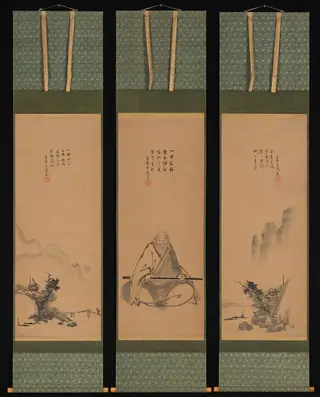 Untitled
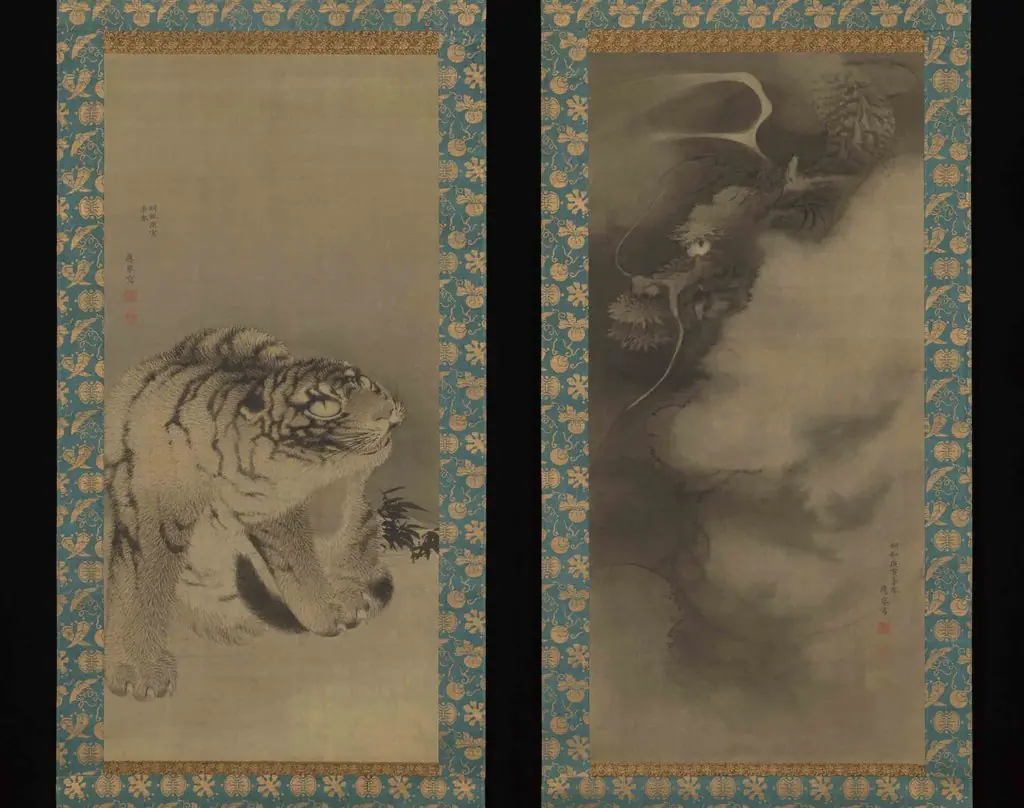 Dragon and Tiger 龍虎図 (Ryūko zu)
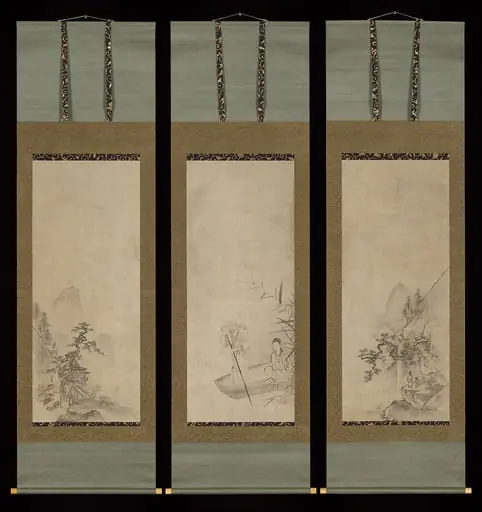 Untitled
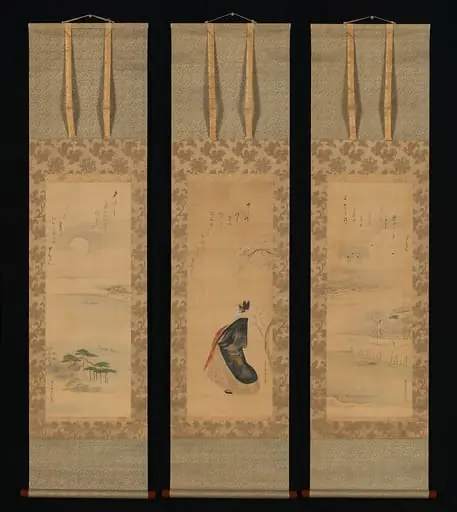 蜀山人(大田 南畝)賛 雪・月・花図 |Snow, Moon, and Cherry Blossoms (Yoshiwara in Three Seasons)
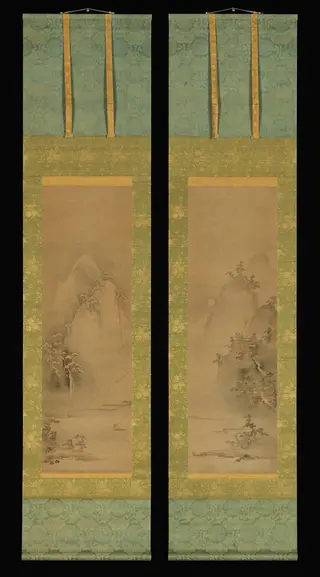 Eight Views of Xiao and Xiang
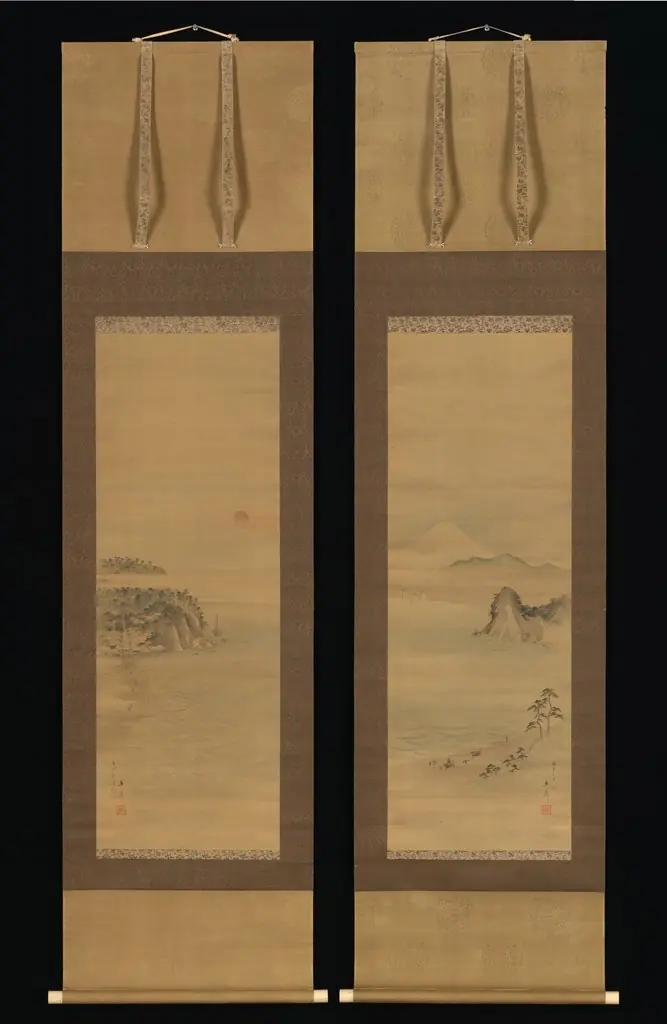 Shichirigahama and Enoshima
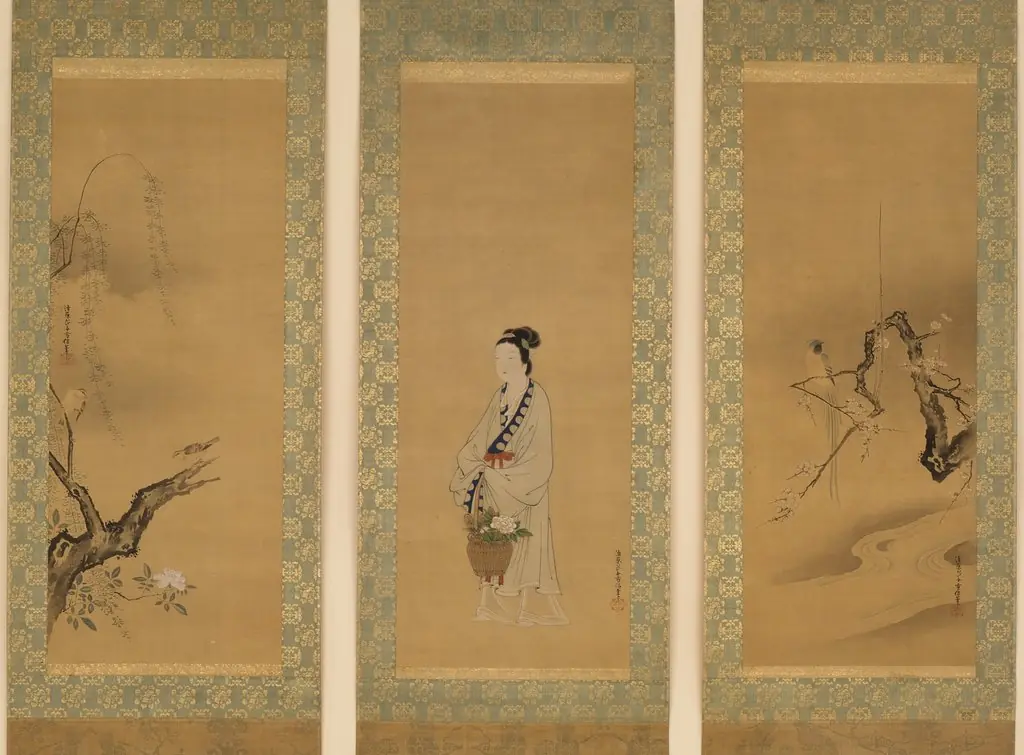 Reishō: Paragon of Filiel Piety; Chinese Blue Magpie with Flowering Plum; Sparrows, Willow, and Rose
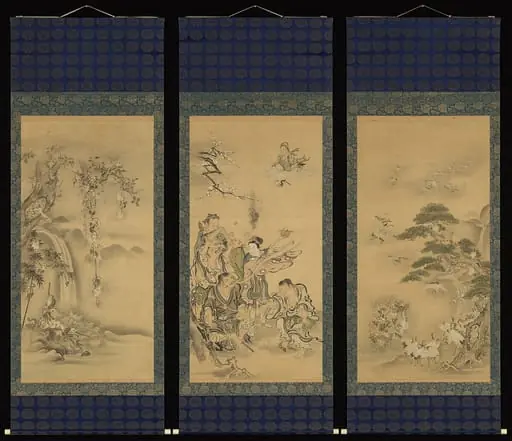 八仙猿鶴図|Eight Daoist Immortals, Cranes, and Gibbons
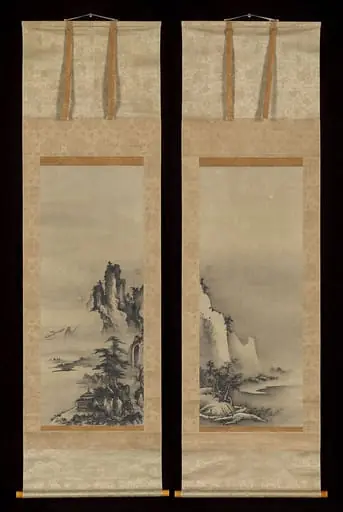 秋冬景山水図|Landscapes of Autumn and Winter