Artwork
八仙猿鶴図|Eight Daoist Immortals, Cranes, and Gibbons
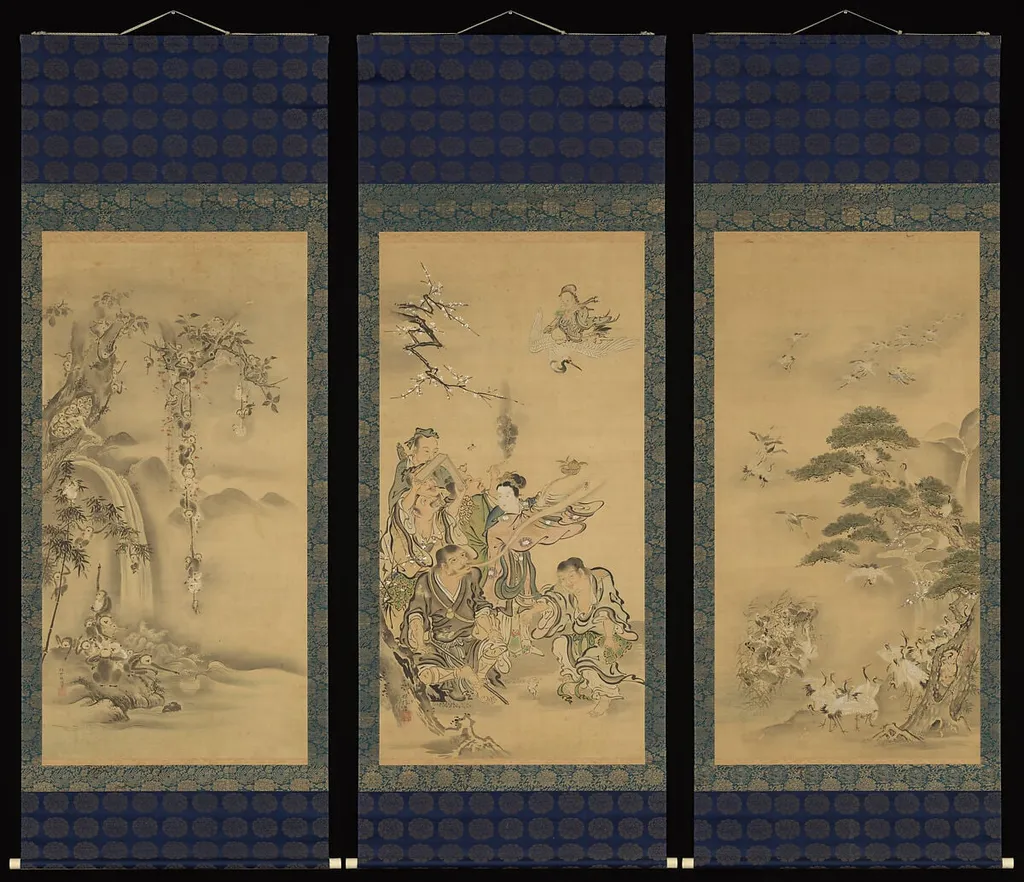
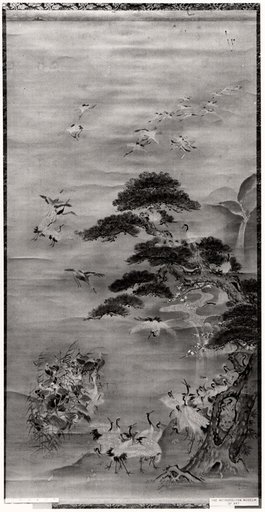
八仙猿鶴図|Eight Daoist Immortals, Cranes, and Gibbons is an ink painting by the Baroque artist Kano Tanshin (Morimasa) 狩野探信. It dates from 1685 and is held in the collection of the Metropolitan Museum of Art.
About this work
Subject & Meaning
Executed by Kano Tanshin in 1685 on silk, the triptych belongs to the religious genre of Japanese painting and is held in the Metropolitan Museum of Art.
The work depicts the Eight Immortals alongside cranes and gibbons, with a prominent tree motif that together convey Daoist themes of longevity, prosperity and spiritual harmony. Cranes symbolize long life, while the tree, often interpreted as a pine or bamboo, represents endurance and vitality. The gathering of the immortals illustrates the quest for transcendence and divine favor.
Executed by Kano Tanshin in 1685 on silk, the triptych belongs to the religious genre of Japanese painting and is held in the Metropolitan Museum of Art. This synthesis relies on the documented iconography of crane, tree and immortal figures.
Technique & Style
The Eight Daoist Immortals, Cranes, and Gibbons (1685) by Kano Tanshin (Morimasa) is executed as a triptych of hanging scrolls, utilizing ink and mineral pigments on silk as the primary medium and support (1). The silk’s fine weave provides a smooth surface, allowing for precise brushwork characteristic of the Kano school’s meticulous style. The handling demonstrates a controlled, linear technique, with delicate washes of color applied to define robes, foliage, and avian plumage, while ink outlines establish the figures’ contours and dynamic postures (1).
Stylistically, the work balances decorative elegance with narrative clarity, employing vibrant yet harmonious hues, particularly in the Immortals’ garments, and naturalistic detailing in the cranes and gibbons, reflecting the artist’s adherence to both Chinese Daoist iconography and Japanese decorative traditions (1).
History & Provenance
The work titled 八仙猿鶴図|Eight Daoist Immortals, Cranes, and Gibbons was painted in 1685 by Kano Tanshin (also known as Morimasa) in Japan, employing ink and color on silk to create a triptych of hanging scrolls depicting Daoist immortals alongside cranes and trees. Its creation is documented in contemporary records as a religious painting of the Kanō school. The piece remained in Japan until it entered the collection of the Metropolitan Museum of Art, where it has been catalogued since 1685 with dimensions of 149.2 cm by 76.8 cm. The museum’s records confirm its provenance and current location.
The triptych hangs at the Metropolitan Museum of Art, New York, where it is recorded as Eight Daoist Immortals, Cranes, and Gibbons, accessioned 1975.1.206a–c. It was exhibited in 1975 as part of the museum’s accession display following its acquisition (1975.1.206a–c).
Overview
Eight Daoist Immortals, Cranes, and Gibbons is a 1685 triptych of hanging scrolls by Kano Tanshin (Morimasa), executed in ink and color on silk. The work depicts eight Daoist immortals traversing a rugged, mist-shrouded landscape populated by cranes and gibbons, traditional symbols of longevity and spiritual attainment. Composed as three vertical panels intended to be displayed side by side, the painting utilizes fine, precise brushwork characteristic of the Kano school to render curling mists and dense forest foliage.
Each immortal is distinguished by specific attributes, such as a flute or fan, identifying their individual mythological personas. Created during the late Edo period, this piece reflects the enduring popularity of Daoist themes in Japanese religious art and demonstrates Tanshin's adherence to established Kano stylistic conventions while adapting them to a narrative format. The integration of mythical figures with natural elements like waterfalls and towering trees creates a dynamic composition that balances spiritual symbolism with atmospheric depth.
Artist & collection
Artist
Kano Tanshin Morimasa (1653-1718) was a Japanese painter of the Kano school, the dominant lineage of professional painters in the Edo period.

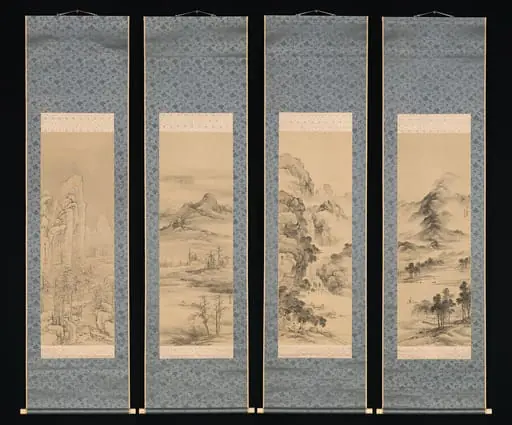 山本梅逸筆 四季山水図|Landscapes of the Four Seasons
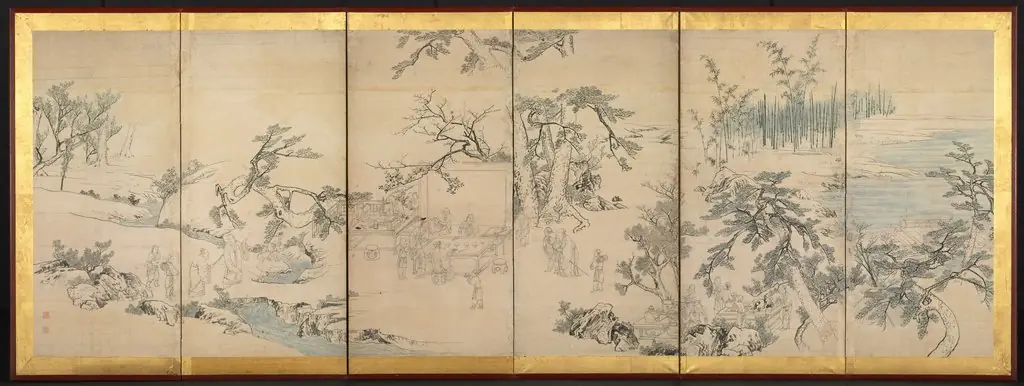 Literary Gathering in the Orchid Pavilion
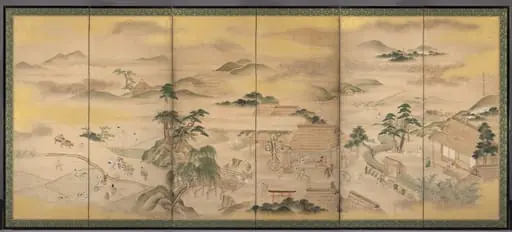 Spring and Autumn Farming (Spring)
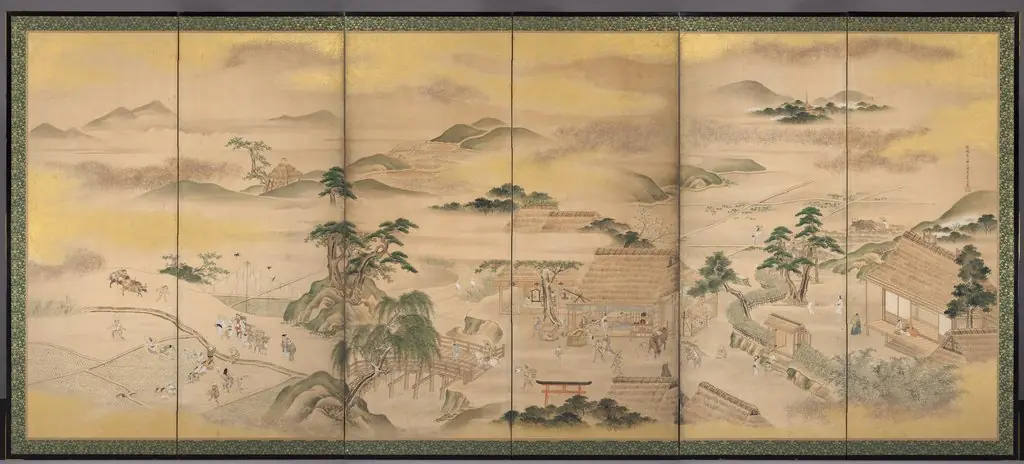 Spring and Autumn Farming (Spring)
 Flowers and Birds
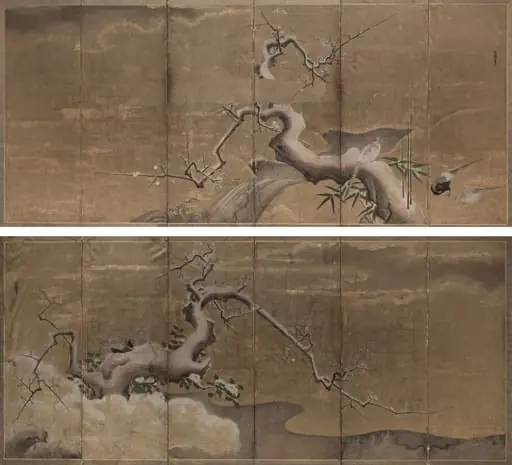 Winter Scene with Plum Trees and Pheasants
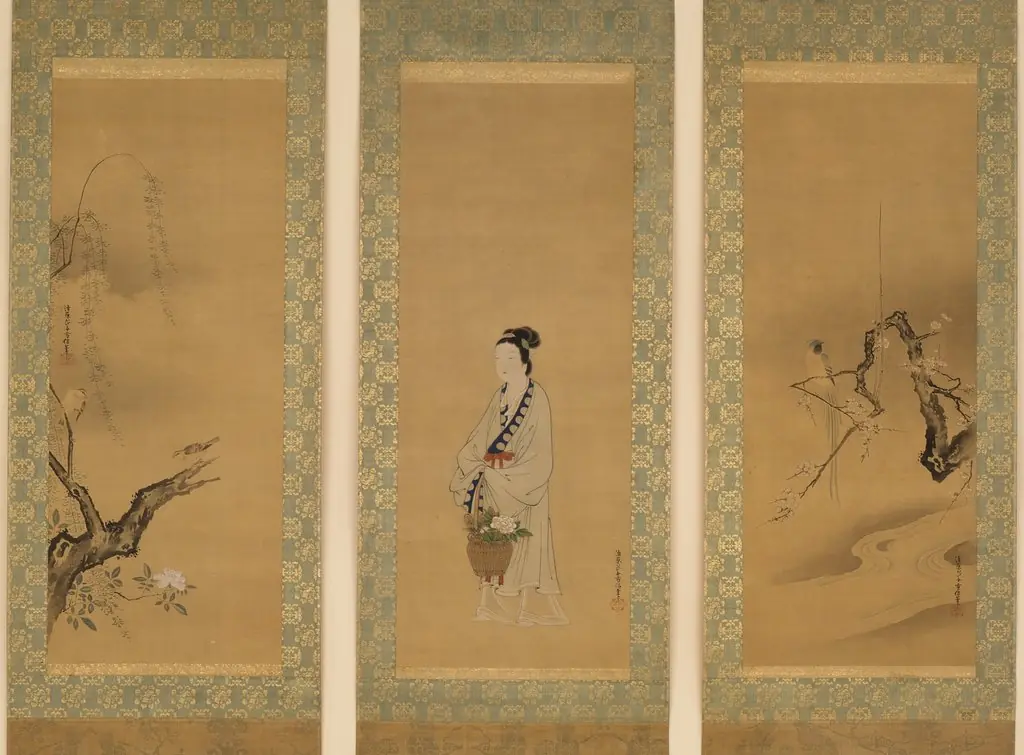 Reishō: Paragon of Filiel Piety; Chinese Blue Magpie with Flowering Plum; Sparrows, Willow, and Rose
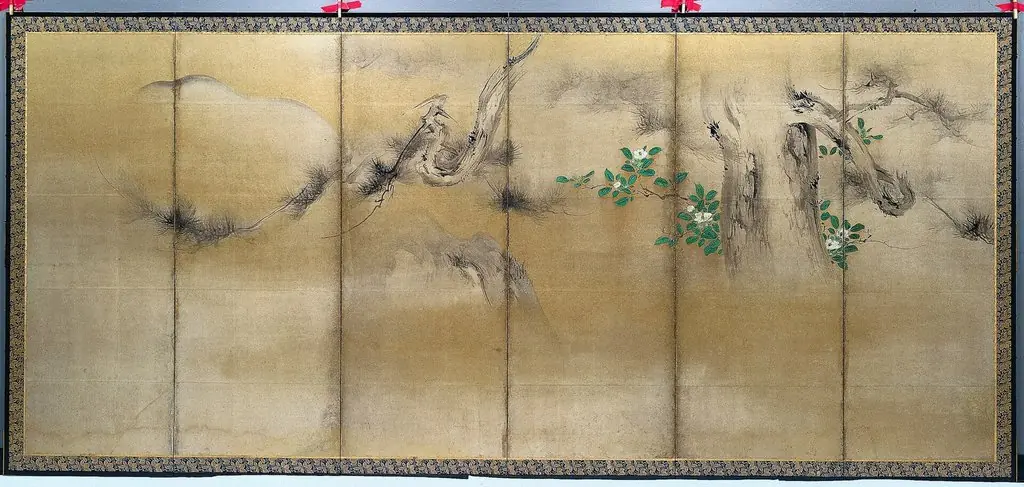 Winter and Summer Flowers
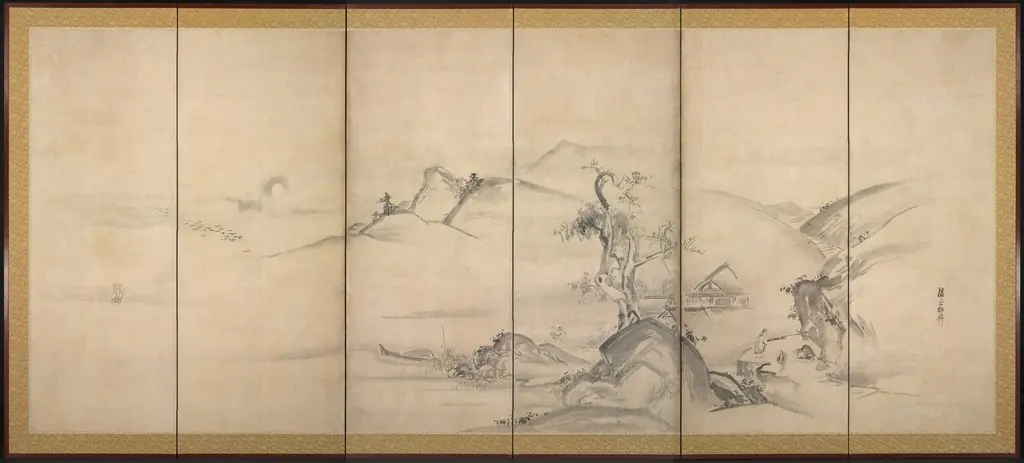 Eight Views of the Xiao and Xiang Rivers
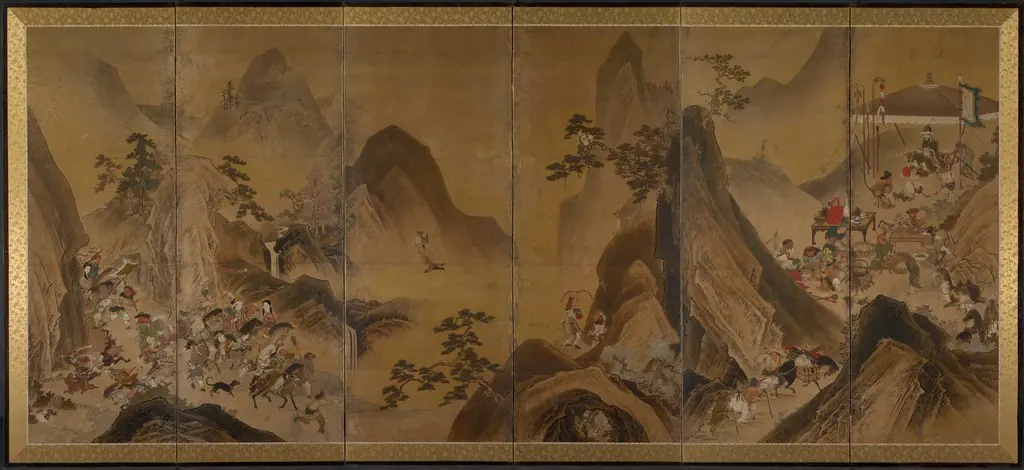 Tartars Hunting in a Mountain Landscape