Artwork
The Regents of the Spinhuis and Nieuwe Werkhuis, Amsterdam
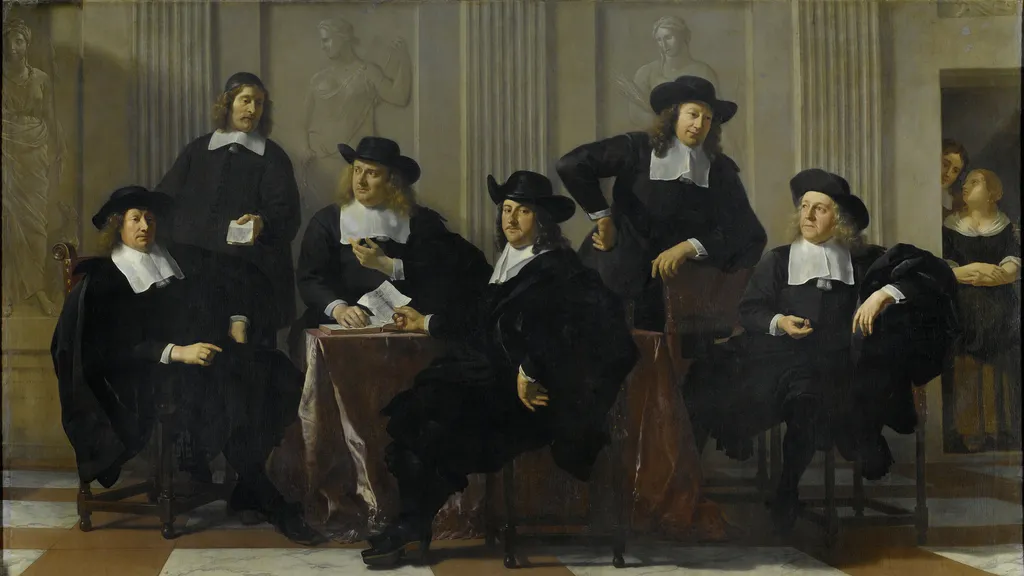
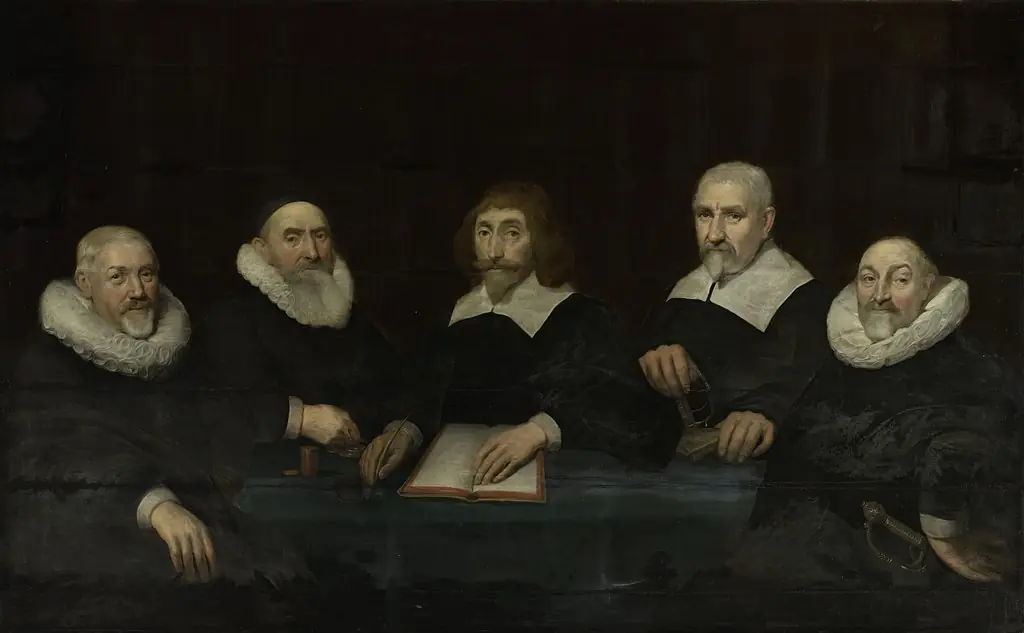
The Regents of the Spinhuis and Nieuwe Werkhuis, Amsterdam is an oil painting by the Dutch Golden Age artist Karel Dujardin. It dates from 1669 and is held in the collection of the Rijksmuseum.
About this work
Subject & Meaning
The composition emphasizes collective authority and moral oversight within the charitable framework of the Spinhuis and Nieuwe Werkhuis.
The painting shows a group of regents and regents' wives gathered in a charitable institution in Amsterdam, representing the civic duty and social organization of the Dutch Republic's regent class. The composition emphasizes collective authority and moral oversight within the charitable framework of the Spinhuis and Nieuwe Werkhuis. It functions as a formal record of institutional leadership rather than a narrative scene, reflecting the prominence of group portraiture in 17th-century Dutch civic art.
The work belongs to the genre of regent group portraits, highlighting themes of governance, charity, and social hierarchy.
History & Provenance
Karel Dujardin created the group portrait titled The Regents of the Spinhuis and Nieuwe Werkhuis, Amsterdam in 1669. Executed in oil paint on canvas, the work was commissioned to depict the governing board of these specific Amsterdam institutions. The painting measures 225 cm in height and 390 cm in width.
Historically associated with the institutions it portrays, the artwork is currently held in the collection of the Rijksmuseum in Amsterdam.
Legacy
The painting's legacy is anchored in its role as a prototype for Amsterdam regent portraiture, influencing later group portraits with its dignified composition and meticulous detail. Its reputation as a masterful example of 17th-century civic portraiture was reinforced by its inclusion in the Rijksmuseum collection, where it remains a benchmark for scholarly study of Dutch Golden Age governance art.
The work's influence extends to modern interpretations of civic identity, cited in art historical analyses for its innovative portrayal of institutional authority and its technical virtuosity in rendering fabric and facial expression.
Overview
Created in 1669, this oil painting by Karel Dujardin records the governing board of the Spinhuis and Nieuwe Werkhuis in Amsterdam. Executed during the Dutch Golden Age, the work is part of the Rijksmuseum’s collection. It presents a formal assembly of men in dark dress, positioned around a table within a stone‑walled interior, conveying a sense of institutional gravitas.
Technique & Style
Dujardin employs a restrained palette of muted tones, allowing the crisp whites of the collars to stand out against the dark garments. The composition is organized around a central table, with careful attention to the play of light on stone columns and the subtle modeling of faces, reflecting the artist’s skill in rendering texture and atmosphere within a relatively small, intimate format.
Context
In the mid‑17th century, group portraits of regents were common in Dutch civic life, serving both as records of governance and as visual affirmations of social responsibility. Dujardin, better known for Italianate landscapes, applied his compositional sensibility to this genre, situating the officials within a dignified architectural setting that underscores their public role.
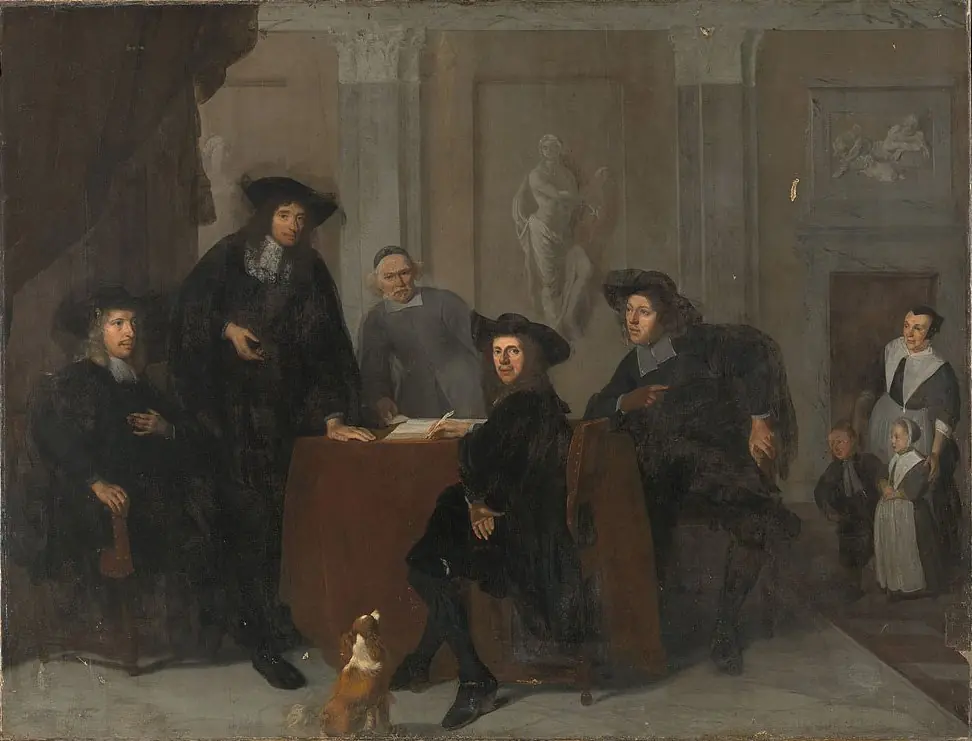
Artist & collection

Artist
Karel Dujardin (September 27, 1626 – November 20, 1678) was a Dutch Golden Age painter.

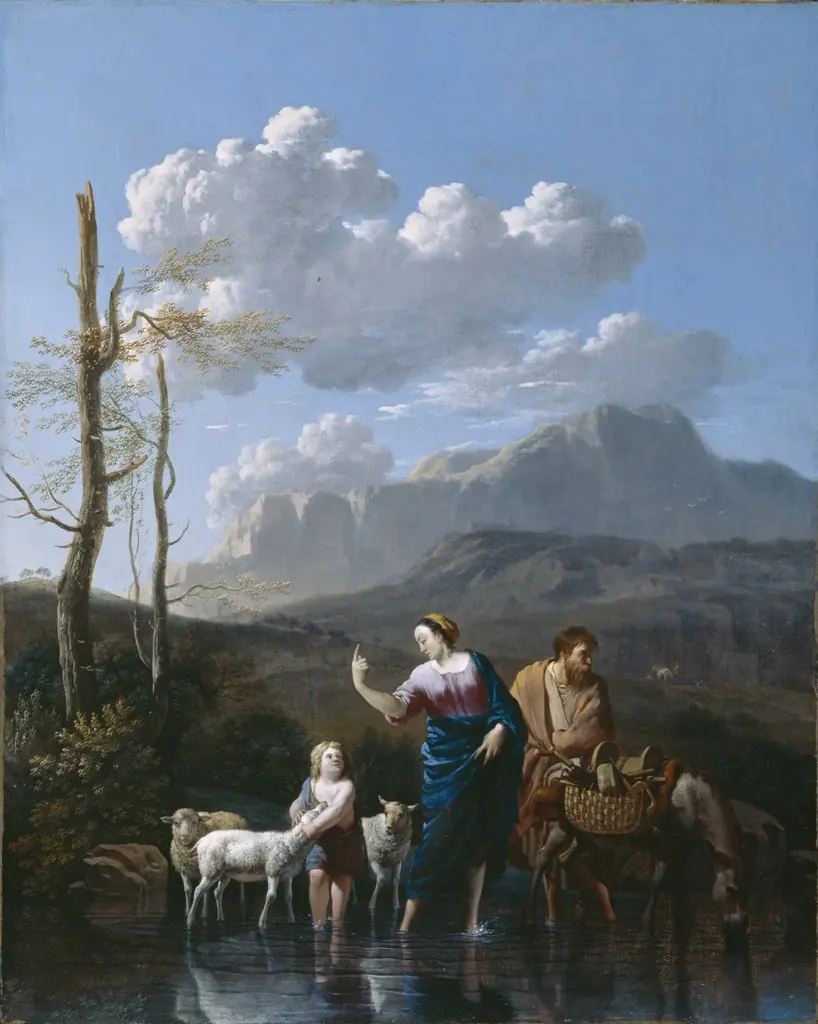
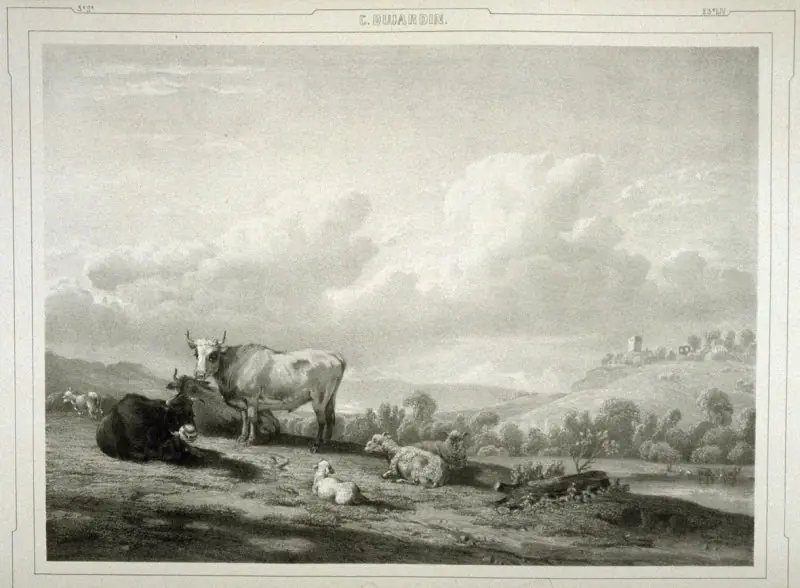
- Regents of the Leper's house in Amsterdam
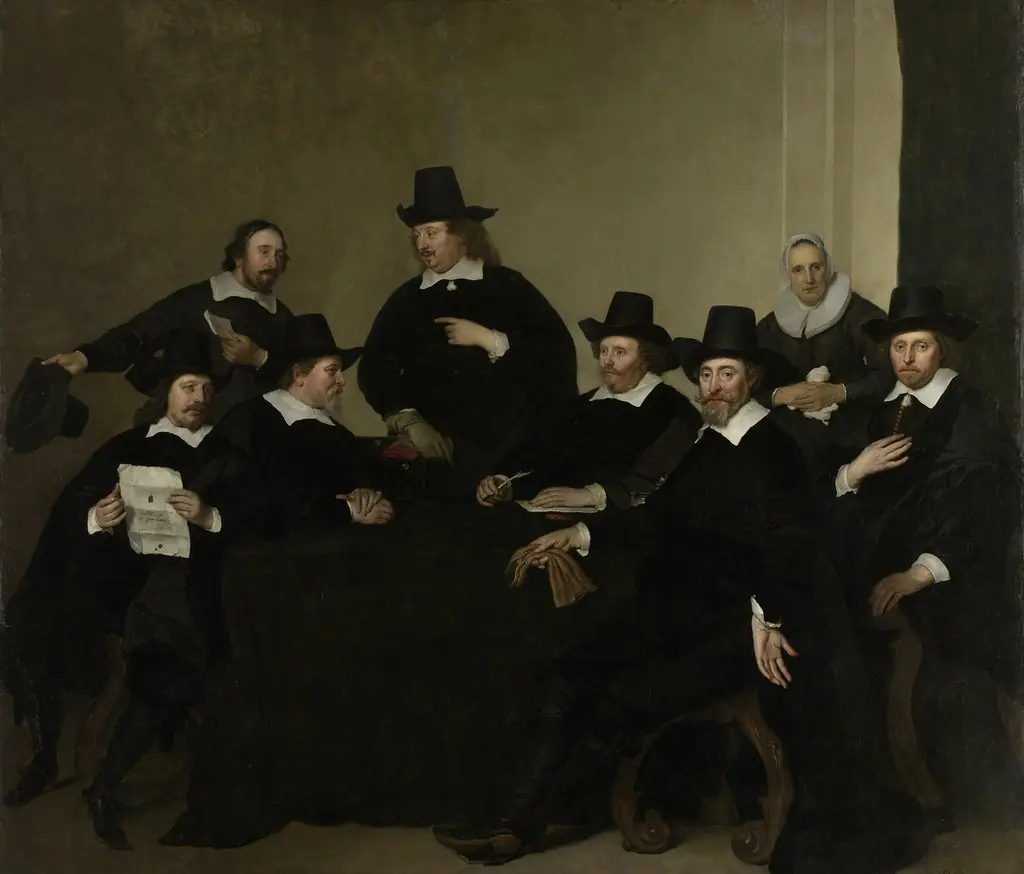 The regents of the Nieuwe Zijds institute for the outdoor relief of the poor, Amsterdam, ca 1650
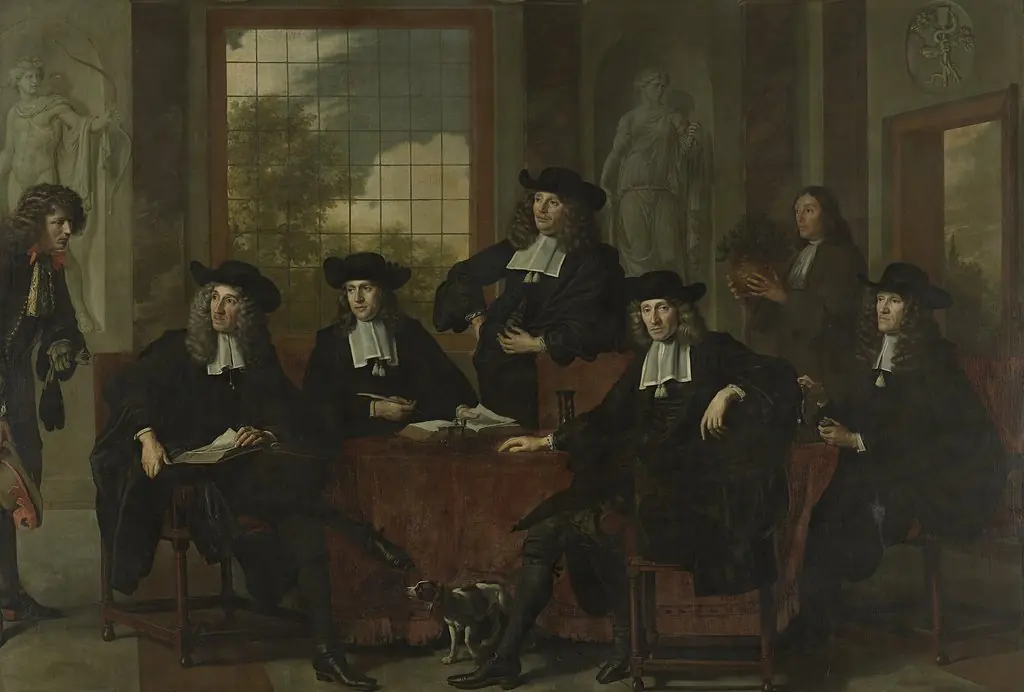 The superintendents of the Collegium Medicum in Amsterdam
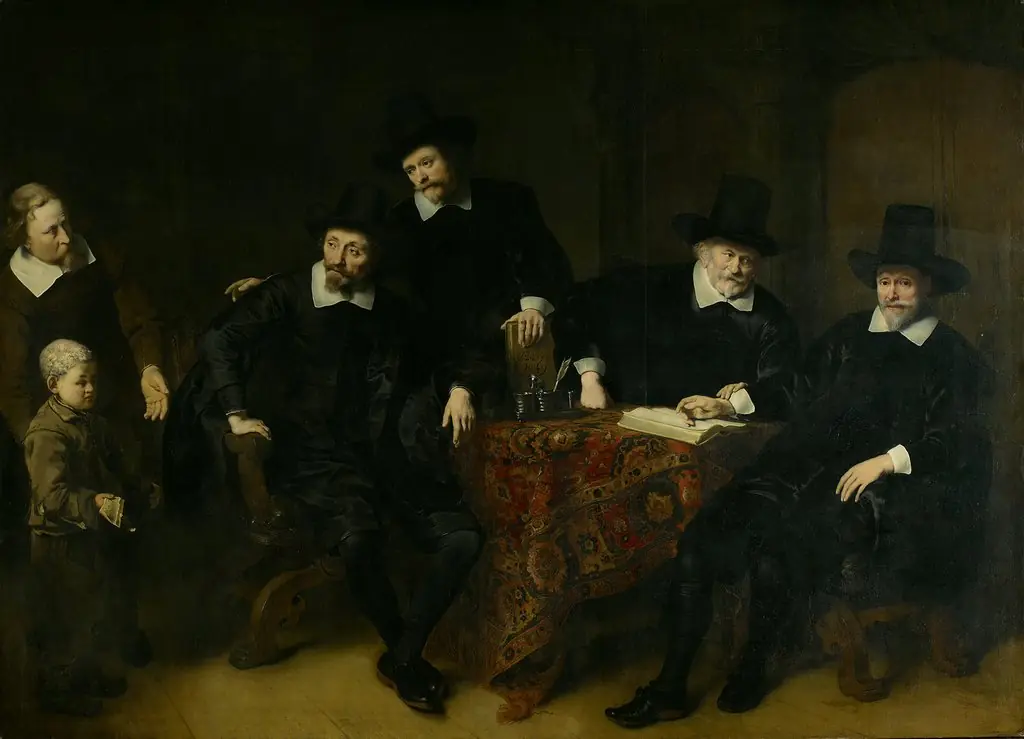 The Regents of the Leper's house in Amsterdam in 1649
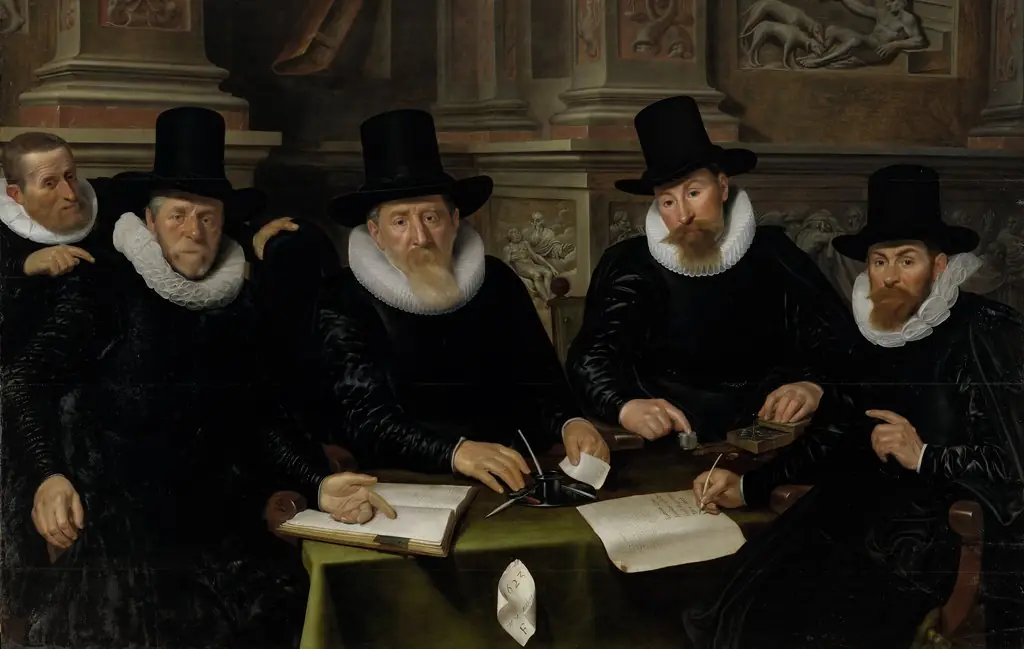 Four Regents and the ‘House Father’ of the Amsterdam Lepers’ Asylum
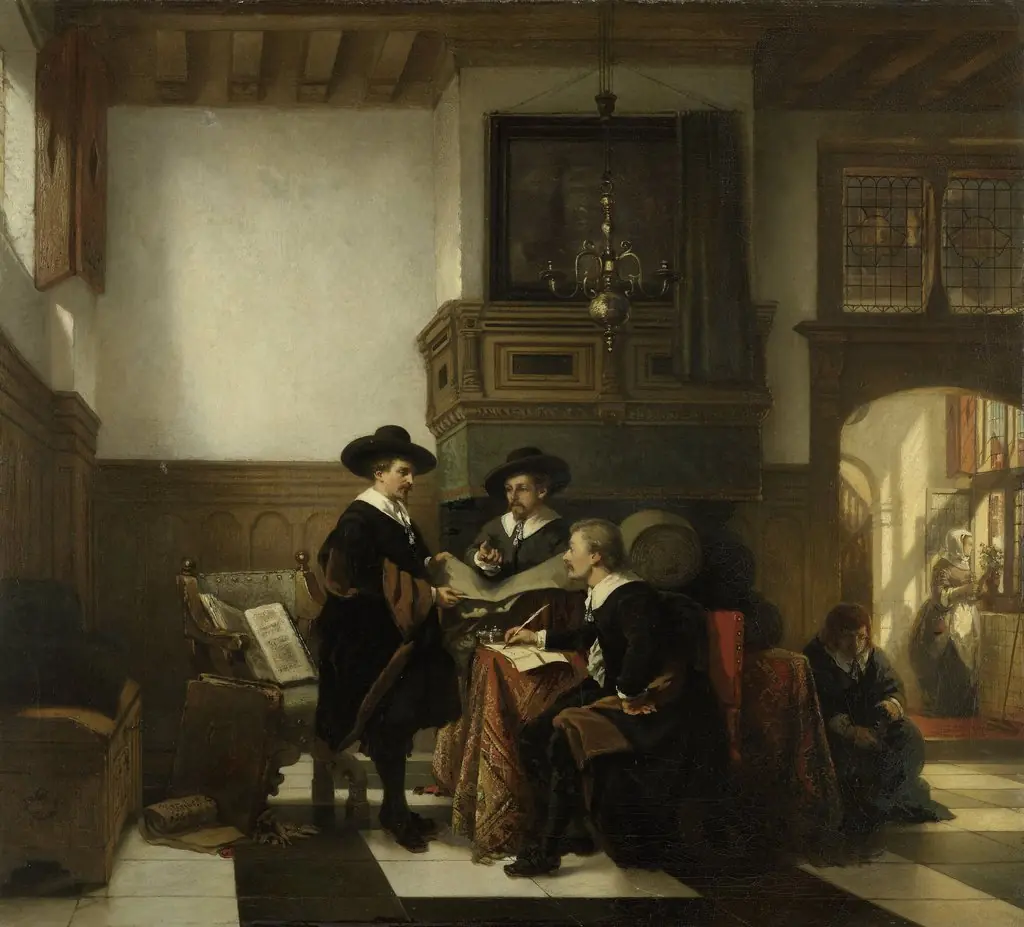 Syndics of the Leiden
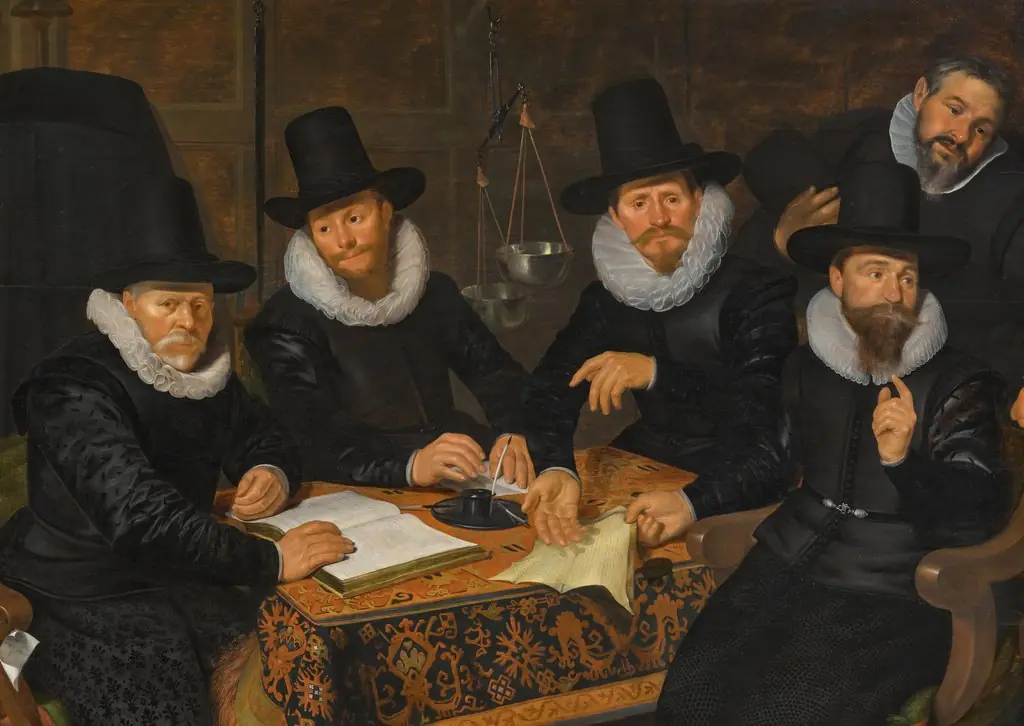 Four Regents of the Groot-Kramergild
 The regents of the Tuchthuis (house of correction) in Middelburg, 1643