Artwork
Wisteria Maiden (Fuji Musume)
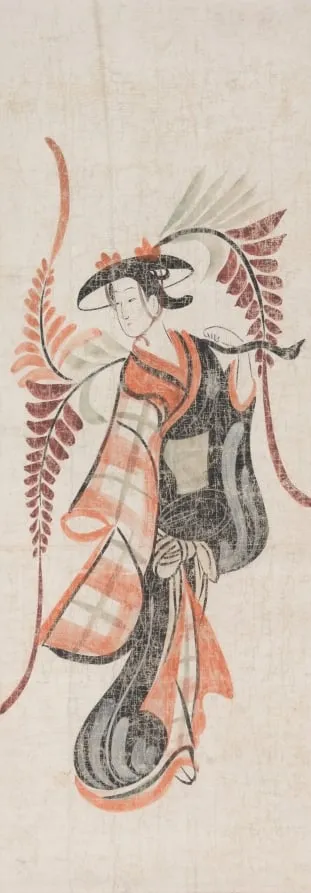
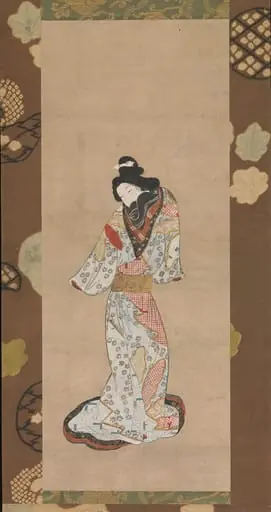
Wisteria Maiden (Fuji Musume) is an unspecified painting by the Baroque artist Unknown. It dates from 1657 and is held in the collection of the Cleveland Museum of Art. The work depicts a woman in a flowing blue robe standing beneath a mass of purple wisteria vines.
- Accession no.
- 1963.96
- Credit line
- Anonymous Gift
About this work
This painting is an otsu-e, a cheap, mass-produced picture sold as a good-luck charm for marriages.
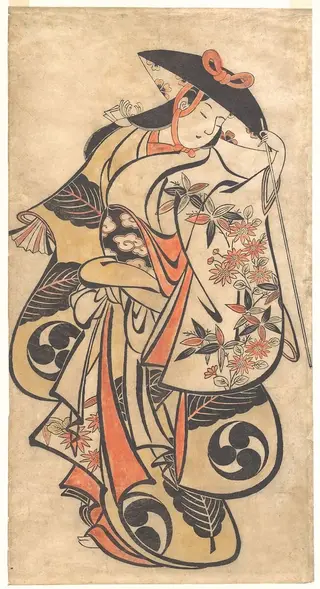
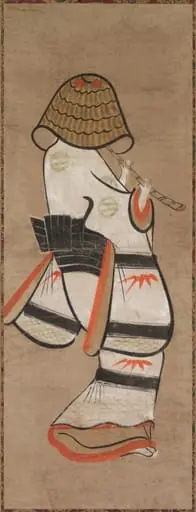
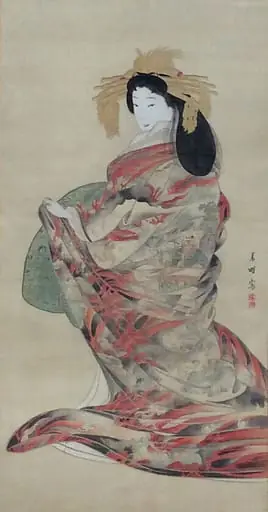
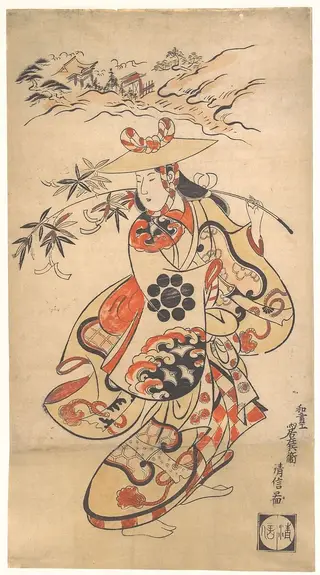
A woman in a flowing blue robe stands under a tangle of purple wisteria vines. Her face is pale, her hair black and glossy, and she holds a fan in one hand.
This painting is an otsu-e, a cheap, mass-produced picture sold as a good-luck charm for marriages. It wasn’t made for collectors or museums. The wisteria maiden comes from a popular dance, a character people would have recognized instantly.
To see more art from this time, look up japan, edo period (1615–1868).
Overview
The work depicts a woman in a flowing blue robe standing beneath a mass of purple wisteria vines. Her complexion is pale, her hair glossy black, and she holds a fan in one hand, creating a serene yet festive tableau.
Subject & Meaning
The figure represents the so‑called “wisteria maiden,” a character drawn from a popular dance of the Edo period. Such images were understood by contemporary viewers as symbols of marital harmony and were often used as talismans to attract good fortune in marriage.
Technique & Style
Executed as an otsu‑e, the painting belongs to a category of inexpensive, mass‑produced prints. The composition relies on flat areas of color and simplified forms, emphasizing decorative appeal over fine detail, which made the image suitable for widespread distribution.
History & Provenance
Created during Japan’s Edo era (1615–1868), the piece was not intended for elite collections but for the general public. It would have been sold in marketplaces or temple fairs as a good‑luck charm, reflecting the commercial art practices of the time.
Artist & collection