Artwork
The Bookplate of the Printer's Devil
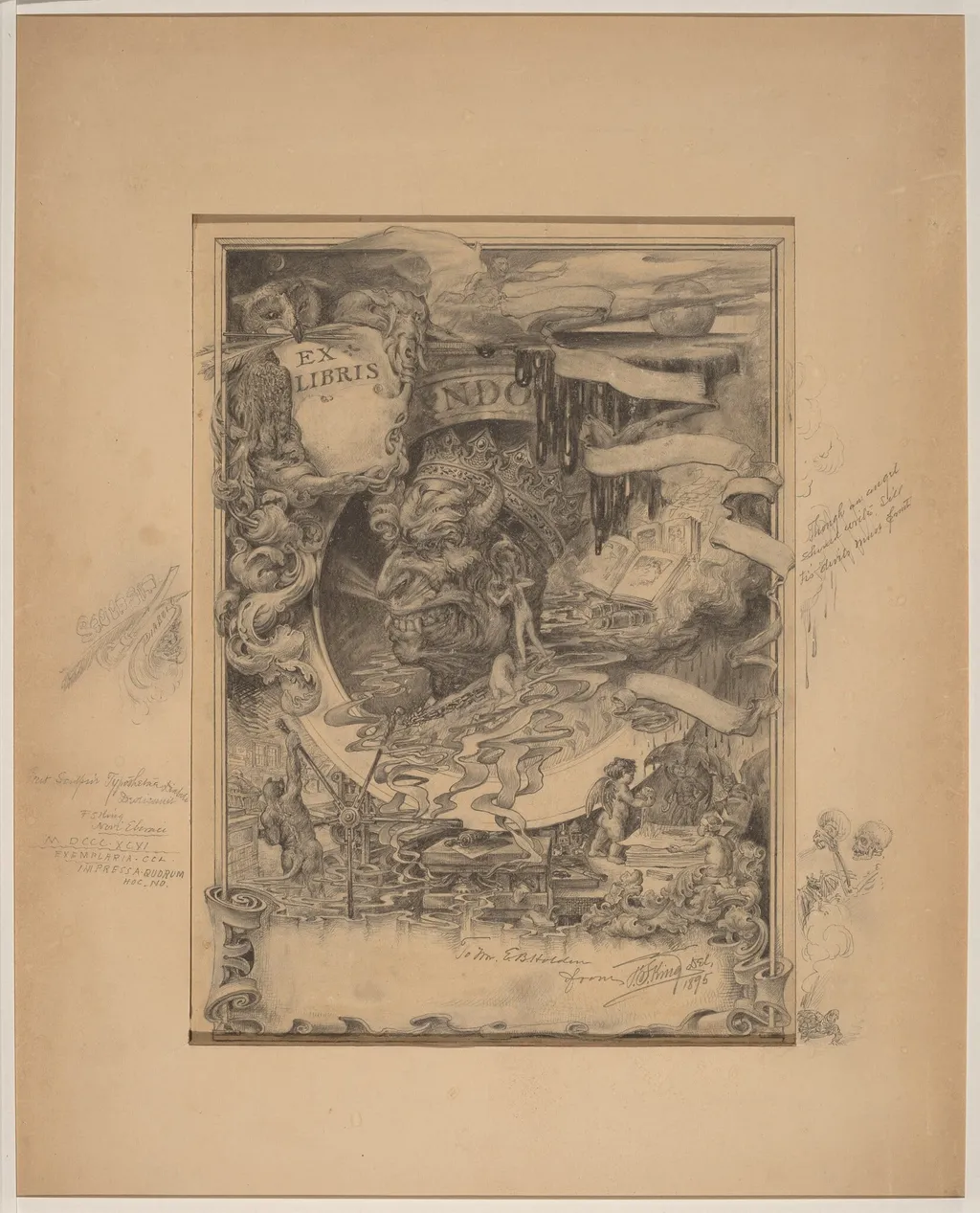
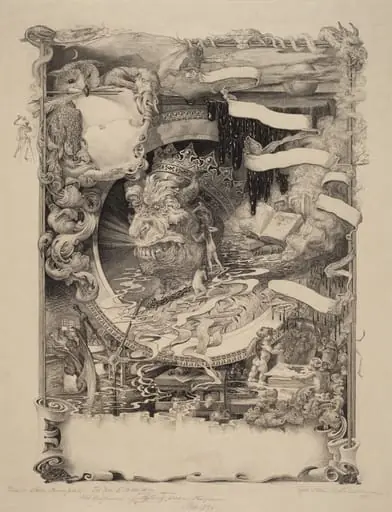
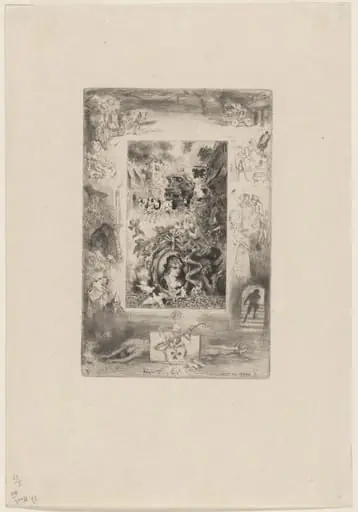
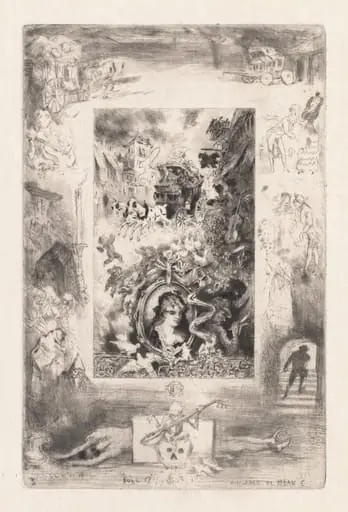
The Bookplate of the Printer's Devil is a graphite drawing by the Impressionist artist Francis Scott King. It dates from 1895 and is held in the collection of the National Gallery of Art.
- Inscription
- Inscribed:upper left in graphite: EX LIBRIS; upper center in graphite: [...]NDO; lower right in graphite: To Mr. E. B. Holden ; from F.S. King Del. / 1895; upper right verso in graphite: My cares and my inquiries are directed in / search of decency and truth, and in this I am / wholly engrossed and occupied; lower left verso in graphite: Under this sign thou shalt conquer; left center of mat in graphite: SCULPSIT / DIABOLO / Fecit Sculpsit Typothetae / Diabolo / F S King / Novi Eboraci / M.DCCC.XCVI / EXEMPLARIA. CCL. / IMPRESSA.QUDRUM / HOC.NO.; right center of mat in graphite: Though an angel / should write, still / Tis' devils must print
About this work
Overview
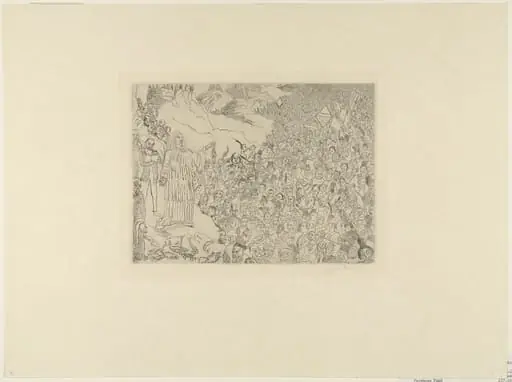
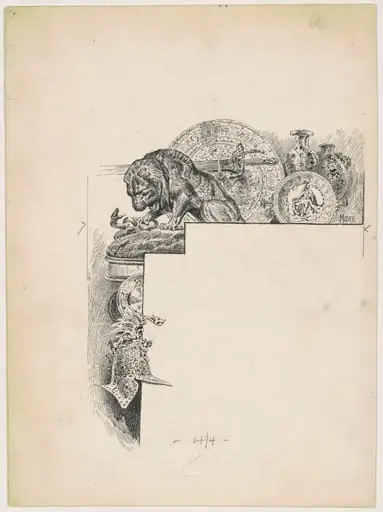
Francis Scott King’s graphite drawing, dated 1895, is titled The Bookplate of the Printer’s Devil. Executed on wove paper, the work functions as a decorative bookplate, yet its composition extends far beyond a simple imprint, presenting a densely packed tableau that merges mechanical and fantastical elements.
Subject & Meaning
At the composition’s core stands a horned, winged figure that evokes the folkloric “printer’s devil,” a mischievous spirit said to assist in the printing trade. This central entity presides over a crowd of diminutive figures, tangled machinery, floating books and cloud‑like forms, suggesting a chaotic workshop caught between labor and imagination.
Technique & Style
King employs a monochrome graphite palette, using vigorous, swirling lines to generate movement and depth. The drawing relies on strong contrasts of light and dark, a chiaroscuro effect that heightens the sense of turbulence. Fine hatching renders intricate details, tiny workers, fragmented text, and obscure symbols, while the overall composition feels deliberately crowded.
History & Provenance
Created in the late nineteenth century, the piece reflects King’s interest in the intersection of print culture and myth. Though specific ownership records are scarce, the drawing has been catalogued in several collections of American graphic art and is referenced in studies of bookplate design from the period.
Own this work as a print
Artist & collection