Artwork
風俗美人時計 子ノ刻 妾|Midnight: Mother and Sleepy Child
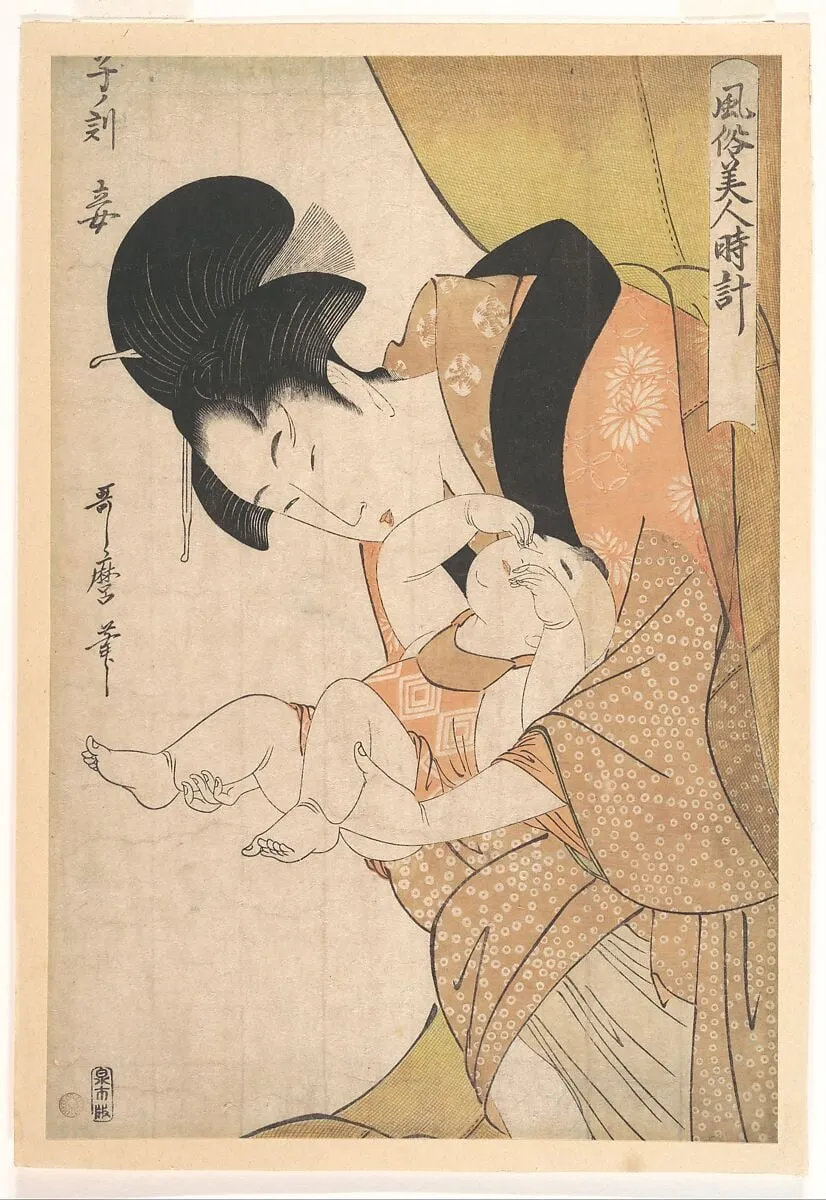
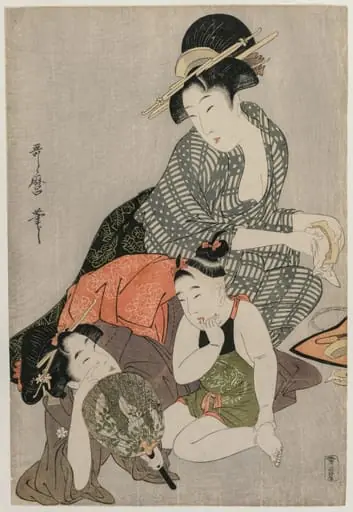
風俗美人時計 子ノ刻 妾|Midnight: Mother and Sleepy Child is an ink print by the Romanticist artist Kitagawa Utamaro. It dates from 1790 and is held in the collection of the Metropolitan Museum of Art.
About this work
Subject & Meaning
The juxtaposition of time‑keeping and maternal care underscores themes of transience and the quiet moments that punctuate daily routines.
The print shows a mother cradling a sleeping child beneath a clock face, a scene drawn from everyday domestic life in Edo-period Japan. The juxtaposition of time‑keeping and maternal care underscores themes of transience and the quiet moments that punctuate daily routines. The work is categorized as a bijin‑ga portrait within the ukiyo‑e tradition, reflecting contemporary fascination with elegant women and intimate domestic scenes.
Technique & Style
Executed in 1790, the print is a polychrome woodblock (nishiki-e) on paper, printed with ink and colorants typical of late eighteenth-century ukiyo-e technique. The sheet measures 36.5 cm in height by 24.4 cm in width, aligning with standard ōban format used for bijin-ga during this period.
Stylistically, the composition centers on a seated mother holding a child, rendered with Utamaro’s signature soft line and delicate gradations of color. The mother’s garments and the child’s skin are tinted with pale hues, while the background is left largely unprinted, directing focus to the figures and the inset clock face. The clock’s dial is integrated into the scene, reinforcing the bijin-ga’s blend of genre subject and decorative detail.
Context
Kitagawa Utamaro created this woodblock print in 1790, depicting a mother and child in a domestic moment under the title Midnight: Mother and Sleepy Child. The work belongs to the bijin-ga genre of ukiyo-e portraiture, focusing on women and children in everyday scenes. It has been discussed in scholarship as an example of Utamaro's exploration of intimate domestic themes within the broader context of Edo-period print culture. The Metropolitan Museum of Art holds the print in its collection, cataloging it within their ukiyo-e holdings.
Legacy
The work has shaped subsequent depictions of domestic intimacy in ukiyo-e, inspiring later artists to explore nocturnal domestic scenes with comparable tenderness. Its compositional balance between mother and child has been cited in studies of maternal representation in Japanese print culture from the late nineteenth century onward. The piece is held in the collection of the Metropolitan Museum of Art, where it is frequently referenced in exhibitions on Edo-period portraiture.
Overview
Kitagawa Utamaro’s woodblock print, dated 1790, presents a nocturnal domestic scene titled “Midnight: Mother and Sleepy Child.” Executed in ink and color on paper, the image captures a mother gently holding her drowsy infant within a dim interior, the composition framed by a decorative clock. The work belongs to Utamaro’s series of everyday genre prints that depict intimate moments of ordinary life.
History & Provenance
Produced for the broader public rather than elite collectors, the print circulated among Edo‑period consumers of popular art. While specific ownership records are scarce, the piece has been documented in several museum collections and catalogues of Utamaro’s oeuvre, confirming its attribution and dating to the late 18th century.
Artist & collection


 Untitled
 Untitled
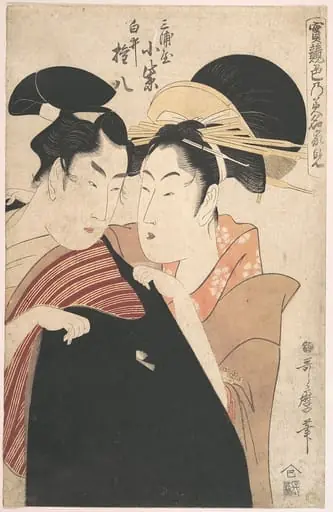 実競色乃美名家見 三浦屋小紫 白井権八|The Lovers Miura-ya Komurasaki and Shirai Gonpachi.
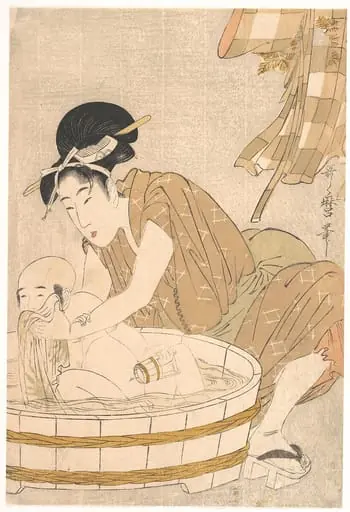 行水|Bathtime (Gyōzui)
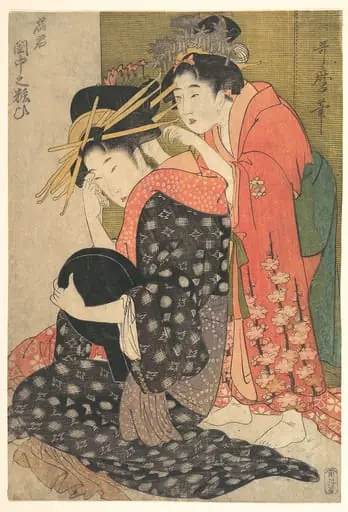 名君 閨中の粧ひ|The Oiran Yoso-oi Seated at Her Toilet
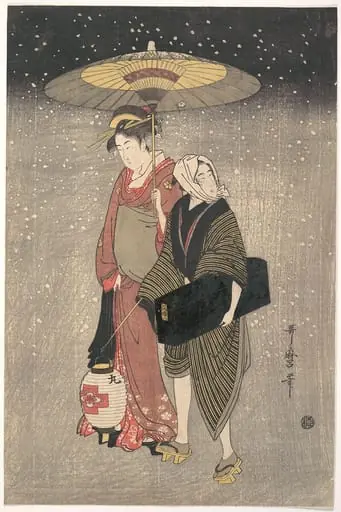 Untitled
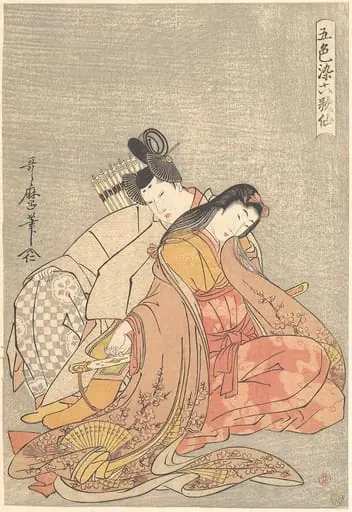 『五色染六歌仙』 在原業平と小野小町|“The Poet Ariwara no Narihira (825–880) and Ono no Komachi,” from the series Five Colors of Love for the Six Poetic Immortals (Goshiki-zome rokkasen)
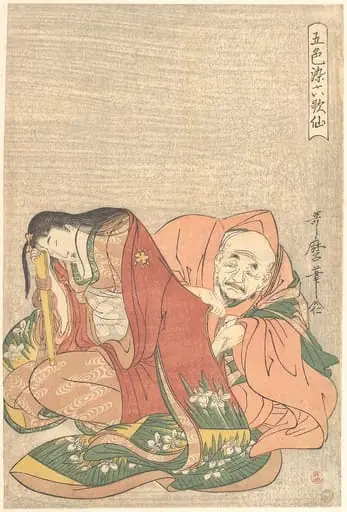 『五色染六歌仙』 僧正遍昭|“The Poet Sōjō Henjō (816–890) Slipping a Letter into a Woman’s Sleeve,” from the series Five Colors of Love for the Six Poetic Immortals (Goshiki-zome rokkasen)
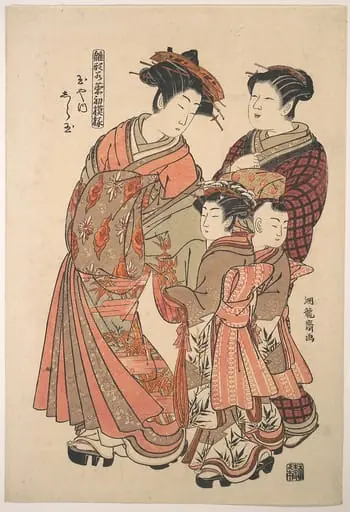 『雛形若菜初模様 玉や内 しら玉』|The Courtesan Shiratama of the Tamaya Brothel, from the series “A Pat-tern Book of the Year’s First Designs, Fresh as Spring Herbs” (“Hinagata wakana hatsu moyō”)
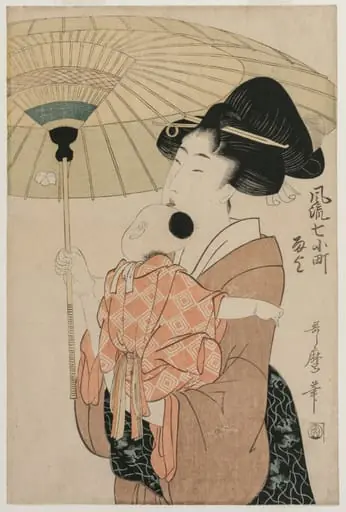 Prayers for Rain, from the series Seven Elegant Komachi
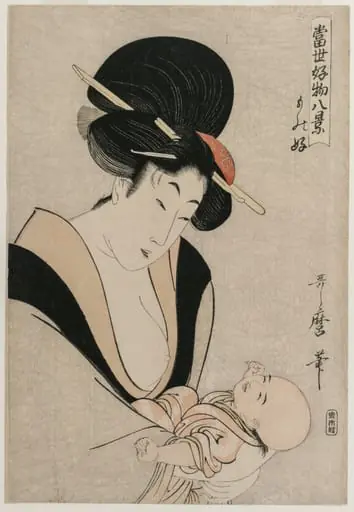 Fond of Things from the series Eight Views of Favorite Things of Today's World
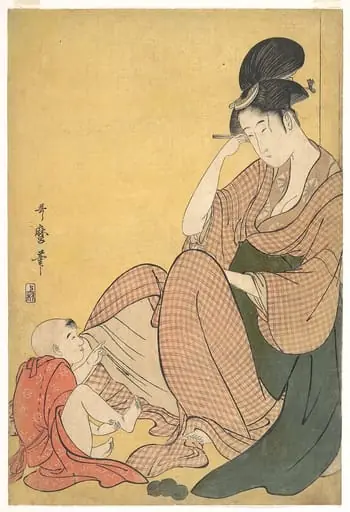 Untitled
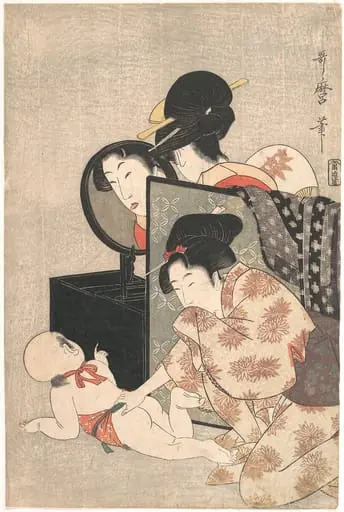 Untitled
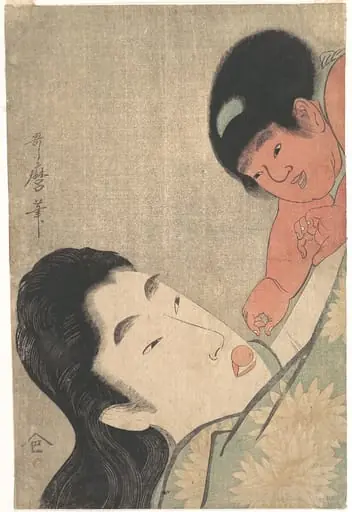 山姥と金太郎|Yamauba and Kintarō Playing with a Cherry
 Cleaning Combs
 Untitled
 Studied in the Edo/Japonisme course