Artwork
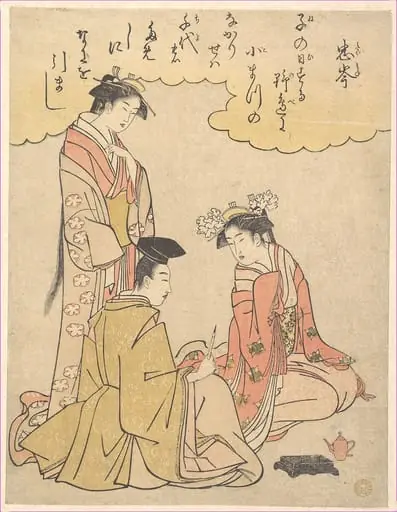
『五色染六歌仙』 在原業平と小野小町|“The Poet Ariwara no Narihira (825–880) and Ono no Komachi,” from the series Five Colors of Love for the Six Poetic Immortals (Goshiki-zome rokkasen)
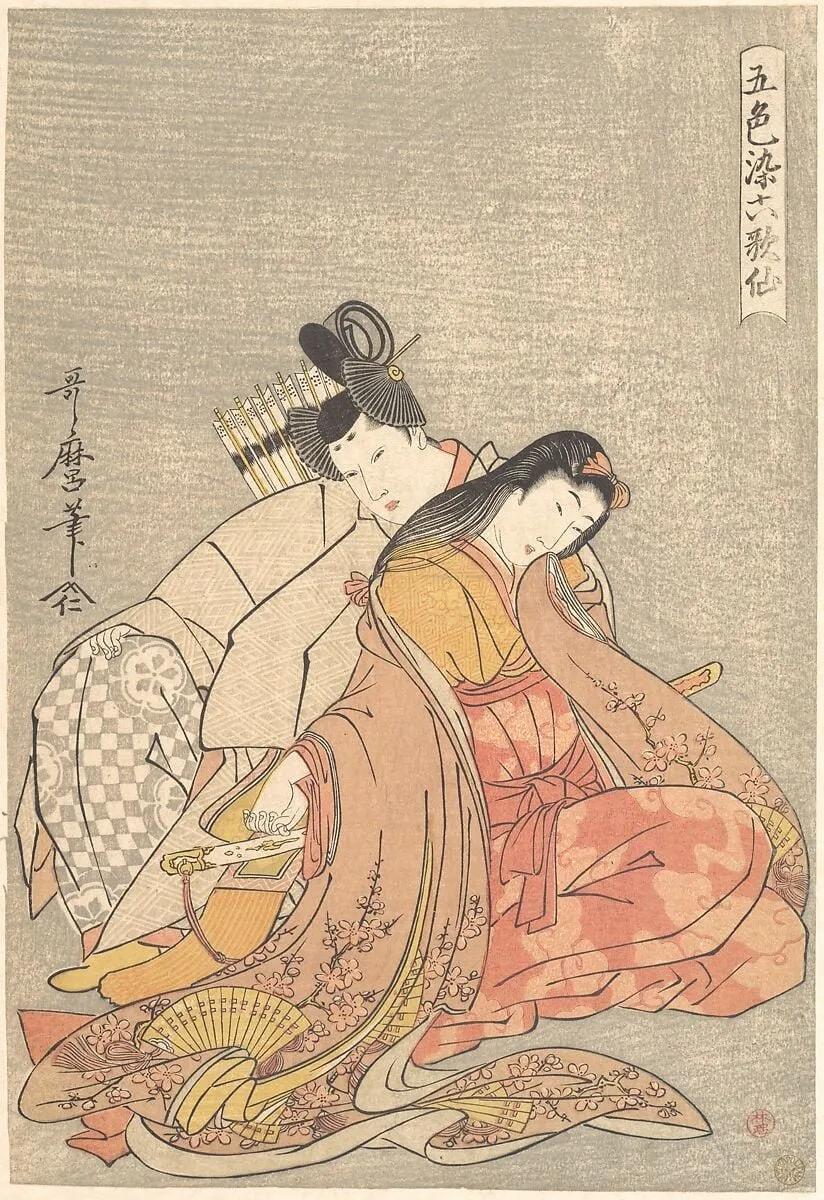
『五色染六歌仙』 在原業平と小野小町|“The Poet Ariwara no Narihira (825–880) and Ono no Komachi,” from the series Five Colors of Love for the Six Poetic Immortals (Goshiki-zome rokkasen) is an ink print by the Romanticist artist Kitagawa Utamaro. It dates from 1798 and is held in the collection of the Metropolitan Museum of Art.
About this work
Subject & Meaning
This 1798 woodblock print by Kitagawa Utamaro depicts the celebrated Heian-period poets Ariwara no Narihira and Ono no Komachi.
This 1798 woodblock print by Kitagawa Utamaro depicts the celebrated Heian-period poets Ariwara no Narihira and Ono no Komachi. As a work within the ukiyo-e tradition, specifically categorized as a mitate-e, the image functions as an allusive parody or visual metaphor rather than a literal historical portrait. The composition brings together these two legendary figures, who are central subjects in Japanese literary history, representing the archetype of the poetic immortal.
By pairing the renowned male and female poets, the print engages with themes of romantic and artistic excellence associated with the Six Poetic Immortals, utilizing the genre's conventions to reinterpret classical literature for a contemporary Edo-period audience.
Technique & Style
The print is a woodblock print executed in ink and color on paper, a technique characteristic of late eighteenth-century Japanese ukiyo-e production. identifies the medium specifically as woodblock print with ink and color on paper, while classifies the work within the ukiyo-e tradition and further categorizes it as a nishiki-e, a "brocade print" produced through the use of multiple color blocks registered in precise alignment with the keyblock. also identifies the genre as mitate-e, a format involving playful allusion or reinterpretation of a classical theme, in this instance, the pairing of the Six Poetic Immortals (Rokkasen) with a five-color dyeing conceit.
Stylistically, the work belongs to the portrait genre, depicting the two poets as idealized figures. The combination of nishiki-e coloration with the mitate-e conceptual framework reflects Utamaro's mature approach to bijin-ga and poetic portraiture during the late 1790s.
Context
Created in 1798, this woodblock print by Kitagawa Utamaro belongs to the series Five Colors of Love for the Six Poetic Immortals (Goshiki-zome rokkasen). The work exemplifies the ukiyo-e tradition through its classification as a nishiki-e and mitate-e, genres that utilize visual puns and historical allusions to depict contemporary subjects through the lens of the past. By portraying the Heian-era poets Ariwara no Narihira and Ono no Komachi, Utamaro engages with the established cultural motif of the Six Poetic Immortals while filtering it through the aesthetic sensibilities of late Edo-period Japan.
The piece is currently held in the collection of the Metropolitan Museum of Art, where it stands as a significant example of Utamaro's portraiture and his ability to blend historical reverence with the popular tastes of his time.
Overview
Kitagawa Utamaro’s woodblock print, created around 1798, belongs to the series Goshiki‑zome rokkasen, “Five‑color dyed Six Poetic Immortals.” The work presents a trio of figures, Ariwara no Narihira, the celebrated Heian poet, Ono no Komachi, famed for her beauty and verse, and an additional poet, arranged side by side against a softly colored background.
History & Provenance
Produced in the late eighteenth century, the print reflects the popularity of multi‑panel series that celebrated literary figures for a growing urban audience. As part of the Goshiki‑zome rokkasen set, it would have been distributed among collectors of ukiyo‑e prints, contributing to the broader dissemination of Heian poetry motifs during the Edo period.
Artist & collection


 Untitled
 Untitled
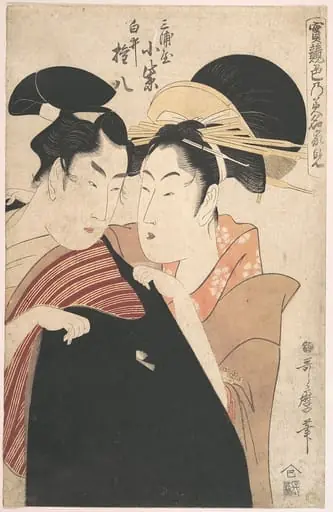 実競色乃美名家見 三浦屋小紫 白井権八|The Lovers Miura-ya Komurasaki and Shirai Gonpachi.
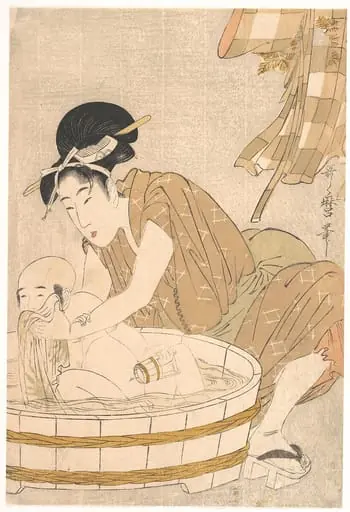 行水|Bathtime (Gyōzui)
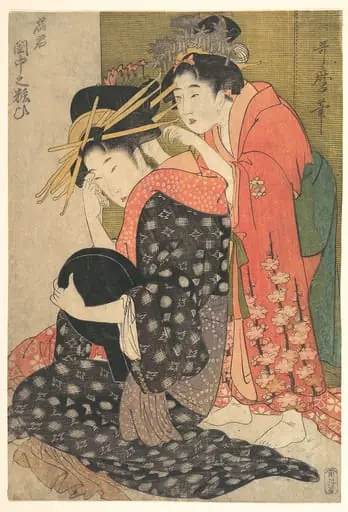 名君 閨中の粧ひ|The Oiran Yoso-oi Seated at Her Toilet
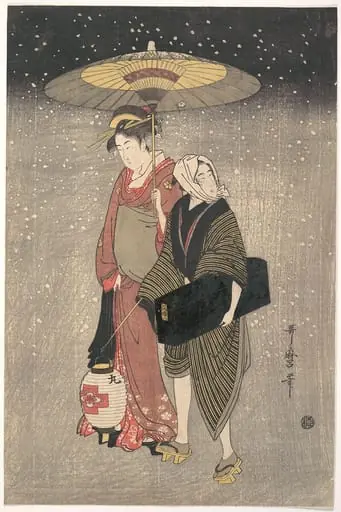 Untitled
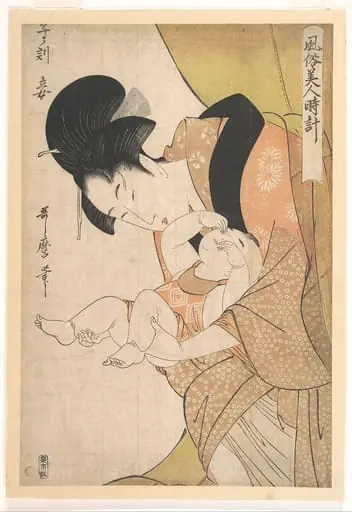 風俗美人時計 子ノ刻 妾|Midnight: Mother and Sleepy Child
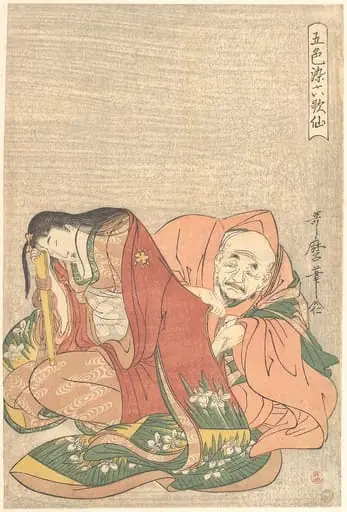
- 『五色染六歌仙』 僧正遍昭|“The Poet Sōjō Henjō (816–890) Slipping a Letter into a Woman’s Sleeve,” from the series Five Colors of Love for the Six Poetic Immortals (Goshiki-zome rokkasen)
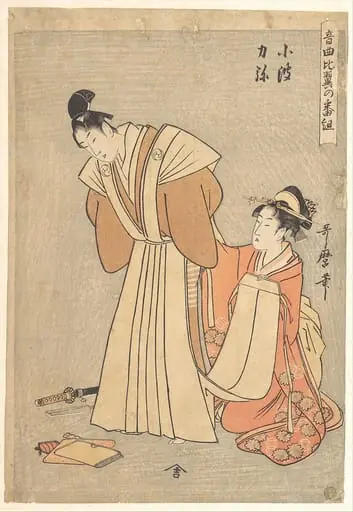 音曲比翼の番組 小波 力弥|Rikiya and Konami, from the series A Program with Music about Loving Couples (Ongyoku hiyoku no bangumi)
 Untitled
 Untitled
 Untitled
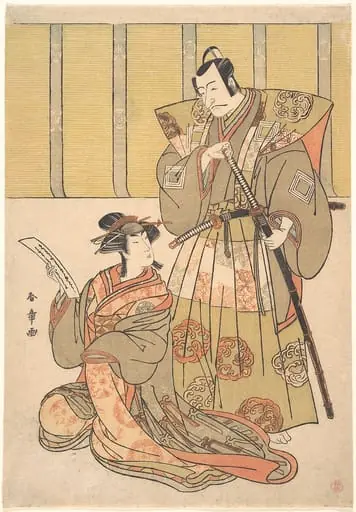
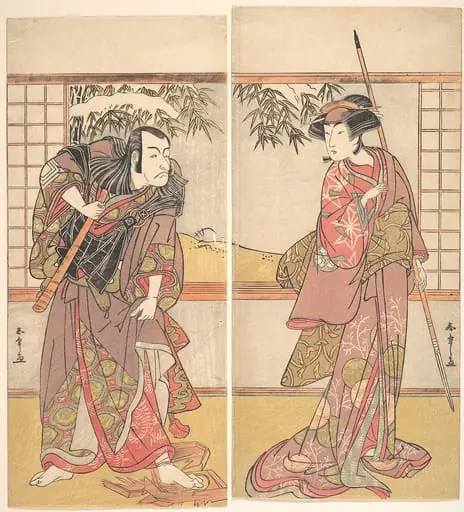 勝川春章画 二代目小佐川常世・五代目市川団十郎|Kabuki Actors Osagawa Tsuneyo II and Ichikawa Danjūrō V
 Untitled
 Untitled
 礫川亭永理 (鳥橋斎栄里)画 壬生忠岑の見立絵|Courtier and Two Ladies of the Court, with a Poem by Mibu no Tadamine