Artwork
行水|Bathtime (Gyōzui)
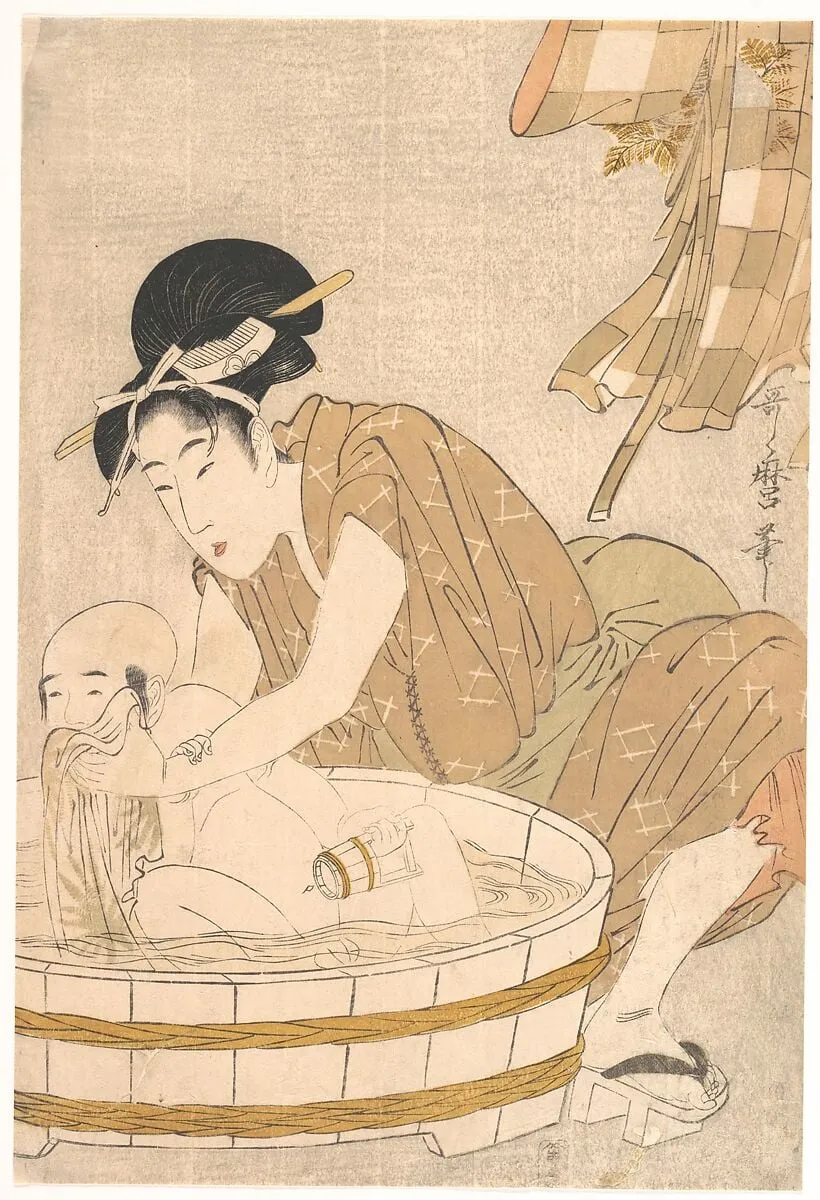
行水|Bathtime (Gyōzui) is an ink print by the Romanticist artist Kitagawa Utamaro. It dates from 1801 and is held in the collection of the Metropolitan Museum of Art.
About this work
Subject & Meaning
The child is depicted with a kanzashi hair ornament and geta sandals, while the mother holds a tenugui cloth and stands beside a wash basin.
The print shows a mother washing her young child in a domestic setting, emphasizing intimate daily care. The child is depicted with a kanzashi hair ornament and geta sandals, while the mother holds a tenugui cloth and stands beside a wash basin. Symbolic accessories such as a comb and hair tie underscore traditional grooming practices.
The scene reflects contemporary Edo-period ideals of maternal nurturing and household routine, rendered through meticulous detail characteristic of ukiyo-e portraiture.
Technique & Style
Bathtime (Gyōzui) is a woodblock print executed in ink and color on paper, a technique characteristic of the ukiyo-e genre to which the work belongs. The sheet measures 37.3 cm in height by 25.1 cm in width, presented in a vertical format suited to its intimate domestic subject. The composition focuses on a bathing scene, with the mother, child, and surrounding objects, including a wash basin, comb, kanzashi, geta, and tenugui, rendered through the layered printing process typical of early nineteenth-century Japanese woodblock production.
Utamaro's handling of the medium allows for fine linear definition in the figures and textiles while the application of color modulates the tonal range across the paper support.
No specific condition report is documented in the available sources.
History & Provenance
The woodblock print Bathtime (Gyōzui) by Kitagawa Utamaro is dated to 1801 based on its inscription and stylistic features, aligning with the artist’s late period output.
The work entered the collection of the Metropolitan Museum of Art, where it is currently held. Its dimensions are recorded as 37.3 cm in height and 25.1 cm in width, executed on paper with ink and color, consistent with ukiyo-e techniques of the time.
Overview
Kitagawa Utamoro’s woodblock print, titled 行水 (Gyōzui, “Bathtime”), dates from around 1801. Executed in ink and color on paper, the image captures a domestic scene of a woman assisting a child during a bath, rendered in the delicate style characteristic of early‑19th‑century Japanese prints.
Context
During the Edo era, bathing rituals held both hygienic and social significance, especially for families. Prints like Gyōzui offered viewers a glimpse into these private rituals, reflecting broader cultural values of modesty, familial duty, and the aesthetic appreciation of mundane tasks.
Artist & collection


 Untitled
 Untitled
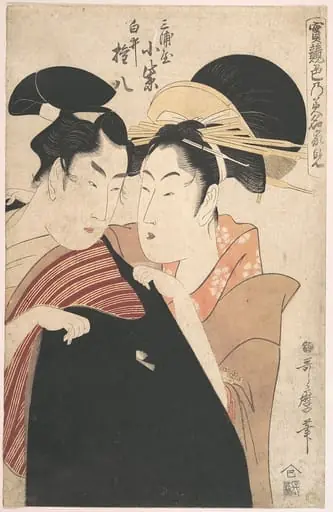 実競色乃美名家見 三浦屋小紫 白井権八|The Lovers Miura-ya Komurasaki and Shirai Gonpachi.
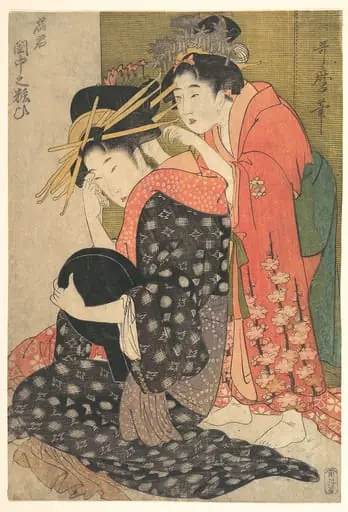 名君 閨中の粧ひ|The Oiran Yoso-oi Seated at Her Toilet
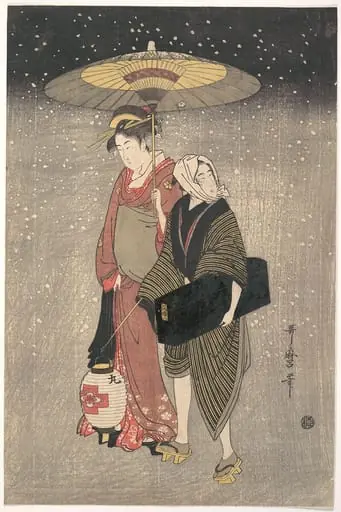 Untitled
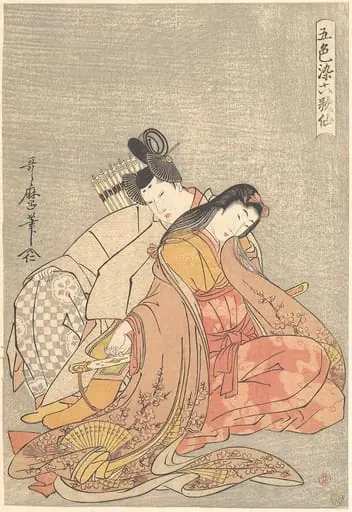 『五色染六歌仙』 在原業平と小野小町|“The Poet Ariwara no Narihira (825–880) and Ono no Komachi,” from the series Five Colors of Love for the Six Poetic Immortals (Goshiki-zome rokkasen)
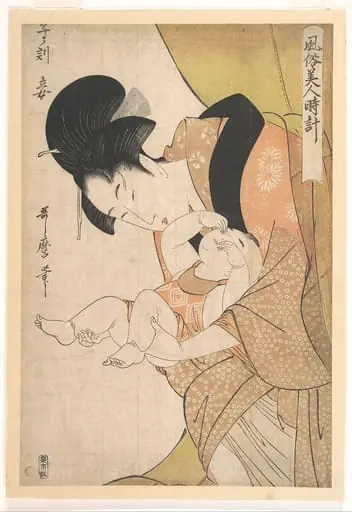 風俗美人時計 子ノ刻 妾|Midnight: Mother and Sleepy Child
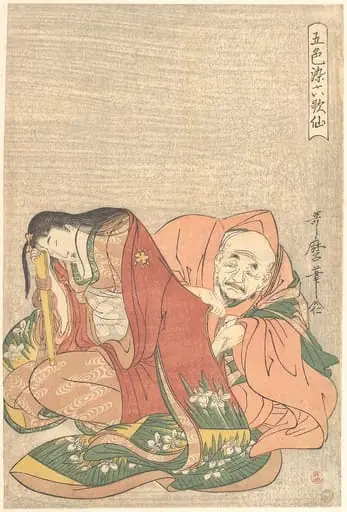 『五色染六歌仙』 僧正遍昭|“The Poet Sōjō Henjō (816–890) Slipping a Letter into a Woman’s Sleeve,” from the series Five Colors of Love for the Six Poetic Immortals (Goshiki-zome rokkasen)
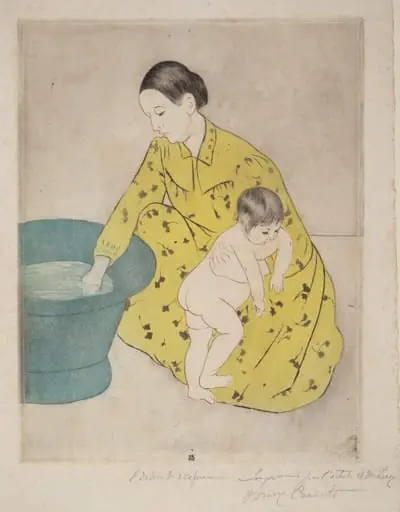 The Bath
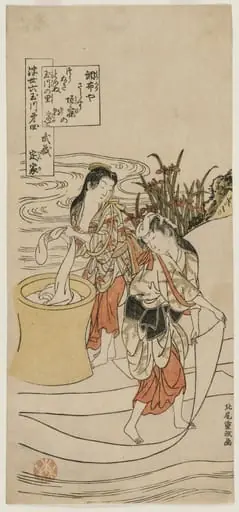 The Chofu Tama River in Musashi Province (from the series The Six Tama Rivers of the Floating World)
 The Bath
 Untitled
 当世風俗通 女房風|Mother and Child
 喜多川歌麿画 山姥と金太郎 |Yamauba Combing Her Hair with Kintarō
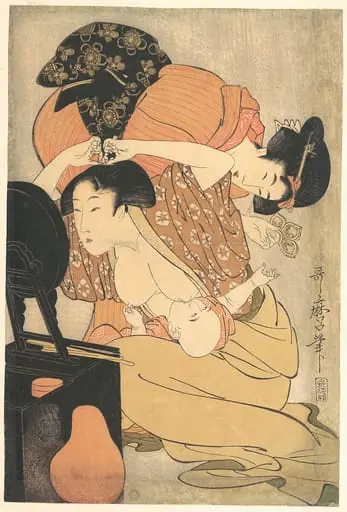 Untitled
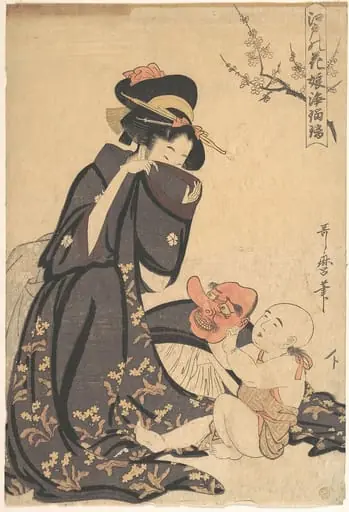 江戸の花 娘浄瑠璃|A Woman Playing with a Young Boy
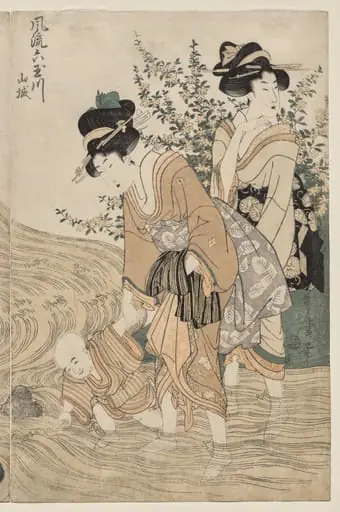 Yamashiro Province from the series Fashionable Six Jewel Rivers (Furyu Mu Tamagawa)
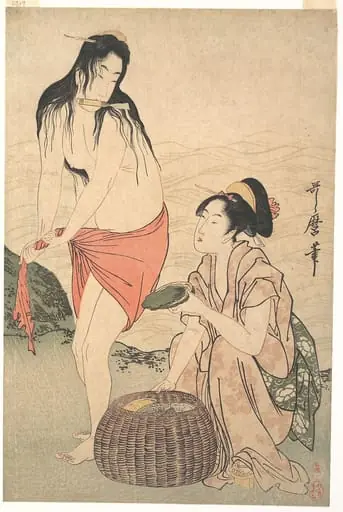
- 喜多川歌麿画 鮑取り|Abalone Divers
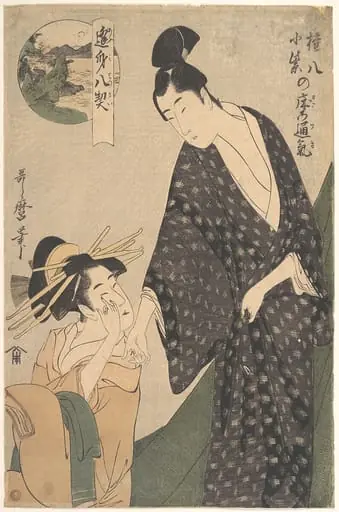 逢身八契 権八小紫の床の通気|Gonpachi ni Komurasaki no Toko no Tsuki
 Compared in the Edo/Japonisme course