Artwork
Untitled
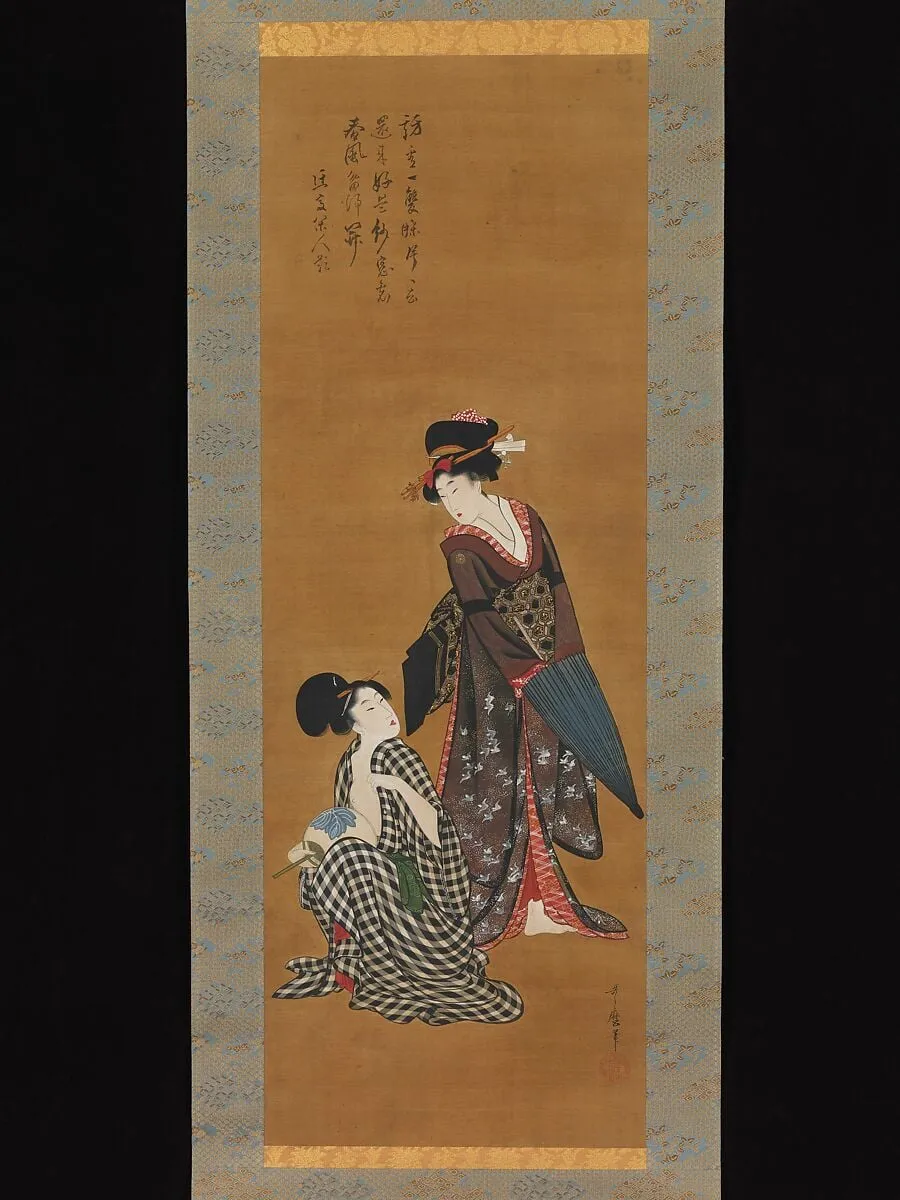
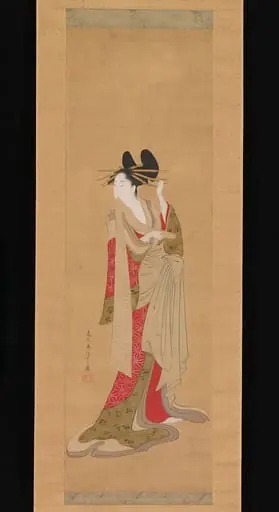
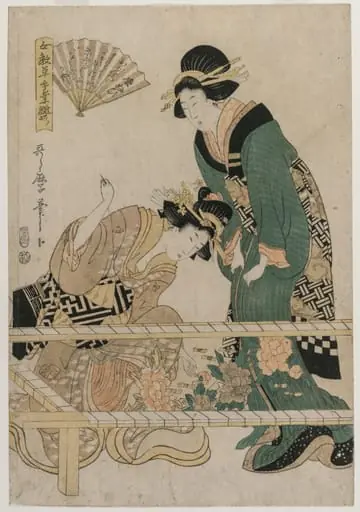
Untitled is an ink painting by the Romanticist artist Kitagawa Utamaro. It dates from 1802 and is held in the collection of the Metropolitan Museum of Art.
About this work
Technique & Style
As a Japanese work from the early 19th century, it adheres to traditional painting methods characteristic of the artist's output during this period.
Created in 1802, this work by Kitagawa Utamaro is executed as a hanging scroll using ink and color applied to a silk support. The piece functions as a portrait genre painting that depicts a woman. As a Japanese work from the early 19th century, it adheres to traditional painting methods characteristic of the artist's output during this period.
The composition relies on the interaction of ink outlines and colored pigments on the silk surface to define the figure.
History & Provenance
The hanging scroll titled Untitled was created by the Japanese artist Kitagawa Utamaro in 1802. Executed in ink and color on silk, the work depicts a woman and is classified as a portrait. The piece is currently held in the collection of the Metropolitan Museum of Art.
While the specific commission details and the full chain of previous ownership are not detailed in the available records, the work's inception is firmly dated to 1802, originating from Japan.
Untitled (1802) is a hanging scroll by Kitagawa Utamaro executed in ink and color on silk. The painting is catalogued as a portrait within the museum’s Paintings division. It has been part of the Metropolitan Museum of Art’s collection since at least the early 20th century, residing in New York, United States.
The work was created in Japan and depicts a woman, reflecting Utamaro’s expertise in portraiture. No specific accession number or detailed exhibition record is documented in the available sources.
Overview
Created around 1802, this hanging scroll by Kitagawa Utamaro presents a solitary woman in a light‑coloured kimono. She leans gently against a bamboo screen, her profile turned slightly away, hands resting calmly in her lap. The composition captures a fleeting, intimate moment rather than a formal portrait, offering a quiet glimpse into everyday elegance.
Subject & Meaning
The figure embodies Utamō’s interest in ordinary women, portraying a refined yet approachable presence. Her modest pose and the subtle tilt of her head suggest contemplation or a private thought, inviting viewers to consider the inner life of a woman whose status is neither aristocratic nor overtly defined.
Context
During the early nineteenth century, Utamō was renowned for his bijin-ga, images of beautiful women that moved away from idealised courtly depictions toward more realistic, momentary scenes. This scroll reflects that shift, focusing on the everyday grace of a single figure rather than elaborate narrative settings.
Legacy
The piece exemplifies Utamō’s influence on later Japanese portraiture, where the emphasis on subtle expression and everyday poise became a hallmark. Its understated intimacy continues to inform contemporary interpretations of Edo‑period domestic life and the nuanced representation of women in art.
Artist & collection


 Untitled
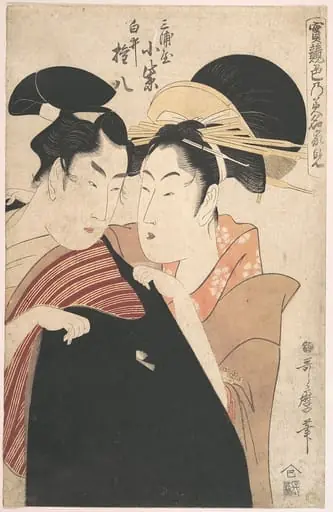 実競色乃美名家見 三浦屋小紫 白井権八|The Lovers Miura-ya Komurasaki and Shirai Gonpachi.
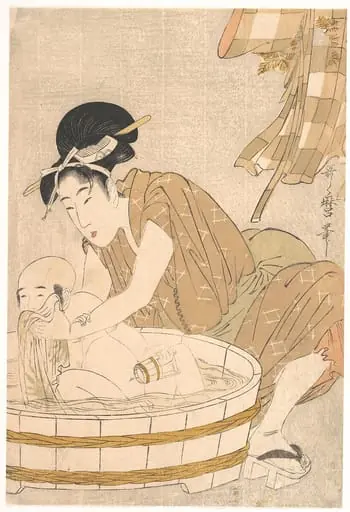 行水|Bathtime (Gyōzui)
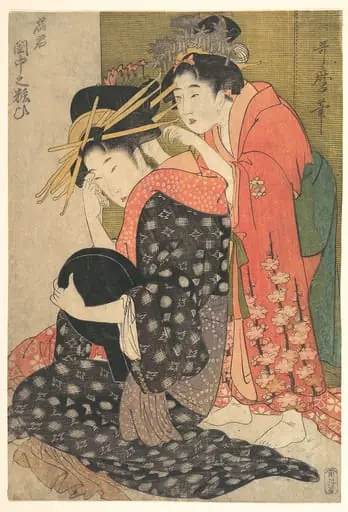 名君 閨中の粧ひ|The Oiran Yoso-oi Seated at Her Toilet
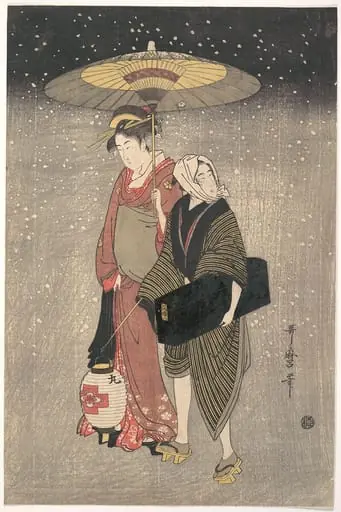 Untitled
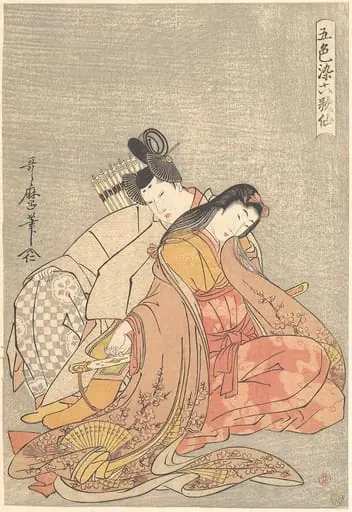 『五色染六歌仙』 在原業平と小野小町|“The Poet Ariwara no Narihira (825–880) and Ono no Komachi,” from the series Five Colors of Love for the Six Poetic Immortals (Goshiki-zome rokkasen)
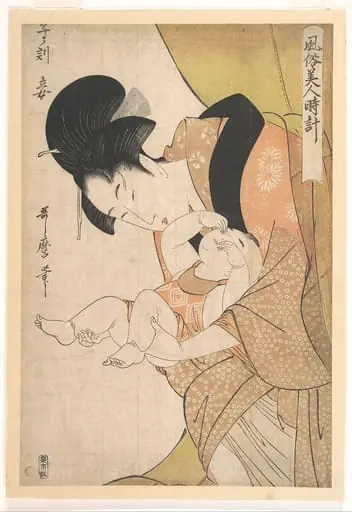 風俗美人時計 子ノ刻 妾|Midnight: Mother and Sleepy Child
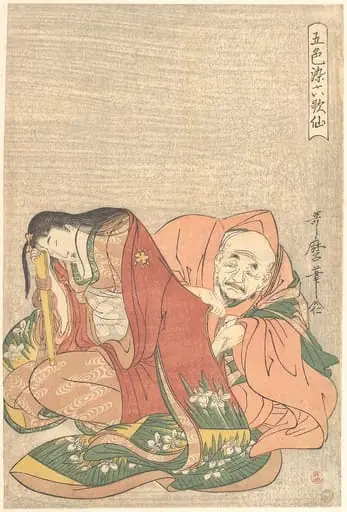 『五色染六歌仙』 僧正遍昭|“The Poet Sōjō Henjō (816–890) Slipping a Letter into a Woman’s Sleeve,” from the series Five Colors of Love for the Six Poetic Immortals (Goshiki-zome rokkasen)
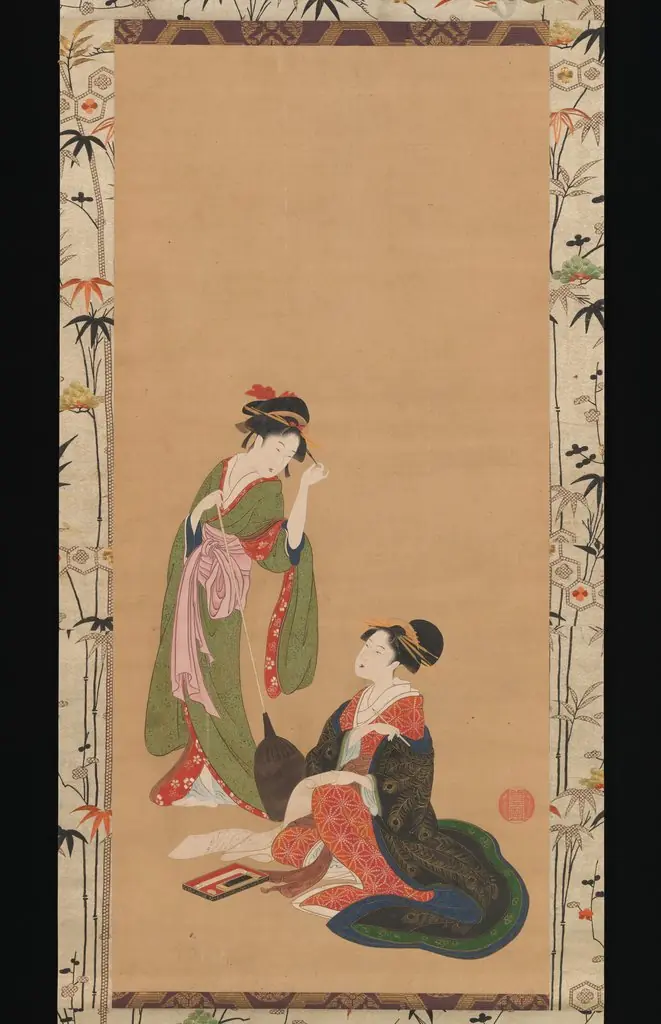 Courtesans Parodying Kanzan and Jittoku
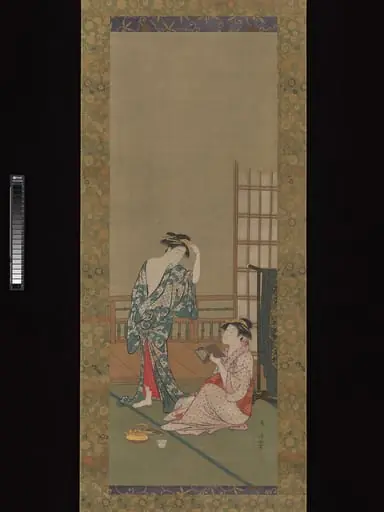 Untitled
 Untitled
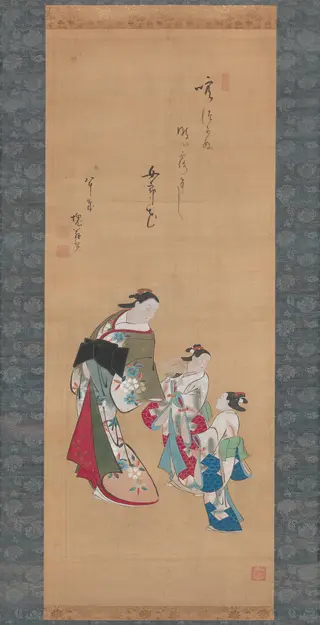 Courtesan and Two Attendants
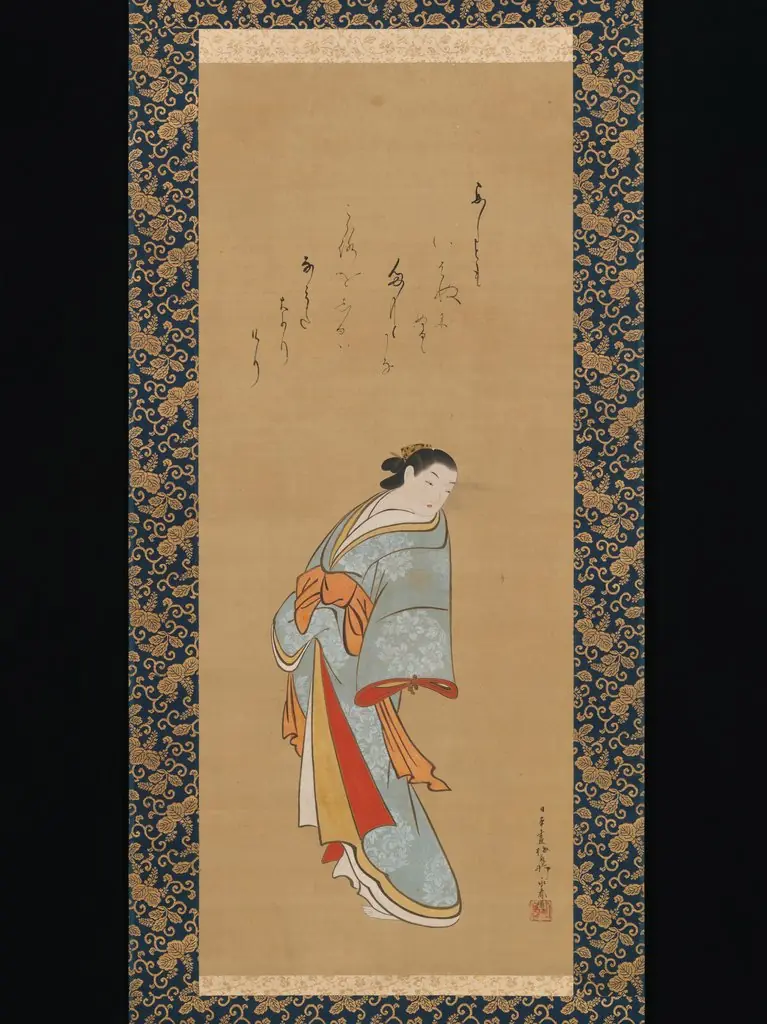 Standing Courtesan
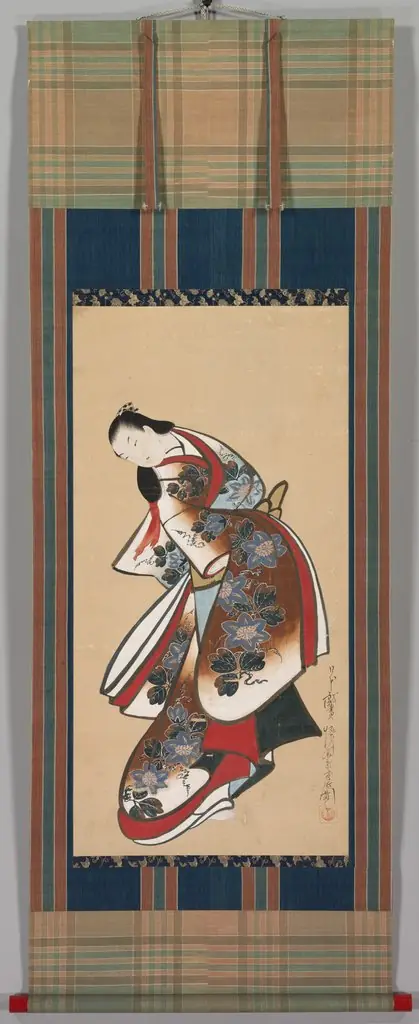 Courtesan
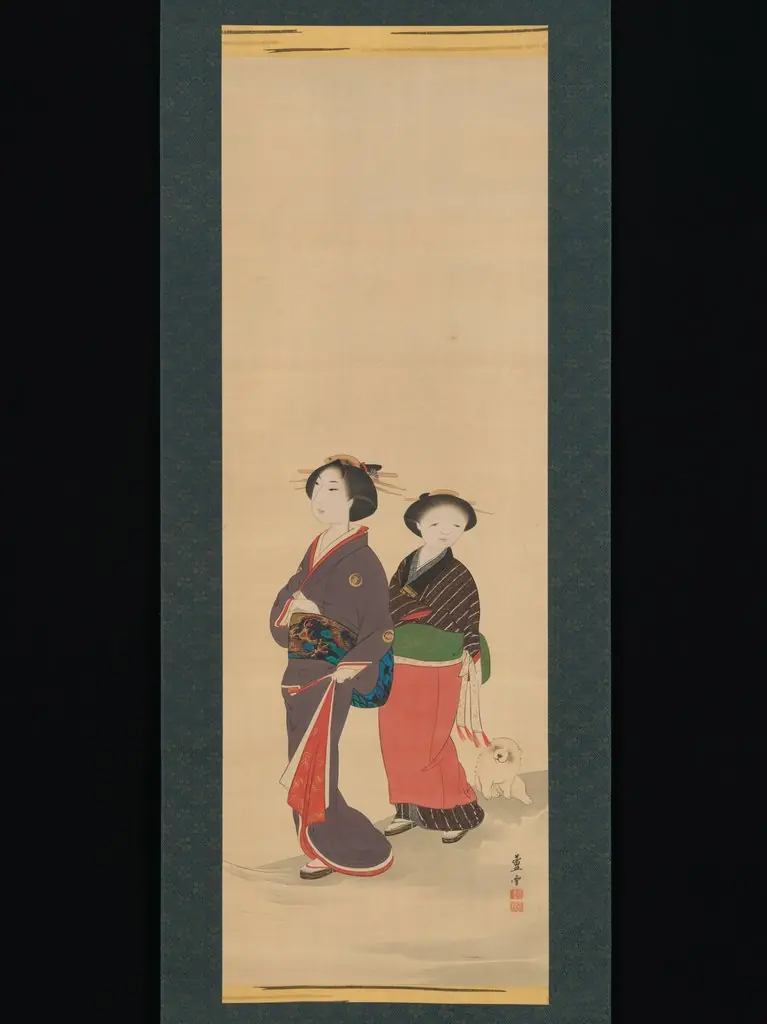 Two Women and a Puppy
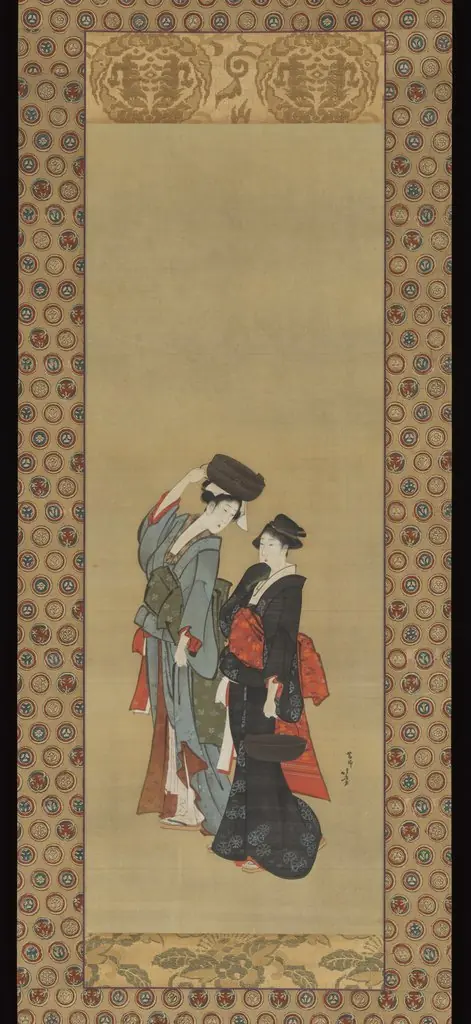 Women Carrying Pots for the Tsukuma Festival
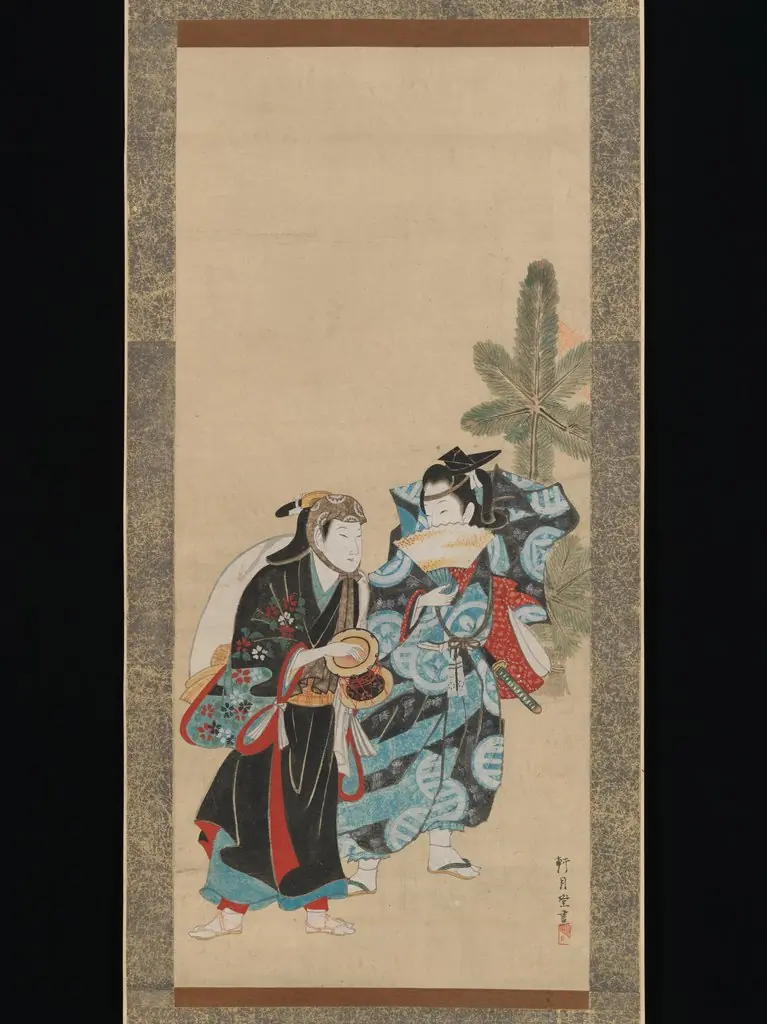 Itinerant Actors
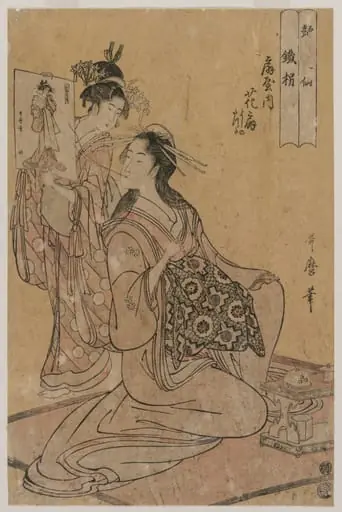 The Courtesan Hana-ogi of Ogiya as the Sennin Tekkai (from the series Eight Immortals of Sensuality)
 Chinese Embroidery (from the series Instructive Patterns for Women's Handicraft)
- Untitled