Artwork
青楼仁和嘉女芸者之部 扇売 団扇売 麦つき|The Niwaka Performers
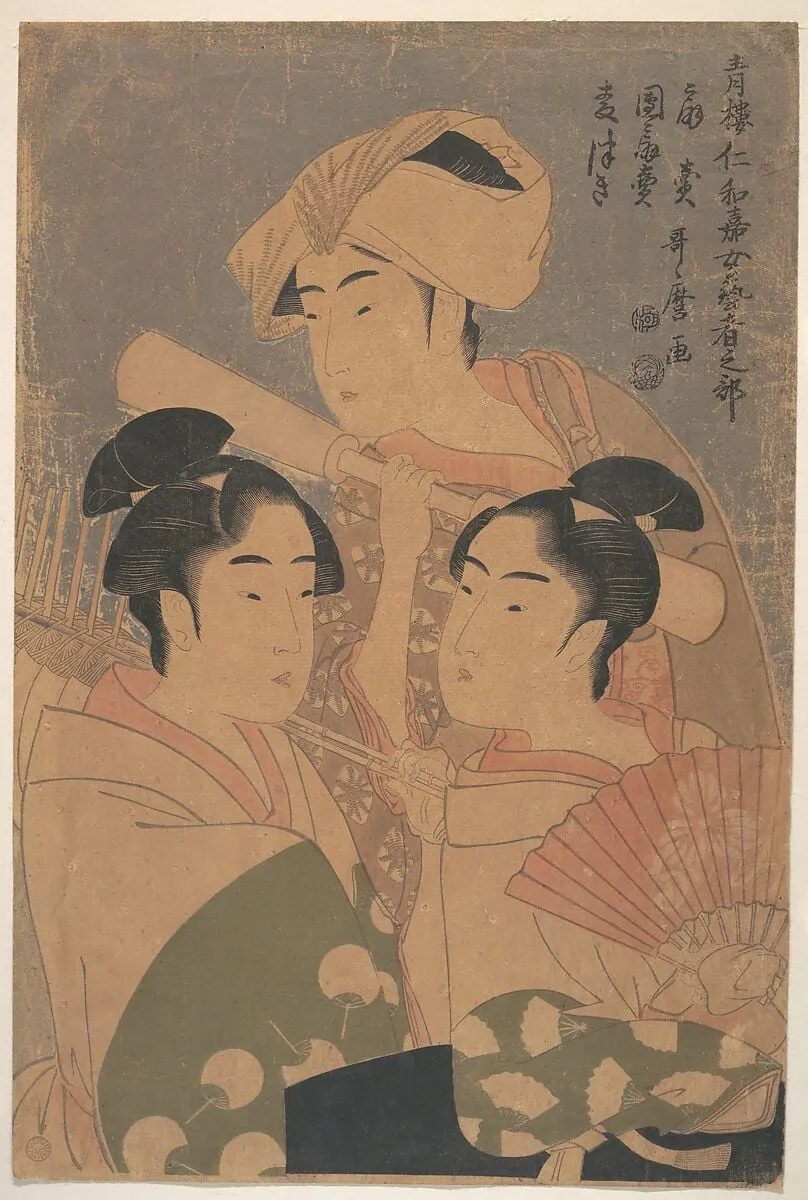
青楼仁和嘉女芸者之部 扇売 団扇売 麦つき|The Niwaka Performers is an ink print by the Romanticist artist Kitagawa Utamaro. It dates from 1795 and is held in the collection of the Metropolitan Museum of Art.
About this work
Overview
This woodblock print, created around 1795 by Kitagawa Utamaro, captures a serene domestic scene within an entertainment district, featuring three women engaged in distinct activities amidst a softly illuminated interior.
Subject & Meaning
The print portrays everyday workers in an entertainment district, rather than famous individuals. A geisha waves a hand fan, another sells round fans, and a third labors at a stamp mill, highlighting the mundane aspects of their lives.
Technique & Style
Utamaro's characteristic attention to detail is evident in the single brushstroke ink technique used for the fan ribs, with no underlying pencil sketch. The intricately patterned robes with tiny flowers and the subtle, warm glow of the paper walls further showcase his style.
History & Provenance
Produced for a broad, everyday audience rather than exclusively for collectors, this print reflects Utamaro's approach to making art accessible. The exact provenance is not detailed here, focusing instead on its intended market.
Context
Part of Utamaro's genre scene works, this print offers a glimpse into the daily life of women in 18th-century Japanese entertainment districts, emphasizing their ordinary tasks and environments.
Legacy
While specific legacy details of this piece are not provided, Utamaro's works, including this print, are notable for their influence on the depiction of geisha and everyday life in Japanese art, encouraging viewers to explore similar 'geisha' prints for comparative analysis of his fabric rendering techniques.
Artist & collection


 Untitled
 Untitled
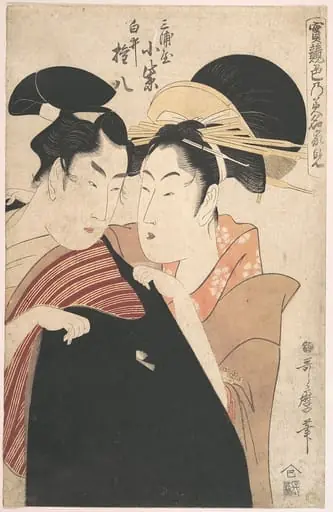 実競色乃美名家見 三浦屋小紫 白井権八|The Lovers Miura-ya Komurasaki and Shirai Gonpachi.
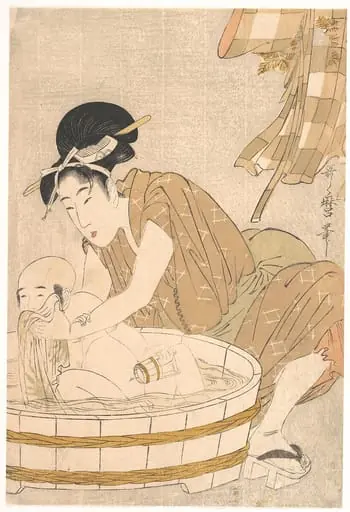 行水|Bathtime (Gyōzui)
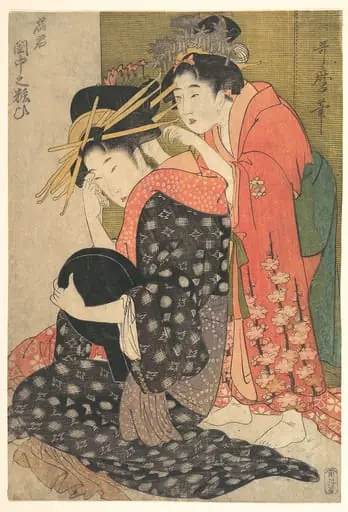 名君 閨中の粧ひ|The Oiran Yoso-oi Seated at Her Toilet
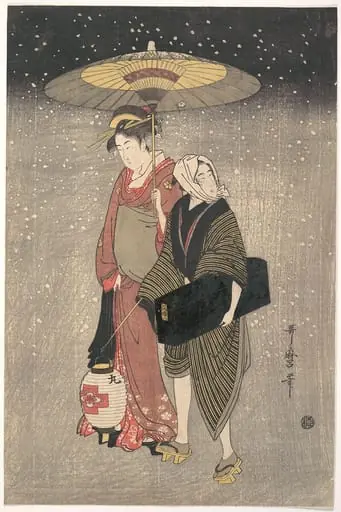 Untitled
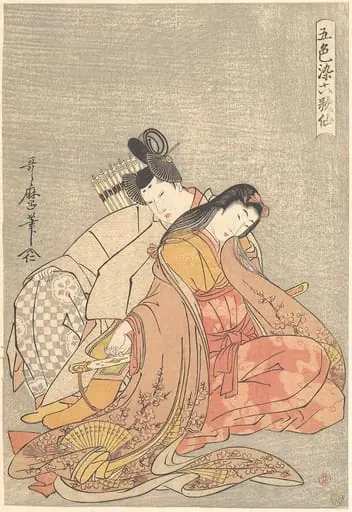 『五色染六歌仙』 在原業平と小野小町|“The Poet Ariwara no Narihira (825–880) and Ono no Komachi,” from the series Five Colors of Love for the Six Poetic Immortals (Goshiki-zome rokkasen)
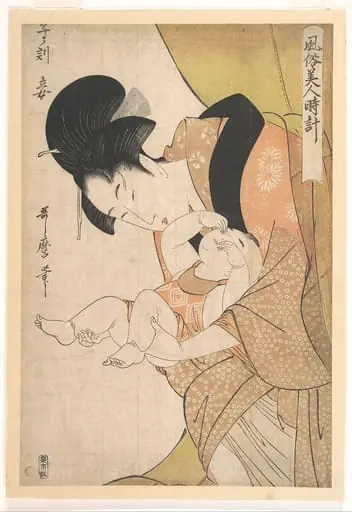 風俗美人時計 子ノ刻 妾|Midnight: Mother and Sleepy Child
 Untitled
 Untitled
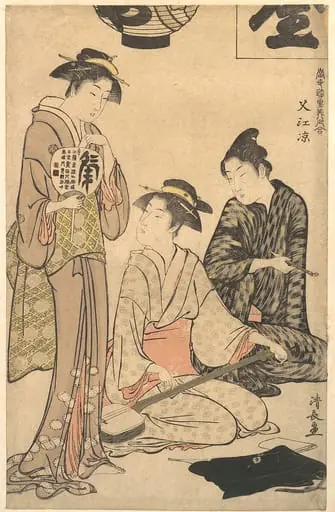 Untitled
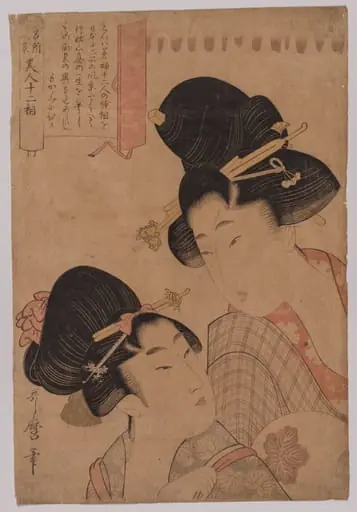 Two Courtesans
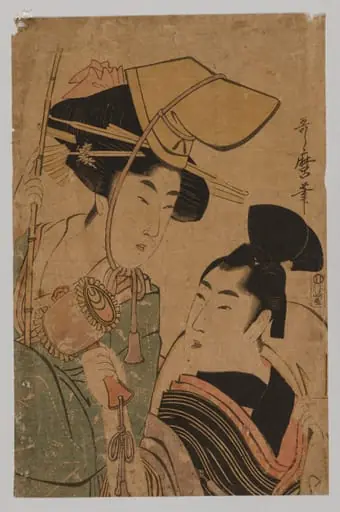 Woman Representing Good Fortune
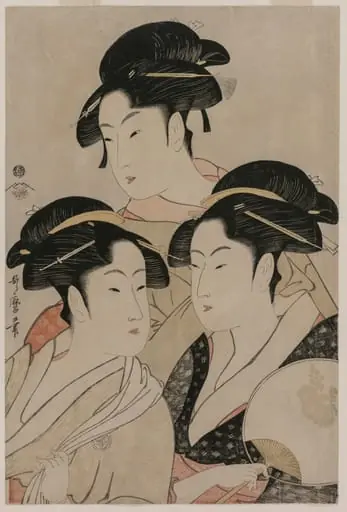 Tomimoto Toyohina, Takashimaya Ohisa, and Naniwaya Okita
 Untitled
 Untitled
 Untitled
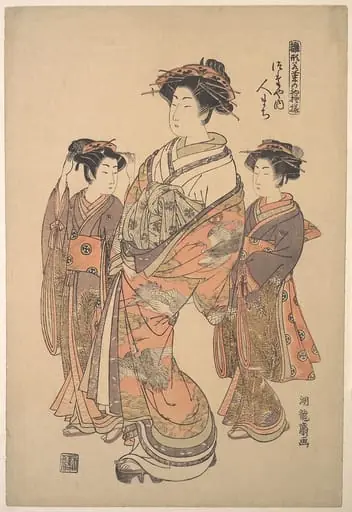 『雛形若菜の初模様 つたや内 人まち』|The Courtesan Hitomachi of the Tsutaya Brothel, from the series “A Pat-tern Book of the Year’s First Designs, Fresh as Spring Herbs” (“Hinagata wakana no hatsu moyō”)