Artwork
Untitled
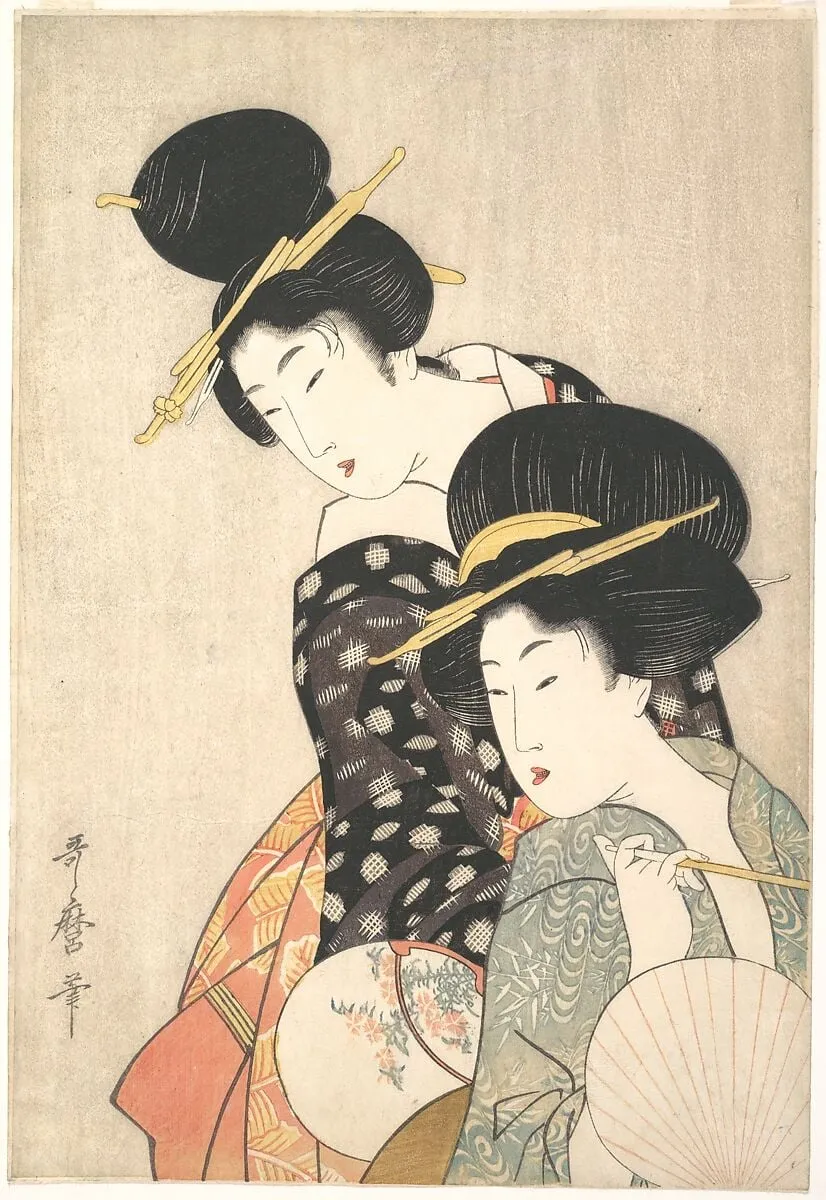
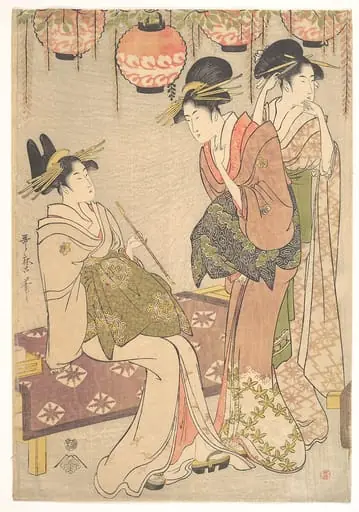
Untitled is an ink print by the Romanticist artist Kitagawa Utamaro. It dates from 1790 and is held in the collection of the Metropolitan Museum of Art.
About this work
Overview
The composition exemplifies Utamaro's celebrated focus on female subjects and his influential role in late eighteenth century Japanese printmaking.
Untitled is a woodblock print created by the Japanese artist Kitagawa Utamaro in 1790. Executed in ink and color on paper, the work belongs to the ukiyo-e genre and measures 39.1 cm in height and 25.7 cm in width. It is held in the collection of the Metropolitan Museum of Art. The print depicts two women adorned with elaborate hairstyles and traditional garments, accompanied by specific accessories including a comb, kanzashi hairpin, kiseru pipe, and uchiwa fan. The composition exemplifies Utamaro's celebrated focus on female subjects and his influential role in late eighteenth century Japanese printmaking.
Subject & Meaning
The print features two women arranged in a vertical composition against a plain background. The taller woman stands behind a shorter, seated or kneeling companion, looking downward with an averted gaze. Both figures wear elaborate black wigs decorated with gold hair ornaments, specifically kanzashi and combs, and have pale faces with red lips, narrow eyes, and finely arched brows. The standing woman is dressed in a dark kimono with white geometric patterns over a red and orange underlayer, while the seated woman wears a gray-green kimono with swirling patterns. The seated figure holds a thin object, identified as a kiseru pipe, in her right hand and a partially visible round uchiwa fan in her left. Another round fan with floral decoration rests near the bottom center of the image. Calligraphic text runs along the left edge.
Technique & Style
Utamaro executed this work using the full color woodblock printing technique on a paper support. The formal qualities of the print are characterized by flat color areas, crisp outlines, and minimal shading, which are hallmarks of the ukiyo-e woodblock tradition. The artist emphasizes the elaborate textures and patterns of the garments, contrasting the dark geometric designs of the standing woman's kimono with the swirling motifs of the seated figure's gray-green robe. This attention to the nuances of female fashion and the close cropping of the figures aligns with Utamaro's broader stylistic innovations in bijin okubi-e, or large-headed pictures of beautiful women, which often featured exaggerated, elongated features and an emphasis on partial views.
History & Provenance
Created in 1790, this print is a product of Utamaro's most prolific period, when he rose to prominence in the early 1790s with his distinctive portraits of beautiful women. The work is now part of the collection of the Metropolitan Museum of Art. While the specific accession details for this impression are drawn from its current institutional holding, other impressions of Utamaro's work have followed varied paths, such as one donated from the collection of Jose Palacio, and another gifted by William Dallam Armes to the University of California, Berkeley Art Museum and Pacific Film Archive in 1919.
Context
Kitagawa Utamaro is one of the most highly regarded designers of ukiyo-e woodblock prints and paintings, best known for his bijin okubi-e of the 1790s. His work began to appear in the 1770s, and he produced over 2000 known prints, becoming one of the few ukiyo-e artists to achieve widespread fame throughout Japan during his lifetime. In addition to his portraits of women, he produced nature studies, including illustrated books of insects. His career faced a severe setback in 1804 when he was arrested and manacled for fifty days for producing illegal prints depicting the sixteenth century military ruler Toyotomi Hideyoshi, and he died two years later.
Legacy
Utamaro's work reached Europe in the mid-nineteenth century, where it enjoyed particular acclaim in France and significantly influenced the European Impressionists. Artists in this movement imitated his use of partial views and his emphasis on light and shade. When art historians reference the Japanese influence among the Impressionists, they are frequently referring to the aesthetic innovations of Utamaro. His distinctive approach to figuration and composition left a lasting mark on both Japanese and Western art historical traditions.
Artist & collection


 Untitled
 Untitled
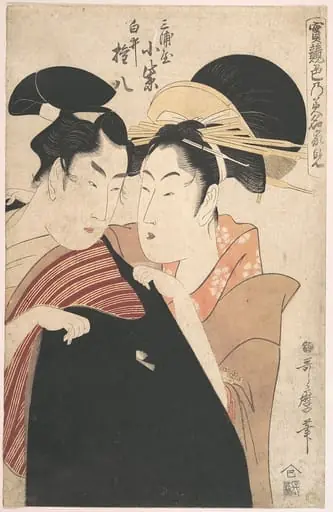 実競色乃美名家見 三浦屋小紫 白井権八|The Lovers Miura-ya Komurasaki and Shirai Gonpachi.
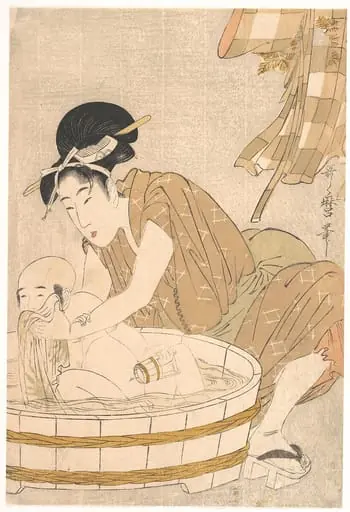 行水|Bathtime (Gyōzui)
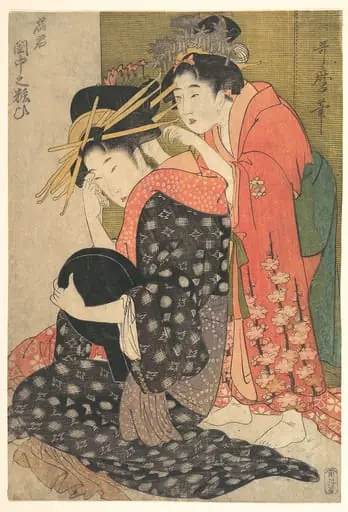 名君 閨中の粧ひ|The Oiran Yoso-oi Seated at Her Toilet
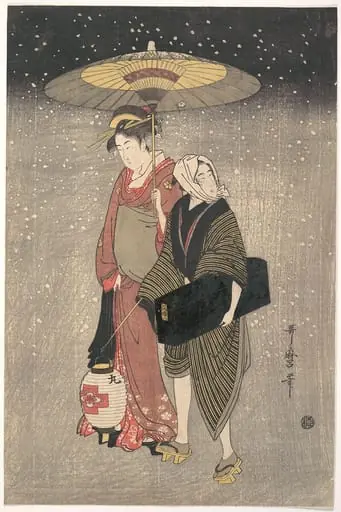 Untitled
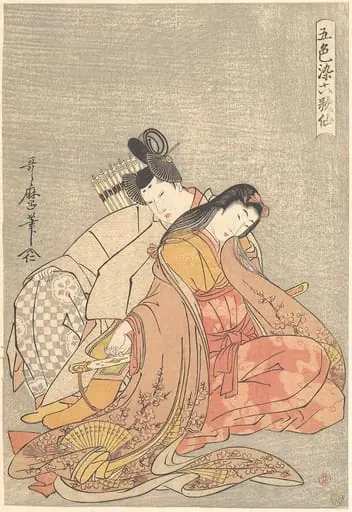 『五色染六歌仙』 在原業平と小野小町|“The Poet Ariwara no Narihira (825–880) and Ono no Komachi,” from the series Five Colors of Love for the Six Poetic Immortals (Goshiki-zome rokkasen)
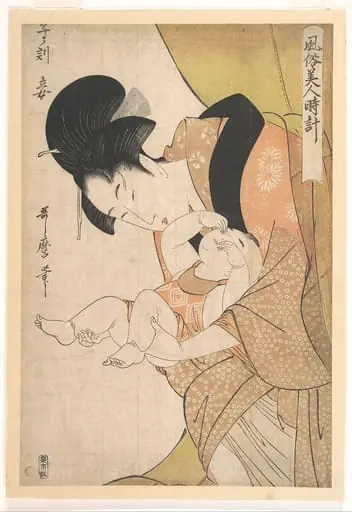 風俗美人時計 子ノ刻 妾|Midnight: Mother and Sleepy Child
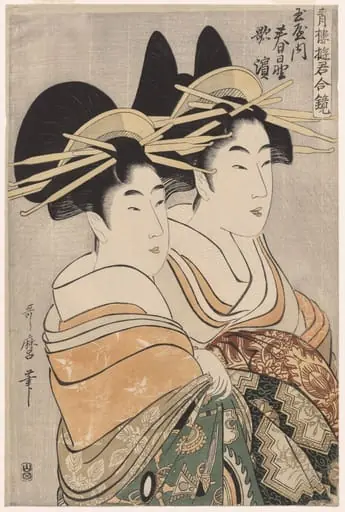 The Courtesans Kasugano and Utahama of Tamaya, from Courtesans of the Pleasure Quarters in Double Mirrors
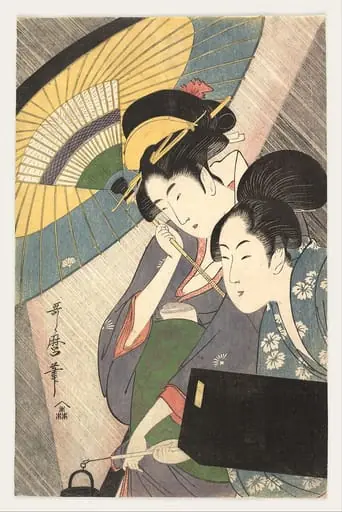 喜多川歌麿画 夜の雨に芸者と三味線箱を持つ女|Geisha and Attendant on a Rainy Night
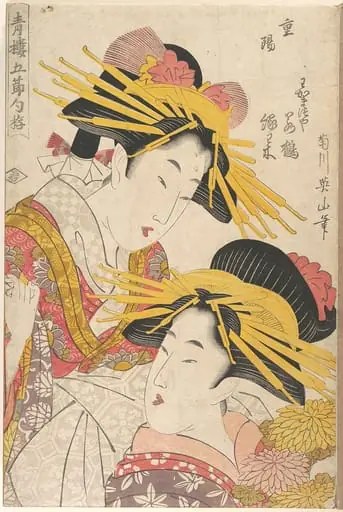 Untitled
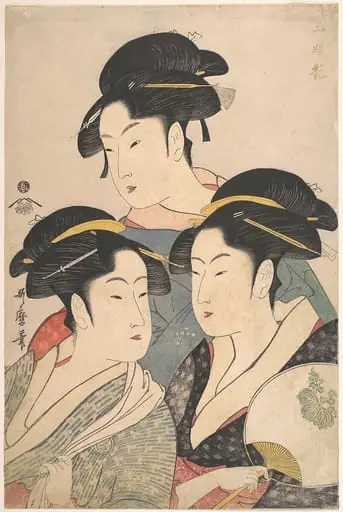 三婦艶|Three Beauties of the Kwansei Period
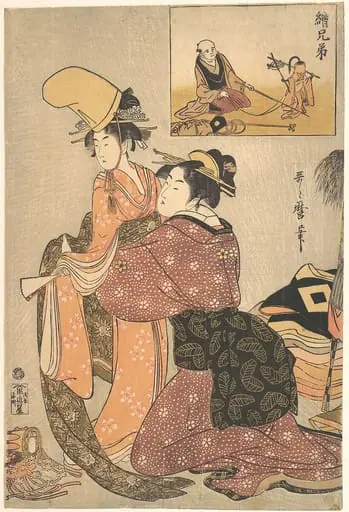 喜多川歌麿画 絵兄弟娘道成寺 見立猿廻し 「絵兄弟」|A Woman Dressing a Girl for a the Kabuki Dance “Musume Dojōji,” with “Brother Picture” (E-kyōdai) of a Monkey Trainer
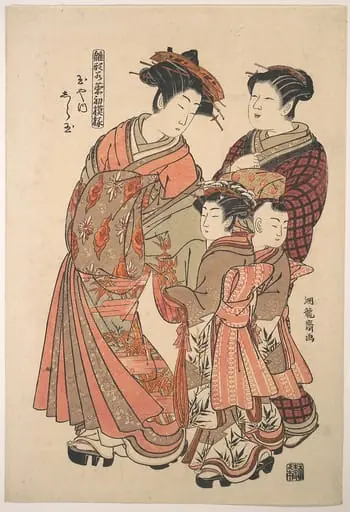 『雛形若菜初模様 玉や内 しら玉』|The Courtesan Shiratama of the Tamaya Brothel, from the series “A Pat-tern Book of the Year’s First Designs, Fresh as Spring Herbs” (“Hinagata wakana hatsu moyō”)
 Untitled
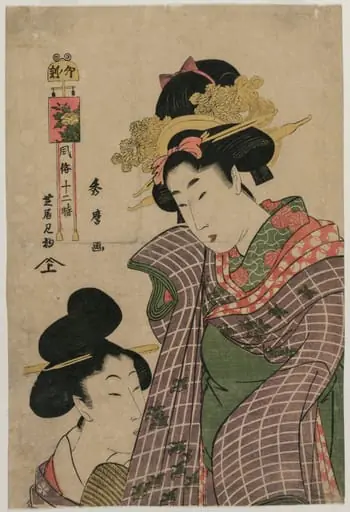 Going to the Kabuki Theater in the Hour of the Hare (From the Series The Twelve Hours with Daily Events)
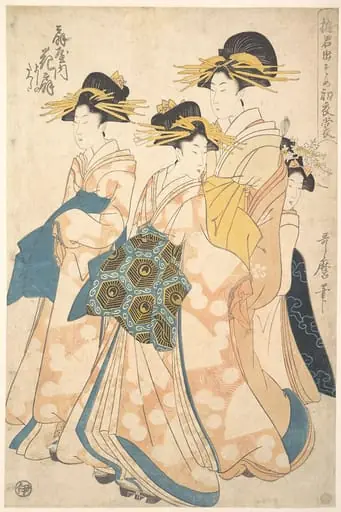 遊君出そめ初衣裳 扇屋内花扇|The Oiran Hanaogi of Ogiya attended by Two Shinzo and Her Kamuro Yoshino
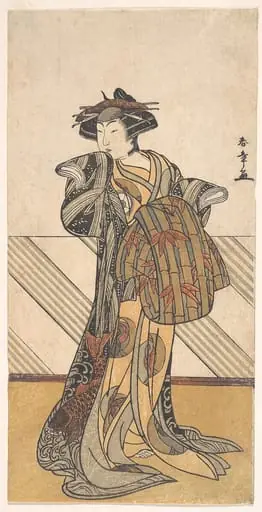 四代目岩井半四郎|Kabuki Actor Iwai Hanshirō IV
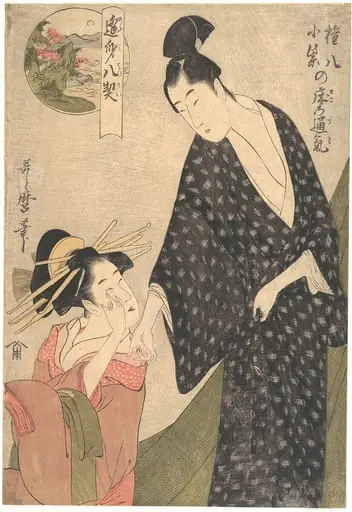
- Gompachi Komurasaki no Toko no Tsuki|逢身八契 権八小紫の床の通気|Shared Feelings in the Bedchamber of Komurasaki and Gompachi