Artwork
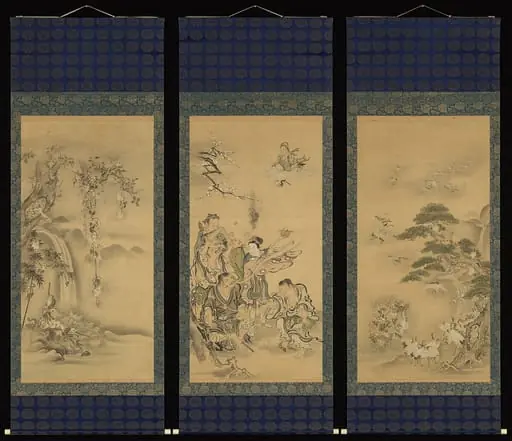
Hotei with Daoist Immortals
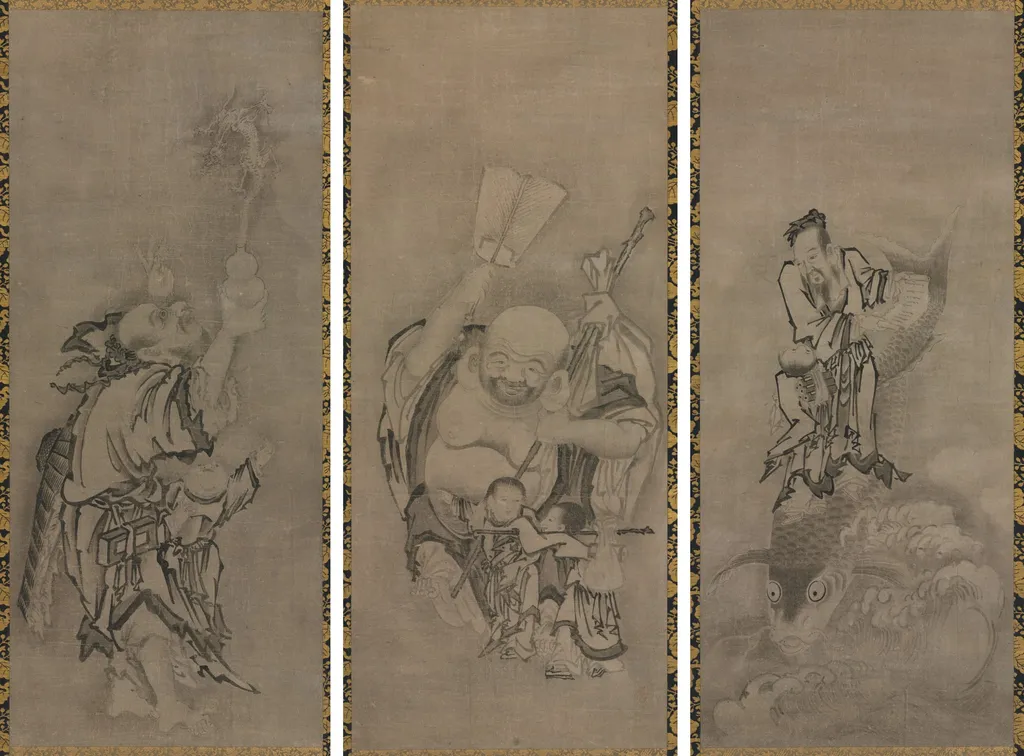
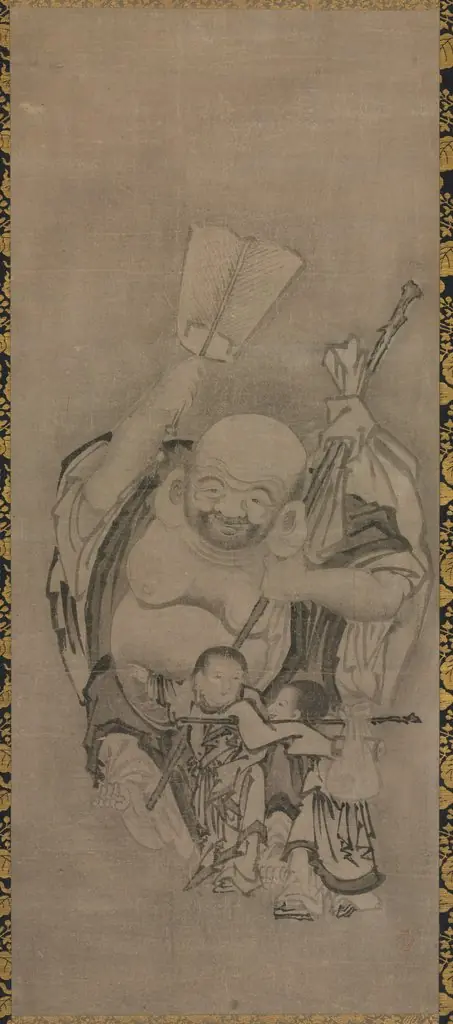
Hotei with Daoist Immortals is an unspecified painting by the Baroque artist Kyūseki Tomonobu. It dates from 1700 and is held in the collection of the Cleveland Museum of Art.
- Accession no.
- 1989.8
- Credit line
- Mr. and Mrs. William H. Marlatt Fund
About this work
You can learn more about Japanese art by looking at the work of Kyūseki Tomonobu (Japanese, 1653–1721).
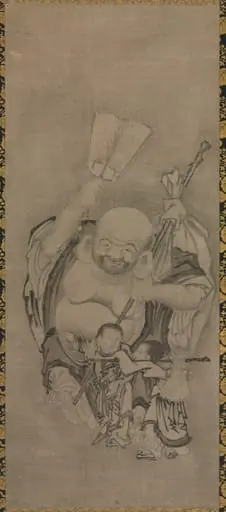
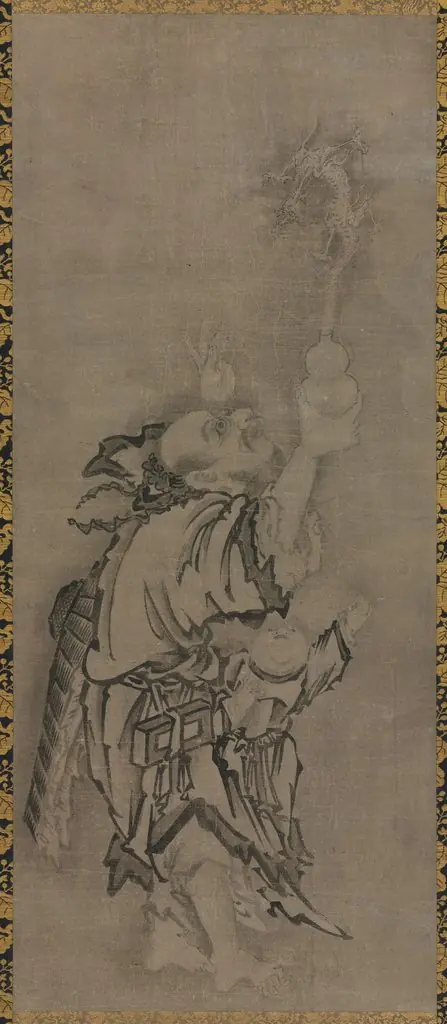
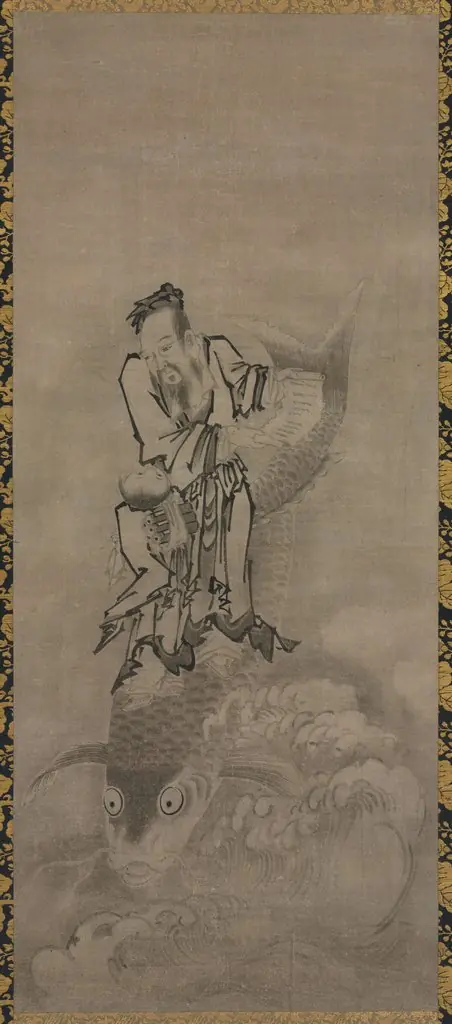
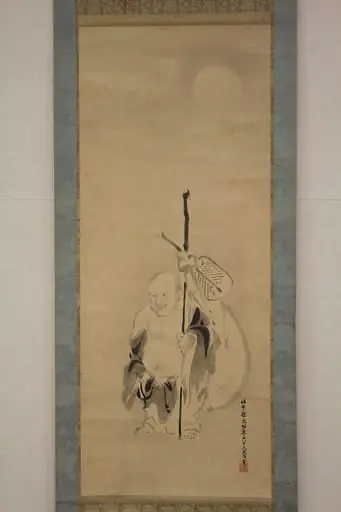
This painting shows Hotei, a Chan monk, with Daoist immortals. He's surrounded by other figures, looking happy. The mix of Zen and Daoist images is interesting because it shows these two beliefs can coexist.
Hotei was a real person, but he became a legend in Japan. People liked him because he was kind and wise. He's often shown laughing, which is why he looks so happy here.
You can learn more about Japanese art by looking at the work of Kyūseki Tomonobu (Japanese, 1653–1721).
Overview
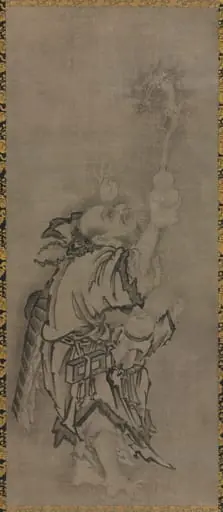
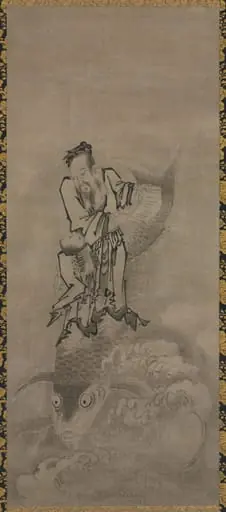
The work is a three‑panel painting that places a smiling Chan monk, known as Hotei, at its centre, flanked by two figures drawn from Daoist tradition. By juxtaposing these images, the composition conveys a visual argument for the harmonious coexistence of Zen Buddhism and Daoist belief systems during the medieval period.
Subject & Meaning
Hotei, a historical Chinese monk of the ninth century, was later revered in Japan as a benevolent, laughing figure embodying generosity and wisdom. The accompanying Daoist characters are rendered with exaggerated, otherworldly features, reflecting their mythic status as immortals and underscoring the work’s theme of religious syncretism.
Technique & Style
Executed on paper scrolls, the painting employs ink brushwork that retains the original tonal variations without later overpainting. The central figure is depicted with a light, jovial expression, while the Daoist companions are portrayed with stylised, unconventional gestures, highlighting the contrast between the two traditions.
History & Provenance
Created as a rare triptych, the piece entered the museum collection with its textile mountings deteriorated and its paper surfaces cracked. Conservation work involved careful cleaning, repair of lifted areas, and remounting on new supports, preserving the authentic ink lines and brushstrokes.
Context
During the thirteenth century, a cult devoted to Hotei spread beyond Zen circles into broader religious communities in Japan. This painting reflects that period’s openness to integrating Daoist motifs alongside Buddhist iconography, illustrating a cultural climate that welcomed eclectic spiritual expression.
Own this work as a print
Artist & collection