Artwork
布袋図 (Hotei zu)|Hotei
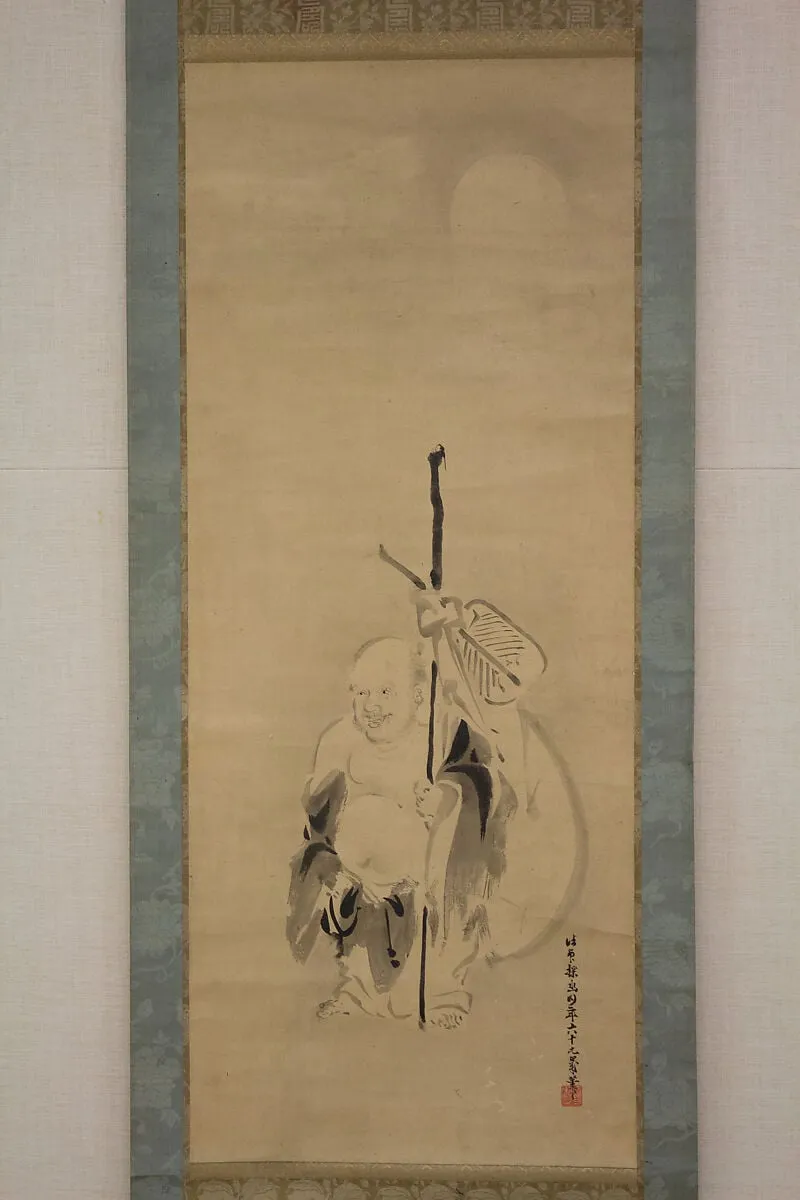
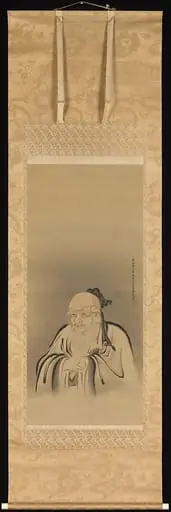
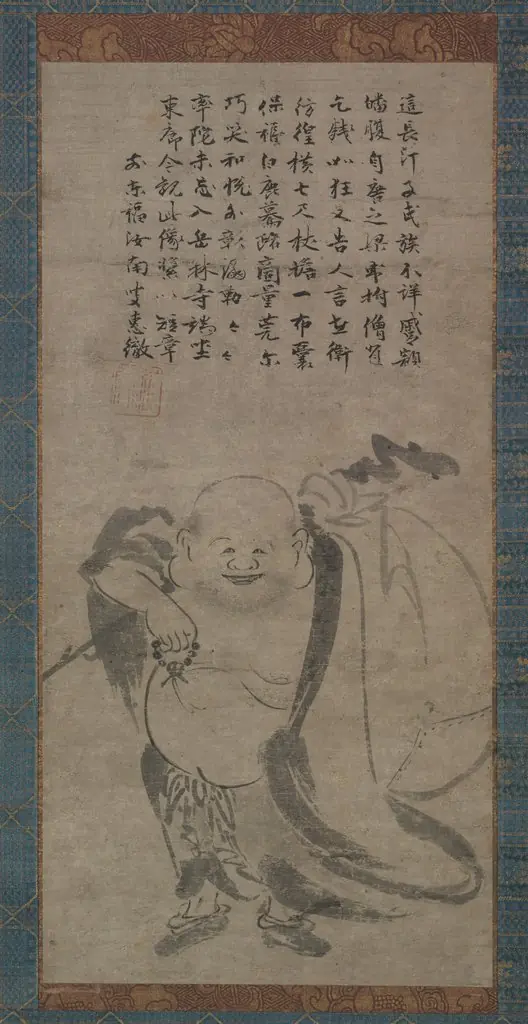
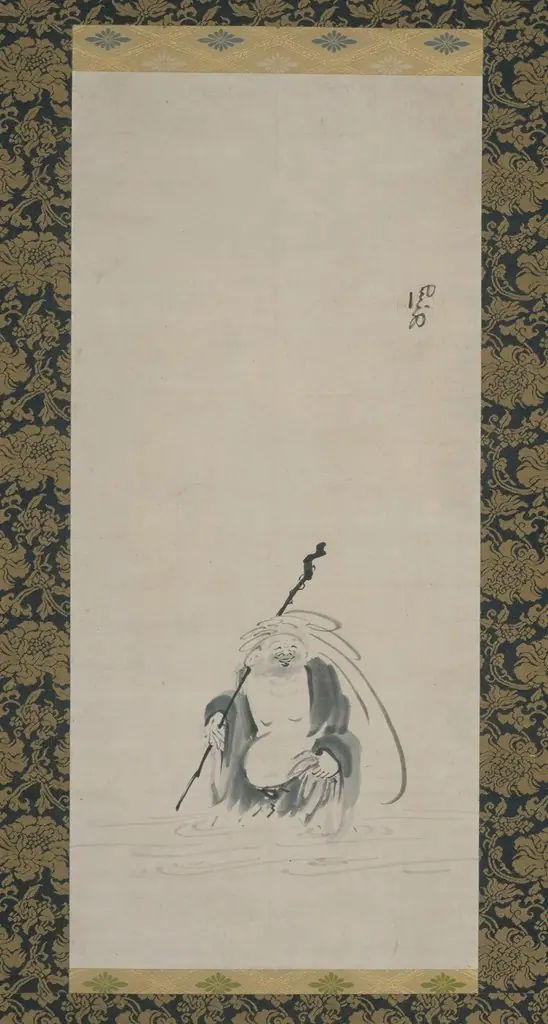
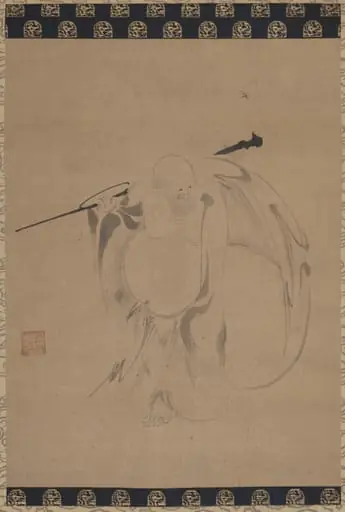
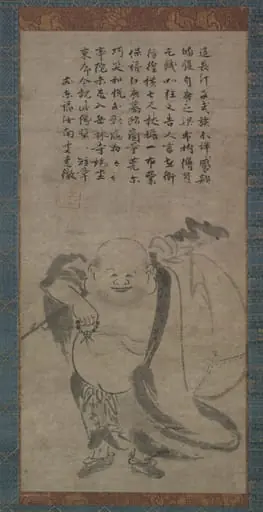
布袋図 (Hotei zu)|Hotei is an ink painting by the Baroque artist Kano Tan'yū. It is held in the collection of the Metropolitan Museum of Art. Kano Tan’yū’s 1707 hanging scroll presents a single figure rendered in ink on paper.
- Accession no.
- 36.100.81
About this work
Subject & Meaning
While the specific iconographic attributes such as the sack or staff are not detailed in the provided records, the subject is explicitly classified as a man.
The artwork depicts a single man, identified as the Buddhist figure Hotei, rendered in ink on paper. Executed by Kano Tan'yū in 1707, the work functions as a portrait within the hanging scroll format. While the specific iconographic attributes such as the sack or staff are not detailed in the provided records, the subject is explicitly classified as a man.
The piece serves as a visual representation of this figure, created within the context of the Kano School tradition in Japan.
Technique & Style
The work is executed as a hanging scroll using ink on paper, a traditional medium for Japanese portraiture. Created by Kanō Tan'yū, the piece belongs to the Kano School, known for its distinctive brushwork and stylistic conventions. The painting depicts a male figure, consistent with the genre of the Hotei portrait.
The support measures 115.3 cm in height and 47 cm in width, indicating a vertical format typical for hanging scrolls displayed in domestic or temple settings.
History & Provenance
The hanging scroll painting known as Hotei was created by the artist Kanō Tan'yū in 1707. Executed in ink on paper, the work originates from Japan and is classified within the genre of portraiture. The piece is currently held in the collection of the Metropolitan Museum of Art in New York. The specific inception date recorded for the artwork is January 1, 1707.
Overview
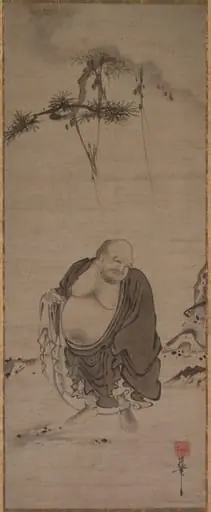
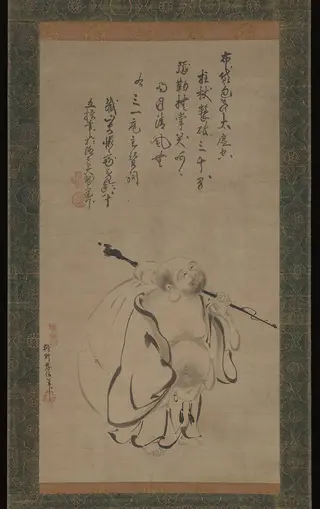
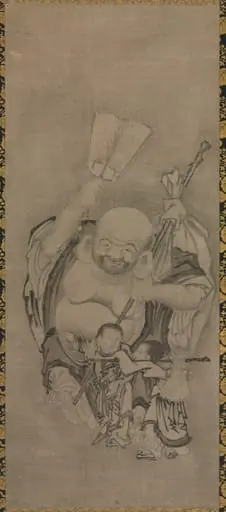
Kano Tan’yū’s 1707 hanging scroll presents a single figure rendered in ink on paper. The composition centers on a rotund, smiling man seated on the ground, his open robe exposing a protruding belly. He balances a cloth sack on one shoulder while holding a fan in the other hand, creating a lively, informal pose.
Context
During the 18th century, images of Hotei were common in both temple settings and private collections, serving as talismans of good fortune. Tan’yū’s rendition aligns with this tradition, yet his refined brush technique situates the piece within the elite Kanō academy’s aesthetic, bridging folk iconography and courtly art.
Artist & collection