Artwork
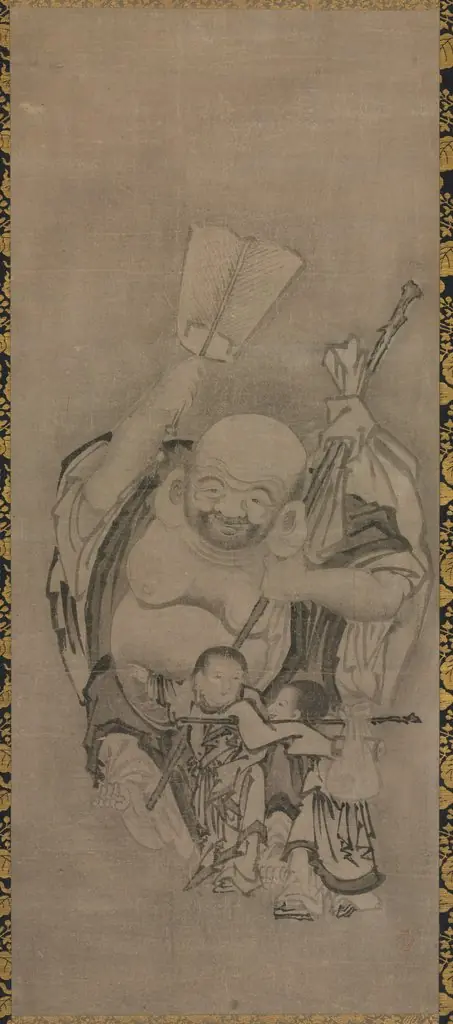
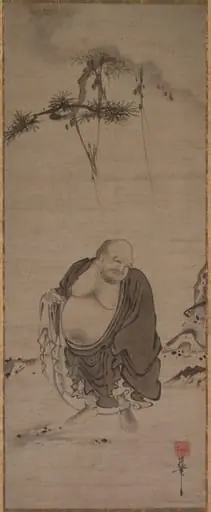
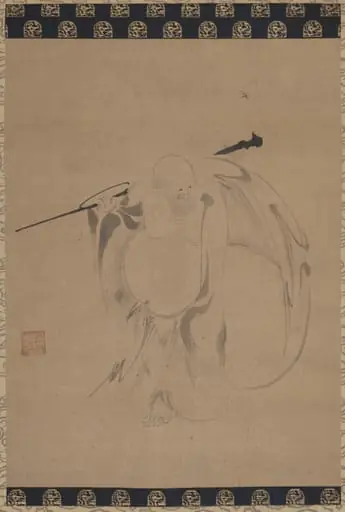
Hotei with Daoist Immortals: Hotei
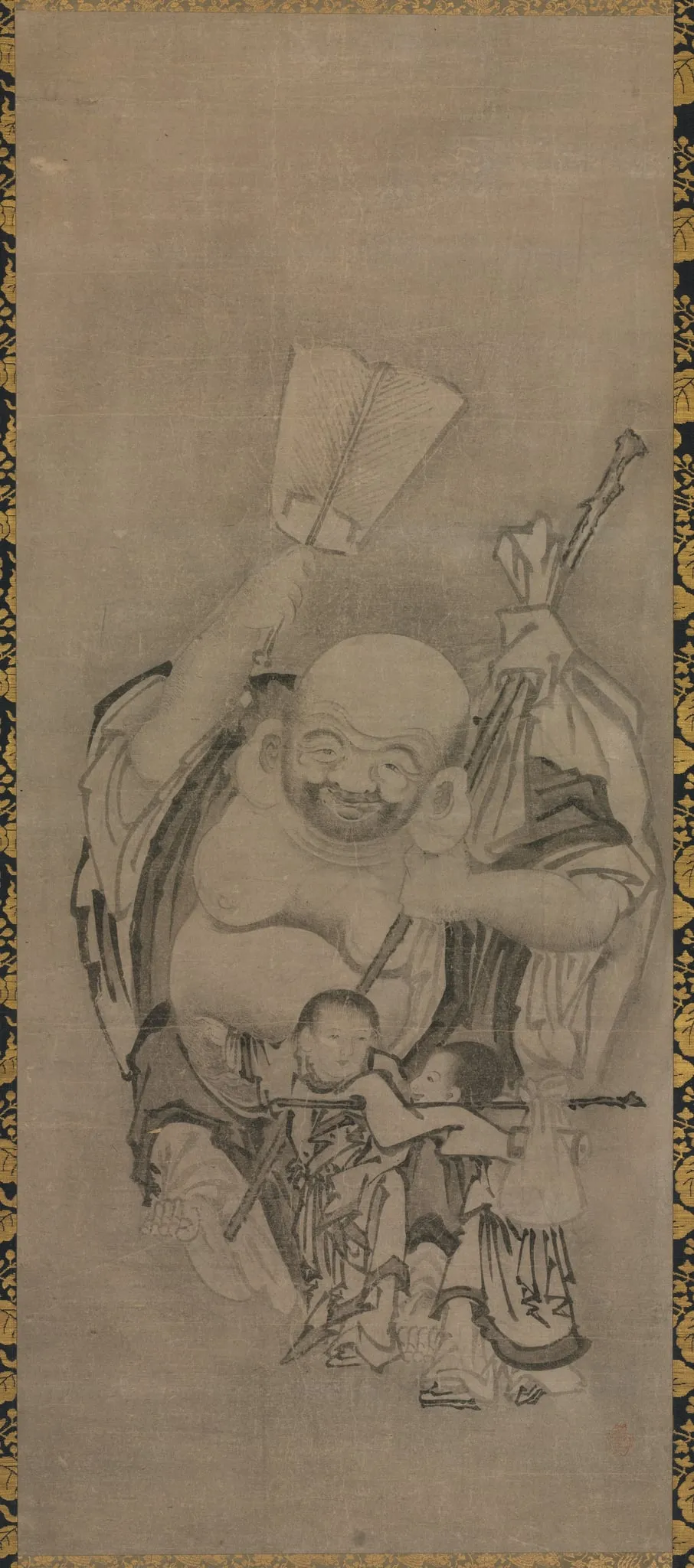
Hotei with Daoist Immortals: Hotei is an unspecified painting by the Baroque artist Kyūseki Tomonobu. It dates from 1646 and is held in the collection of the Cleveland Museum of Art.
- Accession no.
- 1989.8.2
- Credit line
- Mr. and Mrs. William H. Marlatt Fund
About this work
Overview
The composition combines a Zen Buddhist icon with elements drawn from Chinese Daoist tradition, reflecting a syncretic religious atmosphere.
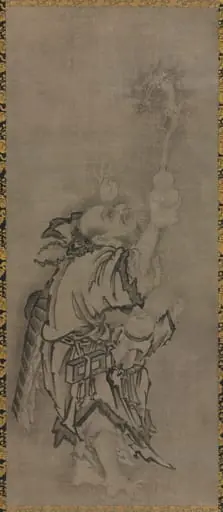
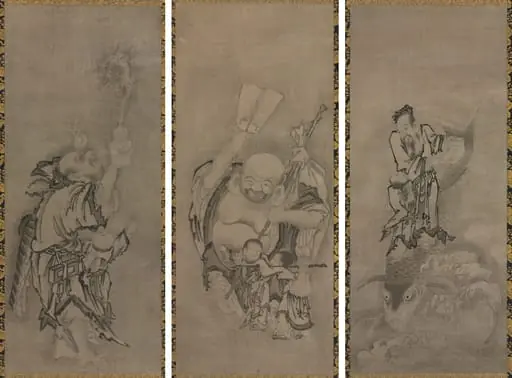
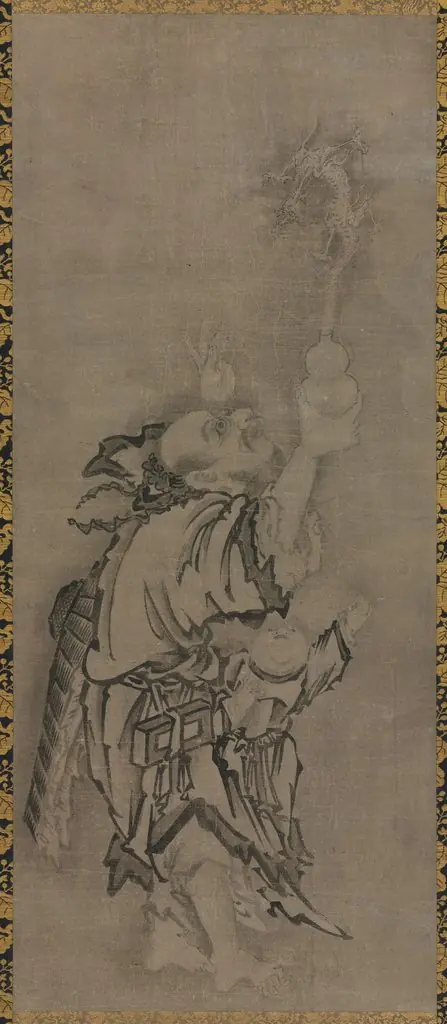
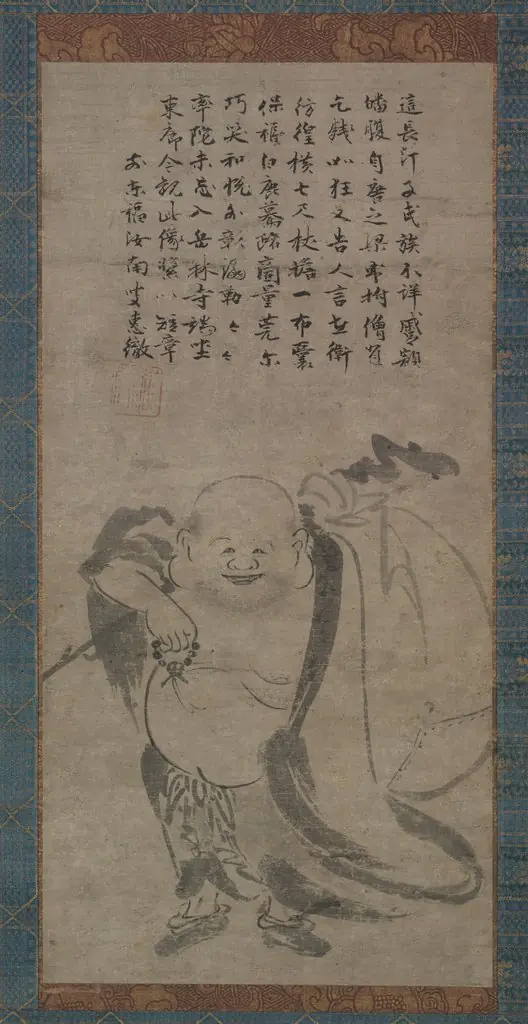
This three‑panel scroll, painted in Japan in the late seventeenth century, presents a central figure of the laughing monk Hōtei surrounded by two Daoist immortals. The composition combines a Zen Buddhist icon with elements drawn from Chinese Daoist tradition, reflecting a syncretic religious atmosphere. The work is executed on paper and was originally mounted as a single unit, emphasizing its intended viewing as an integrated whole.
Subject & Meaning
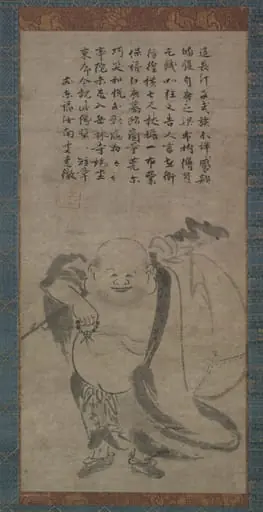
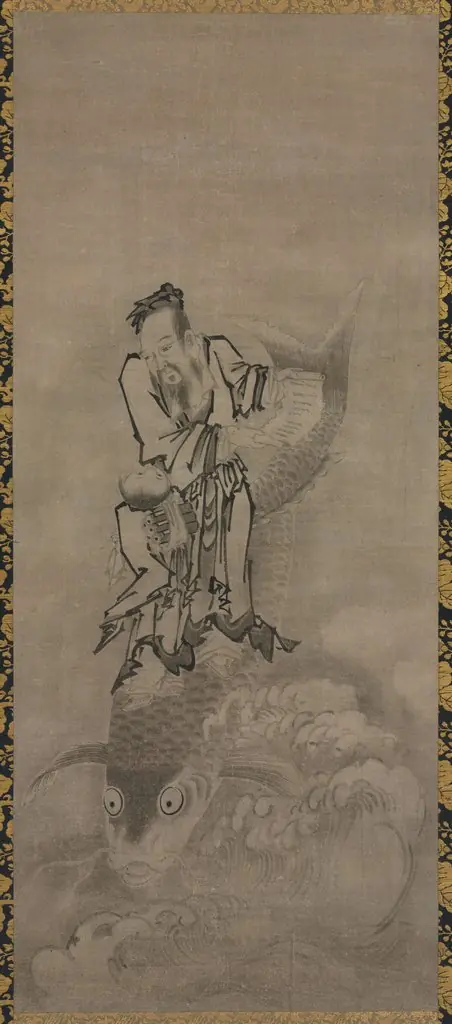
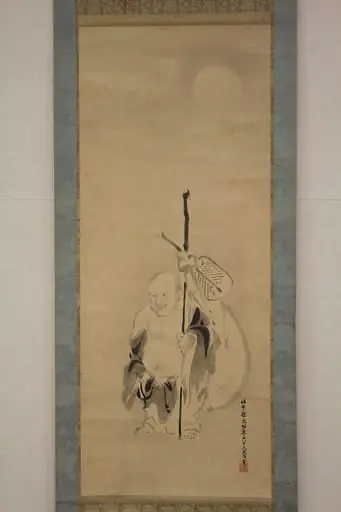
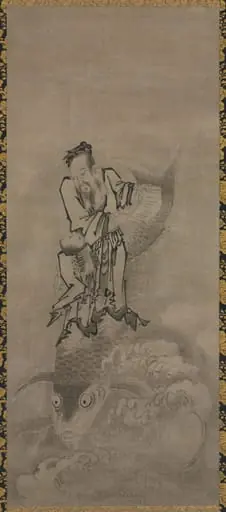
Hōtei, a historical Chan monk who lived in China during the tenth century, was transformed in Japanese culture into a jovial, folk‑hero figure, often identified with abundance and good fortune. In the central panel he is depicted with a broad smile, a sack of treasures, and a relaxed posture, embodying his role as a benevolent, accessible deity. The flanking panels portray Daoist immortals in flowing robes, their exotic appearance underscoring the otherworldly nature of Daoist lore and suggesting a harmonious coexistence of the two traditions.
Technique & Style
The scrolls are rendered in ink on paper, employing bold brushwork characteristic of Japanese Zen painting while integrating the delicate, ornamental detailing typical of Daoist portraiture. The central figure’s exaggerated grin and rounded forms convey a folk aesthetic, whereas the side figures display elongated gestures and stylized garments that convey a sense of foreign eccentricity. The overall visual balance is achieved through the triptych format, linking the central Zen icon with the surrounding Daoist imagery.
History & Provenance
Although the subject originates from a Chinese monk of the 900s, the cult surrounding Hōtei emerged in Japan during the thirteenth century, extending beyond Zen circles to other religious groups. The scrolls entered the museum collection in the twentieth century, but by that time the textile mountings were of poor quality and the paper surfaces exhibited cracking, necessitating conservation.
Context
A comprehensive restoration was undertaken: the paper surfaces were cleaned, damaged areas were repaired, and each panel was remounted on stable supports. No inpainting was applied, preserving the original ink tones and brushstroke integrity. The treatment stabilized the scrolls and restored their intended presentation as a unified triptych for public display.
Artist & collection