Artwork
Lotuses, Insects, and Birds
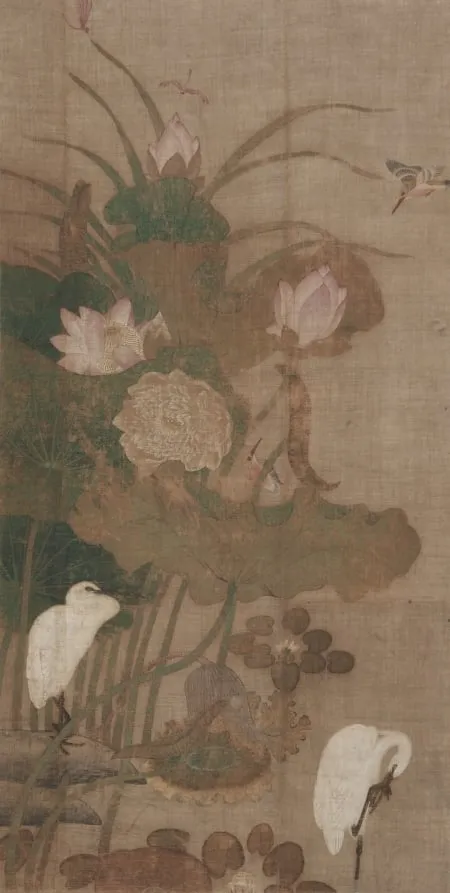
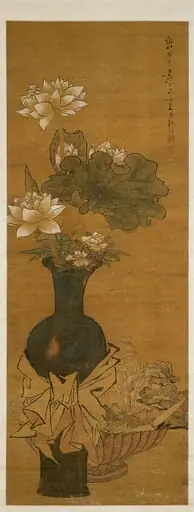
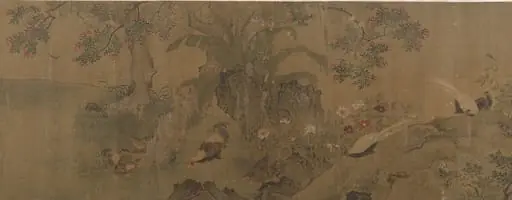
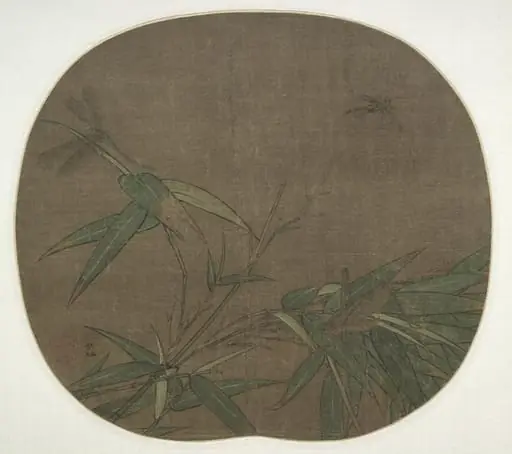
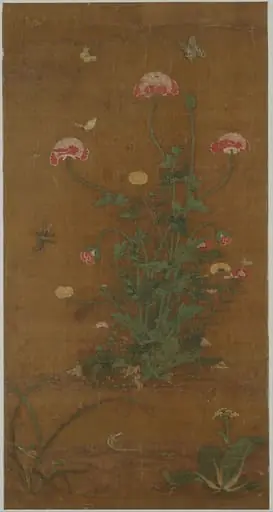
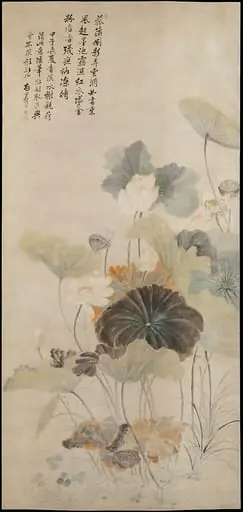
Lotuses, Insects, and Birds is an unspecified painting by the Korean Minhwa artist Unknown. It dates from 1804 and is held in the collection of the Cleveland Museum of Art. This hanging scroll depicts a naturalistic scene of lotus flowers in bloom, accompanied by herons, kingfishers, and dragonflies.
- Accession no.
- 1985.18
- Credit line
- Dudley P. Allen Fund
About this work
The lotus and birds weren’t just pretty; they carried meaning in Korean art, symbolizing purity and fleeting beauty.
This painting shows lotus flowers in bloom, with herons, kingfishers, and dragonflies scattered around them. The colors are soft, pinks, greens, and blues, with most of the action packed on the left side.
It was likely part of a pair, meant to hang in a home during summer. The lotus and birds weren’t just pretty; they carried meaning in Korean art, symbolizing purity and fleeting beauty.
To see more works like this, look up Korea, Joseon dynasty (1392–1910).
Overview
This hanging scroll depicts a naturalistic scene of lotus flowers in bloom, accompanied by herons, kingfishers, and dragonflies. The composition is asymmetrical, with dense clusters of figures and flora concentrated on the left, suggesting it was originally paired with another panel. Its format and subject align with seasonal decorative traditions in Joseon Korea, likely displayed during summer months to evoke the tranquility of wetland environments.
Subject & Meaning
The lotus, rising untainted from muddy water, symbolized moral purity in Confucian and Buddhist thought. Herons and kingfishers, often seen near water, represented grace and vigilance, while dragonflies evoked the transience of life. Together, these elements formed a layered visual language, not merely ornamental but reflective of ideals about harmony, impermanence, and ethical conduct in nature.
Technique & Style
The painting employs delicate ink washes and subtle mineral pigments in soft pinks, greens, and blues, creating a muted, atmospheric tone. Brushwork is precise yet fluid, capturing the texture of petals, feathers, and wings with restrained elegance. The composition avoids symmetry, favoring a naturalistic imbalance that guides the viewer’s eye across the scroll, characteristic of literati-inspired Korean painting of the period.
History & Provenance
Though its exact origin is undocumented, the scroll’s format and iconography are consistent with mid-to-late Joseon dynasty works produced for scholarly or aristocratic households. Its probable pairing with another panel suggests it was part of a set designed for interior display, possibly in a pavilion or reception room. The wear and mounting style indicate it was handled with care over generations.
Context
During the Joseon dynasty, nature-themed paintings were favored by the educated elite as expressions of cultivated taste and philosophical reflection. Unlike courtly art, these works emphasized quiet observation over grandeur. Seasonal motifs like lotuses were not only decorative but served as reminders of Confucian virtues and the rhythms of the natural world, reinforcing cultural values through visual poetry.
Legacy
This painting exemplifies a tradition of Korean nature painting that prioritized subtlety and symbolic depth over spectacle. Its influence can be traced in later 19th-century works that continued to blend botanical accuracy with moral allegory. Today, such pieces are studied for their quiet resistance to ornamental excess, offering insight into how Korean artists engaged with nature as both subject and teacher.
Artist & collection