Artwork
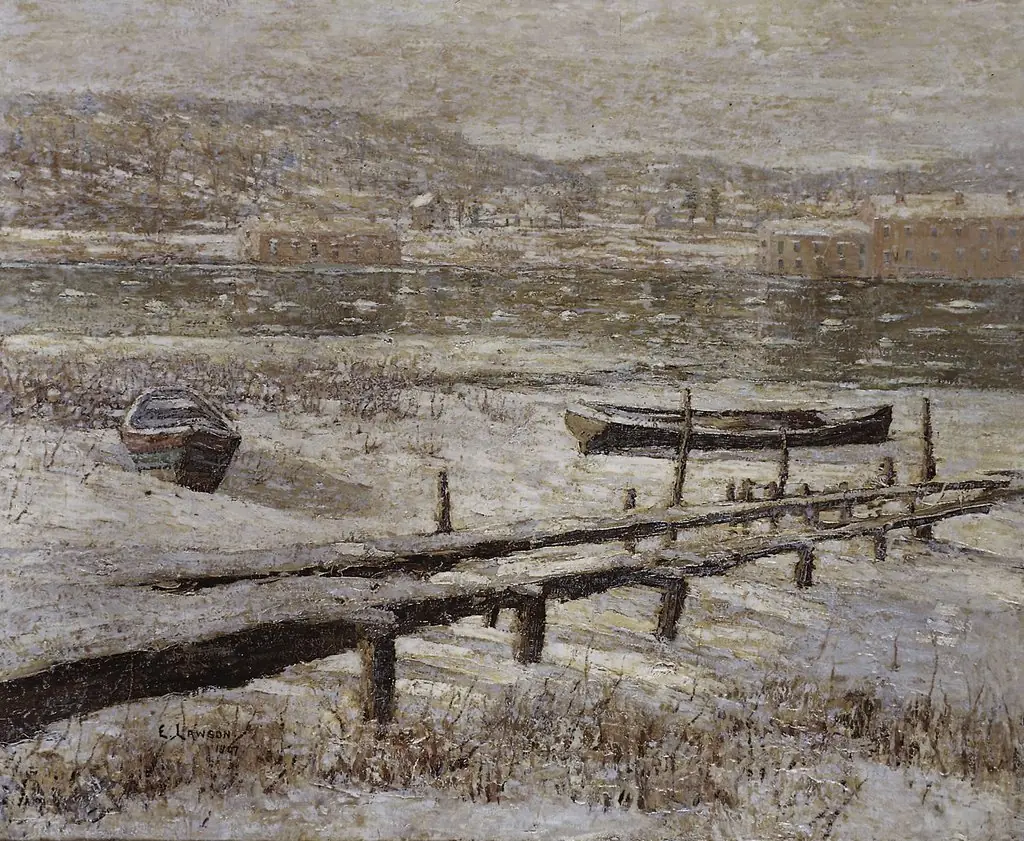
Boathouse, Winter, Harlem River
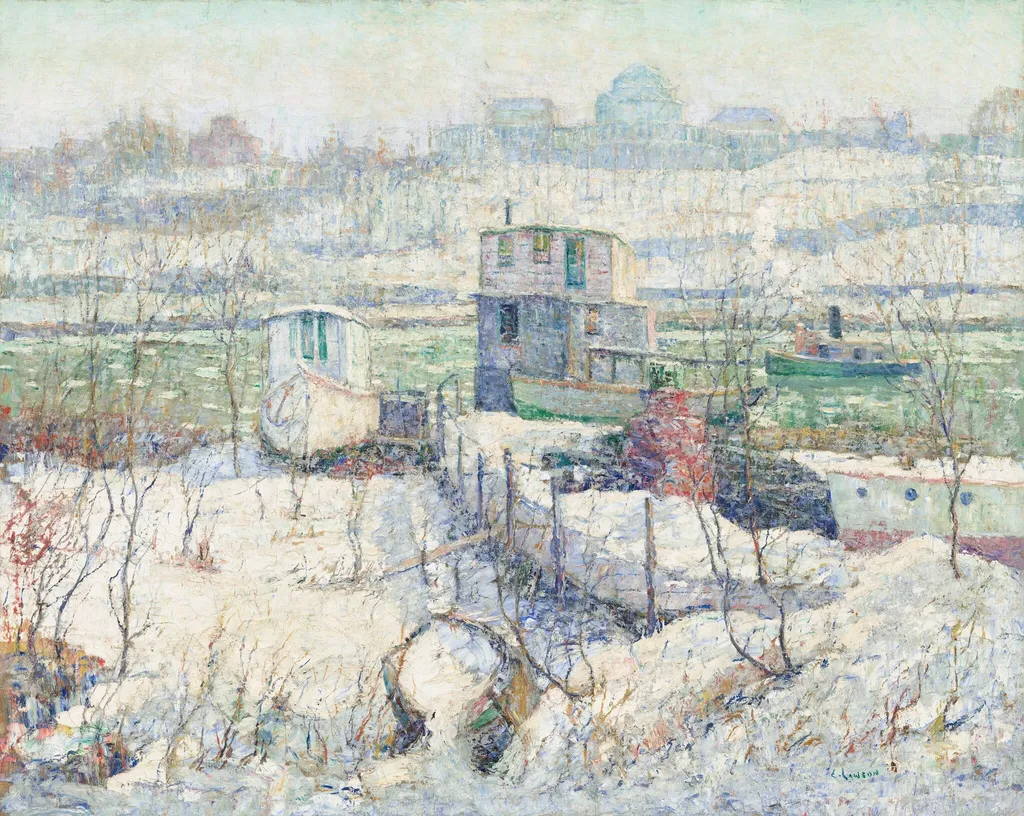
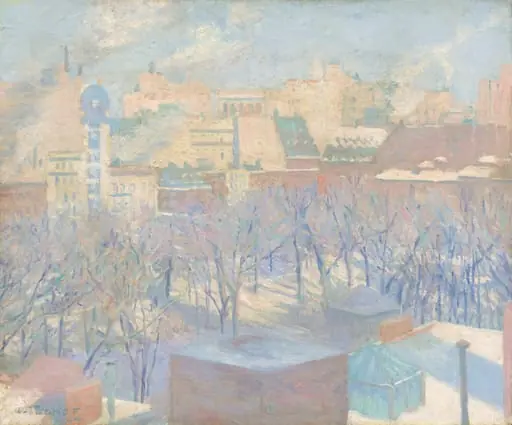
Boathouse, Winter, Harlem River is an oil painting by the American Impressionist artist Ernest Lawson. It dates from 1916 and is held in the collection of the National Gallery of Art.
- Inscription
- Inscribed:lower right: E. Lawson
About this work
Technique & Style
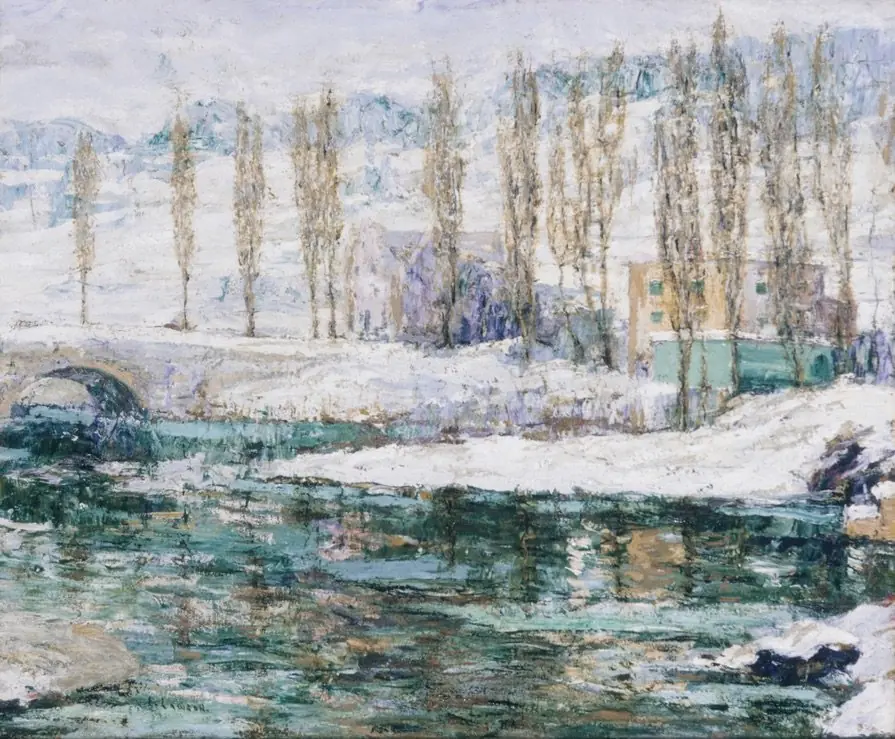
Its composition captures the quiet stillness of the Harlem River in winter, employing loose brushwork and muted tonal contrasts to convey atmospheric depth.
The work is an oil painting on canvas, reflecting the Impressionist-influenced style characteristic of early 20th-century American art. Its composition captures the quiet stillness of the Harlem River in winter, employing loose brushwork and muted tonal contrasts to convey atmospheric depth. Ernest Lawson exhibited with The Eight in 1908, but worked primarily as a landscape Impressionist, and these formal qualities align with that tradition rather than with the urban realism of some of his associates.
History & Provenance
Ernest Lawson created Boathouse, Winter, Harlem River in 1916. The canvas was first handled by the dealer Charles Daniel in New York before being purchased by the Corcoran Gallery of Art in Washington later that same year. The Corcoran retained the painting until 2014, when its collection was transferred to the National Gallery of Art.
The work measures 102.55 cm in height and 127 cm in width. While its ownership trajectory from Daniel to the Corcoran and finally to the National Gallery of Art is documented, specific details regarding public exhibitions or accession numbers are not provided in the available records.
Overview
Boathouse, Winter, Harlem River is an oil on canvas painting by Ernest Lawson, completed in 1916. The work depicts a wintry scene along the Harlem River, featuring a prominent boathouse and moored boats set against a frozen waterway. Lawson employs a palette dominated by whites, blues, and greens to convey the cold atmosphere of the season.
Characteristic of his American Impressionist style, the artist applies thick, textured brushstrokes, often referred to as impasto, to build up the surface and create a sense of depth and light reflection on the snow and ice. The composition centers the architectural form of the boathouse and the vessels, grounding the landscape while the surrounding environment dissolves into a mosaic of color. Painted during the height of Lawson's career, this piece exemplifies his dedication to capturing the specific light and weather conditions of the New York City area, particularly the Hudson and Harlem Rivers.
It stands as a significant example of early 20th-century American landscape painting, bridging the gap between traditional realism and the looser, more expressive techniques of Impressionism adapted to the American urban and suburban context.
Subject & Meaning
The painting focuses on the boathouse structure and the boats moored against it, set against a backdrop of ice and snow. By isolating these elements within a winter setting, Lawson emphasizes the interaction between human activity and the seasonal transformation of the river, suggesting both the endurance of the built environment and the temporary hush of winter.
Artist & collection