Artwork
Shepherdess with Sheep
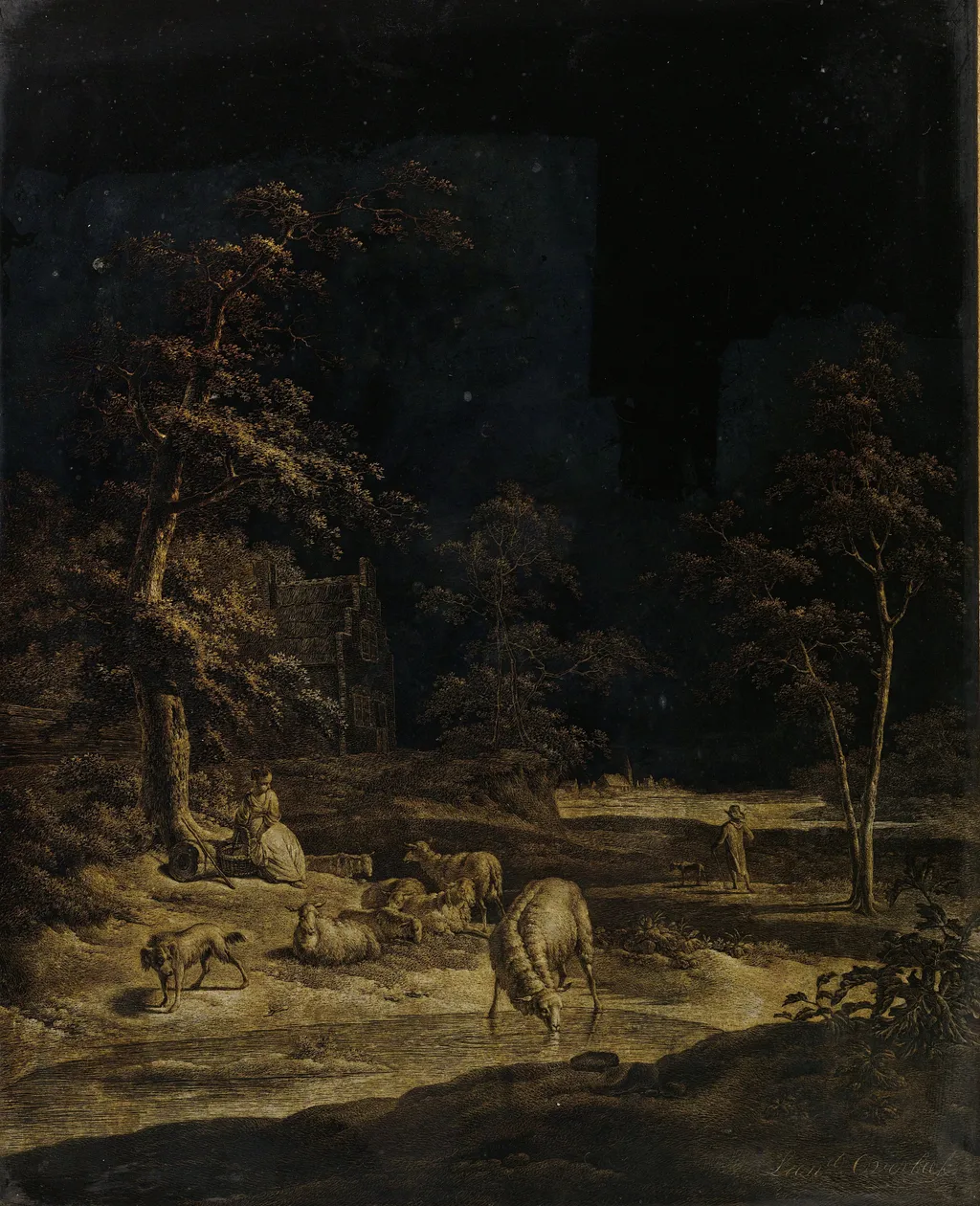
Shepherdess with Sheep is an unspecified painting by the Rococo painting artist Leendert Overbeek. It dates from 1799 and is held in the collection of the Rijksmuseum.
About this work
Technique & Style
The work is executed in vitreous enamel on a glass support, employing the verre églomisé technique in which gilding is applied to the reverse of a transparent sheet and covered with a colored enamel layer that is then fired. The scene is painted with fine, controlled brushwork that delineates the shepherdess and flock in a restrained palette of earth tones and muted greens, emphasizing naturalistic detail within the small format. Compositionally, the arrangement clusters the figures near a central tree, directing attention through subtle perspectival recession while maintaining a calm, pastoral mood typical of Dutch landscape painting of the period.
History & Provenance
The provided sources do not list a specific inventory or accession number for the work, nor do they document any exhibition history.
The vitreous enamel painting titled Shepherdess with Sheep was created by Leendert Overbeek in 1797. This work, classified as a landscape, depicts a tree and was executed using the verre églomisé technique. The piece is currently held in the collection of the Rijksmuseum.
The artwork Shepherdess with Sheep by Leendert Overbeek is held in the collection of the Rijksmuseum. Created in 1797, this vitreous enamel landscape painting is part of the museum's permanent holdings. The provided sources do not list a specific inventory or accession number for the work, nor do they document any exhibition history.
Overview
Leendert Overbeek’s 1799 work Shepherdess with Sheep is a small‑scale landscape rendered in vitreous enamel. The composition captures a tranquil rural scene at twilight, centered on a woman seated on a rock beside a gentle stream. A flock of sheep grazes nearby, a dog lingers at the water’s edge, and a distant figure stands under the fading light, all framed by trees and the suggestion of a dark building.
Subject & Meaning
The image presents an everyday moment of pastoral life, emphasizing the quiet relationship between the shepherdess and her flock. The subdued atmosphere and the inclusion of ordinary figures convey a sense of calm routine, inviting viewers to contemplate the simple rhythms of countryside labor and the harmony between humans, animals, and the landscape.
Context
At the turn of the 19th century, Dutch artists often turned to rural genre subjects to depict national identity and everyday life. Overbeek’s choice of a shepherdess aligns with this tradition, while the use of enamel, a medium more commonly associated with decorative arts, demonstrates a crossover between fine art and craft practices of the era.
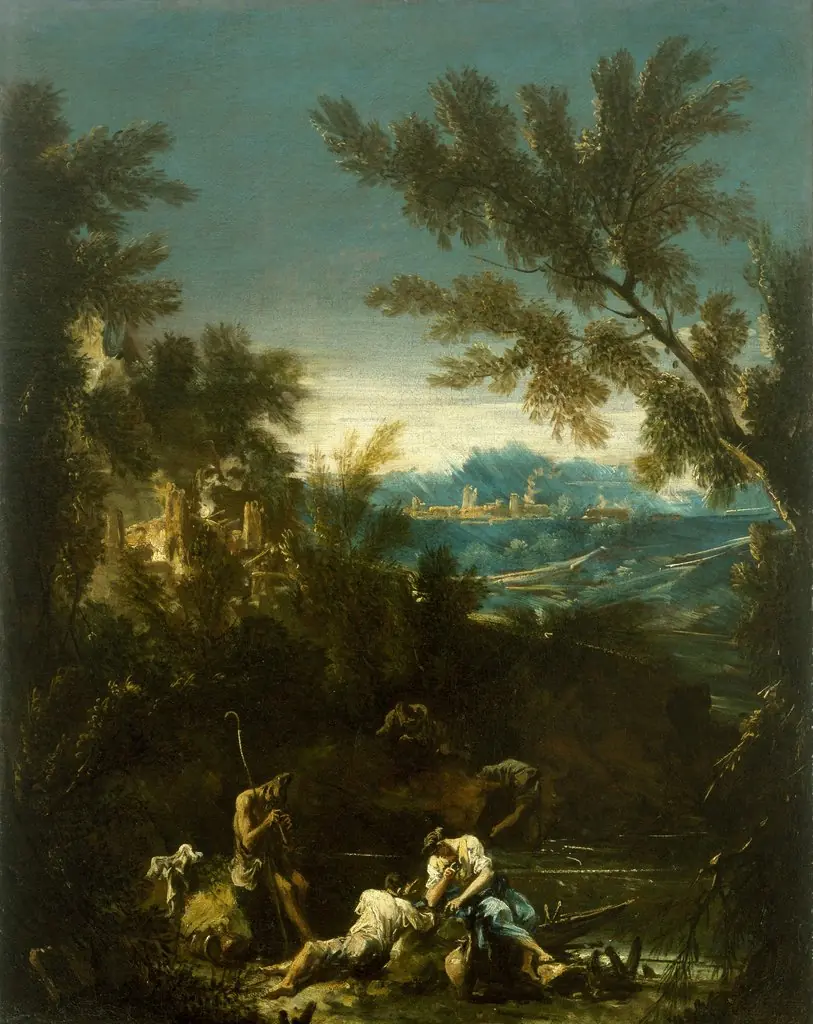
Own this work as a print
Artist & collection
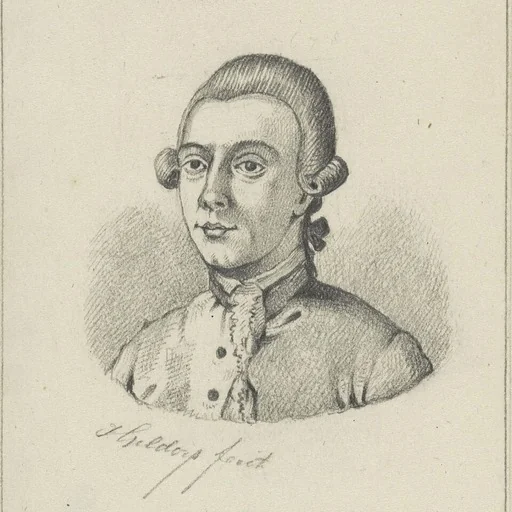

- Landscape with Figures
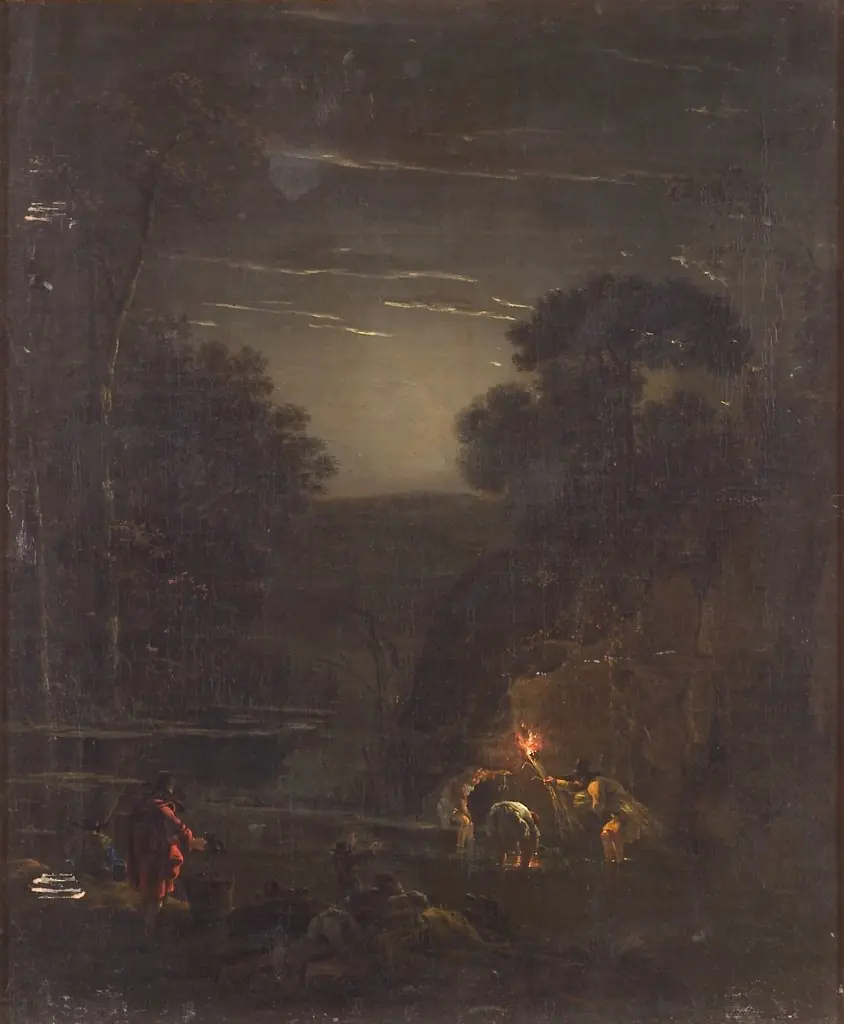 Nocturnal Crayfishing
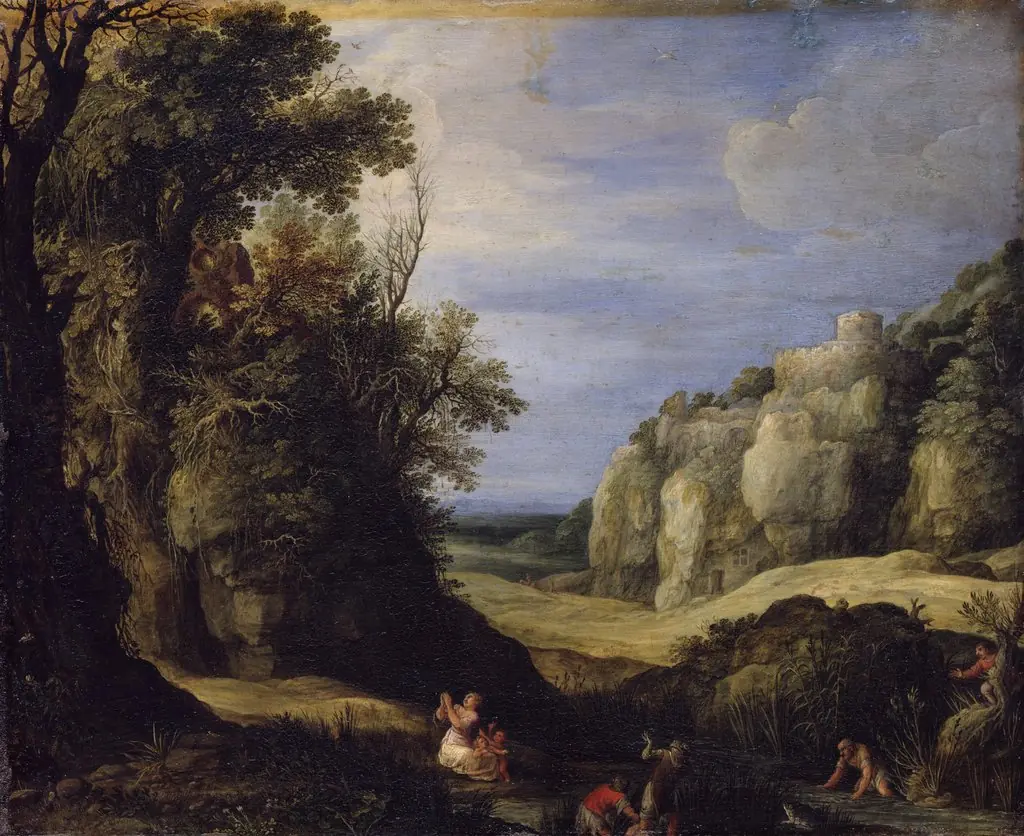 Landscape with Latona and the Lycian Peasants
 Gebirgslandschaft mit Tobias und dem Engel
 Baumlandschaft
 Italienische Landschaft mit Vieh und Hirtinnen
 Cattle at the waterfall
 Wooded Landscape with a Duck Hunt
 Landschaft mit Merkur und Argus
 Landscape with ruins, cattle and deer
 Landscape
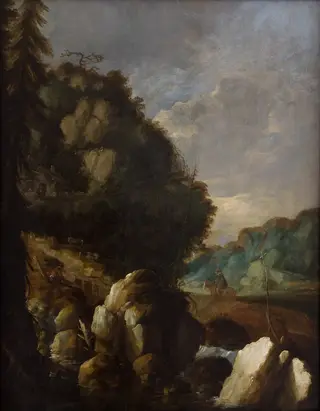 Mountain Landscape (Horseman on a Mountain Path)