Artwork
Head of an Oriental
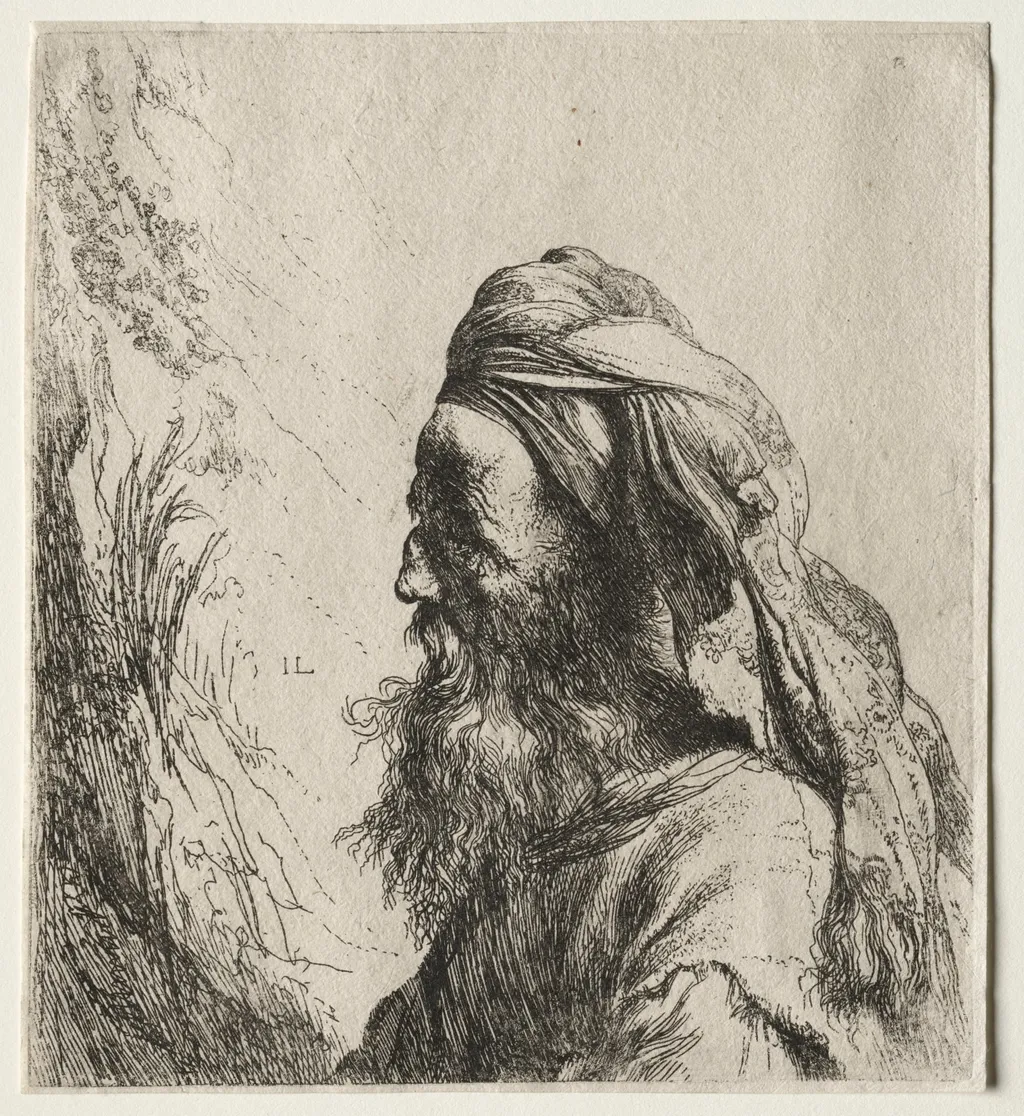
Head of an Oriental is a print by the Baroque artist Jan Lievens. It dates from 1604 and is held in the collection of the Cleveland Museum of Art.
- Accession no.
- 1921.173
- Credit line
- Gift of The Print Club of Cleveland
About this work
Overview
Created in the 1630s, this etching by Jan Lievens is part of a small series depicting male figures in Ottoman-style dress.
Created in the 1630s, this etching by Jan Lievens is part of a small series depicting male figures in Ottoman-style dress. Reflecting European fascination with the East during a period of expanding trade, the work captures a single head in profile, rendered with brisk, confident lines. The figure’s attire and headwear suggest a Turkish or Persian origin, aligning with contemporary European interest in foreign costumes as subjects of artistic study.
Subject & Meaning
The subject is a bearded man wearing a turban and a scarf adorned with a paisley motif, a design originating in Persia and widely admired in 17th-century Europe. Rather than portraying a specific individual, Lievens presents a generalized type, typical of ethnographic studies common among artists of the time. The image conveys curiosity about distant cultures, not satire or idealization, serving as a visual record of perceived foreign dress.
Technique & Style
Lievens employed the etching needle with a loose, gestural hand, allowing the lines to suggest form rather than define it precisely. The contrast between dark, dense strokes and open areas creates subtle volume, hinting at chiaroscuro without full tonal modeling. The paisley pattern is rendered with fine, deliberate marks, demonstrating attention to textile detail amid an otherwise spontaneous composition.
History & Provenance
This print was made during Lievens’s time in Leiden, when he shared a studio with Rembrandt. The two artists influenced each other’s approach to etching, favoring expressive line work over polished finish. While the exact provenance of this particular impression is undocumented, similar studies from this period were likely kept as preparatory works or circulated among collectors interested in exotic subjects.
Context
In the 1630s, Dutch merchants and diplomats brought back goods, stories, and garments from the Ottoman Empire and Persia, fueling artistic interest in 'Oriental' types. Artists like Lievens and Rembrandt responded by producing studies of costume and physiognomy, not as ethnographic documents but as exercises in observation and technique, reflecting broader cultural curiosity rather than colonial assertion.
Legacy
Lievens’s head studies contributed to a genre of etched character studies that influenced later Dutch artists. Though less celebrated than Rembrandt’s, these works demonstrate an early, nuanced engagement with non-European subjects through direct observation and technical experimentation. They remain valuable as examples of how artistic practice intersected with expanding global awareness in the early modern period.
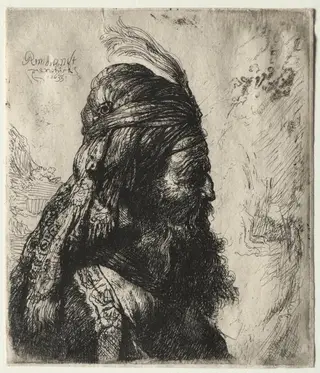
Own this work as a print
Artist & collection

Artist
Jan Lievens (24 October 1607 – 4 June 1674) was a Dutch Golden Age painter who was associated with his close contemporary Rembrandt, a year older, in the early parts of their careers.

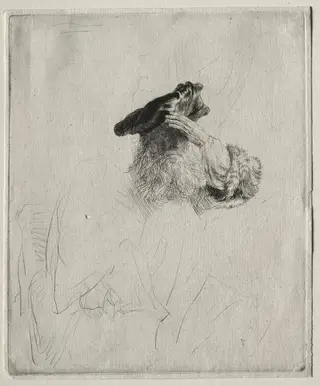 Old Man Shading his Eyes with His Hand
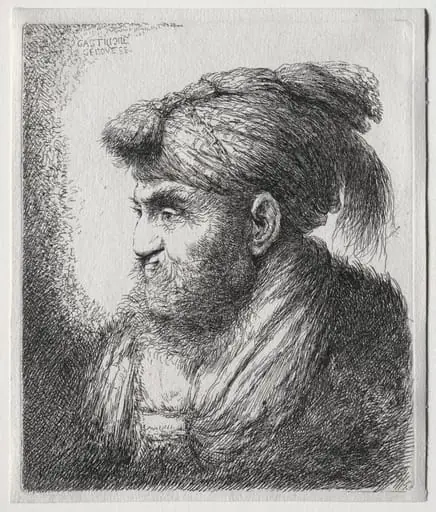 The Large Heads of Men in Oriental Headdress: A Man Nearly in Profile and Turned to Left
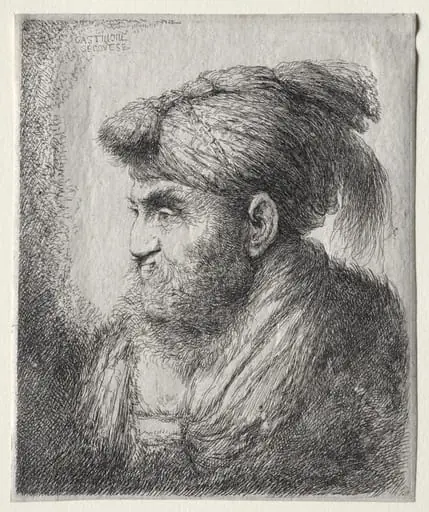 Head of a Man in Oriental Turban
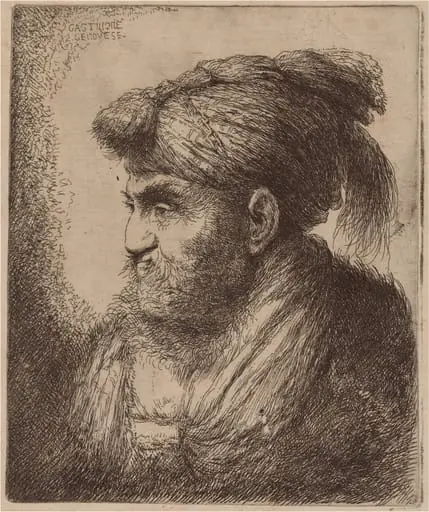 Man with a Beard and a Tassled Headdress, Facing Left
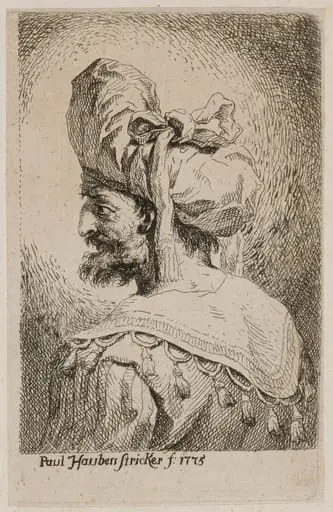 Oriental with a Soft Hat in Profile, Looking Left
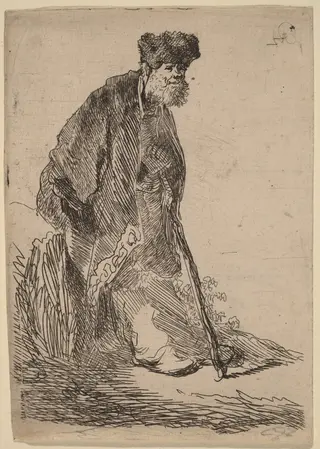 Man in a Coat and Fur Cap Leaning against a Bank
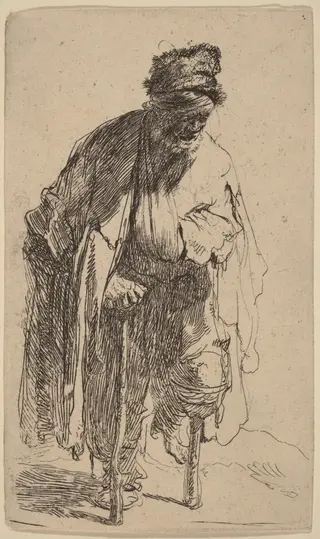 Beggar with a Wooden Leg
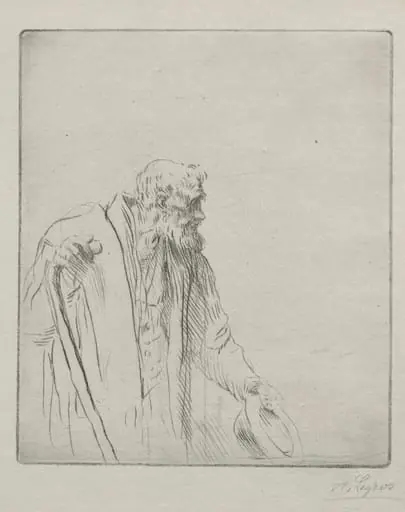 A Beggar
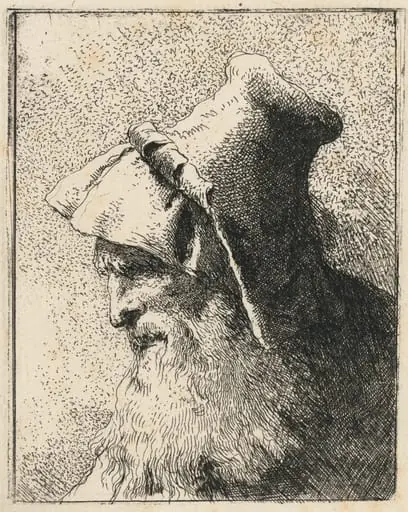 Profile of an Old Man with a Beard
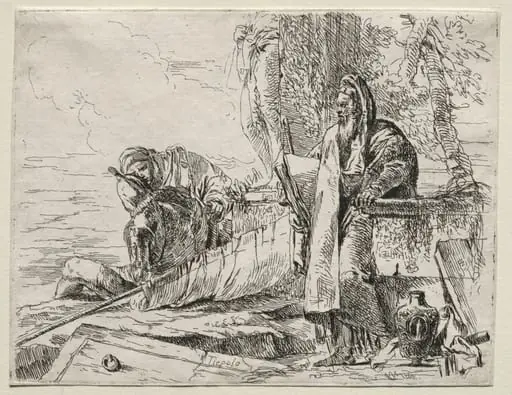 Various Caprices: The Philosopher Holding a Book