Artwork
Statue d'homme d'etat
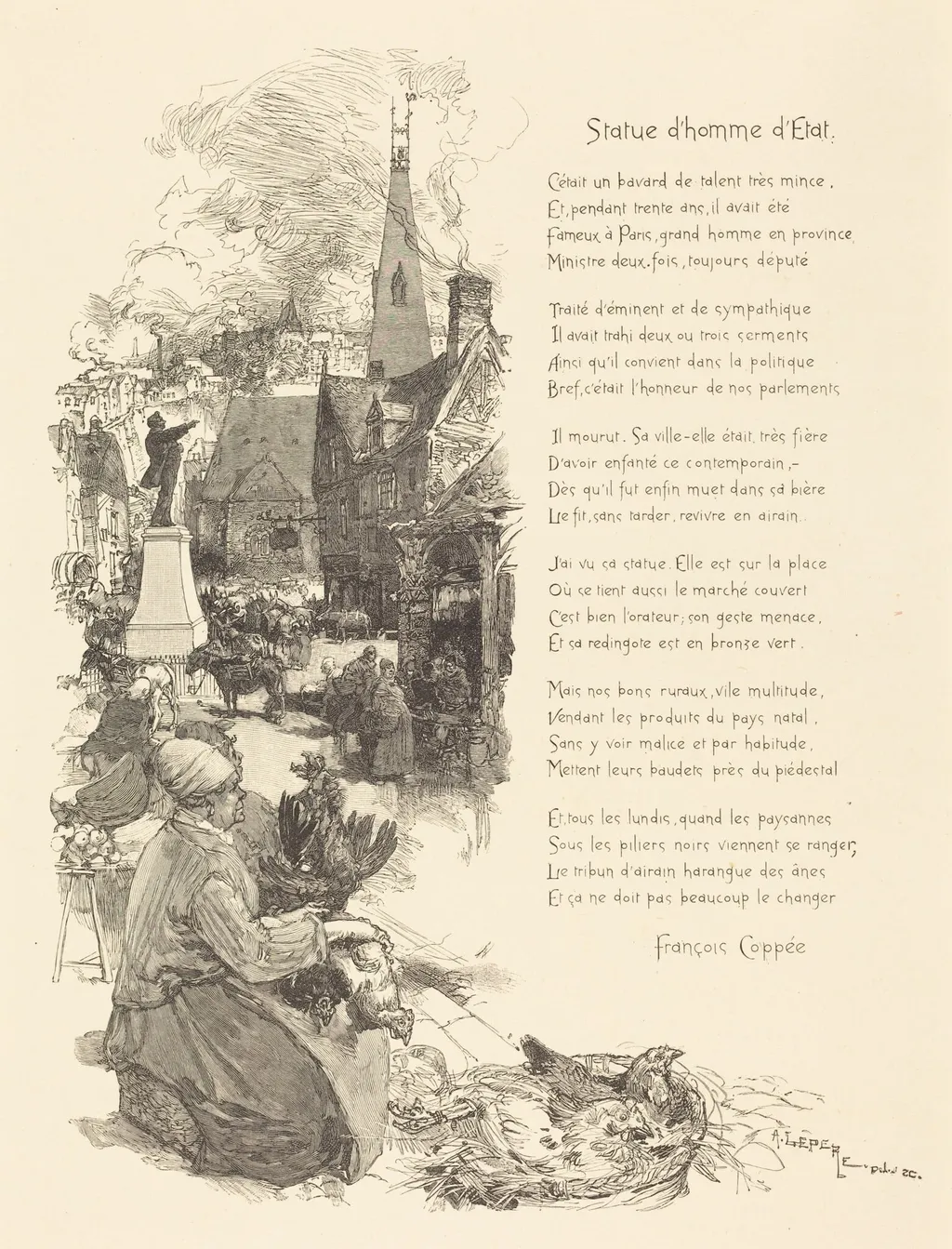
Statue d'homme d'etat is an ink print by the Impressionist artist Auguste Louis Lepère. It dates from 1886 and is held in the collection of the National Gallery of Art.
About this work
Overview
Auguste Lepère’s 1886 wood engraving titled Statue d’homme d’État depicts a monumental figure on a pedestal set against a bustling urban scene.
Auguste Lepère’s 1886 wood engraving titled Statue d’homme d’État depicts a monumental figure on a pedestal set against a bustling urban scene. The composition juxtaposes the elevated statue with everyday activity: a seated woman holding a flower basket, a bird on the ground, and a crowded street filled with market stalls and pedestrians. The image captures a moment where public monumentality meets ordinary life.
Subject & Meaning
The central statue represents a political figure, rendered in a satirical tone by an accompanying poem that derides the subject as a “bronze green” whose words continue to reverberate. The surrounding crowd, rendered in lively detail, underscores the contrast between the lofty self‑importance of the statue and the quotidian reality of the city’s inhabitants, suggesting a critique of political pomp.
Technique & Style
Lepère employs swift, sketch‑like lines characteristic of the late‑19th‑century revival of wood engraving. The medium allows for fine tonal variation, evident in the delicate rendering of the crowd and architectural backdrop, while the statue itself is outlined with bolder strokes to emphasize its prominence. This blend of precise detail and loose gesture reflects Lepère’s mastery of the revived engraving technique.
History & Provenance
Created during a period when Lepère was instrumental in re‑establishing wood engraving as a respected artistic practice in Europe, the print exemplifies his contribution to the medium’s resurgence. Though specific ownership records are limited, the work is documented as part of Lepère’s oeuvre from the 1880s, a time when he was actively producing prints that explored social and political themes.
Context
The engraving emerges from the broader cultural climate of the French Third Republic, a time marked by public monuments celebrating political leaders. Lepère’s satirical approach aligns with contemporary artistic movements that questioned authority and highlighted the everyday experiences of urban populations, positioning the work within both artistic and socio‑political dialogues of its era.
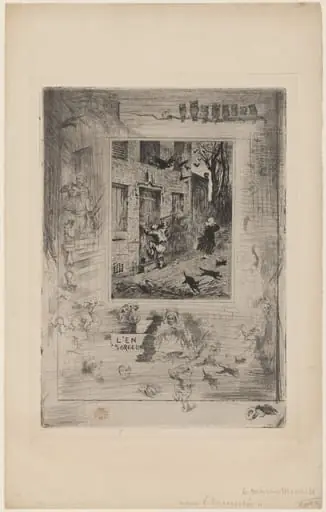
Own this work as a print
Artist & collection

Artist
Louis-Auguste Lepère (30 November 1849 – 20 November 1918) was a French painter and etcher. Lepère is also considered a leader in the creative revival of wood engraving in Europe.

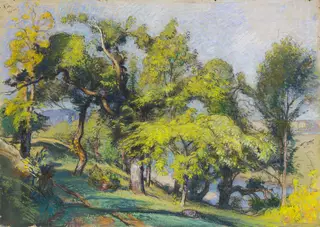
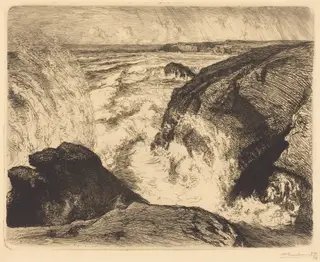
- La Maison Maudite (The House of the Damned)
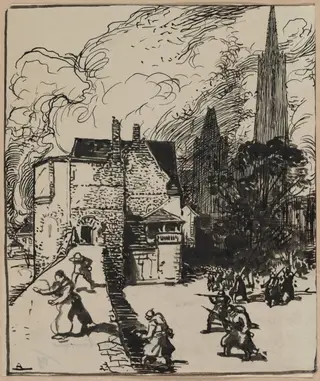 Siège des Maubeuge
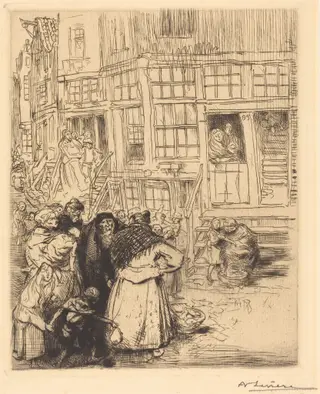 Jewish Quarters in Amsterdam
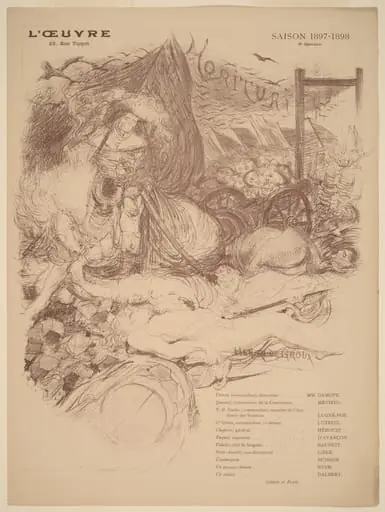 Morituri
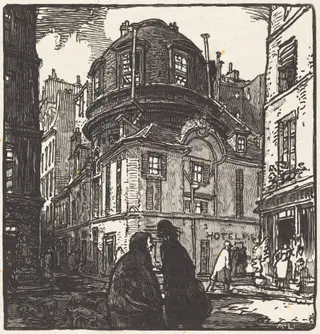 L'ancienne academie de medecine
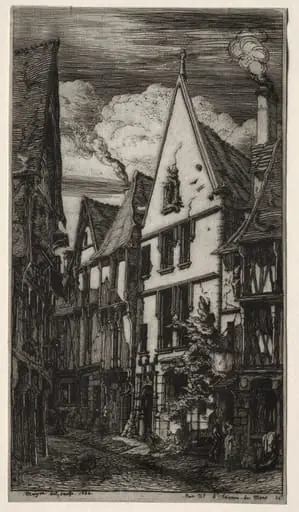 Rue des Toiles, Bourges
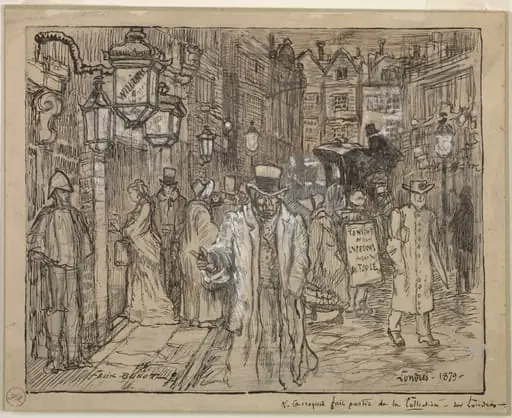 Street Scene in London
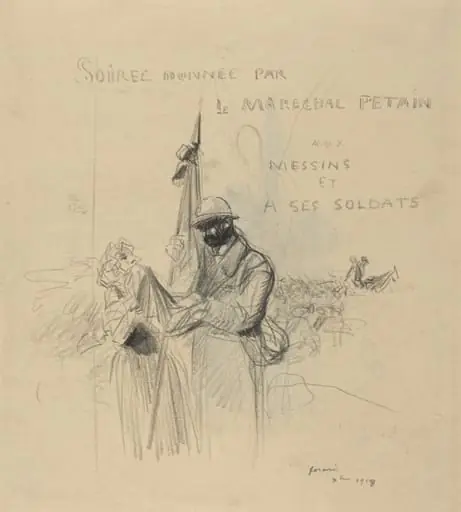 a) Le baiser du drapeau (recto); b) Study of Le baiser du drapeau (verso)
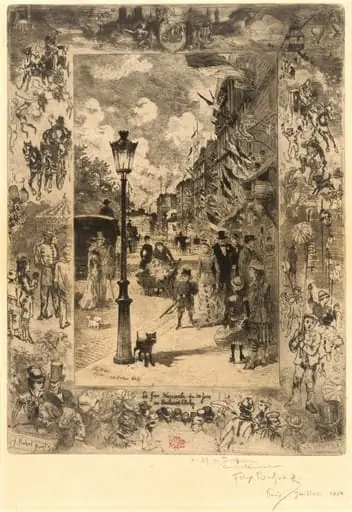 La Fête nationale au Boulevard Clichy (National Holiday on the Boulevard de Clichy)
![La Meule; Jeune premier! [recto], by Charles Decaux](https://artifactworldgallery.com/img/charles-decaux--la-meule-jeune-premier-recto--6473ebd1ba62054c-w320.webp) La Meule; Jeune premier! [recto]
La Meule; Jeune premier! [recto]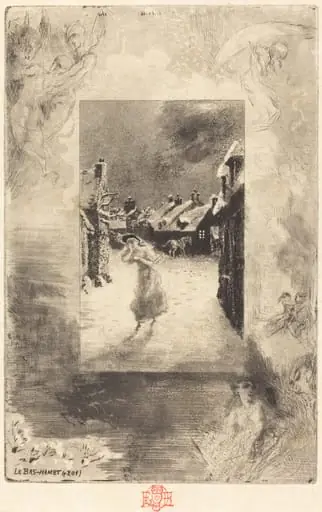 Le Bas-Hamet
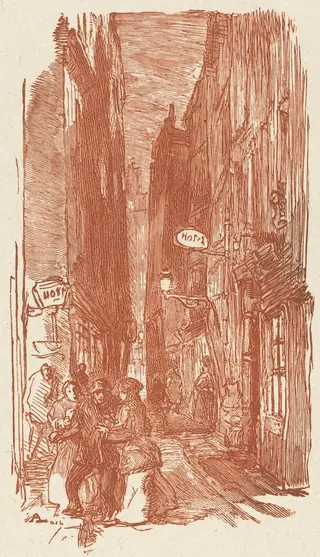 Rue Saint-Severin