Artwork
Madonna and Child
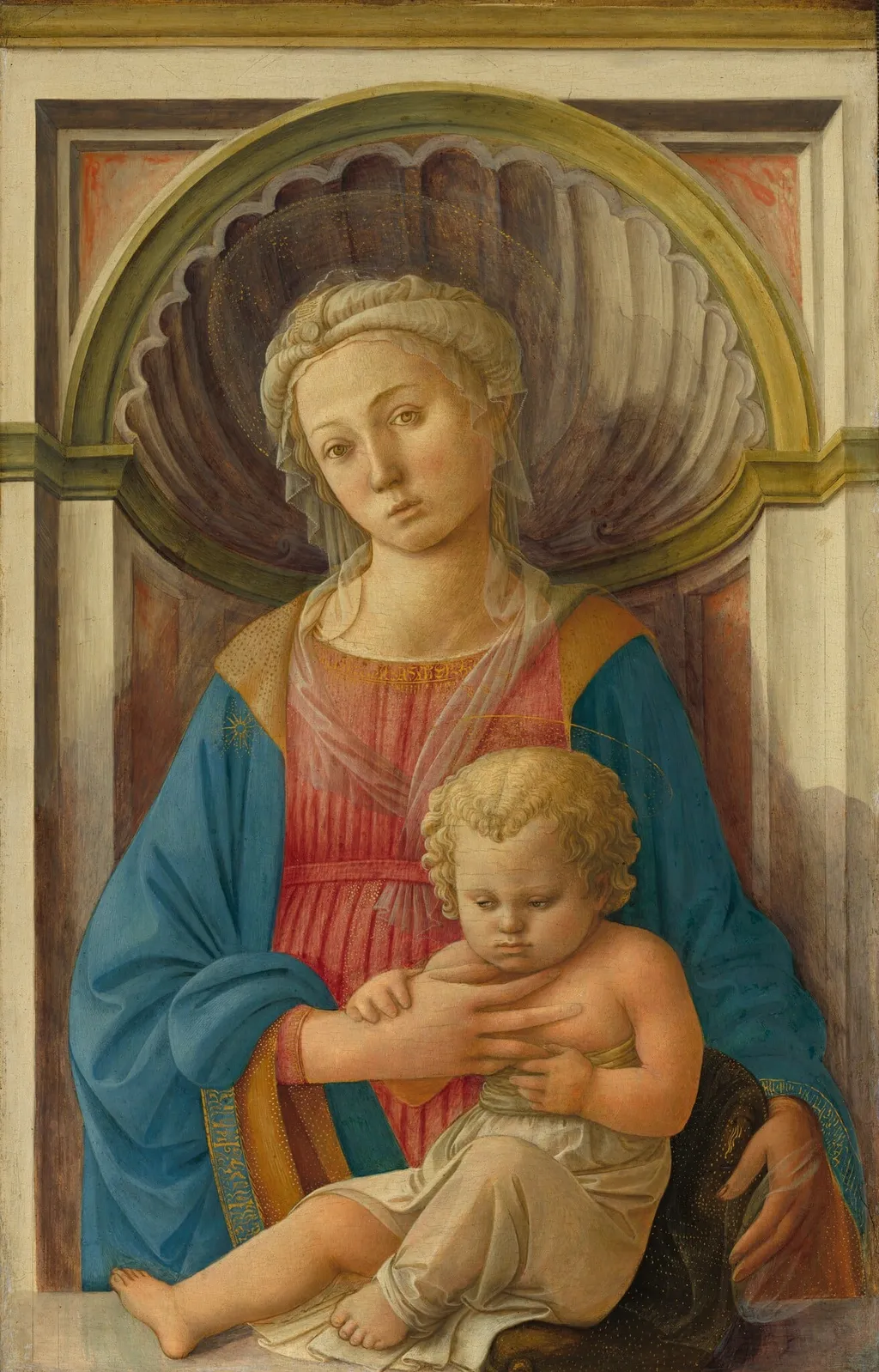
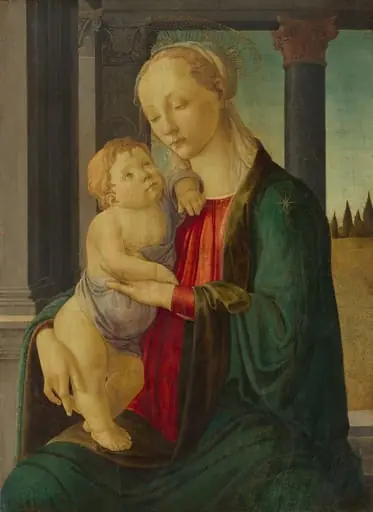
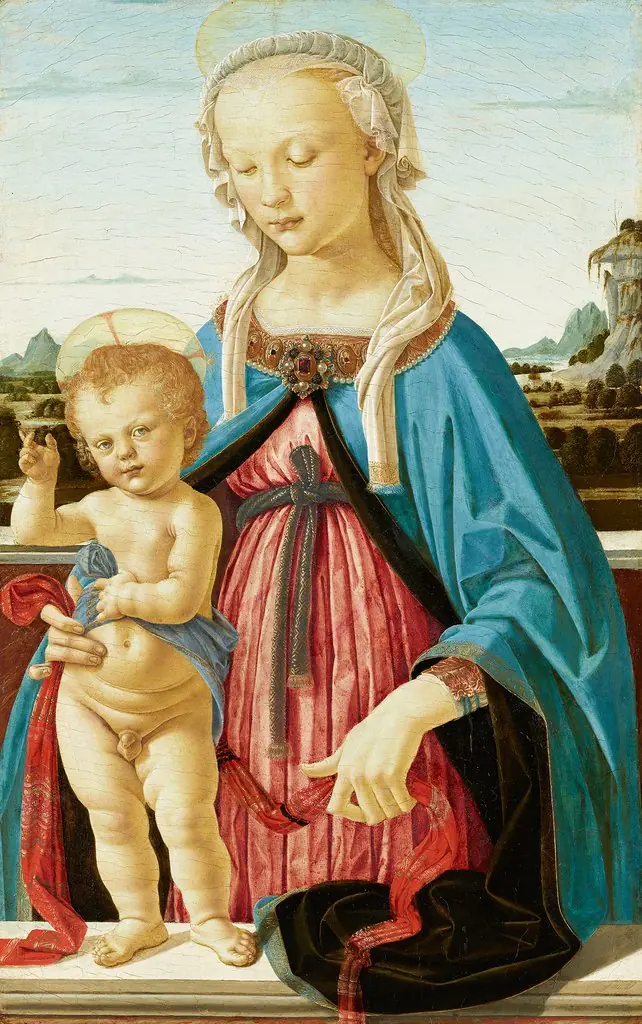
Madonna and Child is a tempera painting by the Early Renaissance artist Filippo, Fra Lippi. It dates from 1440 and is held in the collection of the National Gallery of Art.
About this work
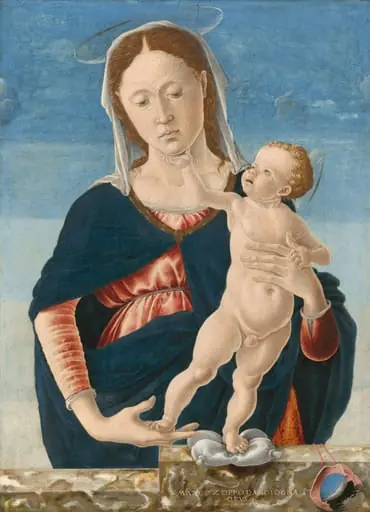
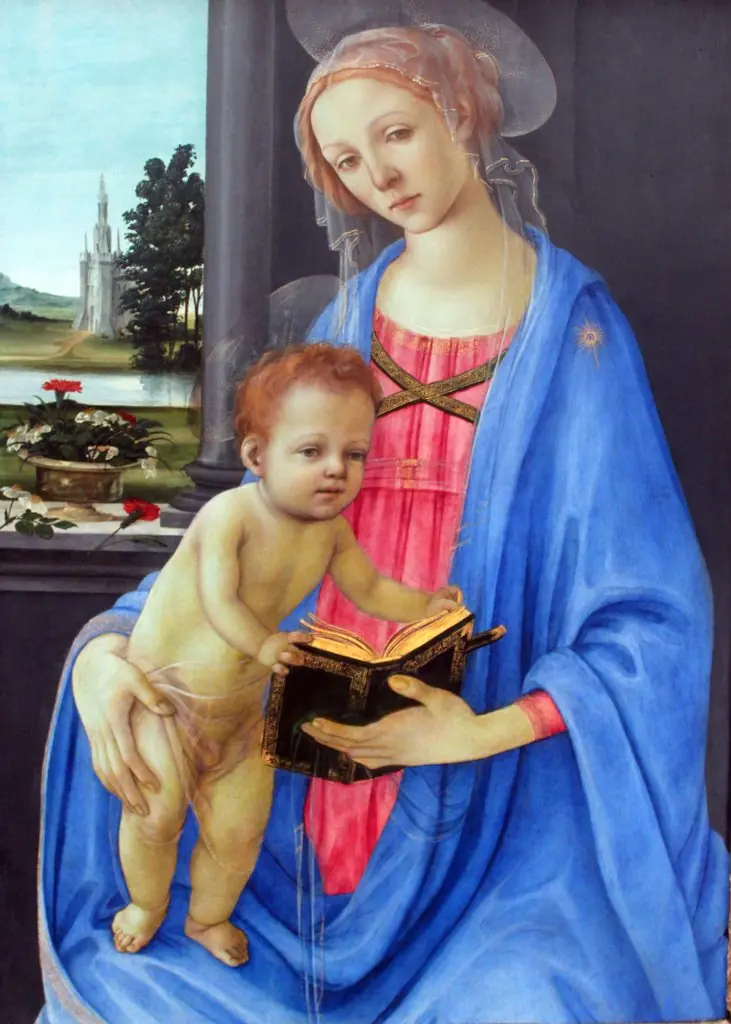
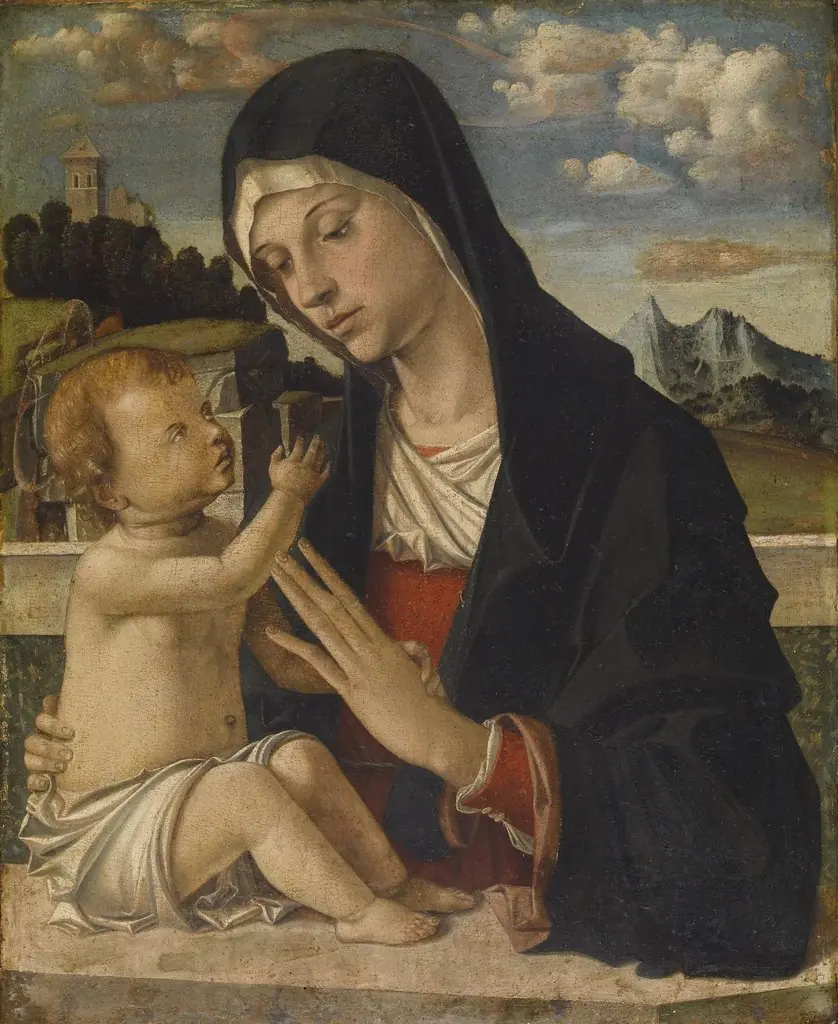
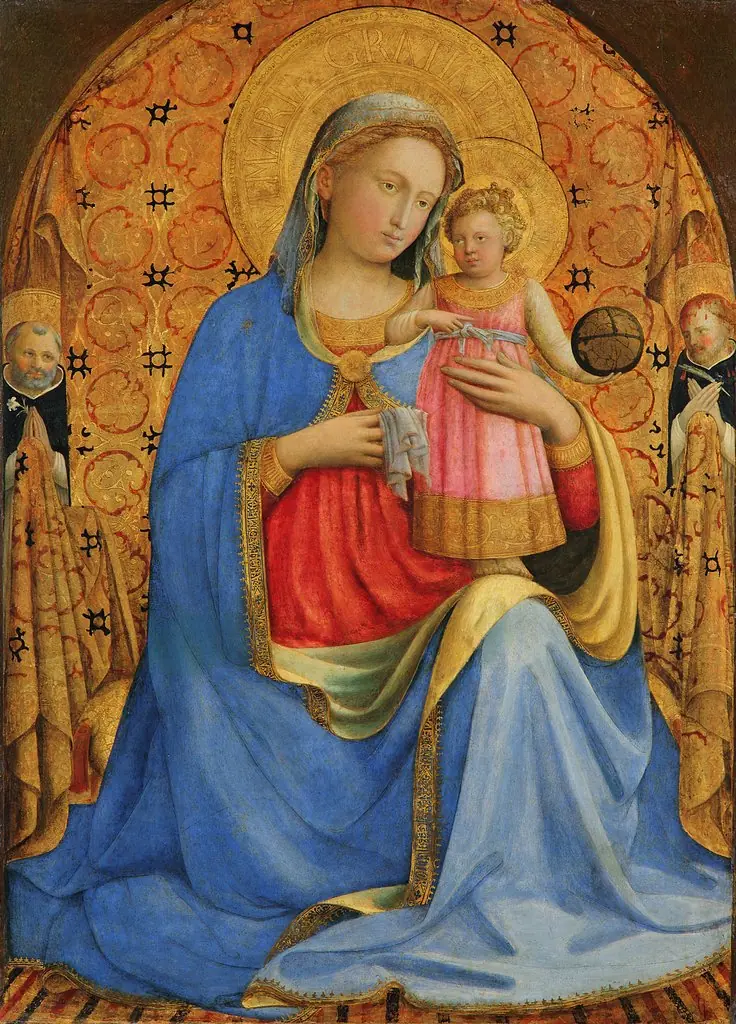
Mary rests her right hand at her son's throat, a gesture pointing to the sacrificial Lamb of God, while the Christ Child sits on a low stone wall beneath a scalloped niche. Fra Filippo Lippi painted this devotional image in tempera on poplar around 1440. X-radiography shows he changed his mind partway, shrinking the Virgin and seating the child who had first been standing.
Subject & Meaning
The work was likely commissioned for private, domestic prayer, as its scale and simple, elegant design suggest.
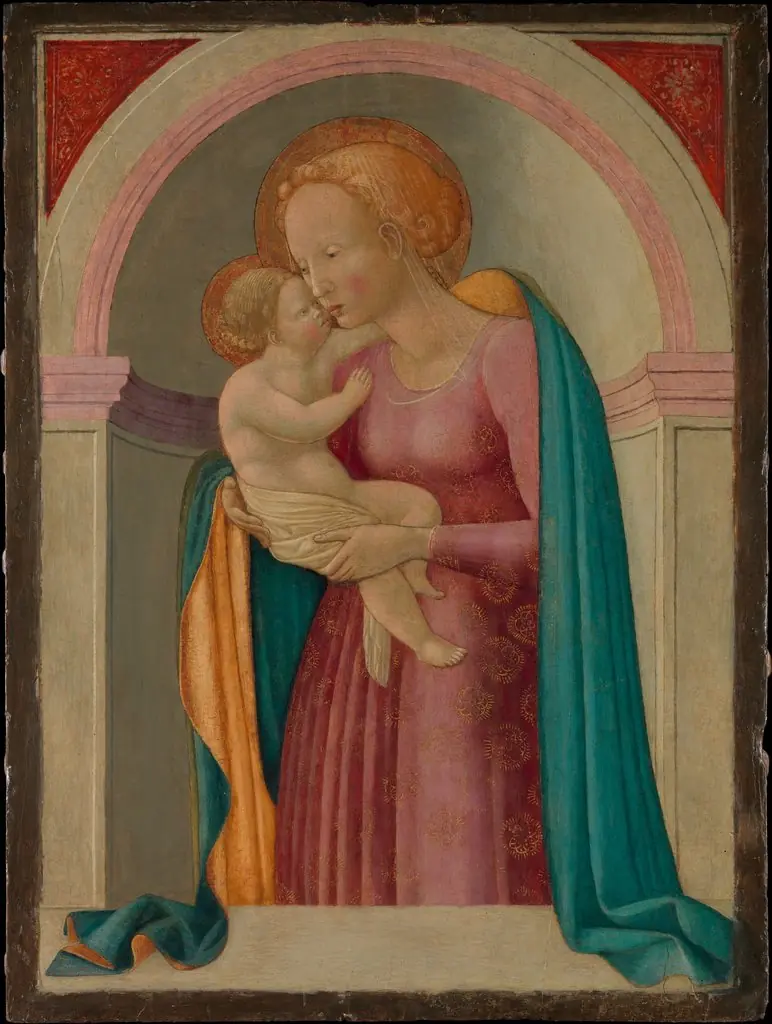
The painting depicts the Virgin Mary and the Christ Child in a half-length composition, with Mary standing and the infant Jesus seated on a balustrade before a shell-shaped niche. This iconographic scheme, inspired by Donatello's tabernacle at Orsanmichele and also employed by Luca della Robbia, had considerable success and was adapted by Lippi for intimate devotional use. The work was likely commissioned for private, domestic prayer, as its scale and simple, elegant design suggest.
Lippi emphasizes refined linear contours and a tender, humanizing interaction between mother and child. The transparent veil and soft, enveloping light further accentuate the grace and approachability of the sacred figures, reflecting the humanistic tendencies of early Renaissance religious art.
Technique & Style
Painted in tempera on a poplar panel (79 × 51.1 cm), Madonna and Child exemplifies Fra Filippo Lippi’s early exploration of the half-length Madonna-and-Child composition set within a shell-like niche, a scheme influenced by Donatello’s tabernacle at Orsanmichele. Radiographic analysis in 1993 revealed an underdrawing with numerous pentimenti, indicating compositional revisions during execution. Lippi’s handling is characterized by an enveloping light that softly models forms without the stark plasticity of Masaccio, instead emphasizing refined contour lines.
Notable details include the Virgin’s transparent veil, which falls delicately over her shaded left hand, and the infant’s garment that reveals the anatomy beneath. The elegant, balanced composition and these virtuosic passages illustrate Lippi’s synthesis of Florentine volumetric tradition with a linear, graceful sensibility.
History & Provenance
Dating to 1440 or the early 1440s, the painting is believed to have been commissioned for private devotional use, despite an early, now-rejected identification with a work described by Vasari in the Sala degli Otto. Its modern provenance begins with Edward Solly in Berlin by 1819; in 1821 it was sold to the Königliche Museen (later Kaiser-Friedrich Museum) in Berlin, where it was inventoried as no. I.165 and later no. 58. In 1937 it was deaccessioned and sold to Duveen Brothers, who sold it in June 1938 to the Samuel H. Kress Foundation.
The foundation gifted the work to the National Gallery of Art in Washington in 1939. Radiographic analysis in 1993 confirmed the autography, revealing underdrawing that includes numerous pentimenti.
The painting is held by the National Gallery of Art (NGA) in Washington, D.C., as part of the Samuel H. Kress Collection, to which it was gifted in 1939. Its earlier provenance includes the Berlin collection of Edward Solly (by 1819), who sold it in 1821 to the Königliche Museen (later the Kaiser-Friedrich Museum, Gemäldegalerie), Berlin, where it was inventoried as no. I.165 and later as no. 58. The work was deaccessioned and sold in 1937 to Duveen Brothers, then sold in 1938 to the Kress Foundation.
No formal exhibition history beyond its museum tenure is recorded in the sources, though it was displayed at the Berlin museum until its deaccession.
Context
The painting, universally attributed to Filippo Lippi, was confirmed as autograph by radiographic studies in 1993 that revealed underdrawing and pentimenti. Early identification with a work described by Vasari in the Sala degli Otto of the Palazzo Vecchio has been rejected; it is now understood as a commission for private domestic devotion. Together with the Madonna of the Cassa di Risparmio in Prato, it represents one of Lippi's earliest treatments of the half-length Madonna and Child set within a shell-backed niche, a schema that would prove highly successful and that drew on iconographic traditions also employed by Luca della Robbia.
The niche's form specifically references Donatello's tabernacle for the Parte Guelfa at Orsanmichele. Lippi's handling of light differs from Masaccio's plastic modeling, favoring instead refined contour lines that soften the forms, evident in such virtuosic details as the Virgin's transparent veil.
Legacy
Fra Filippo Lippi's Madonna and Child is recognized in art-historical scholarship for its influential compositional scheme. The painting presents the Virgin and Child in a half-length format set within a shell-backed niche, a motif that Lippi would revisit and that, according to the Italian Wikipedia entry, achieved notable success. This early example from the 1440s is thus seen as a foundational work within the artist's oeuvre, establishing a devotional image type that had considerable influence on subsequent treatments of the subject.
The work's reception has been shaped by its elegant design, which balances the plasticity of Masaccio with Lippi's own emphasis on refined contour and delicate detail. Housed in the National Gallery of Art, Washington, the painting continues to be studied as a key instance of Lippi's impact on Renaissance devotional painting.
Overview
Fra Filippo Lippi's Madonna and Child, painted around 1440, is an intimate devotional work executed in tempera on a poplar panel. Measuring 79 by 51.1 centimeters, it depicts the Virgin Mary and Christ Child within a classical architectural setting. This painting, likely intended for private worship, showcases Lippi's early Renaissance style and his innovative approach to traditional religious subjects. It is now part of the Samuel H. Kress Collection at the National Gallery of Art.
Own this work as a print
Artist & collection