Artwork
Marie-Antoinette seated, in blue coat and white dress, holding a book in her hand
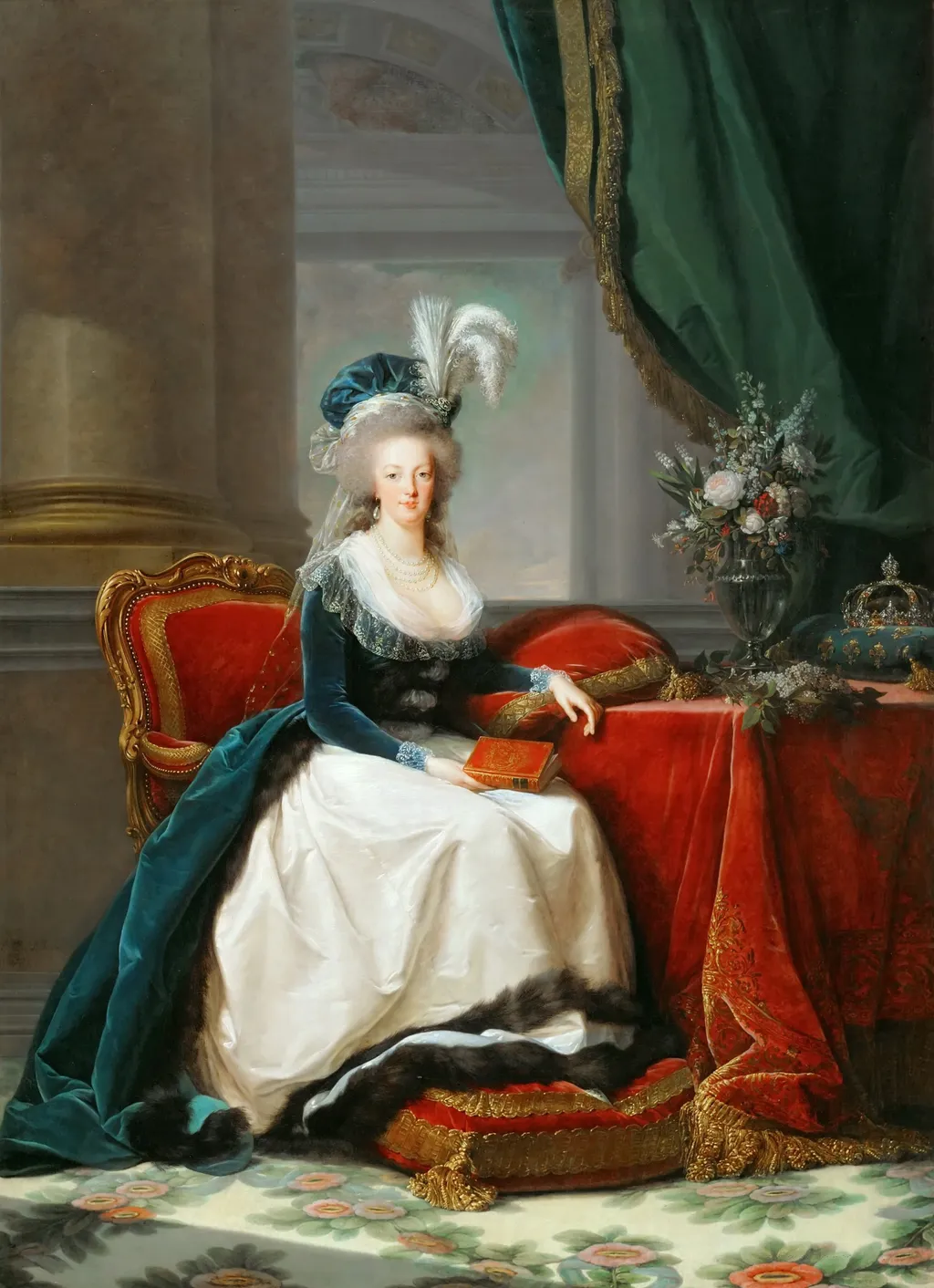
Marie-Antoinette seated, in blue coat and white dress, holding a book in her hand is an oil painting by the Rococo painting artist Élisabeth Louise Vigée Le Brun. It dates from 1794 and is held in the collection of the Palace of Versailles.
About this work
Subject & Meaning
It entered the French royal collection after Louis XVIII acquired it in 1818 and is now part of the Museum of the History of France at the Palace of Versailles.
The portrait shows Marie Antoinette seated in a simple blue velvet coat and white dress, holding a book in her right hand. Painted by Élisabeth Louise Vigée Le Brun in 1788, it was created shortly before the French Revolution and depicts the queen in mourning after the death of her daughter Sophie in 1787. The work emphasizes her modest attire and personal tragedy while surrounding her with regal symbols such as a crown and a vase of flowers, highlighting both her royal status and her attempt to appear close to the people.
The painting measures 271 cm in height and 195 cm in width, executed in oil on canvas. It entered the French royal collection after Louis XVIII acquired it in 1818 and is now part of the Museum of the History of France at the Palace of Versailles.
Scholars interpret the composition as a blend of personal narrative and political symbolism, using the book and restrained dress to convey both the queen’s private grief and a calculated accessibility to the public.
The portrait is recognized as the last official state portrait of Marie Antoinette and remains on display in the queen’s private apartments at Versailles.
Technique & Style
The work is an oil painting on canvas, executed by Élisabeth Louise Vigée Le Brun in 1788 as a vertical-format state portrait. Sources record the canvas dimensions as 271 × 195 cm, consistent with a large-scale formal composition. The queen is shown seated in mourning dress, combining a dark blue velvet coat with a white silk skirt, both trimmed in black sable fur, and a matching dark blue velvet hat with white plumes and a trailing veil; her jewelry is rendered as a four-strand pearl necklace with matching pearl-drop earrings.
In her right hand she holds a book with red covers, while her left arm rests on a cushion at a table bearing the crown on a blue velvet cushion embroidered with golden fleurs-de-lis, a small bouquet of wildflowers, and a crystal vase of roses. Her feet are placed on a richly embroidered red velvet cushion.
Stylistically, the portrait adopts a deliberately simplified, sober mode that Vigée Le Brun pursued after the diamond-necklace scandal, presenting a sympathetic, approachable image of the queen while still anchoring her in the regalia of monarchy. The pose and facial likeness closely echo her earlier 1787 portrait of Marie Antoinette with her children.
History & Provenance
The work was created in 1788 by Élisabeth Louise Vigée Le Brun as an official portrait of Marie Antoinette, painted shortly after the death of her daughter Sophie in 1787. It entered the French royal collection under Louis XVIII, who acquired it in 1818, and has remained in the ownership of the French state, currently housed in the Musée des Châteaux de Versailles. The painting is catalogued in the Joconde database (inventory numbers MV 2097, INV 3060, L 3591) and is displayed in the queen’s petit appartement at Versailles.
The portrait is held at the Palace of Versailles in France, specifically within the national museum of the châteaux of Versailles and Trianon. It is located in the Queen's small apartment. The work bears multiple inventory numbers, including MV 2097, INV 3060, and L 3591, as recorded in the Joconde database of French museum collections.
The painting was acquired by King Louis XVIII in 1818 during his reign and subsequently entered the royal holdings at Versailles. While the painting is a permanent fixture in the palace, the provided sources do not list specific dates or titles for past temporary exhibitions, noting only its continuous presence in the collection.
Context
Painted in 1788, this portrait is identified as the last official state portrait of Marie Antoinette by Élisabeth Louise Vigée Le Brun, executed on the eve of the French Revolution. It followed her celebrated 1787 composition depicting the queen with her children, and the two works are noted for their strikingly similar pose and expression.
The painting was highly praised for its remarkable likeness to the queen. It was conceived as an exercise in image rehabilitation: Marie Antoinette is shown in deliberately simplified mourning dress, a sober style she adopted after the Diamond Necklace Affair had severely damaged her reputation. The composition pairs this plain attire with overt symbols of monarchy, including the crown, in order to project both royal dignity and closeness to the people.
Acquired by Louis XVIII in 1818, the canvas entered the Versailles collections and remains displayed in the Petit appartement de la reine at the Palace of Versailles.
Legacy
The portrait has been recognized as the last official state portrait of Marie Antoinette and continues to shape her artistic legacy. Contemporary accounts praised its striking resemblance to the queen, noting the dignified yet intimate composition that emphasizes her connection to the French people through modest attire and domestic symbols such as the book, crown, and floral motifs. The work remains part of the collection at the Palace of Versailles, where it is displayed in the queen’s private apartments, ensuring ongoing public engagement with her historical image.
Overview
Élisabeth Louise Vigée Le Brun’s 1794 oil portrait shows Marie Antoinette seated on an upholstered chair, dressed in a blue outer coat over a white gown, with a small book poised in her hands. The composition includes a richly upholstered backdrop, a red cushion, and a table adorned with flowers, all set within an interior of dark green walls and gilded accents.
Own this work as a print
Artist & collection
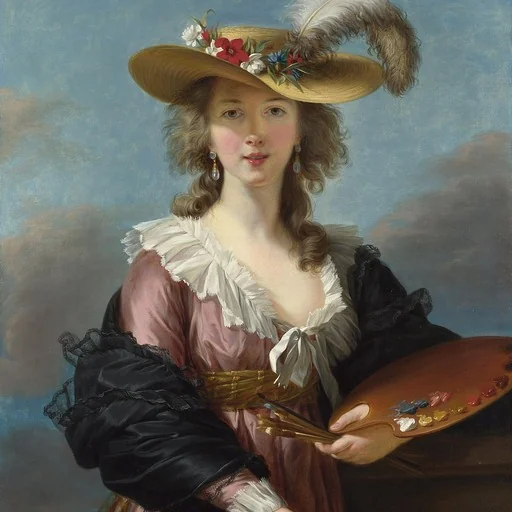
Artist
Élisabeth Louise Vigée Le Brun
Élisabeth Louise Vigée Le Brun (French:; née Vigée; 16 April 1755 – 30 March 1842), also known as Louise Élisabeth Vigée Le Brun or simply Madame Le Brun, was a French painter who mostly specialized in portrait…

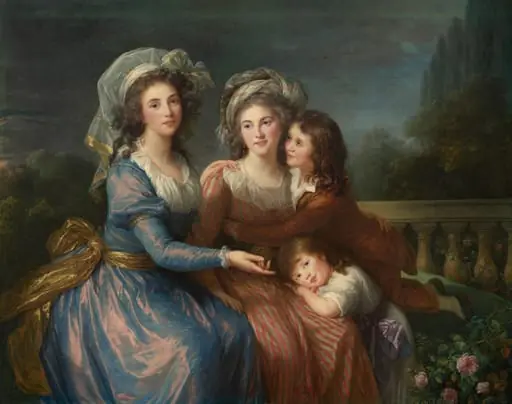 The Marquise de Pezay, and the Marquise de Rougé with Her Sons Alexis and Adrien
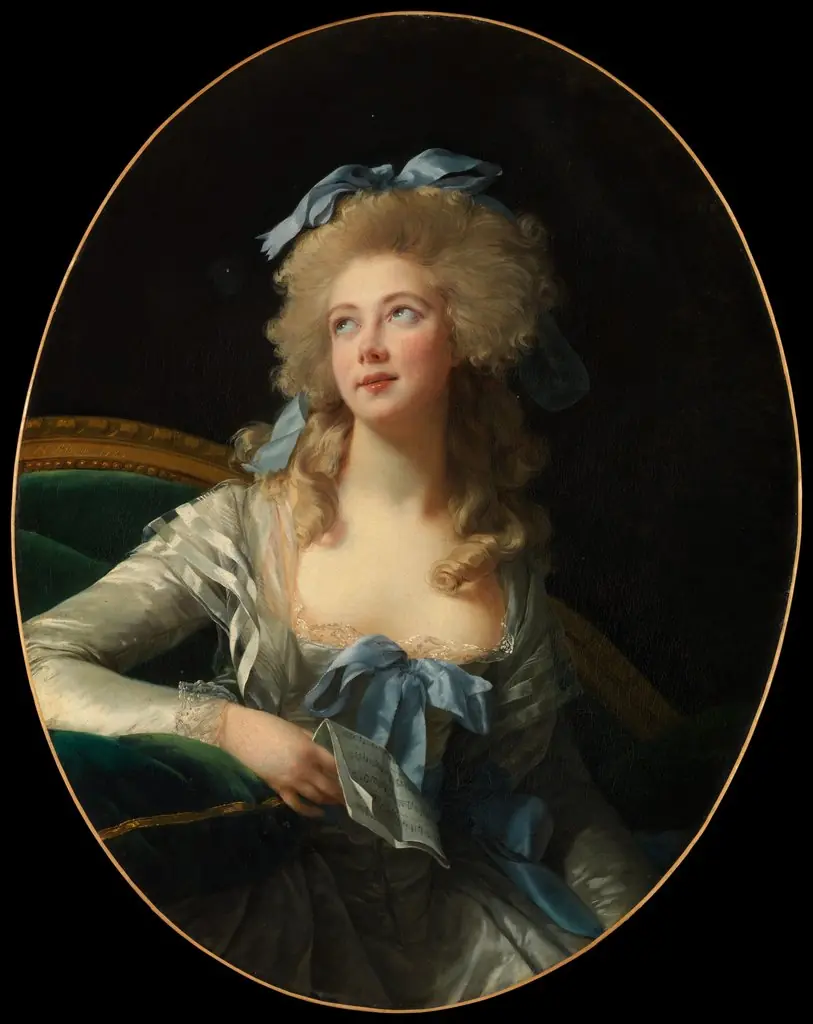 Madame Grand (Noël Catherine Verlée, 1761–1835)
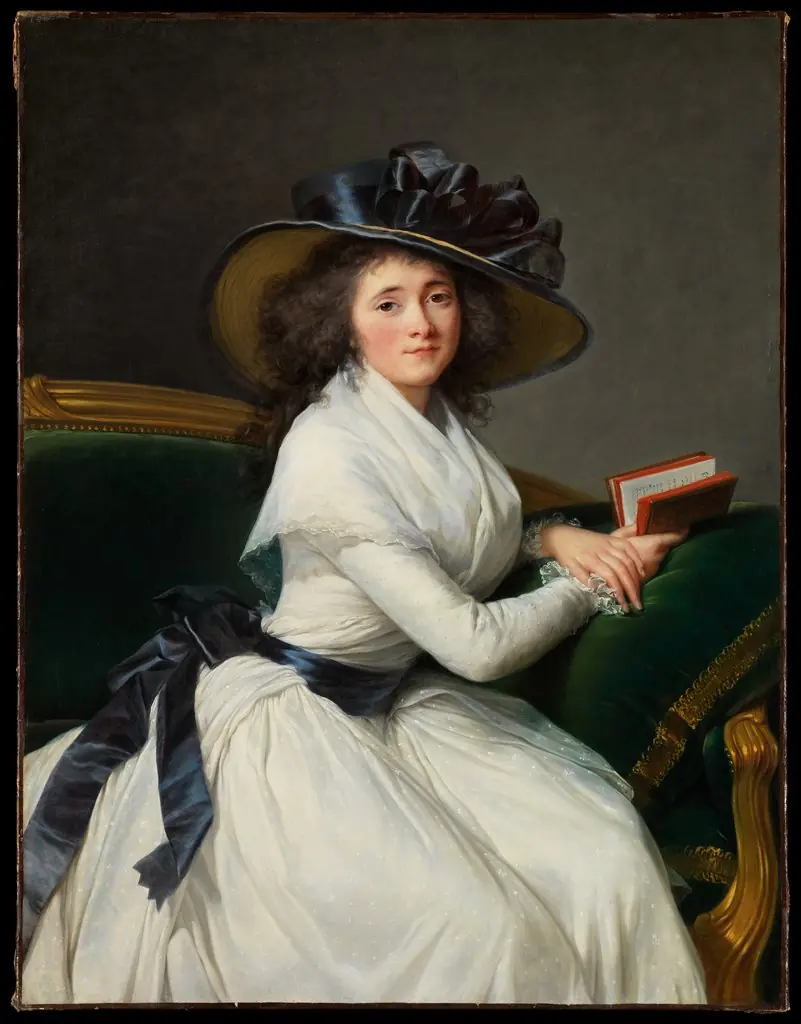 Comtesse de la Châtre (Marie Charlotte Louise Perrette Aglaé Bontemps, 1762–1848)
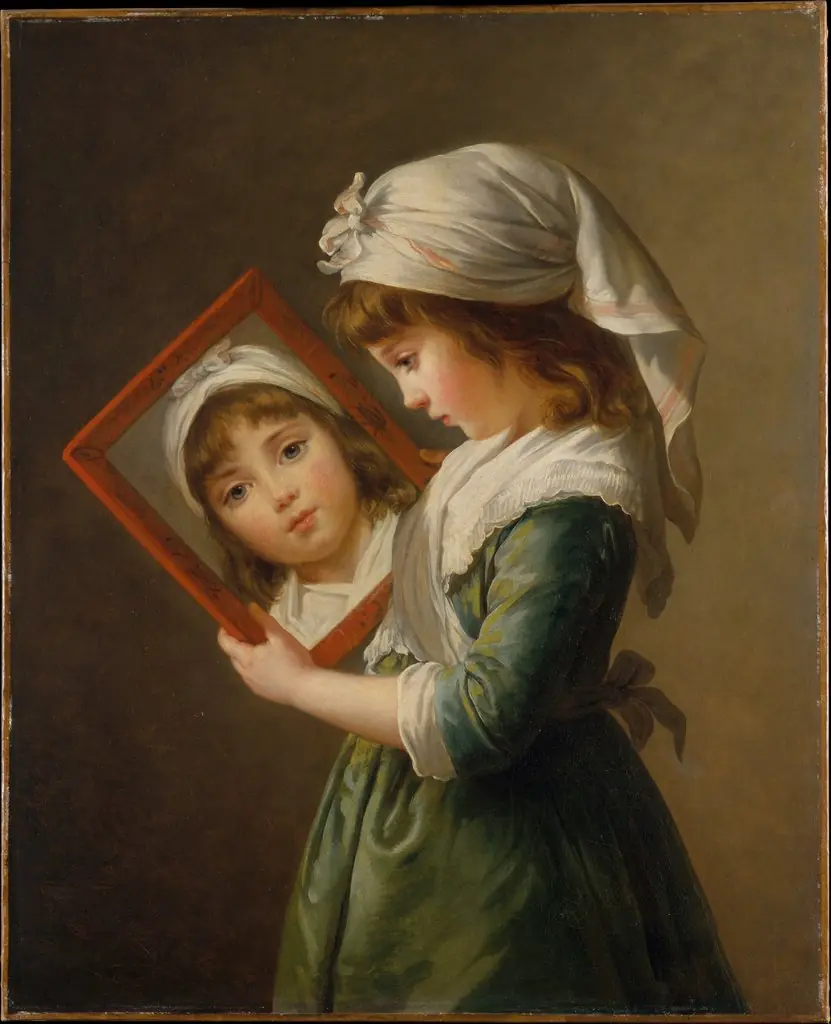 Julie Le Brun (1780–1819) Looking in a Mirror
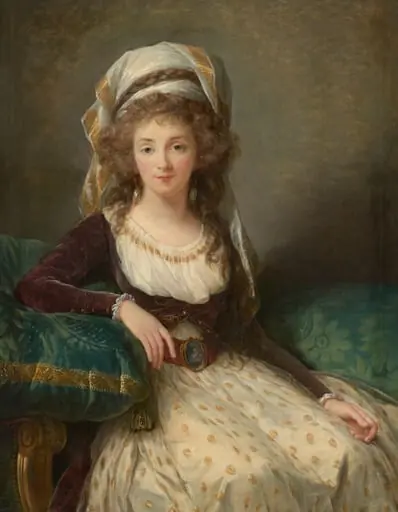 Madame d'Aguesseau de Fresnes
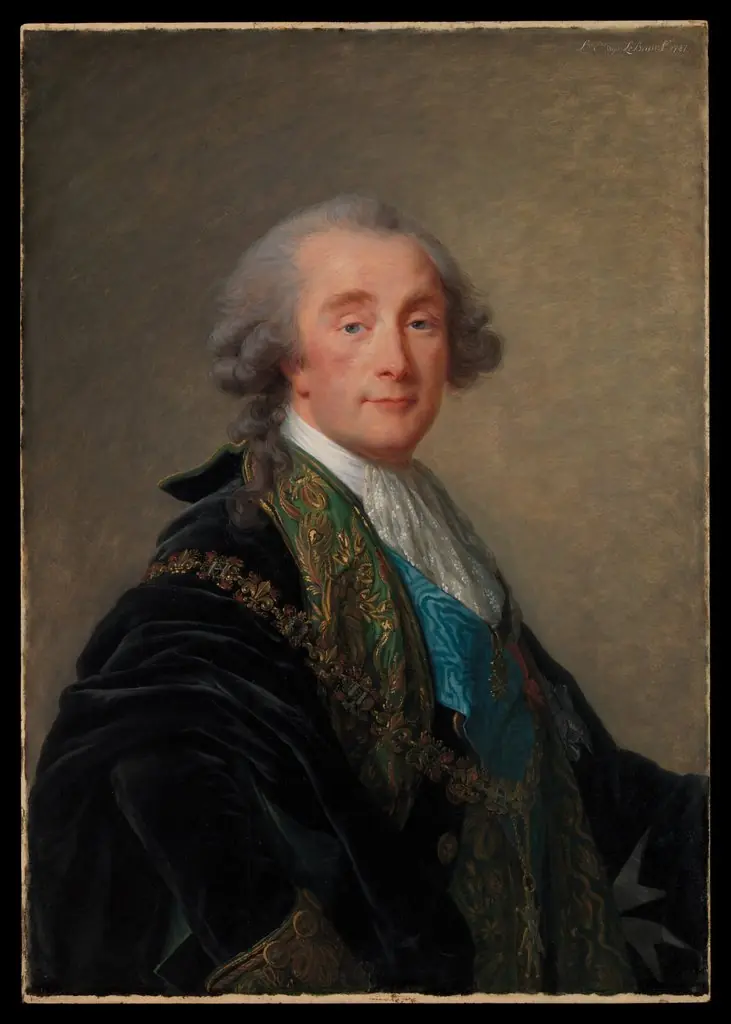 Alexandre Charles Emmanuel de Crussol-Florensac (1743–1815)
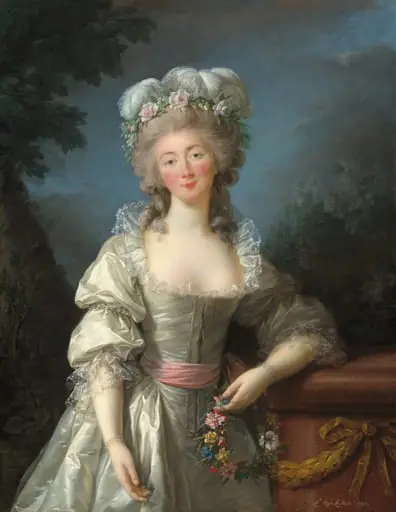 Madame du Barry
 Varvara Ivanovna Ladomirsky