Artwork
Portrait of Countess Anna Stroganova with Her Son
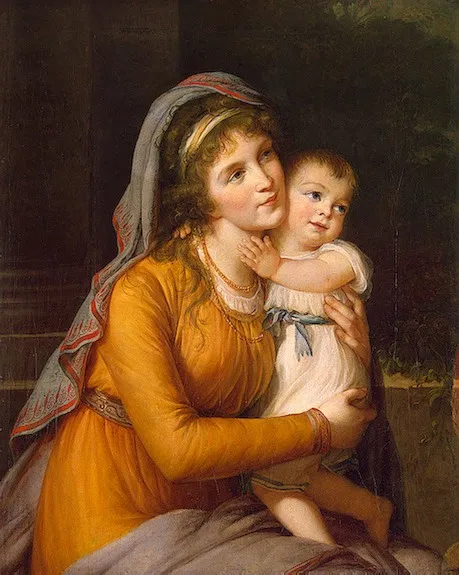
Portrait of Countess Anna Stroganova with Her Son is an oil painting by the Neoclassicist artist Élisabeth Louise Vigée Le Brun. It dates from 1798 and is held in the collection of the Hermitage Museum.
About this work
Subject & Meaning
The painting portrays Countess Anna Stroganova (also recorded as Anna Trubetskaya) seated with her young son, presenting a tender mother‑and‑child composition.
The painting portrays Countess Anna Stroganova (also recorded as Anna Trubetskaya) seated with her young son, presenting a tender mother‑and‑child composition. By placing the aristocratic countess alongside her heir, the work underscores maternal affection and the continuation of the Stroganova lineage, a common theme in late‑eighteenth‑century portraiture that linked familial virtue with social status. The intimate pose and shared gaze convey both personal affection and the dynastic promise embodied by the child, reflecting contemporary ideals of noble motherhood and heritage.
Technique & Style
The portrait is executed in oil paint on canvas, a standard support for Vigée Le Brun's late-eighteenth-century portrait practice. The work measures 90.5 by 73 centimetres, a moderately sized format suited to an intimate double portrait of a mother and child. Stylistically, it belongs to the artist's portrait genre, consistent with her characteristic handling of oil paint to render soft flesh tones and refined textures. The painting is held in the Hermitage Museum collection.
The canvas support and oil medium are documented in the work's catalogue and structured records, which together confirm the materials, dimensions, and current location of the piece.
History & Provenance
The portrait was created in 1795 by Élisabeth Louise Vigée Le Brun in France. It depicts Countess Anna Stroganova (Anna Trubetskaya) with her son. The work is presently part of the collection of the Hermitage Museum, where it is housed and displayed.
The Portrait of Countess Anna Stroganova with Her Son is held in the collection of the Hermitage Museum. Created in 1795 by Élisabeth Louise Vigée Le Brun, the oil on canvas work depicts Anna Trubetskaya and her child. While the painting's location and basic creation details are documented, the provided sources do not contain specific inventory numbers, accession codes, or a record of its exhibition history.
Context
Élisabeth Louise Vigée Le Brun painted Portrait of Countess Anna Stroganova with Her Son in 1795 while residing in France, demonstrating her role in bridging French Rococo elegance with emerging Neoclassical sensibilities. The work was created for the Stroganov family and reflects the aristocratic patronage networks that shaped Russian art collecting in the late 18th century. It is housed in the Hermitage Museum, where it remains part of their permanent collection.
Scholarship emphasizes its significance within Vigée Le Brun's extensive portraiture of Russian nobility, highlighting her technical mastery of oil paint and compositional sensitivity to familial relationships.
Critical reception has consistently praised the painting's psychological depth and refined execution, positioning it among the artist's most celebrated works despite limited contemporary documentation. Its scholarly importance is underscored by its inclusion in major studies of 18th-century European portraiture and its representation of cross-cultural artistic exchange between France and Imperial Russia.
Legacy
The portrait of Countess Anna Stroganova with her son, painted by Élisabeth Louise Vigée Le Brun in 1795, has been recognized for its refined composition and intimate portrayal of aristocratic family life. Its inclusion in the Hermitage Museum's collection has allowed sustained scholarly attention to Vigée Le Brun's role in Russian portraiture, influencing later interpretations of 18th‑century Russian aristocracy. The work's technical execution in oil on canvas, noted for its delicate rendering of texture and light, continues to inform studies of the artist's evolving style and the broader neoclassical tradition.
Overview
Élisabeth Louise Vigée Le Brun painted this oil portrait in 1798, portraying Countess Anna Stroganova and her infant son. Executed during the artist’s mature period, the work exemplifies her shift toward the Neoclassical aesthetic that prevailed in the late eighteenth century. The canvas is now part of the State Hermitage Museum’s collection in St. Petersburg.
Artist & collection
Artist
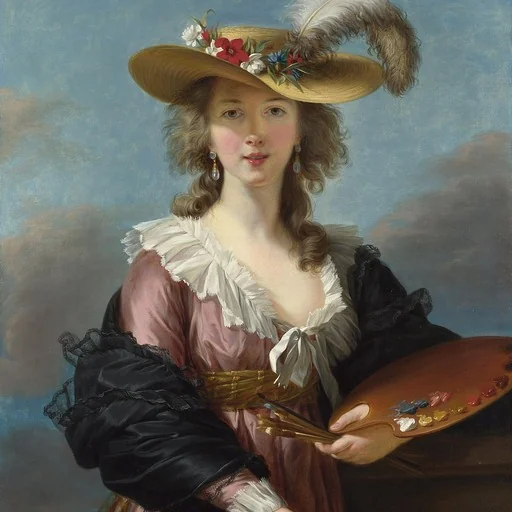
Élisabeth Louise Vigée Le Brun
Élisabeth Louise Vigée Le Brun (French:; née Vigée; 16 April 1755 – 30 March 1842), also known as Louise Élisabeth Vigée Le Brun or simply Madame Le Brun, was a French painter who mostly specialized in portrait…

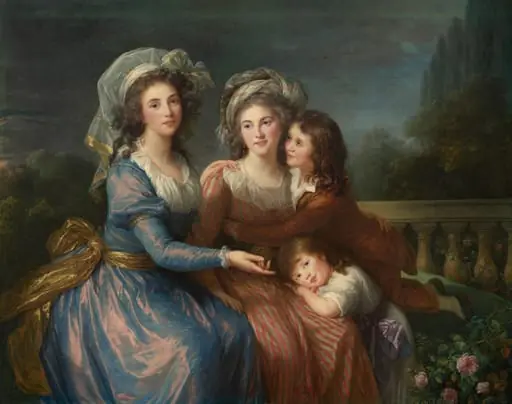 The Marquise de Pezay, and the Marquise de Rougé with Her Sons Alexis and Adrien
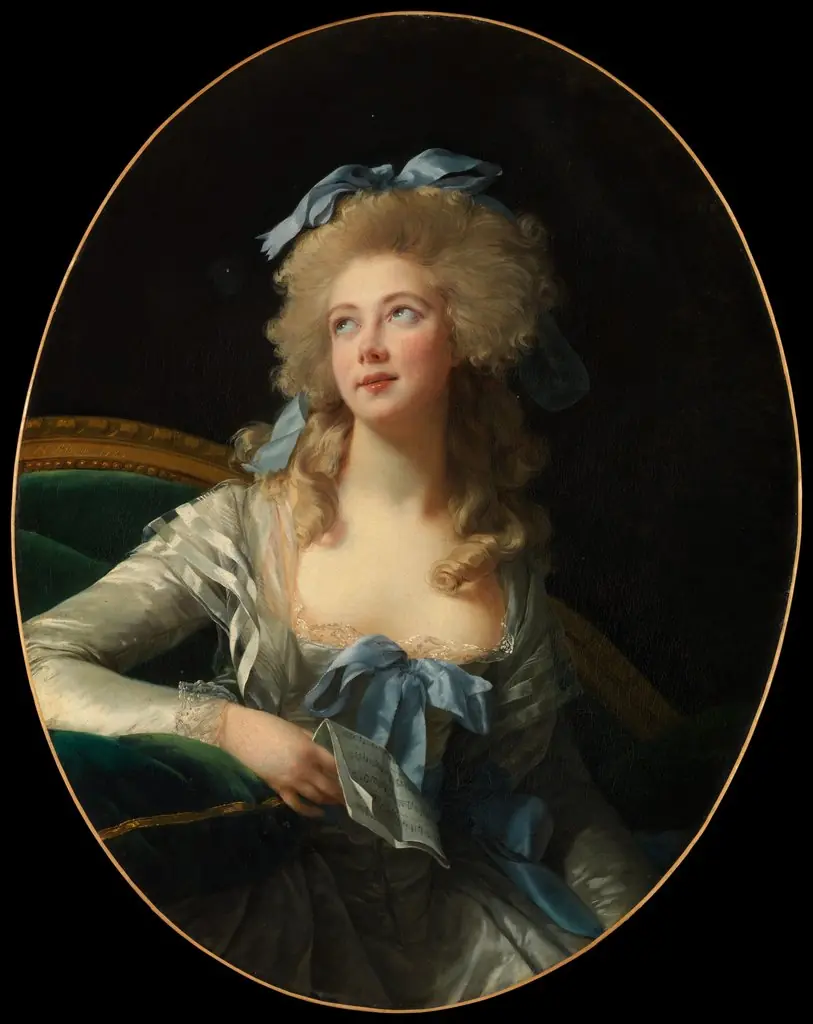 Madame Grand (Noël Catherine Verlée, 1761–1835)
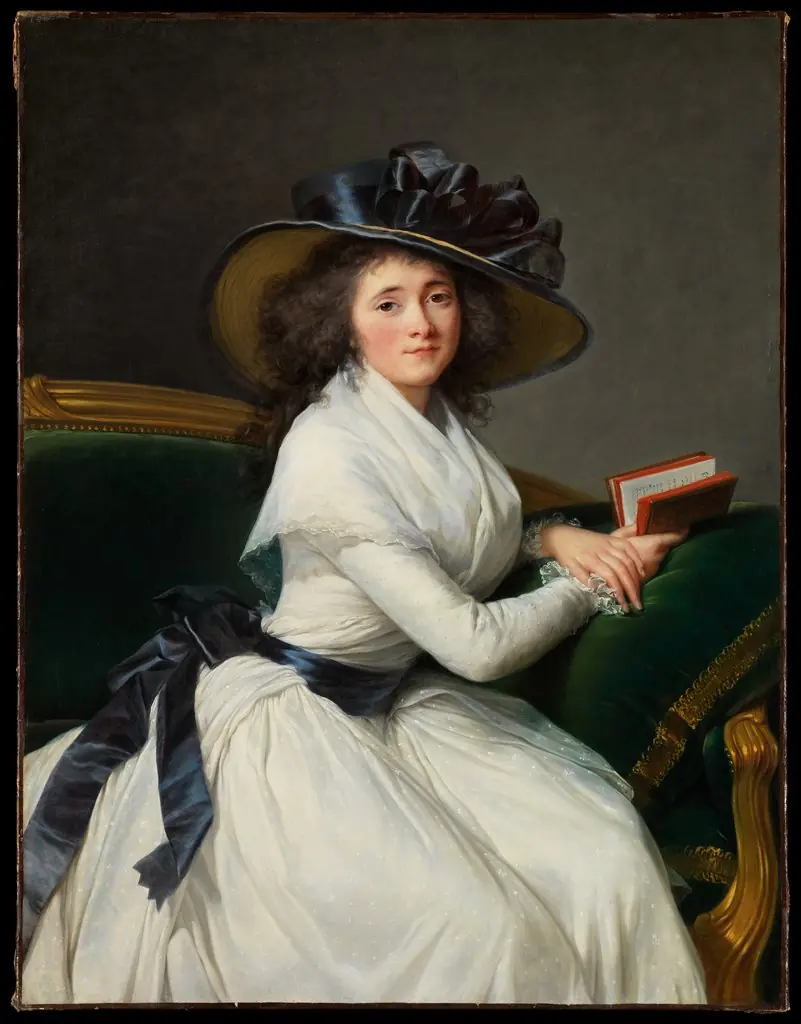 Comtesse de la Châtre (Marie Charlotte Louise Perrette Aglaé Bontemps, 1762–1848)
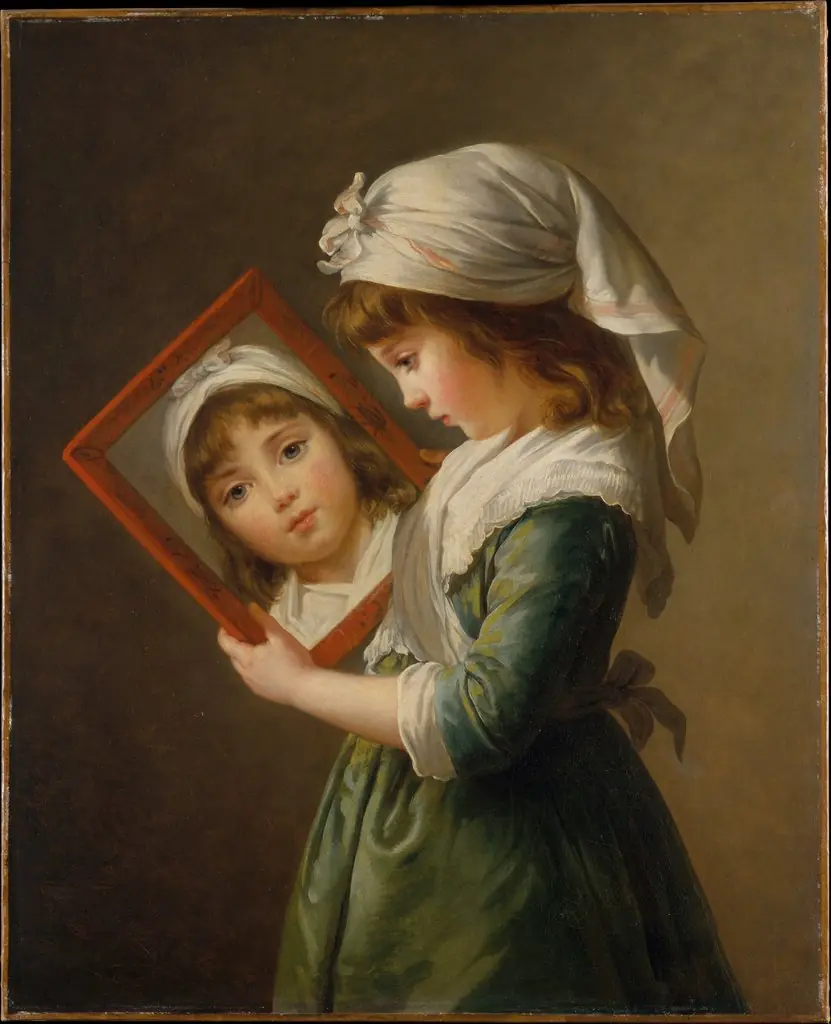 Julie Le Brun (1780–1819) Looking in a Mirror
 Madame d'Aguesseau de Fresnes
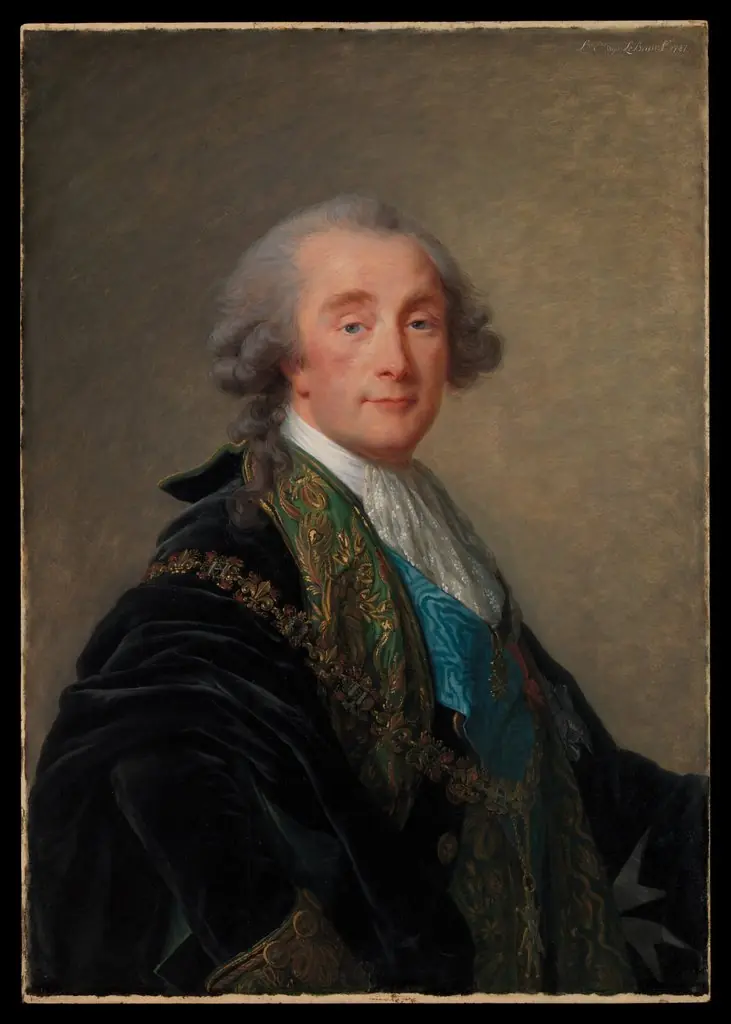 Alexandre Charles Emmanuel de Crussol-Florensac (1743–1815)
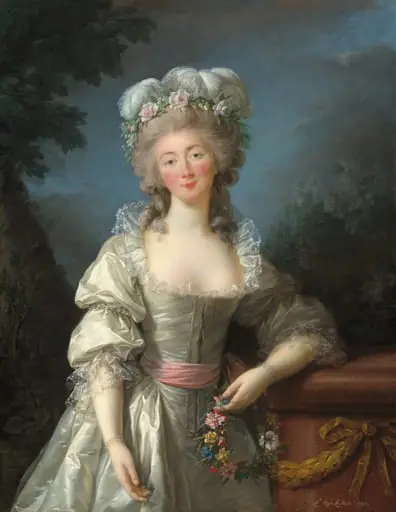 Madame du Barry
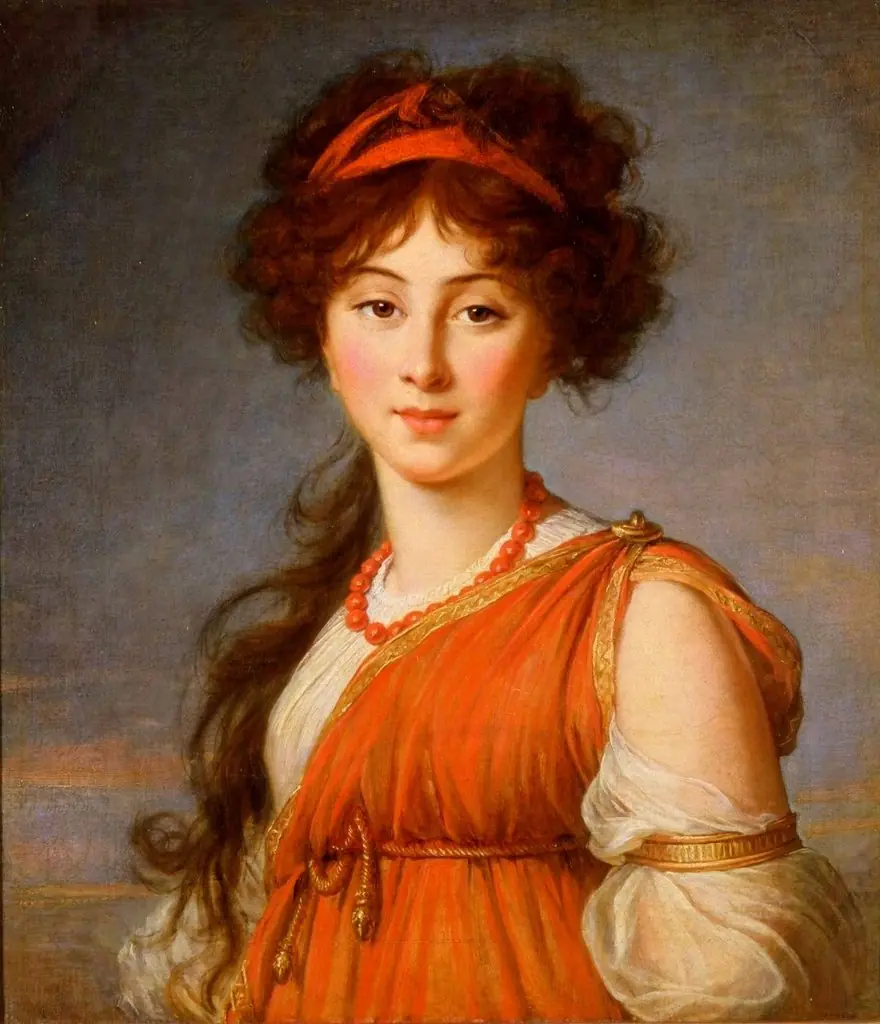 Varvara Ivanovna Ladomirsky
- The portrait of princess Ekaterina Nikolaevna Menshikova
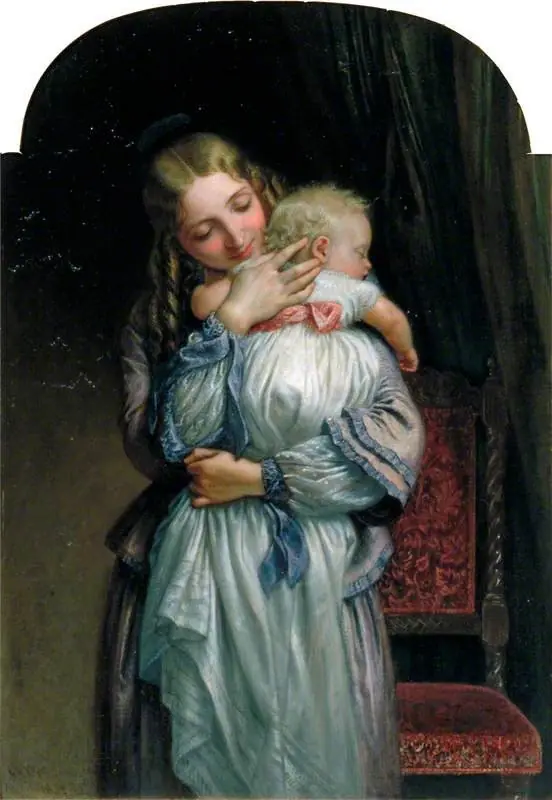 Mother and Child
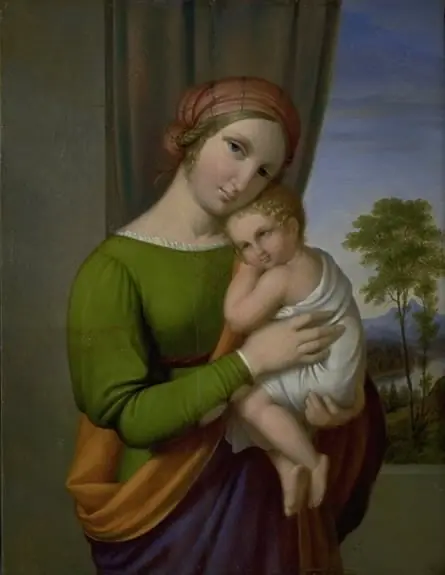 Jomfru Maria med Jesusbarnet
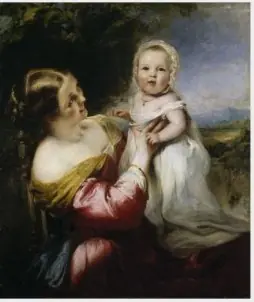 The Young Mother's Pastime
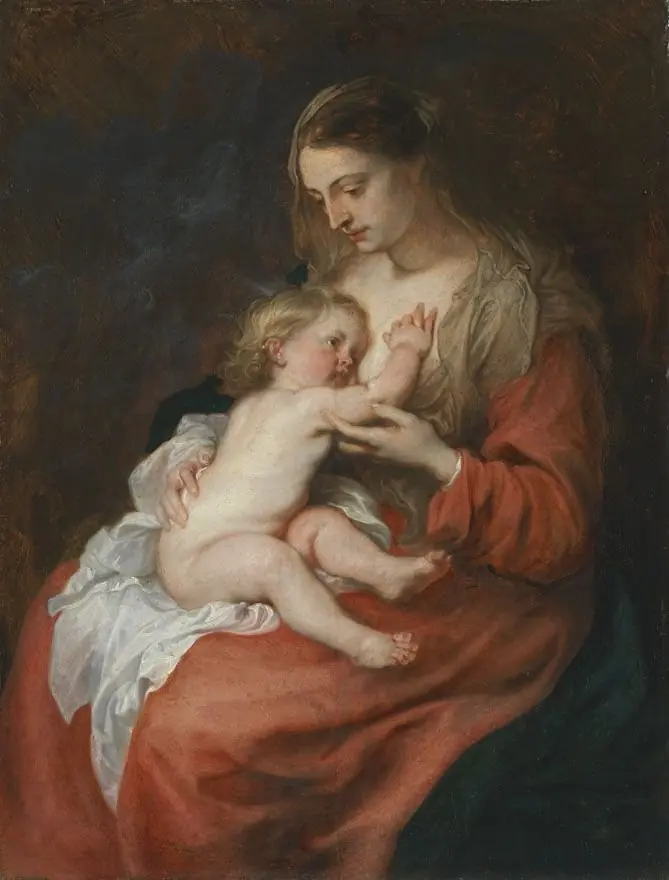 Madonna and Child
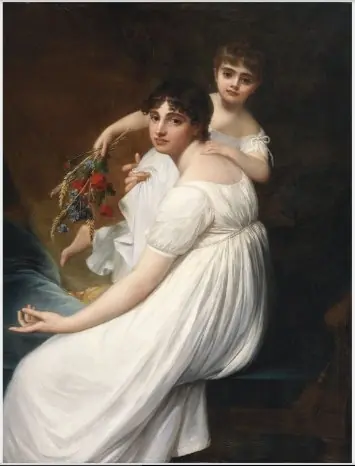 Lady Pamela FitzGerald (d.1831), and her Daughter
 Caritas
 The Awakening
 Madonna with Child
 Mother and her Child
 Bildnis einer Dame mit Knaben
 Elizabeth Shewell West and Her Son, Raphael