Artwork
Portrait of Prince Alexander Kurakin
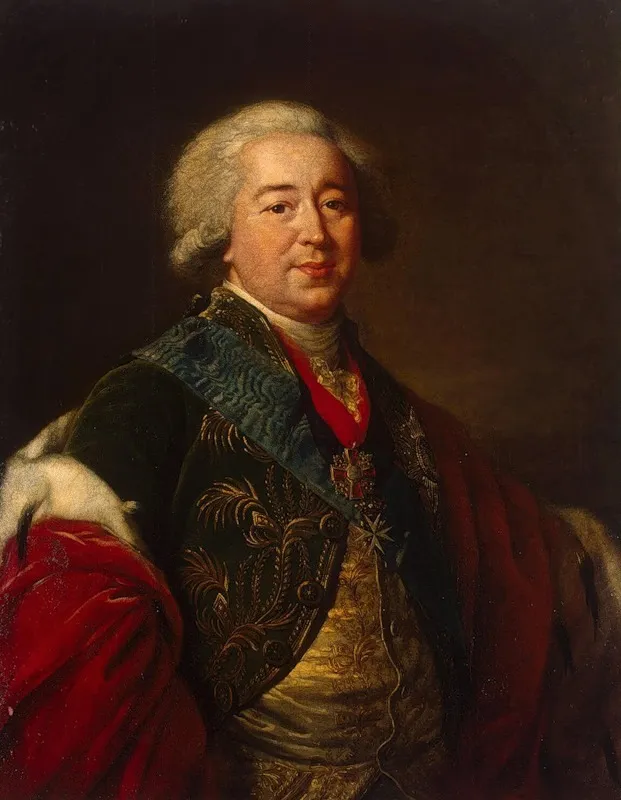
Portrait of Prince Alexander Kurakin is an oil painting by the Rococo painting artist Élisabeth Louise Vigée Le Brun. It dates from 1799 and is held in the collection of the Hermitage Museum.
About this work
Overview
Portrait of Prince Alexander Kurakin is an oil on canvas painting by the French artist Élisabeth Louise Vigée Le Brun, dated to 1797.
Portrait of Prince Alexander Kurakin is an oil on canvas painting by the French artist Élisabeth Louise Vigée Le Brun, dated to 1797. Measuring 96 by 76 centimeters, the artwork is a half-length portrait of the Russian diplomat Prince Alexander Borisovich Kurakin. Created in France during the artist's extended exile from the French Revolution, the painting exemplifies Vigée Le Brun's successful international career catering to European nobility. The work currently resides in the State Hermitage Museum in Saint Petersburg, Russia.
Subject & Meaning
The painting depicts Prince Alexander Borisovich Kurakin (1752-1818), rendered in a three-quarter view facing the viewer with his head turned to his left. The iconography emphasizes his high rank and diplomatic status through luxurious costume and honors. He wears a dark coat heavily adorned with gold embroidery over a gold waistcoat, with a red velvet cloak lined with white fur draped over his shoulders. A blue sash crosses his chest from right shoulder to left hip, and several decorations, including a cross-shaped medal, hang from ribbons around his neck. His powdered hair is styled in curls typical of the eighteenth century, reinforcing his identity within the European aristocratic elite.
Technique & Style
Vigée Le Brun employed oil paint on canvas to achieve a smooth, highly finished surface, particularly evident in the rendering of the fabrics and the flesh tones of the face. The composition is dominated by a rich palette of deep reds, golds, dark greens, and browns set against a near-black, muted brown background. Strong lighting falls from the left, illuminating the prince's face, the gold embroidery, and the white fur trim, while the right side of the figure and the background recede into deep shadow. No landscape or interior setting is visible, focusing the viewer's attention entirely on the sitter's illuminated features and opulent attire.
History & Provenance
The portrait was painted in France in 1797, during Vigée Le Brun's travels abroad following her flight from revolutionary France. The painting eventually entered the collection of E.P. and M.S. Oliv before being handed over to the State Hermitage Museum in 1923. It is cataloged under the museum number GE-5664. The work was included in the virtual exhibition titled The Art of Being a Paintress: Female Artists in Europe of the 17th-20th Centuries, scheduled for 2026.
Context
The portrait was created during the period Vigée Le Brun spent traveling through Europe after leaving France in 1789. Her established reputation preceded her, granting her access to elite circles and artistic institutions across the continent. After traveling through Italy, Prague, and Berlin, she arrived in Saint Petersburg, where she was welcomed by Catherine the Great and painted several portraits of the Russian royal family. Although she did not manage to paint Catherine the Great before the empress's death, her time in Russia proved highly productive. The Kurakin portrait reflects this phase of her career, where nearly half of her roughly 1,500 paintings were portraits of European monarchs and nobles.
Artist & collection
Artist
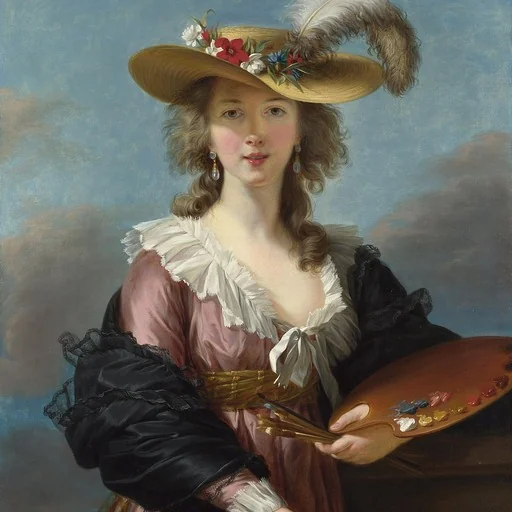
Élisabeth Louise Vigée Le Brun
Élisabeth Louise Vigée Le Brun (French:; née Vigée; 16 April 1755 – 30 March 1842), also known as Louise Élisabeth Vigée Le Brun or simply Madame Le Brun, was a French painter who mostly specialized in portrait…

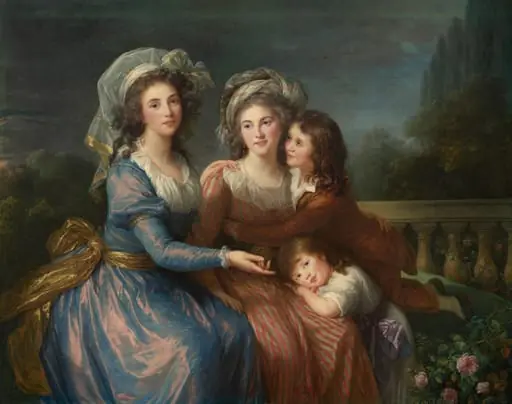 The Marquise de Pezay, and the Marquise de Rougé with Her Sons Alexis and Adrien
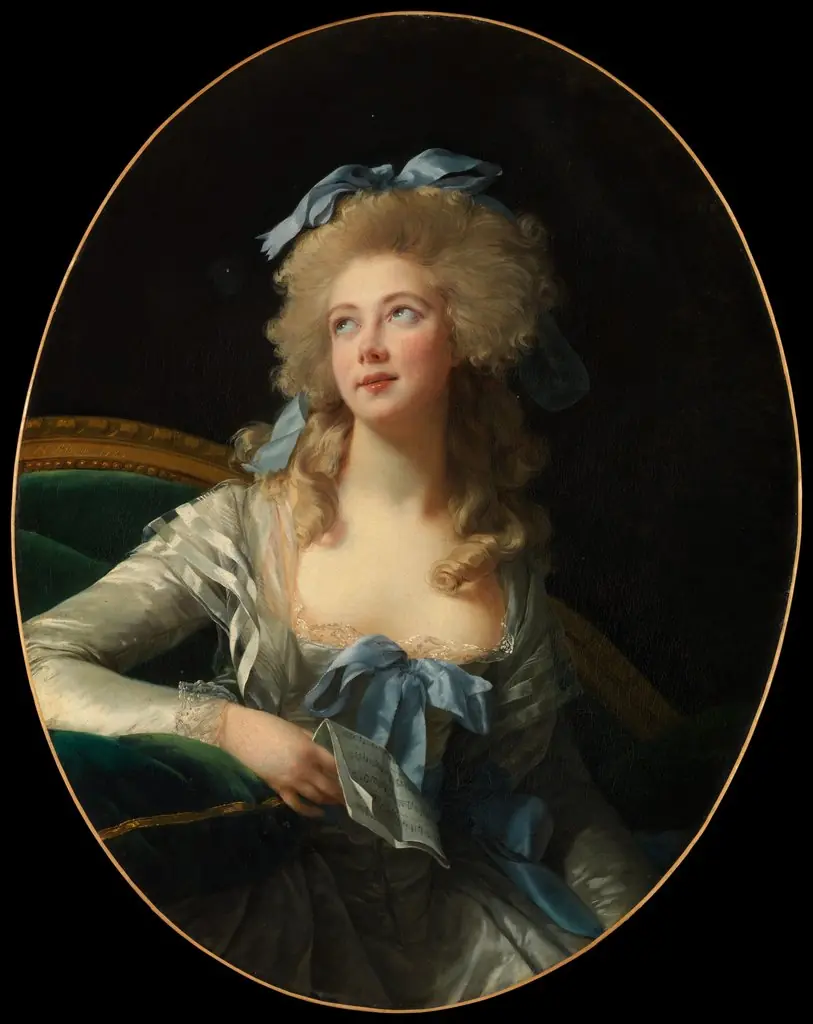 Madame Grand (Noël Catherine Verlée, 1761–1835)
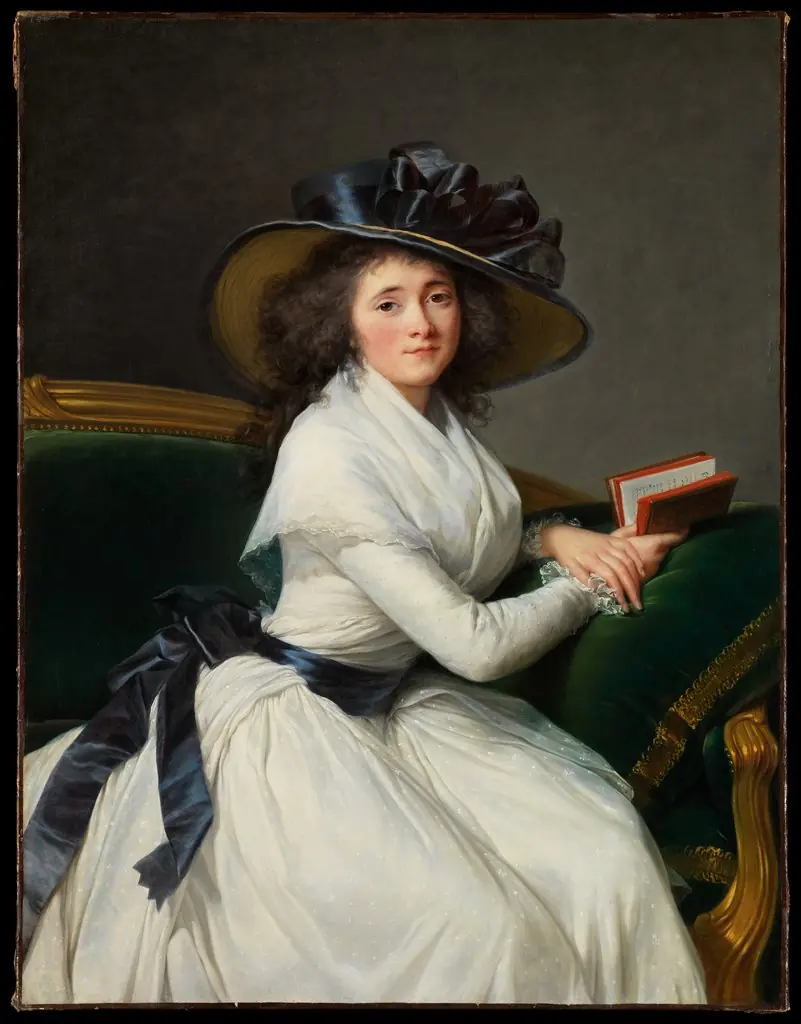 Comtesse de la Châtre (Marie Charlotte Louise Perrette Aglaé Bontemps, 1762–1848)
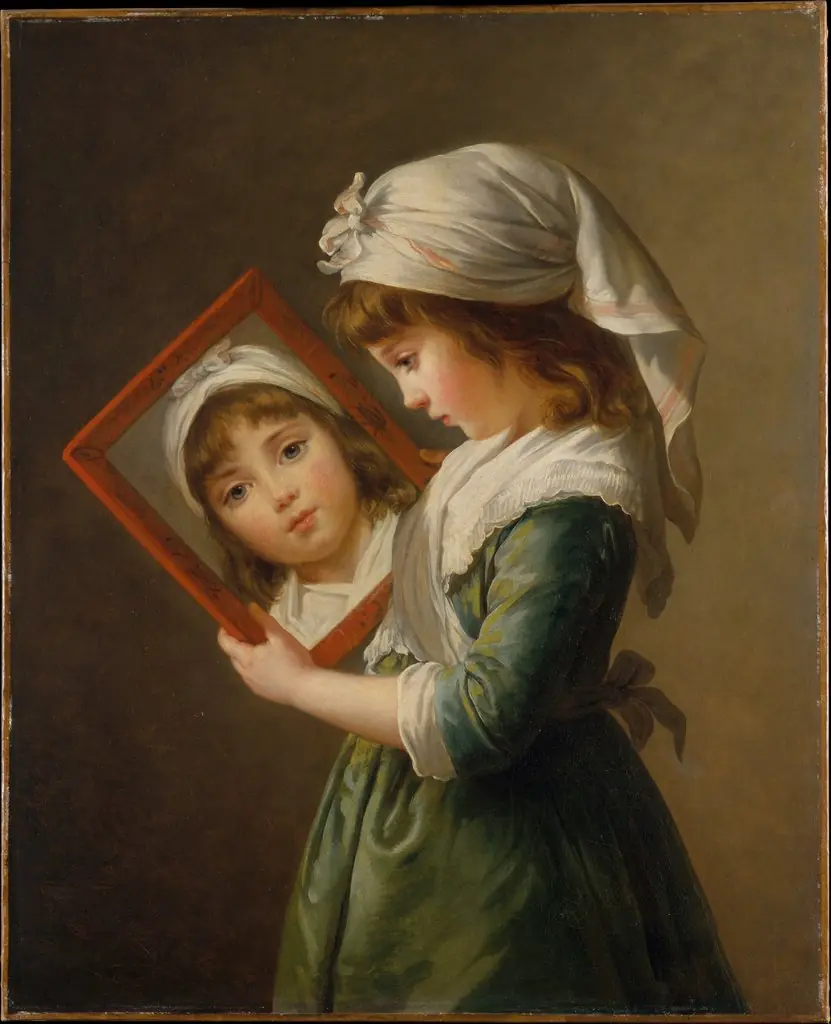 Julie Le Brun (1780–1819) Looking in a Mirror
 Madame d'Aguesseau de Fresnes
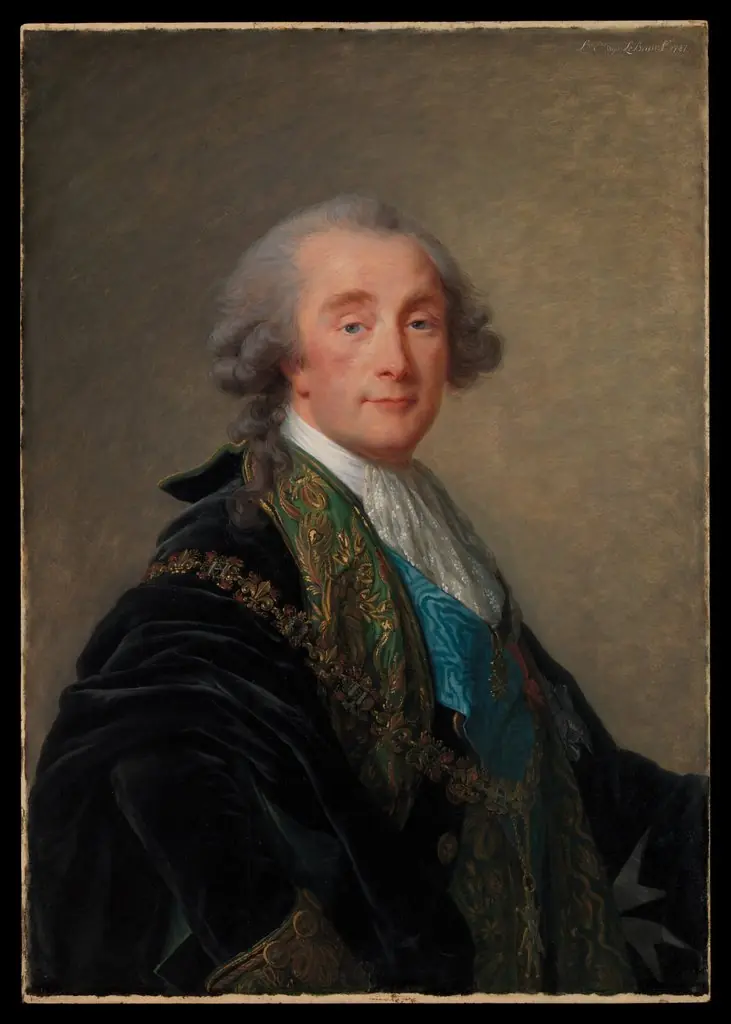 Alexandre Charles Emmanuel de Crussol-Florensac (1743–1815)
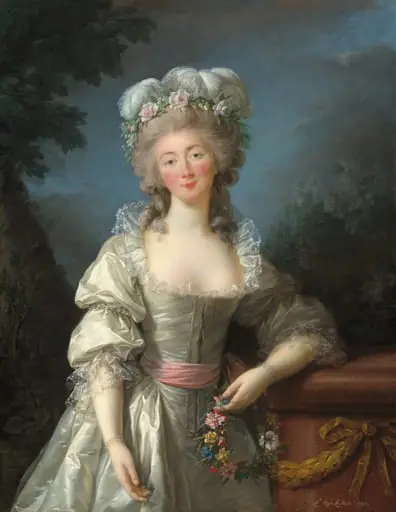 Madame du Barry
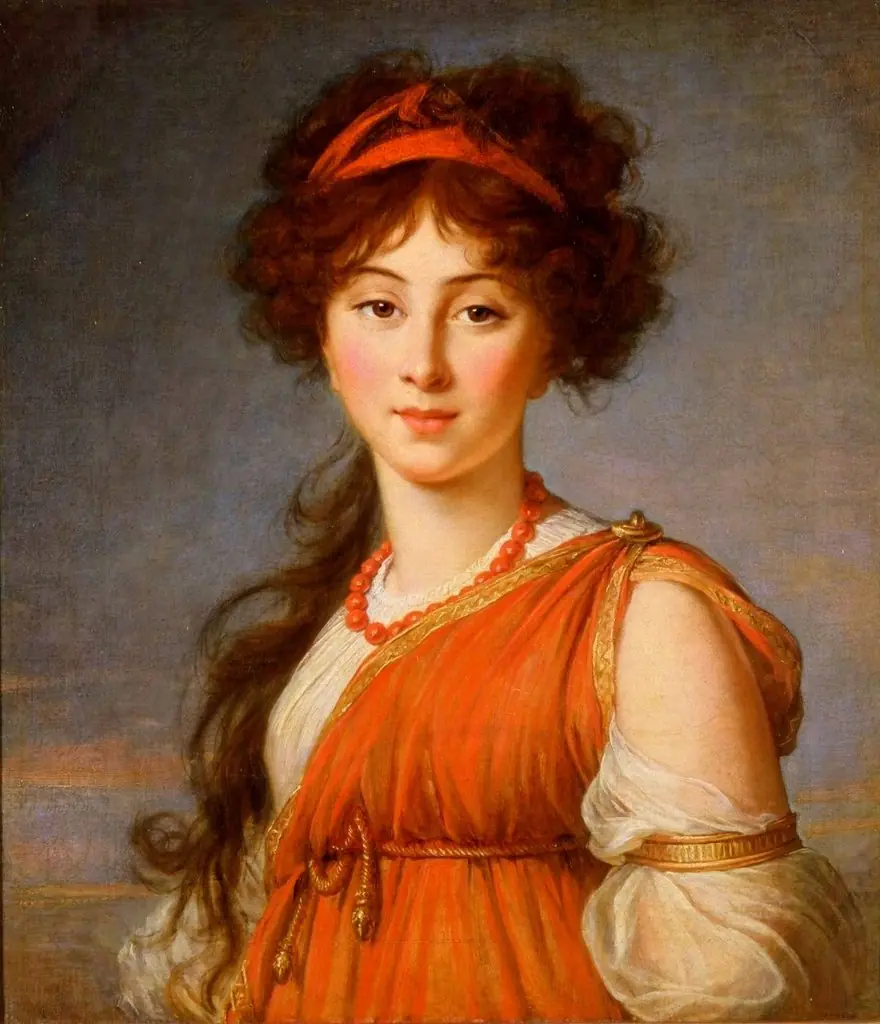 Varvara Ivanovna Ladomirsky
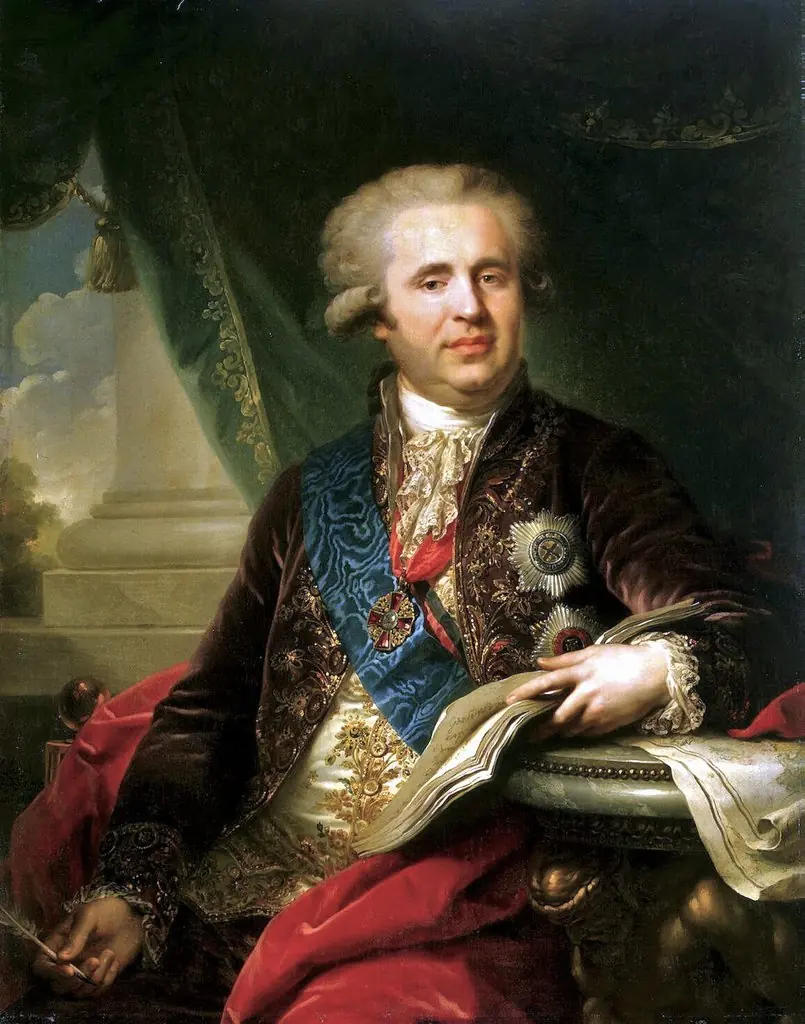 Portrait of Prince Bezborodko A.A.
 Antoine-Paul-Jacques de Quelen de Stuer de Caussade, duc de La Vauguyon (1706-1772)
 Count Gustav Adolph Gotter
 Antoine-René de Voyer de Paulmy, marquis d'Argenson (1722-1787), ministre
 Portrait of Gavrila Romanovich Derzhavin
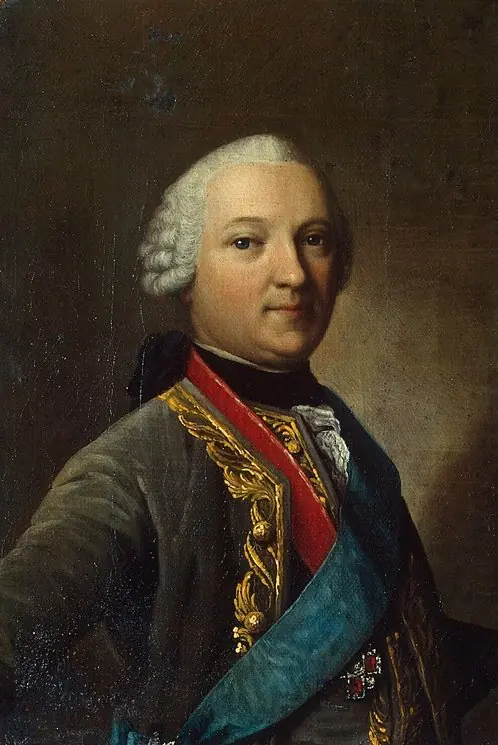 Portrait of Caspar von Saldern
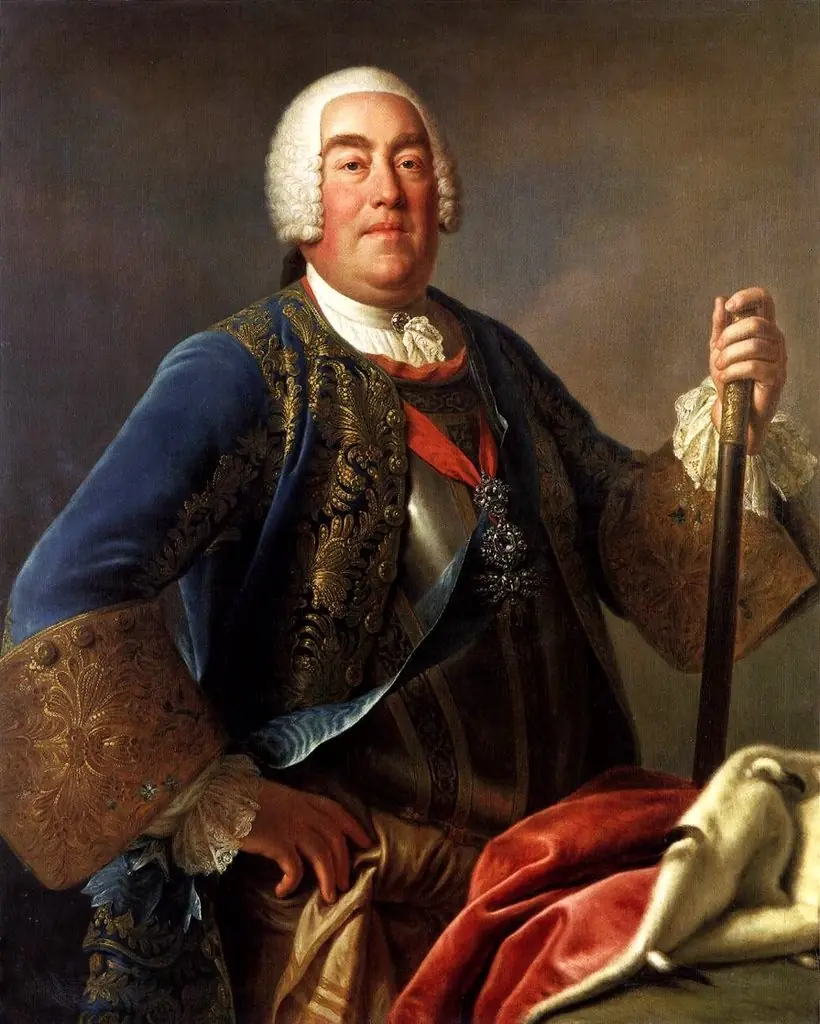 Elector Friedrich August II of Saxony, as King Augustus III of Poland (1696-1763)
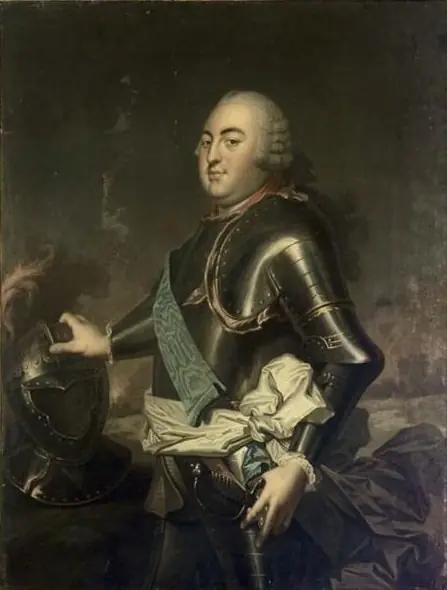 Portrait of Louis Philippe I, Duke of Orléans