Artwork
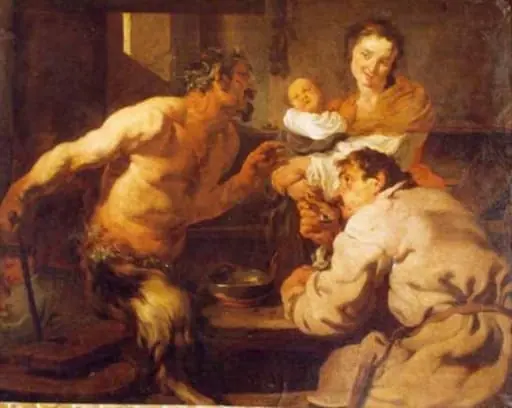
The Satyr and the Peasant
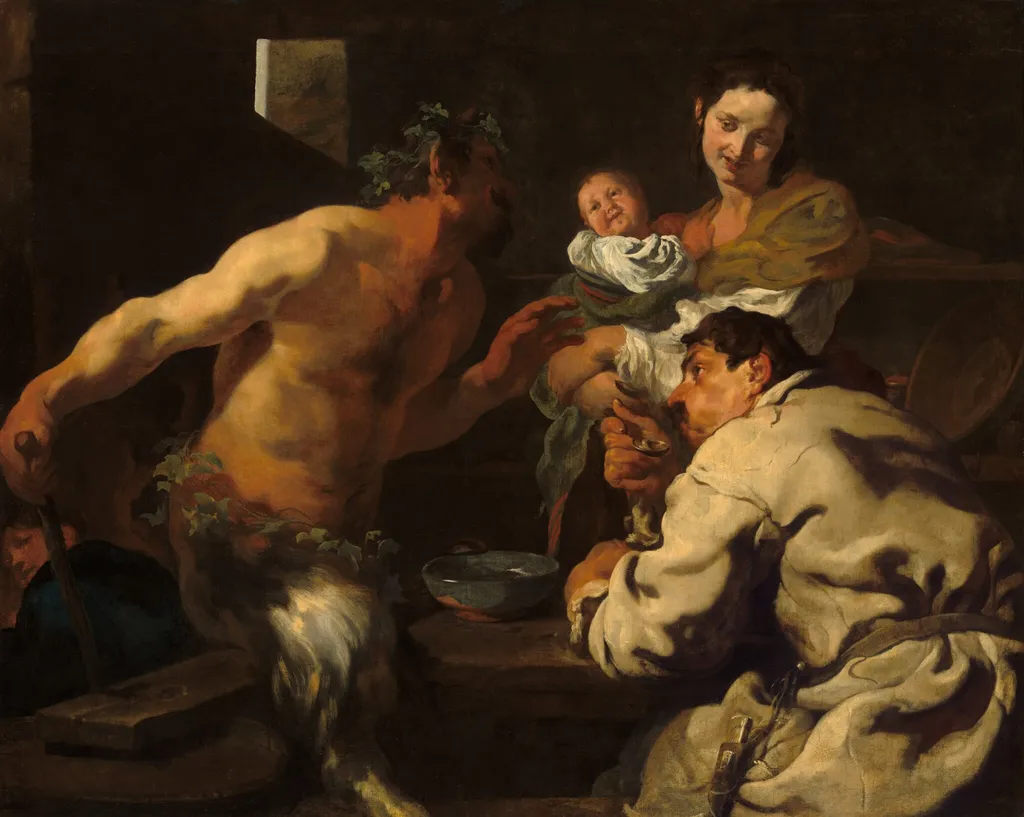
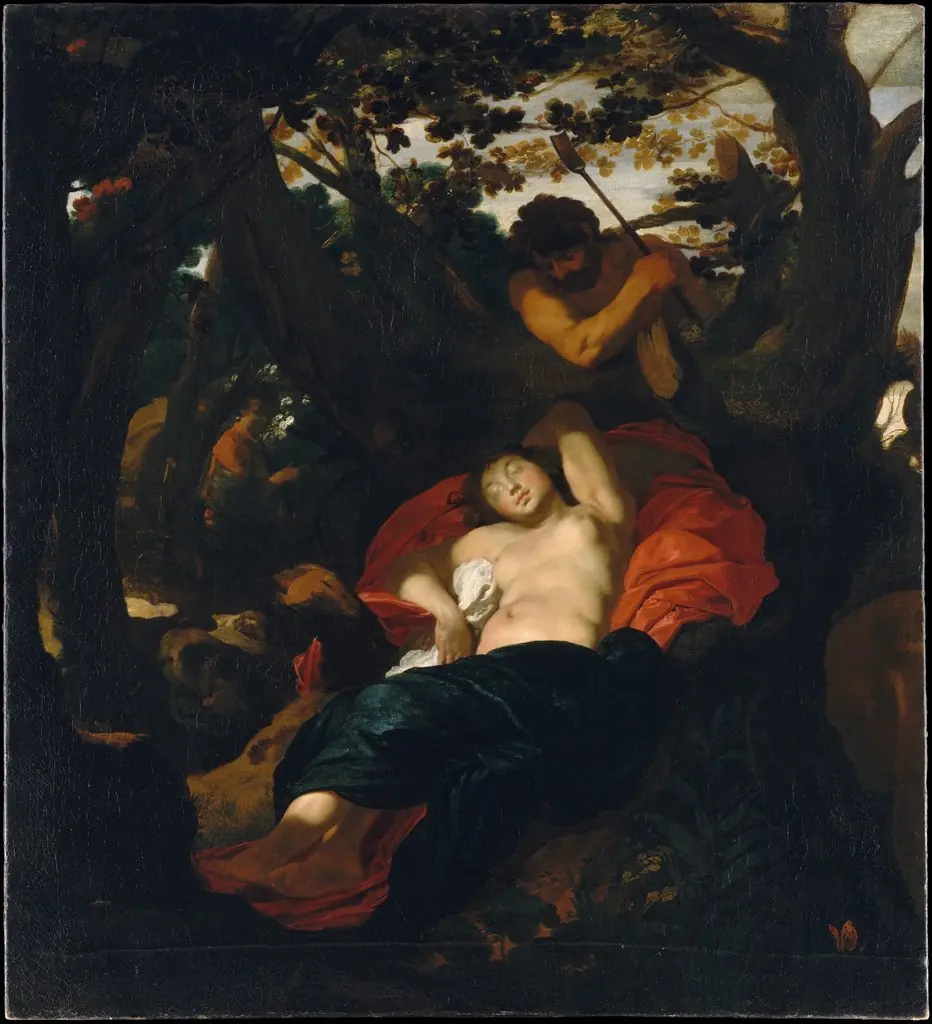
The Satyr and the Peasant is an oil painting by the Baroque artist Johann Liss. It dates from 1624 and is held in the collection of the National Gallery of Art.
About this work
Technique & Style
The physical object remains stable within the collection of the National Gallery of Art in Washington, D.
Johann Liss executed The Satyr and the Peasant in 1623 using oil paint applied to a canvas support. The work measures 133.3 centimeters in height and 167.4 centimeters in width. As a mythological painting, it exemplifies the artist's handling of the medium within the Baroque tradition, though specific details regarding brushwork, surface condition, or formal stylistic analysis are not provided in the available records. The physical object remains stable within the collection of the National Gallery of Art in Washington, D.C.
History & Provenance
Johann Liss executed The Satyr and the Peasant in 1623 as an oil painting on canvas. The work's early ownership history includes Aron de Joseph de Pinto, who held the piece in Spain and the Netherlands by 1780, followed by Lopes Leao de Laguna in the Netherlands. Although not listed in the 1785 de Pinto sale catalogue, the painting later entered the collection of Leo Nardus, who operated between Suresnes, France, and New York.
In 1897, Nardus sold the artwork to Peter A.B. Widener for his estate, Lynnewood Hall, located in Elkins Park, Pennsylvania. Following Widener's death, the painting passed via inheritance and a power of appointment executed by his son, Joseph E. Widener. The younger Widener formally gifted the work to the National Gallery of Art in Washington, D.C., in 1942.
The Satyr and the Peasant is currently housed in the National Gallery of Art, Washington, D.C. According to the provenance recorded in the corpus, the painting passed from Aron de Joseph de Pinto (d. 1785) and Lopes Leao de Laguna to Leo Nardus, who sold it in 1897 to Peter A.B. Widener of Lynnewood Hall; it remained in the Widener collection until it was gifted to the NGA in 1942 through the estate of Joseph E. Widener. The sources do not list an accession number for the work, nor do they detail any exhibition history beyond its entry into the gallery’s collection.
Overview
Johann Liss, a prominent German Baroque painter working in Venice, executed The Satyr and the Peasant around 1624. This oil on canvas exemplifies the early Italian Baroque style, depicting a mythological encounter. The artwork showcases Liss's characteristic blend of German artistic traditions and Venetian influences, resulting in a composition known for its vitality and emotional depth.
Subject & Meaning
The painting captures a nuanced interaction between a mythological satyr and a human peasant. The satyr, identifiable by his goat legs and horns, leans inquisitively towards the peasant, who politely offers a jug of wine. This scene avoids dramatic confrontation, instead portraying a moment of curious exchange between two distinct worlds, highlighting the satyr's gentle curiosity rather than menace.
Context
Active during the early 17th century, Johann Liss was a significant figure in the Baroque movement, bridging artistic currents between Northern Europe and Italy. His time in Venice proved particularly formative, allowing him to absorb the city's rich artistic traditions while retaining elements from his German training. This synthesis contributed to his distinctive style, which was influential among his contemporaries.
Own this work as a print
Artist & collection
Artist
Johann Liss or Jan Lys (c. 1590 or 1597 – 1629 or 1630) was a leading German Baroque painter of the 17th century, active mainly in Venice.