Artwork
The Triumph of Bacchus
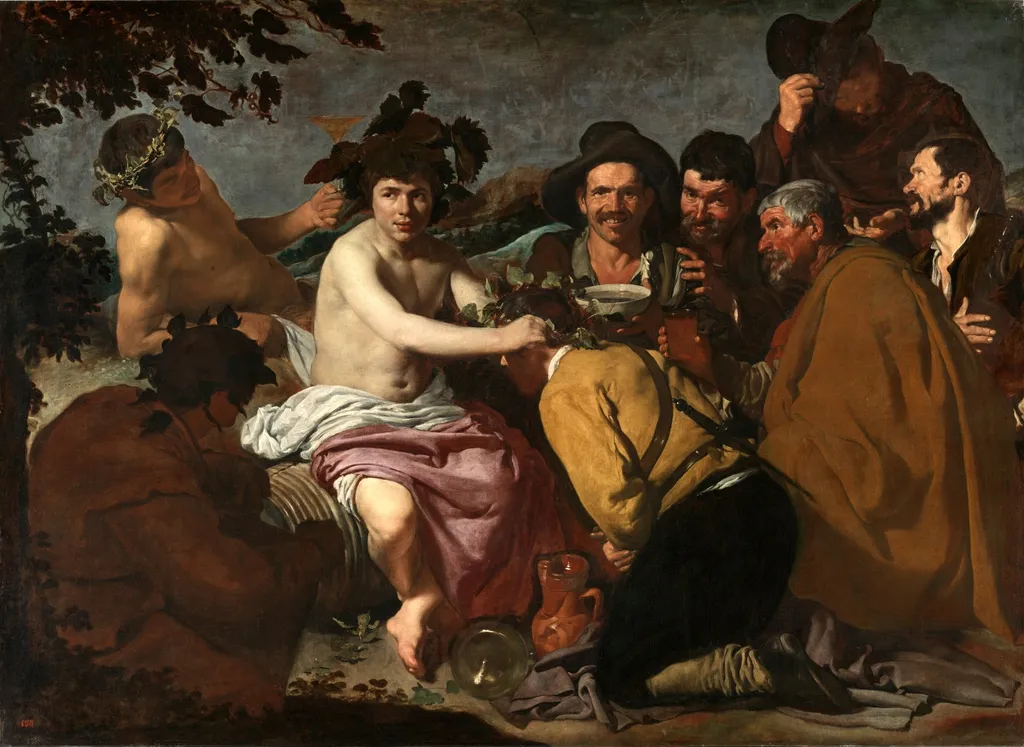
The Triumph of Bacchus is an oil painting by the Early Baroque Italian artist Diego Velázquez. It dates from 1628 and is held in the collection of the Museo del Prado.
About this work
Subject & Meaning
This juxtaposition of mythological grandeur and gritty realism divides the composition between a classicist left side and a darker, naturalistic right.
Velázquez's painting depicts Bacchus, the god of wine, presiding over a small celebration where he crowns a kneeling peasant with ivy leaves. While the deity and a figure behind him wear traditional classical robes and possess an idealized, luminous complexion, the surrounding revelers are rendered as contemporary 17th-century Spanish poor with weathered, unidealized faces. This juxtaposition of mythological grandeur and gritty realism divides the composition between a classicist left side and a darker, naturalistic right.
Technique & Style
Velázquez painted The Triumph of Bacchus in oil on canvas in 1628-1629, measuring 165 cm in height and 225 cm in width. The work depicts the god Bacchus crowning a kneeling peasant with ivy, surrounded by drunken figures in contemporary Spanish dress, blending a mythological subject with naturalistic treatment. Velázquez employed chiaroscuro to illuminate Bacchus against darker, unidealized companions, and integrated still-life elements such as a wine pitcher and bottle, rendered with textural contrast.
The composition reflects Baroque stylistic influences from Caravaggio and Ribera, juxtaposing classical idealization on the left with unidealized realism on the right.
History & Provenance
The Triumph of Bacchus was painted by Diego Velázquez in 1628 for King Philip IV, who paid 100 ducats for the work shortly after Velázquez's arrival in Madrid and before his Italian journey. The painting entered the Spanish royal collection and was later inherited by Ferdinand VII of Spain. It has remained in the Museo del Prado in Madrid since 1819, where it is popularly known as Los borrachos or The Drinkers.
Its inventory number is P00968, and the payment was recorded in a royal warrant of 22 July 1629. The work was displayed in the Royal Palace before entering the Prado's collection, and it has featured in exhibitions at the Prado.
Context
The Triumph of Bacchus occupies a transitional position in Diego Velázquez's career, painted shortly after his move from Seville to Madrid and just before his first voyage to Italy. In the capital, the artist gained access to Philip IV's collection of Italian paintings, and the work reflects his engagement with Italian mythological traditions, including Titian's bacchanals in the Spanish royal collection, alongside the influence of Caravaggio's mixing of idealized figures with contemporary-dressed attendants and José de Ribera's naturalistic treatment of antique subjects.
The painting has been described as the masterpiece of Velázquez's 1620s output and is credited with introducing a profane, realist treatment of a mythological subject that he would develop further in subsequent years. Its combination of still-life elements with naturalistic genre figures also recalls the bodegón subjects of his Sevillian period.
Legacy
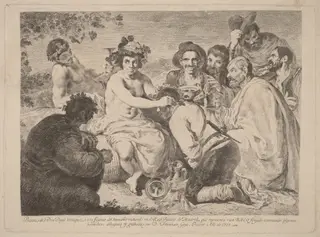
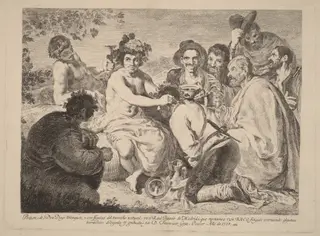
The Triumph of Bacchus has been widely reproduced and reinterpreted, reflecting its enduring cultural resonance. In 1778 Francisco de Goya created an etching after the painting, held by the Museo del Prado in multiple impressions, and Édouard Manet is documented to have owned a copy. More than two centuries later the contemporary artist Herman Braun-Vega incorporated figures from the work into his 1992 triptych La familia informal.
The painting's realistic treatment of a mythological subject, blending classical iconography with contemporary Spanish dress and naturalistic detail such as wine vessels, influenced later artists who explored the contrast between idealized and everyday figures.
Overview
Diego Velázquez’s oil painting The Triumph of Bacchus, also known as Los Borrachos, is housed in Madrid’s Museo del Prado. Executed shortly after the artist’s move from Seville and before his first trip to Italy, the work was commissioned by King Philip IV, who paid Velázquez a fee of one hundred ducats.
Own this work as a print
Artist & collection
Artist
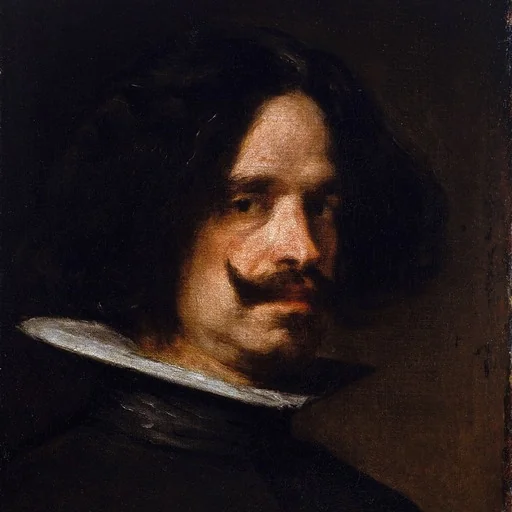
Diego Rodríguez de Silva y Velázquez was a Spanish Baroque painter, the leading artist in the court of King Philip IV of Spain and Portugal, and of the Spanish Golden Age.