Artwork
Virgin of the Councillors
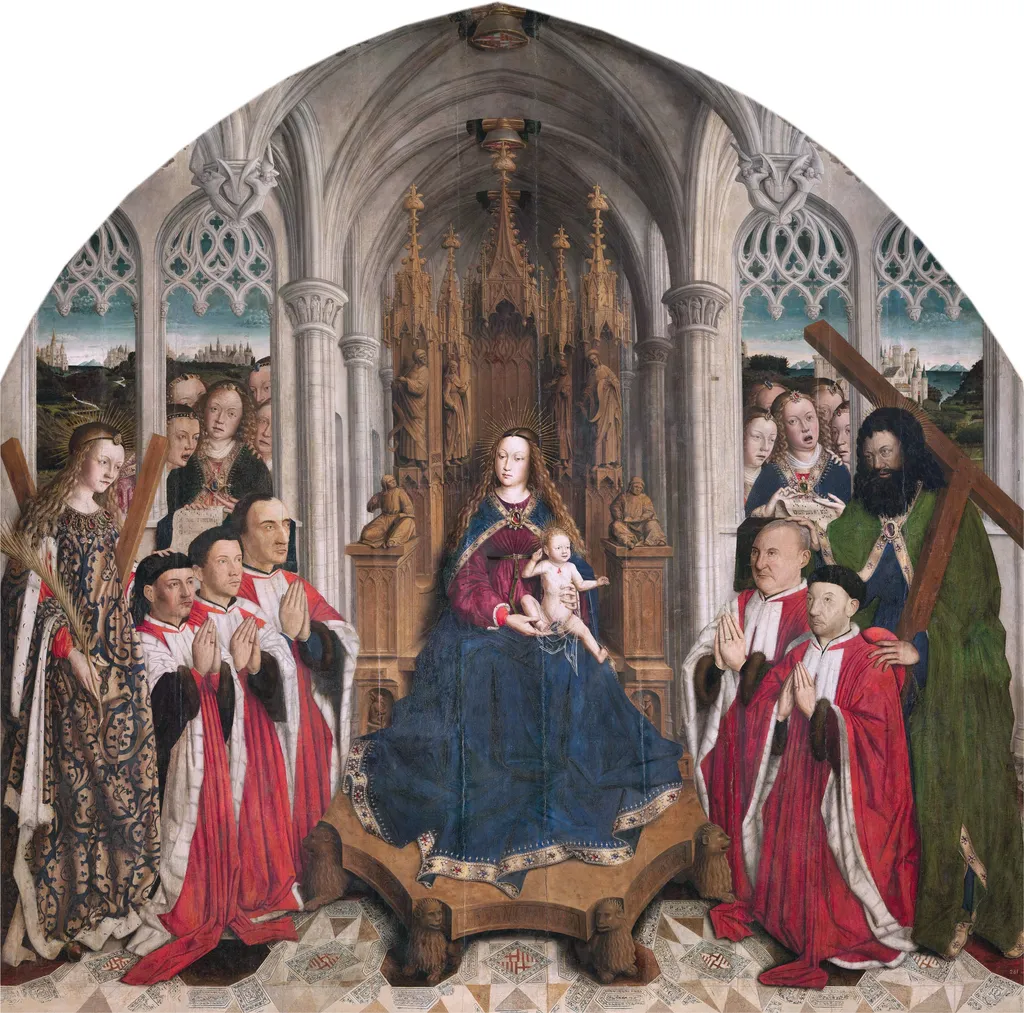
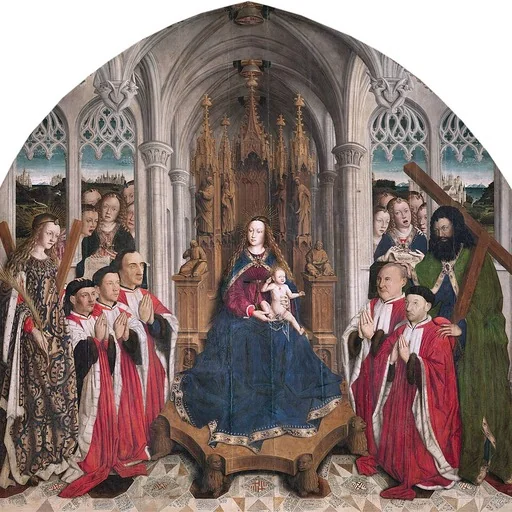
Virgin of the Councillors is an oil painting by the Gothic painting artist Lluís Dalmau. It dates from 1445 and is held in the collection of the Museu Nacional d'Art de Catalunya.
About this work
Subject & Meaning
The Virgin of the Councillors centers on the Madonna and Child enthroned, flanked by Saint Andrew and Saint Eulalia of Barcelona, each bearing the instruments of their martyrdom, Andrew's cross and Eulalia's X-shaped cross, who present the five kneeling city councillors who commissioned the panel. The Virgin sits on a Gothic throne raised on four lions, wearing a blue mantle edged with gold and pearls and fastened by a jeweled brooch, while the Christ Child wears a transparent white veil and a coral-branch amulet, a charm traditionally associated with protection.
The composition fuses sacred and civic meaning: the councillors, shown life-size and lifelike in red fur-lined robes, are rendered at the same scale as the Virgin and saints, asserting their participation in the holy court. Valencian-style azulejo floor tiles and the city's coat of arms on the vault keys reinforce Barcelona's identity, while a choir of angels glimpsed through Flamboyant windows opens the sacred space onto a distant landscape.
Technique & Style
The surface measures approximately 272 × 276 cm, with the full dimensions including the original frame reaching 311.
The Virgin of the Councillors is executed in oil on a single oak panel, a technique unusual for Catalan painting of the 1440s and indicative of the artist’s adoption of Early Netherlandish methods. The surface measures approximately 272 × 276 cm, with the full dimensions including the original frame reaching 311.5 × 311 cm; the support is a well‑preserved oak board that has been primed and ground before painting. The work combines tempera‑like underpainting with layered oil glazes to achieve rich colour modulation and a luminous surface, while the handling of light and spatial depth reflects Jan van Eyck’s realist illusionism.
Formal qualities include a naturalistic rendering of the Virgin and Child, a richly detailed throne supported by lions, and a carefully modelled interior with flamboyant Gothic windows that open onto a painted landscape. The five contemporary councillors are depicted life‑size, their individual features and attire recorded with documentary precision, and the composition is unified by a vaulted ceiling whose ribs bear the heraldic shield of Barcelona. Stylistically the piece merges Burgundian courtly symbolism with the material opulence of Burgundian patronage, and Dalmau’s signature, inscribed at the base of the throne, confirms the date 1445.
History & Provenance
The Virgin of the Councillors is held in the collection of the National Art Museum of Catalonia (Museu Nacional d'Art de Catalunya) in Barcelona. The work entered the museum as a deposit from the Barcelona City Council on May 30, 1902, following the demolition of the Church of Sant Miquel where it had been housed since 1847. Prior to that relocation, the altarpiece originally adorned the chapel of the City Hall (Casa de la Ciutat), having been commissioned for that specific location in 1443.
The painting's exhibition history is defined by its permanent display within these successive institutional and religious settings in Barcelona. It was created for the Saló de Cent chapel, moved to the nearby Church of Sant Miquel due to construction work, and finally transferred to the national museum in the early 20th century, where it remains a key piece of the Gothic painting collection.
Context
The Virgin of the Councillors is widely regarded as a pivotal work in Catalan Gothic painting, marking the introduction of Flemish realism to the region. Art historians attribute this stylistic shift to Lluís Dalmau's 1431–1432 travels to Flanders, where he likely studied in Jan van Eyck's workshop and observed the Ghent Altarpiece. The altarpiece, completed in 1445, demonstrates a direct assimilation of Northern European techniques, particularly the use of oil paint to achieve lifelike detail and spatial depth, replacing the traditional gold backgrounds with expansive landscapes.
Scholarly analysis, notably by José Gudiol, confirmed the work's oil technique, distinguishing it from earlier tempera assumptions. The painting is frequently compared to van Eyck's Madonna of Canon van der Paele due to its compositional similarities and the hyper-realistic portraiture of the five councillors, which fulfilled a specific contractual demand for accurate likenesses.
Legacy
The Virgin of the Councillors is widely regarded as one of the most important works of Catalan Gothic painting, frequently cited as a landmark of early Flemish-influenced art in the region. Its reputation rests on the integration of Northern European oil technique and illusionistic space with a civic portrait tradition, setting a precedent for subsequent Catalan panel painting. The work’s innovative approach to lifelike representation of contemporary figures alongside sacred subjects influenced later artists in Barcelona and beyond, reinforcing the city’s engagement with international Gothic developments.
Its continued prominence is reflected in its display at the Museu Nacional d’Art de Catalunya, where it remains a touchstone for studies of fifteenth-century Iberian-Flemish exchange and civic patronage.
Overview
The panel known as Virgin of the Councillors is a tempera work attributed to the 15th‑century Catalan painter Lluís Dalmau. Currently displayed in the National Art Museum of Catalonia in Barcelona, the piece dates from the mid‑1400s and reflects the devotional art commissioned for civic or ecclesiastical settings.
Own this work as a print
Artist & collection
Artist
Lluís Dalmau (also spelled Luis Dalmau; Valencia?, c. 1400 – Barcelona?, c. 1460) was a Spanish painter associated with the Hispano-Flemish style of the 15th century. He played a pivotal role in introducing…

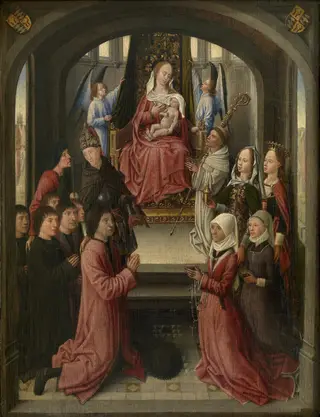 Lactatio of Saint Bernard of Clairvaux with Donors
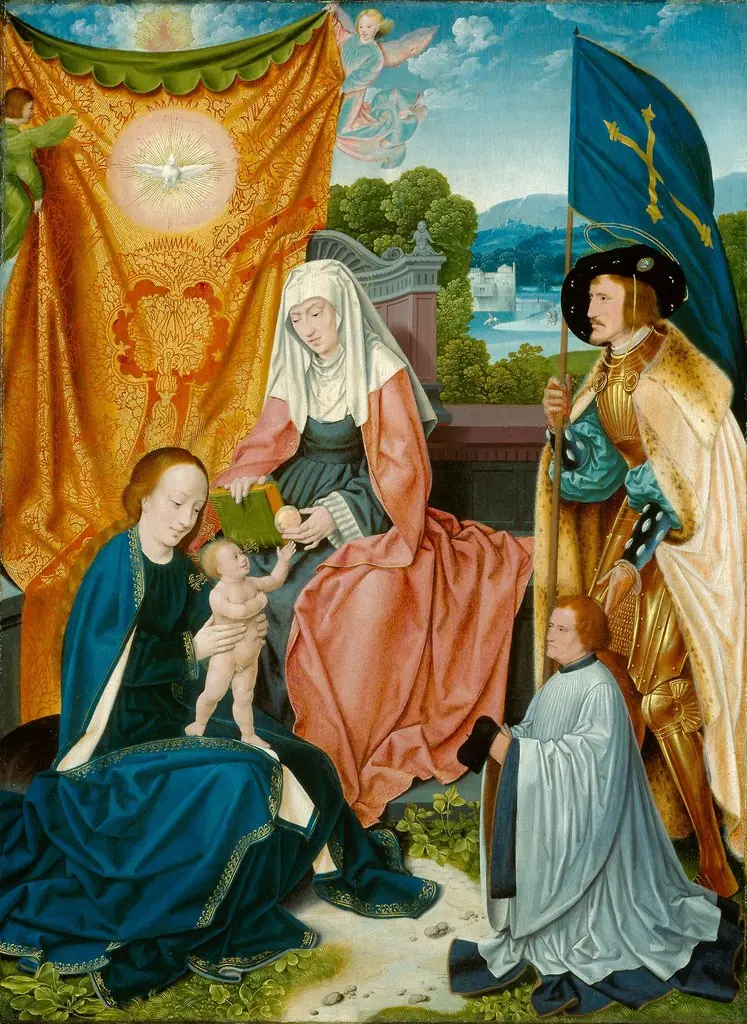 Virgin and Child with Saint Anne, Saint Gereon, and a Donor
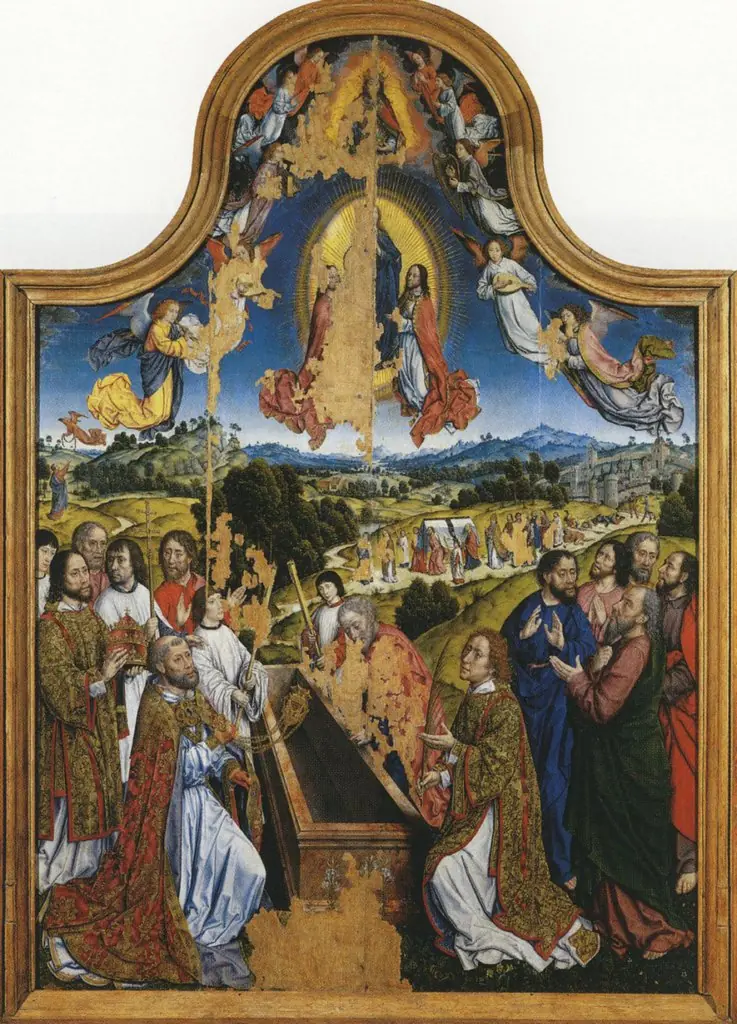 Assumption of the Virgin
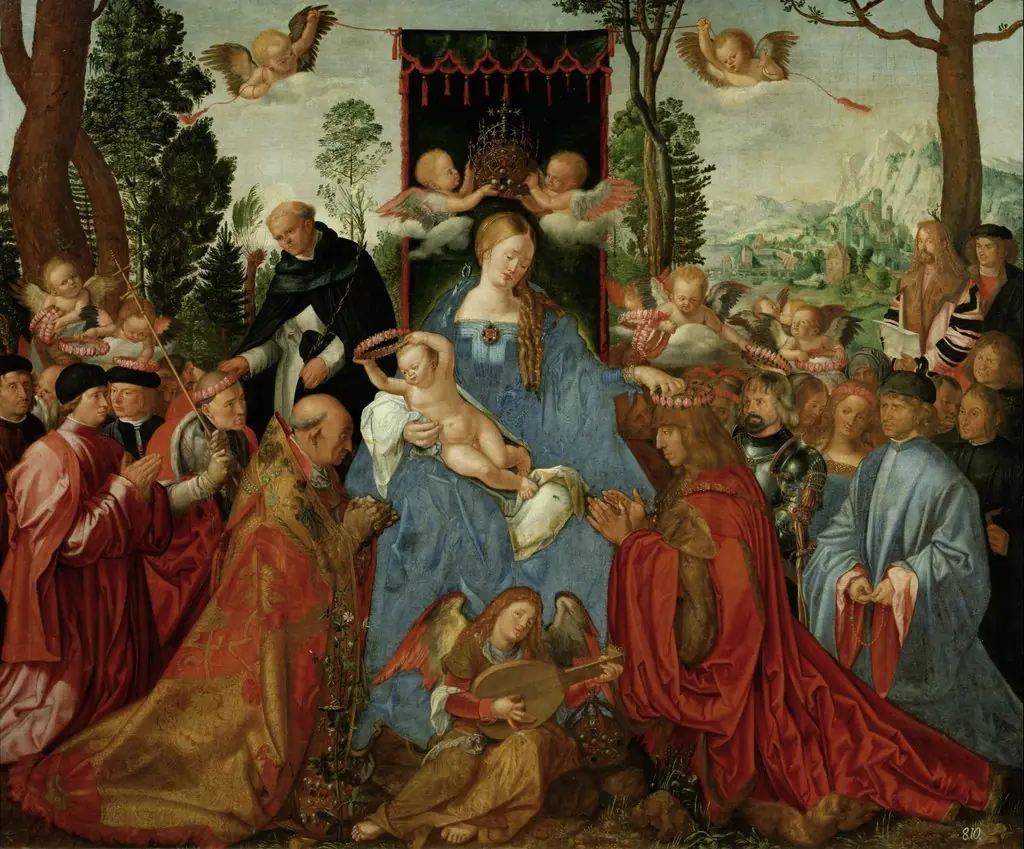 Rosenkranzfest
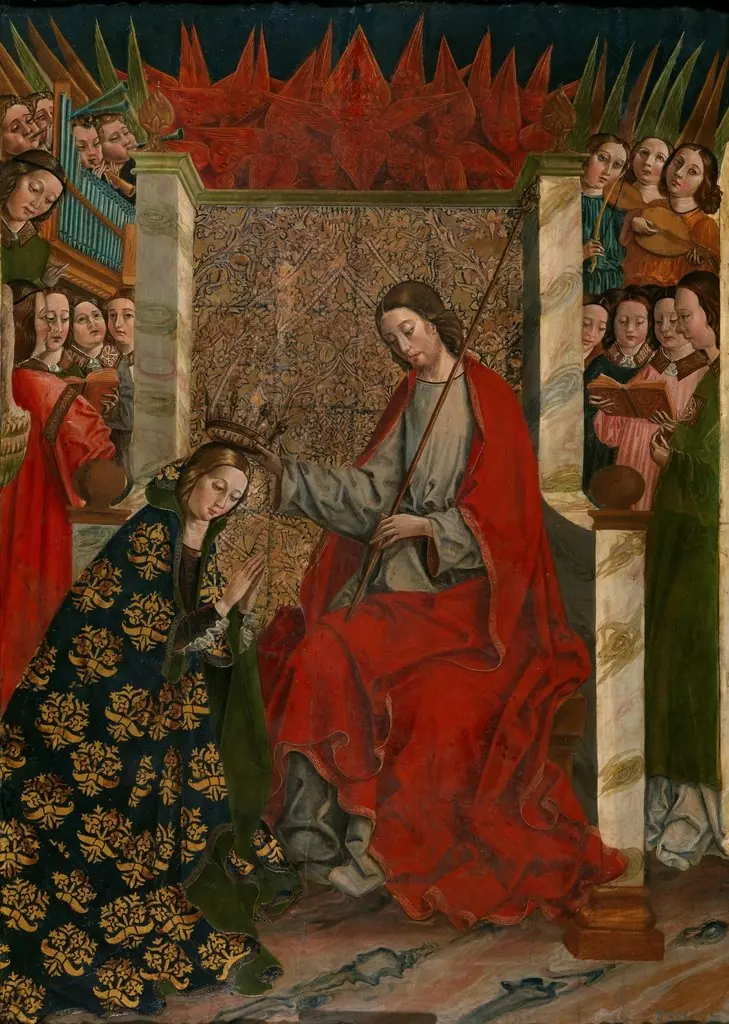 The Coronation of the Virgin
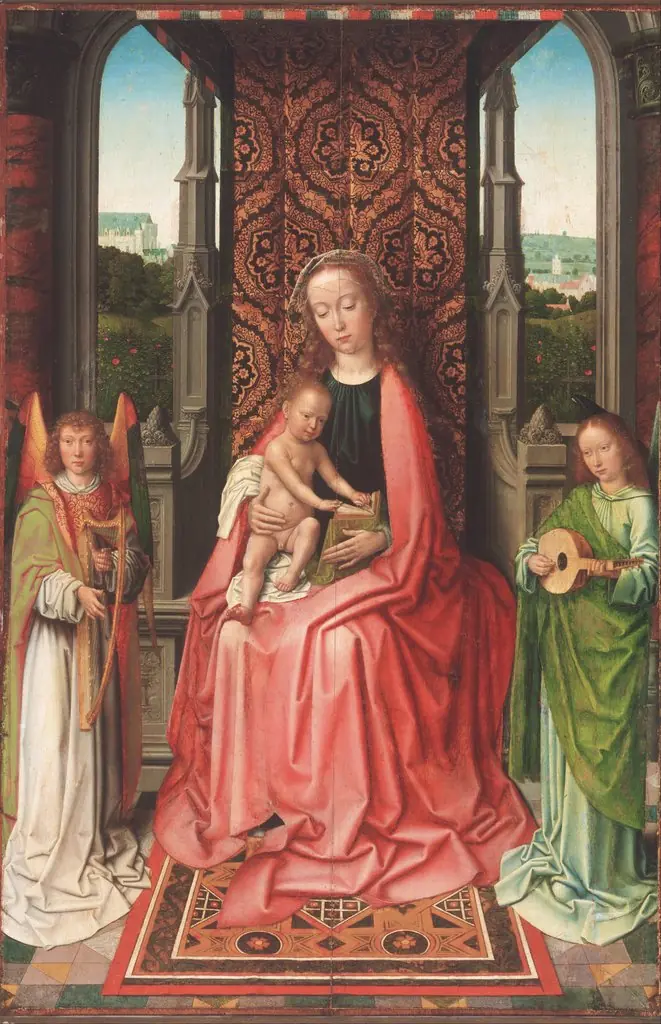 Enthroned Virgin and Child, with Angels
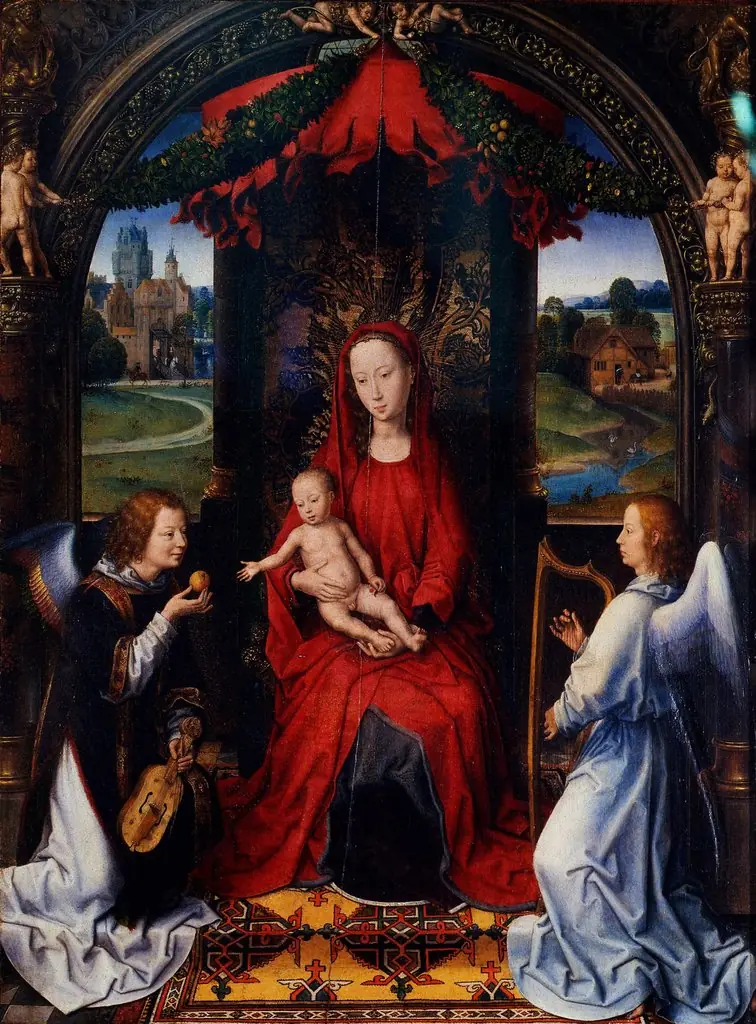 Madonna enthroned with child and two musical angels
 Madonna and Child with Saints in the Enclosed Garden
 Madonna and Child with Angels