Artwork
Virgin and Child with Saints Jerome and Nicholas of Tolentino
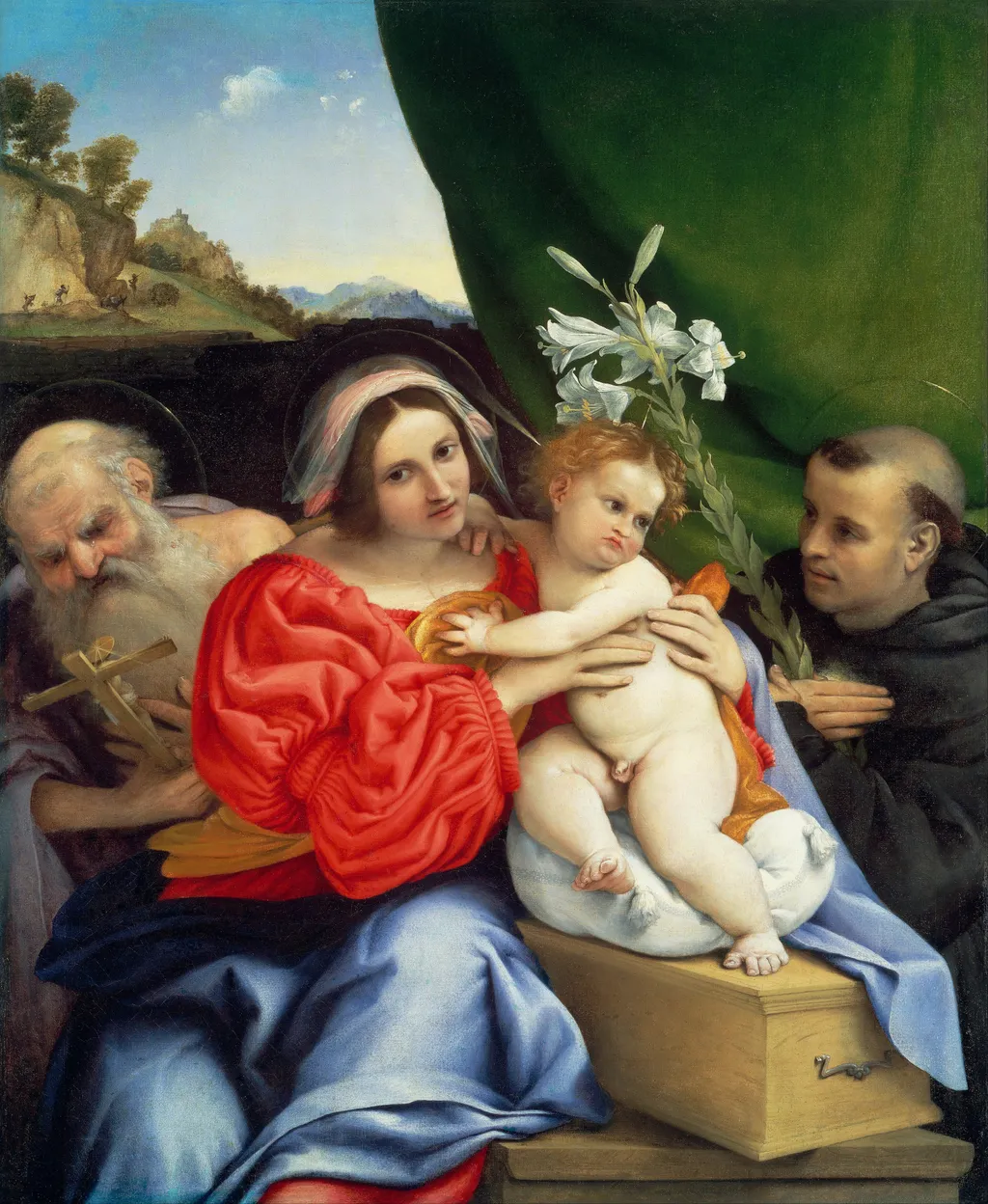
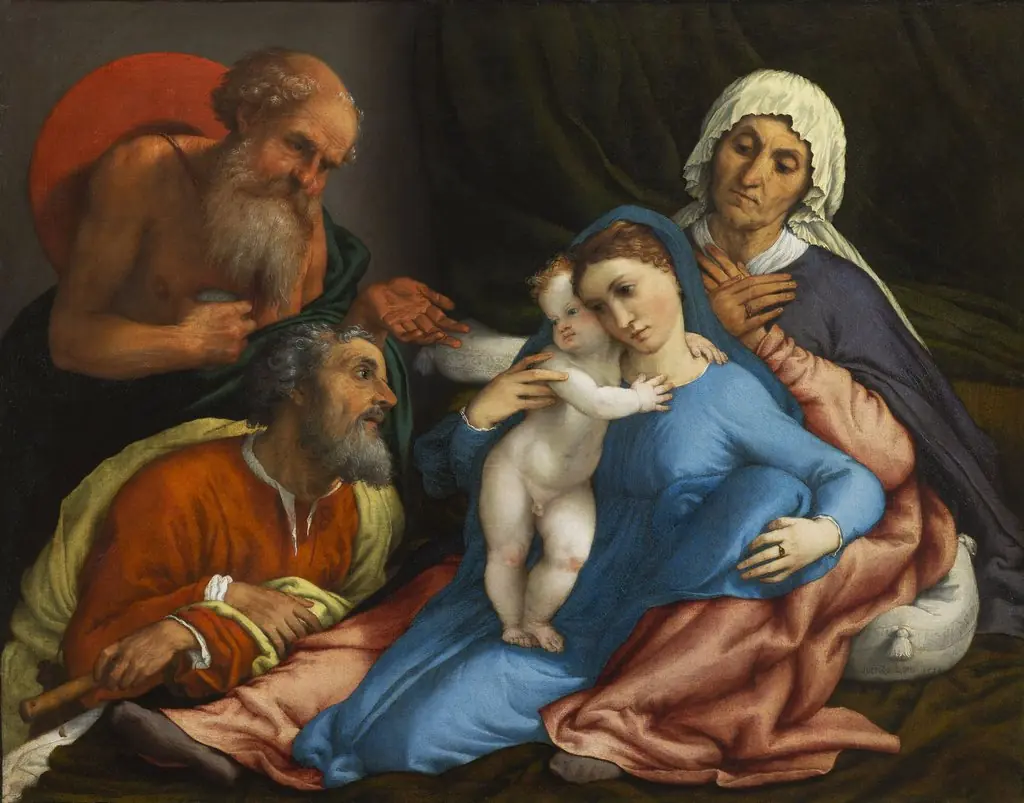
Virgin and Child with Saints Jerome and Nicholas of Tolentino is an oil painting by the Mannerist artist Lorenzo Lotto. It dates from 1522 and is held in the collection of the Museum of Fine Arts Boston.
About this work
Subject & Meaning
A green drapery veils a hilly landscape visible in the upper left corner, and the figures are arranged with isoccephaly, their heads aligned at the same height.
The painting is a sacra conversazione depicting the Virgin Mary holding the nude Christ Child, who sits on a white cushion resting atop a small coffin or sarcophagus. This poignant detail prefigures Christ's sacrificial death, framing the composition as an allegory of his salvific mission. Flanking the central group are two saints: on the left, Jerome weeps before a crucifix, and on the right, Nicholas of Tolentino gazes adoringly at the Child while pressing a white lily to his chest.
The lily symbolizes purity, while Jerome's crucifix further reinforces the theme of Christ's future Passion. A green drapery veils a hilly landscape visible in the upper left corner, and the figures are arranged with isoccephaly, their heads aligned at the same height.
Technique & Style
Executed in oil on canvas, the painting measures 94.3 × 77.8 cm and is a vertical-format sacra conversazione. The composition is set against a luminous landscape glimpsed between a parapet and a drawn-back curtain, with a green drapery partially veiling a rolling countryside visible only in the upper left corner.
Mary holds the nude Christ Child, who is seated on a white cushion placed atop a small casket that evokes a sarcophagus, foreshadowing his sacrifice. The figures display isocephaly, with the heads aligned at a uniform height across the composition. To the left, Saint Jerome weeps before a crucifix, while Saint Nicholas of Tolentino, on the right, presses a lily to his chest in adoration of the Child, who returns his gaze.
The work is known in several autograph replicas and is read as an allegory of Christ's redemptive mission through its allusions to sacrifice.
History & Provenance
The work, an oil‑on‑canvas composition measuring 94.3 × 77.8 cm, was executed by Lorenzo Lotto around 1522–1524, placing it in the final phase of his Bergamasque period. It first entered a documented collection in Oxford, belonging to the Dawkins family from 1911 until 1955, and subsequently passed to the Heinemann dealers in New York. In 1960 the painting was acquired by the Museum of Fine Arts, Boston, where it remains today; earlier ownership by Joséphine de Beauharnais is recorded.
An earlier, undated version of the subject, dated 1522, is held in the Palma Camozzi collection, and both works share preparatory drawings, confirming the composition’s development within Lotto’s workshop.
The painting is currently held in the collection of the Museum of Fine Arts, Boston, having been acquired by the institution in 1960. Prior to this acquisition, the work belonged to the Heinemann collection in New York. Between 1911 and 1955, it was recorded as part of the Dawkins collection in Oxford.
One account also notes that the artwork previously passed through the hands of Joséphine de Beauharnais before entering the Boston museum's holdings.
Context
Dating to the end of Lorenzo Lotto's Bergamo period, the work is generally assigned to 1522 or 1523–1524. Scholarship identifies it as a variation on a composition also seen in the Madonna and Child with Saint John the Baptist and Saint Catherine from 1522, which shares the same preparatory drawings for the central figures. While the flanking saints differ between the two paintings, art historians interpret the inclusion of the sarcophagus-like cushion and the weeping Saint Jerome as an allegory of Christ's sacrificial mission.
The painting is recognized as part of a group of autograph replicas, reflecting the artist's engagement with the sacra conversazione genre during his northern Italian career.
Overview
Virgin and Child with Saints Jerome and Nicholas of Tolentino is an oil painting by Lorenzo Lotto, created around 1523–1524. This work depicts the central figures of Mary and the Christ Child flanked by two venerated saints, Jerome and Nicholas of Tolentino. It represents a period late in Lotto's residency in Bergamo and showcases his characteristic approach to religious narrative.
Own this work as a print
Artist & collection
Artist
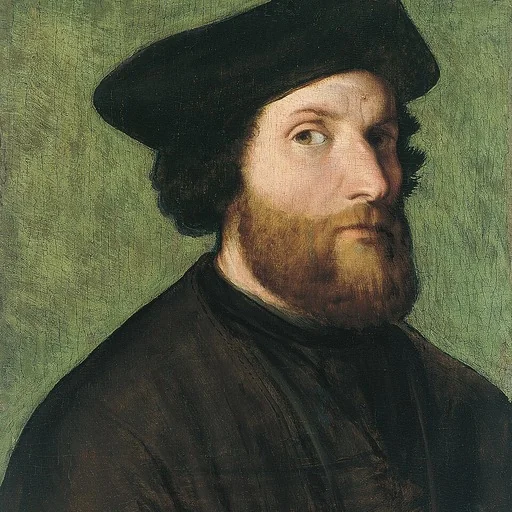
Lorenzo Lotto (c. 1480 – 1556/57) was an Italian Renaissance painter, draughtsman, and illustrator, traditionally placed in the Venetian school, though much of his career was spent in other north Italian cities. He…


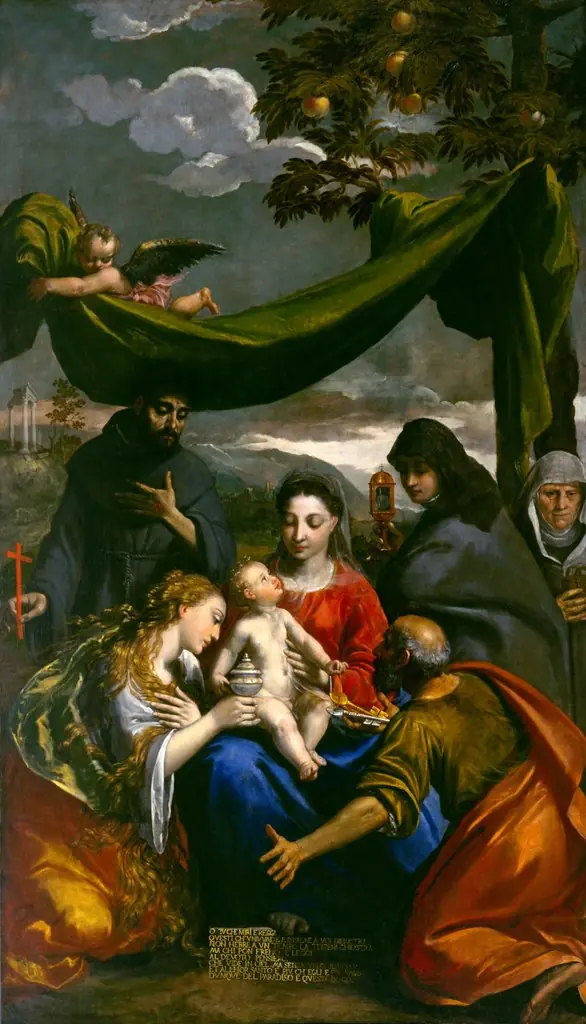 Virgin and Child with Saints Mary Magdalene, Peter, Clare, Francis, and an Abbess
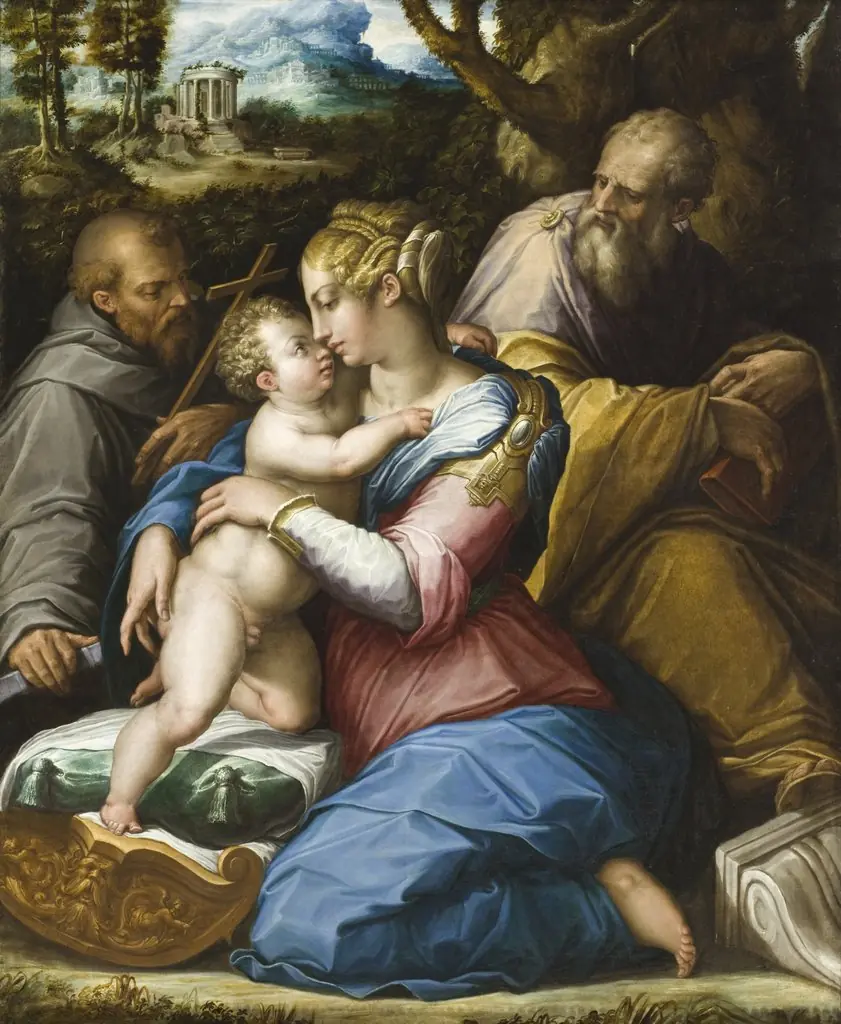 Holy Family with Saint Francis in a Landscape
 Adoration of the Christ Child
 Madonna and Child with Saints Francis and Jerome
 Madonna and Child with Saints Jerome and Francis
 Madonna and Child with Saints
 Madonna and Child with Saints
 The Holy Family with the Infant John the Baptist
 The Holy Family of Cardinal Fernando de’ Medici
 Panciatichi Holy Family
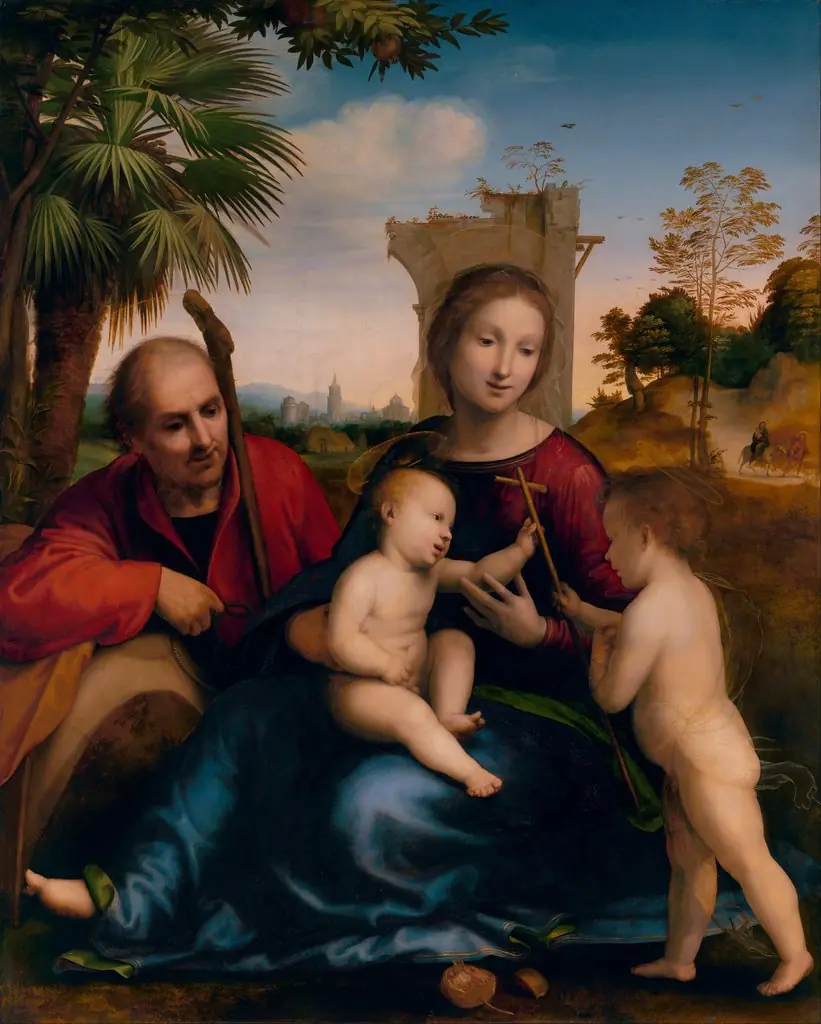 The Rest on the Flight into Egypt with St. John the Baptist
- The Virgin and Child with Saints