Artwork
Banks of the Oise at Dawn
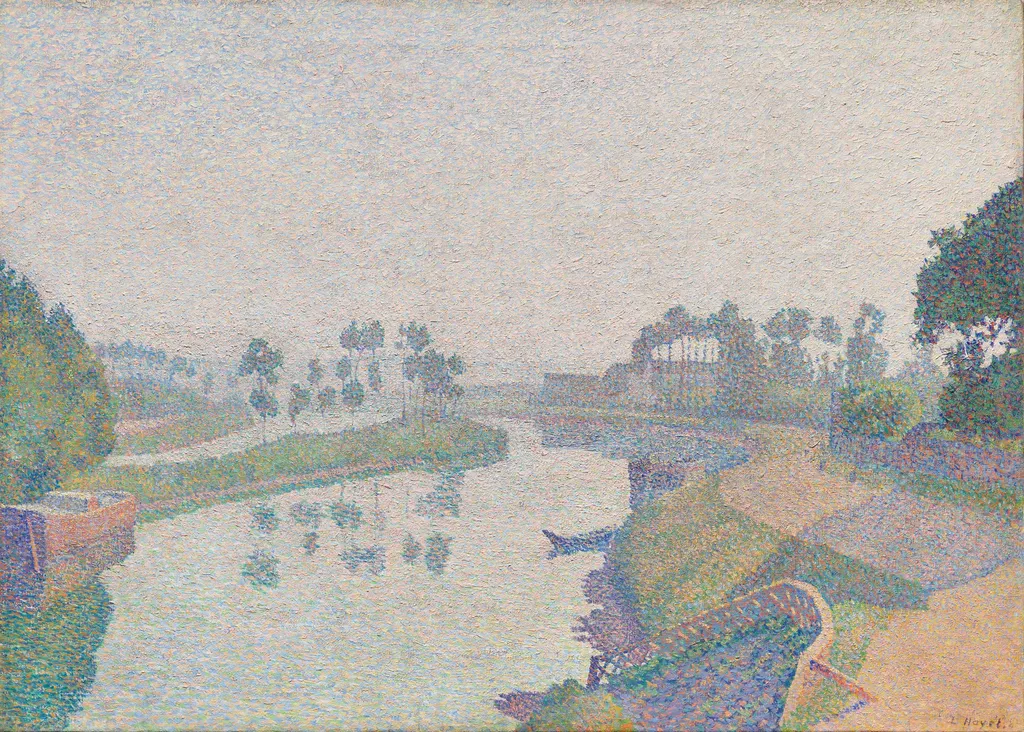
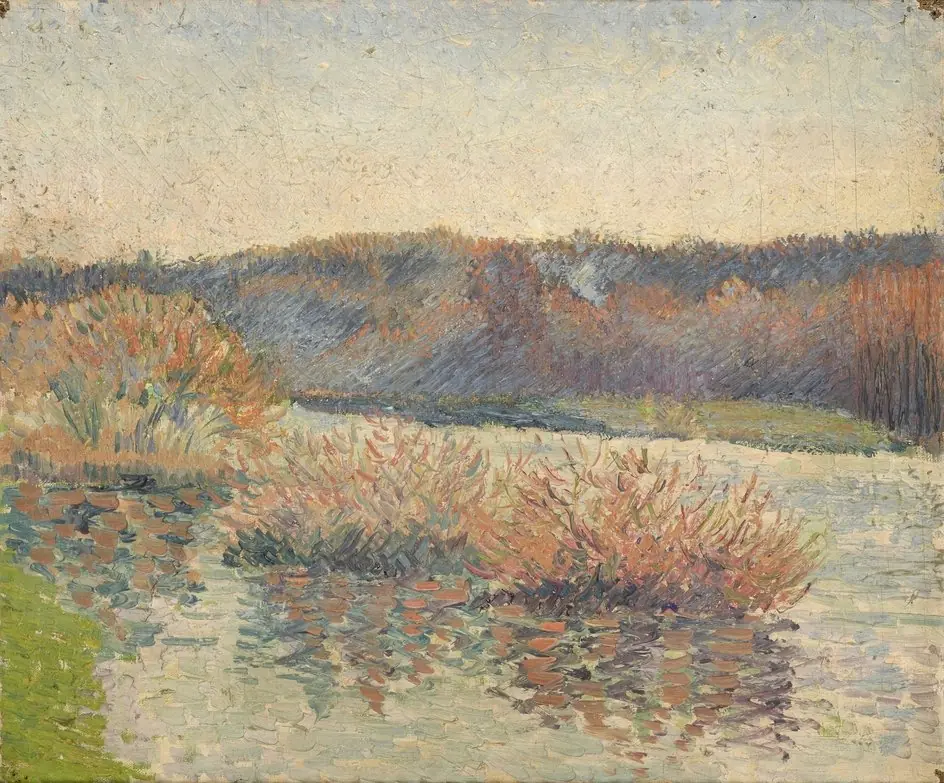
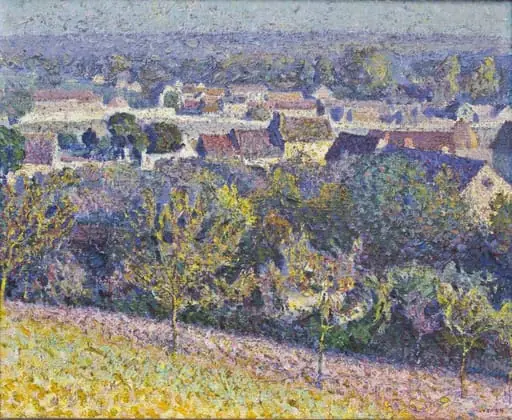
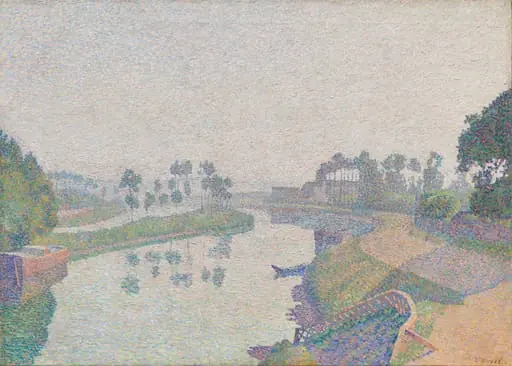
Banks of the Oise at Dawn is an oil painting by the Neo-Impressionist artist Louis Hayet. It dates from 1894 and is held in the collection of the Cleveland Museum of Art.
About this work
Subject & Meaning
The depiction of dawn emphasizes the play of light on water and foliage, a characteristic concern of late-nineteenth-century French landscape painting.
The painting presents a view of the Oise River at first light, capturing the riverbank in the early morning atmosphere. Rendered in oil on canvas, it belongs to the landscape genre and reflects the French countryside surrounding the river. The depiction of dawn emphasizes the play of light on water and foliage, a characteristic concern of late-nineteenth-century French landscape painting.
As part of the Cleveland Museum of Art's collection, the work is identified as a product of Louis Hayet, created in France in 1894.
Technique & Style
Banks of the Oise at Dawn is an oil painting executed by Louis Hayet in 1894. The work is created using oil paint applied to a canvas support, a standard medium for landscape paintings of the period. Measuring 51 centimeters in height and 71 centimeters in width, the piece captures a dawn scene along the Oise River in France.
As a landscape, the composition focuses on natural elements and atmospheric light characteristic of the genre. The painting remains part of the collection at the Cleveland Museum of Art.
History & Provenance
The painting Banks of the Oise at Dawn was executed in 1894 by French artist Louis Hayet, who worked in oil on canvas to render a dawn landscape of the Oise River. The work was created in France and later entered the collection of the Cleveland Museum of Art, where it is catalogued with dimensions of 51 × 71 cm. No documented commission or subsequent owners are recorded prior to the museum's acquisition, and no specific accession number or exhibition history is detailed in the available sources.
Legacy
Louis Hayet completed Banks of the Oise at Dawn in 1887, an oil on canvas landscape that portrays the Oise River at dawn. The work entered the Cleveland Museum of Art's collection, where it is presented as a notable example of French landscape painting from the late 19th century. Its placement in a major public museum has sustained scholarly and public interest, contributing to Hayet's reputation as a modest yet recognized figure in the genre.
Consequently, the painting is frequently referenced in discussions of early French landscape art and the depiction of atmospheric effects, underscoring its lasting legacy.
Overview
Banks of the Oise at Dawn (1894) by Louis Hayet is a landscape painting that captures the atmospheric effects of sunrise along the Oise River. Executed in oil on canvas, the work exemplifies the artist's commitment to Neo-Impressionism, specifically his adaptation of the Pointillist technique. Rather than using the strict, scientific color theory associated with Georges Seurat, Hayet employs a looser application of small, distinct brushstrokes to create a hazy, luminous quality.
The composition features a soft, pale sky that merges seamlessly with a misty riverbank, while clumps of trees line the shore with fuzzy, layered forms. The palette consists of bright yet muted tones, simulating the diffused light filtering through morning fog. Created during the height of the Neo-Impressionist movement, this piece reflects Hayet's role as a key figure who bridged the gap between strict Divisionism and a more intuitive, atmospheric approach to light and color.
The painting stands as a significant example of late 19th-century French landscape art, demonstrating how Post-Impressionist techniques were used to evoke mood and the transient effects of nature rather than merely documenting a scene.
Own this work as a print
Artist & collection