Artwork
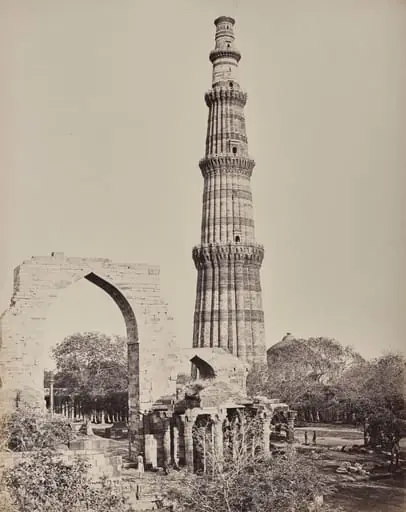
The Kootub Minar, Delhi
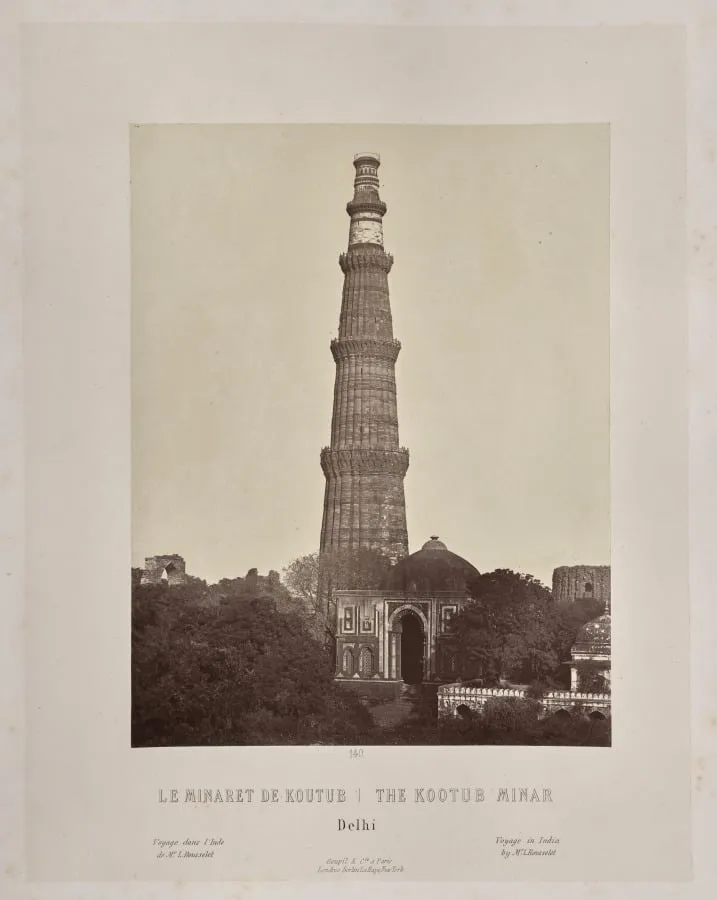
The Kootub Minar, Delhi is a photography by the Impressionist artist Louis-Théophile Marie Rousselet. It dates from 1866 and is held in the collection of the Cleveland Museum of Art.
- Accession no.
- 2022.58.20
- Credit line
- Alma Kroeger Fund
About this work
Rousselet drew this in India, but he was French, so the tower looks a bit like a European fantasy of the East.
You see a tall, red sandstone tower rising against a pale sky, its balconies casting sharp shadows.
Rousselet drew this in India, but he was French, so the tower looks a bit like a European fantasy of the East. He worried his sketches weren’t grand enough, so he learned photography there. That’s why the lines feel so precise, almost like a photo.
For more of this kind of travel art, look up Louis-Théophile Marie Rousselet (French, 1845–1929).
Overview
The Kootub Minar, Delhi is a photograph by French artist Louis-Théophile Marie Rousselet, created during his time in India. The image captures a tall, red sandstone tower set against a pale sky, with its balconies casting sharp shadows.
Subject & Meaning
The subject is the Qutub Minar in Delhi, a prominent monument of Mughal power in northern India. While the photograph aims to document the monument's grandeur, its composition subtly reflects a European perspective on Eastern architecture.
Technique & Style
Rousselet adopted photography in India to better convey the splendor of its monuments, feeling his drawings were insufficient. The photograph showcases his quick mastery of the medium, with precise lines and thoughtful composition, blending documentary intent with a hint of exoticism.
History & Provenance
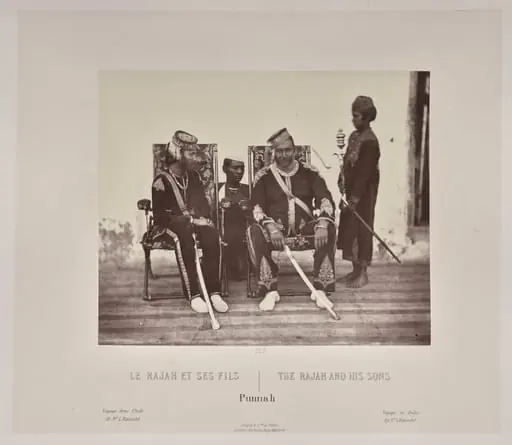
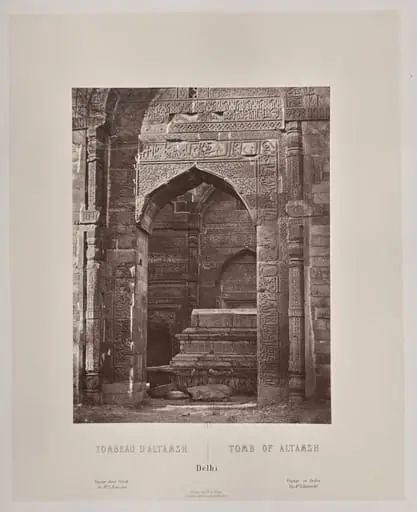
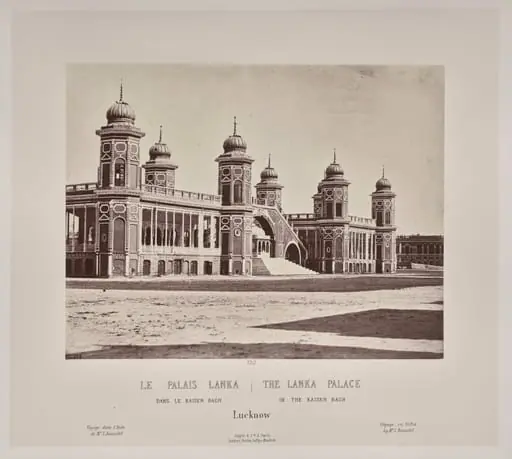
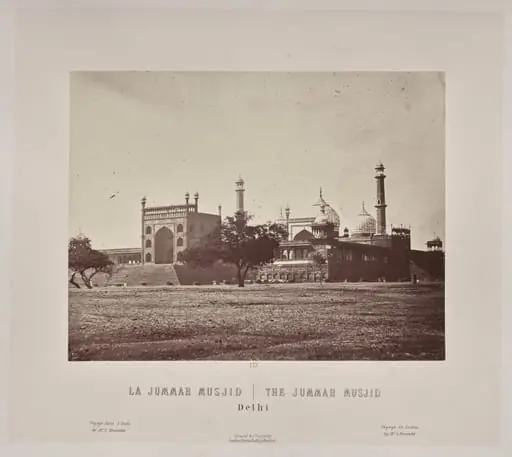
Created during Rousselet's Indian sojourn, the photograph is part of a collection spanning sites of Sultanate, Rajput, and Mughal power, as well as scenes of industry and portraits of rulers, reflecting his broad interest in Indian culture and architecture.
Context
Part of a larger body of work by Rousselet that includes Varanasi, Alwar, and other Indian locations, this photograph situates the Qutub Minar within a broader visual narrative of India's diverse cultural and historical landscapes.
Artist & collection
Artist
Louis-Théophile Marie Rousselet
Louis-Théophile Marie Rousselet (1845–1929) was a French artist.