Artwork
Hércules en la pira
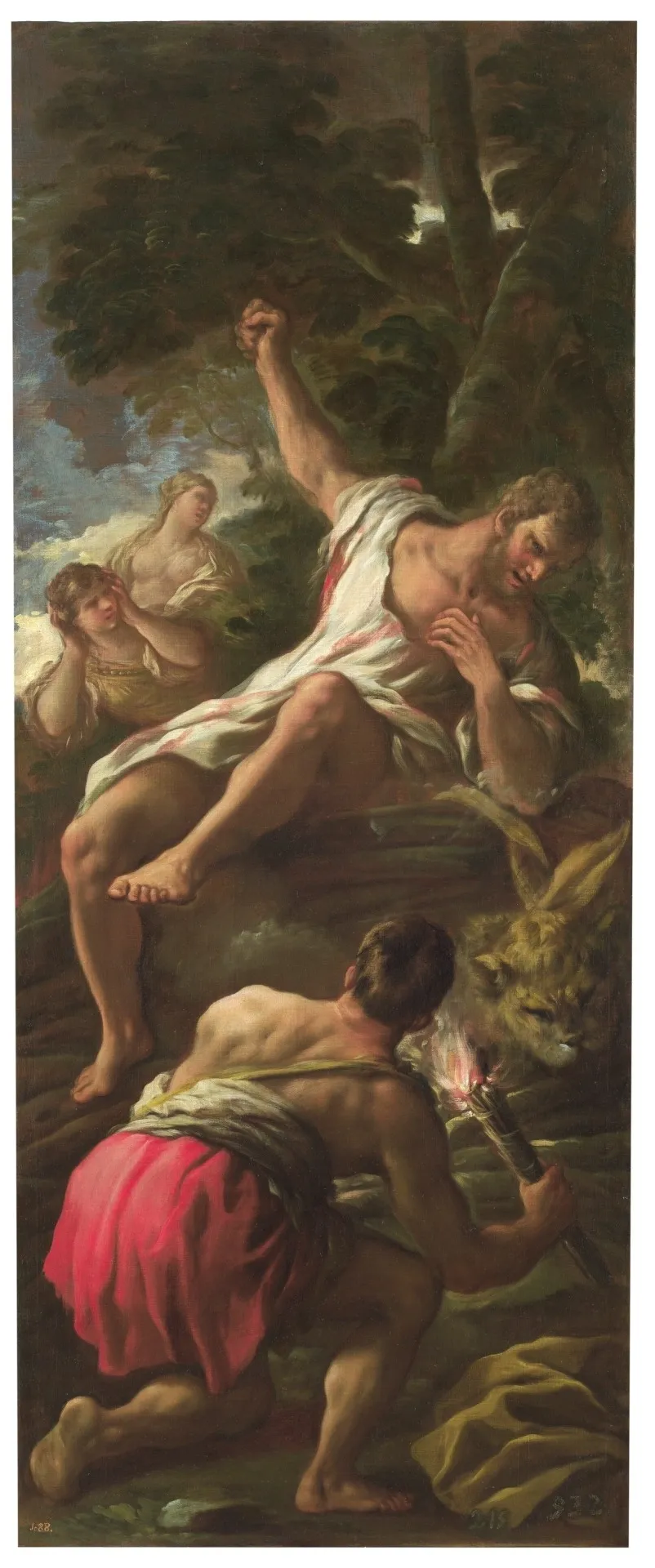
Hércules en la pira is an oil painting by the High Baroque Italian artist Luca Giordano. It dates from 1699 and is held in the collection of the Museo del Prado.
About this work
Subject & Meaning
The work was painted by Luca Giordano in 1697 for the royal collection of Ferdinand VII of Spain and is now housed in the Museo del Prado.
The canvas portrays the mythic hero Heracles in the moment of his sacrificial death, shown on a funeral pyre. He is surrounded by symbolic figures including Nemean lion, the poisoned cloak of Deianira, and the wounded Philoctetes, all drawn from classical narratives of heroism and tragic destiny. The work was painted by Luca Giordano in 1697 for the royal collection of Ferdinand VII of Spain and is now housed in the Museo del Prado.
Technique & Style
Hércules en la pira is executed in oil paint on canvas, a standard support for late Baroque Italian cabinet pictures of this scale. The work measures 224 cm in height by 91 cm in width, giving it a markedly elongated vertical format suited to a single-figure narrative composition. Luca Giordano's handling reflects the loose, fluid brushwork characteristic of his late Neapolitan practice, with rapid, painterly strokes used to model drapery, flame, and anatomy rather than tightly blended finish.
Stylistically, the painting belongs to the Baroque tradition, deploying dramatic chiaroscuro and dynamic diagonal movement to convey the moment of Hercules's immolation on the pyre.
History & Provenance
Luca Giordano executed the oil painting Hércules en la pira in 1697. The work was created on canvas and depicts the mythological figures of Heracles, the Nemean lion, Philoctetes, and Deianira. Historically, the piece entered the collection of Ferdinand VII of Spain.
It is currently held by the Museo del Prado in Madrid, where it remains part of the institution's holdings.
Context
The painting was created during Giordano's mature period in Naples before his 1692 move to Spain, reflecting his late Baroque style characterized by energetic compositions and dramatic chiaroscuro. Its depiction of Heracles' apotheosis through the pyre scene draws on Counter-Reformation themes of martyrdom and triumph, aligning with Spanish Habsburg patronage preferences. The work's provenance with Ferdinand VII of Spain underscores its significance within the royal collection, later entering the Museo del Prado where it remains part of their permanent holdings.
Overview
Luca Giordano’s 1699 oil on canvas, titled Hércules en la pira, is part of the Prado Museum’s collection. The work presents a compact, theatrical tableau set among craggy rocks and dense foliage, where three mythological figures dominate the composition. The central nude hero is wrapped in a stark white cloth, while a woman and a torch‑bearing figure occupy the surrounding space, creating a tense, illuminated scene.
Artist & collection

Artist
Luca Giordano was an Italian late-Baroque painter and printmaker in etching. Giordano was one of the most celebrated artists of the Neapolitan Baroque, whose vast output included altarpieces, mythological paintings and…

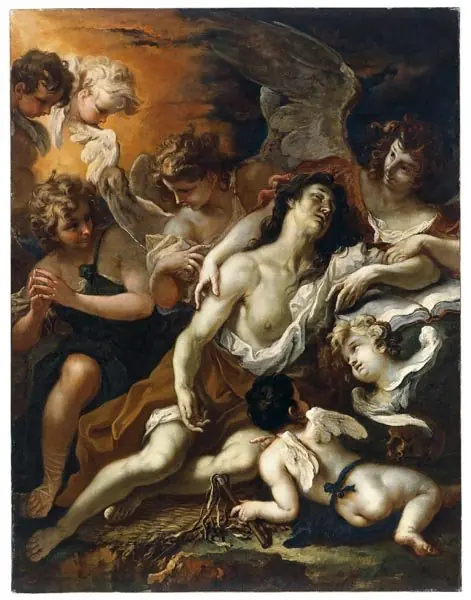 Mary Magdalene Comforted by Angels
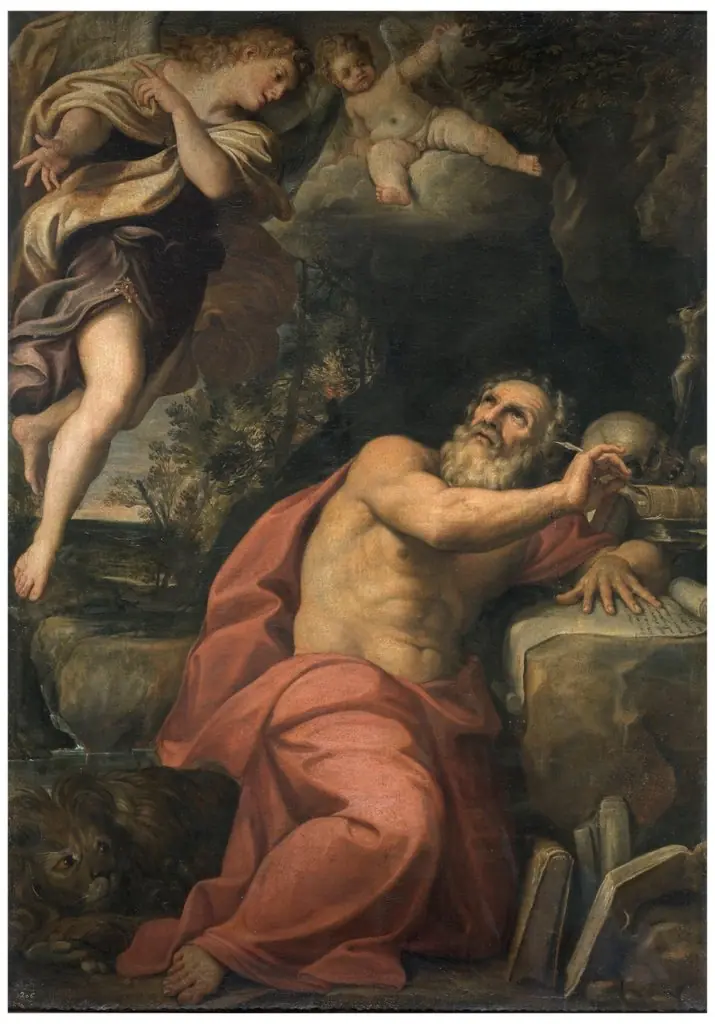
 The Vision of Saint Jerome
 Vestirea nașterii lui Iisus
 Moses before the Burning Bush
 La Resurrección de Cristo
 The apotheosis of Emperor Leopold I
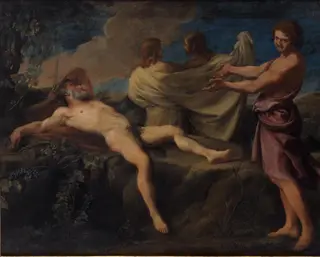 Drunkenness of Noah
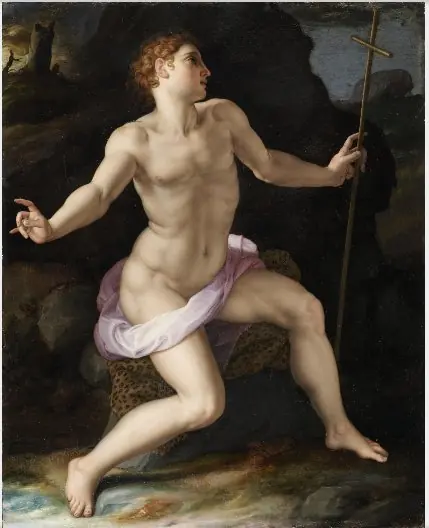 Saint John the Baptist in the Wilderness
 The Apotheosis of Saint Charles Borromeo
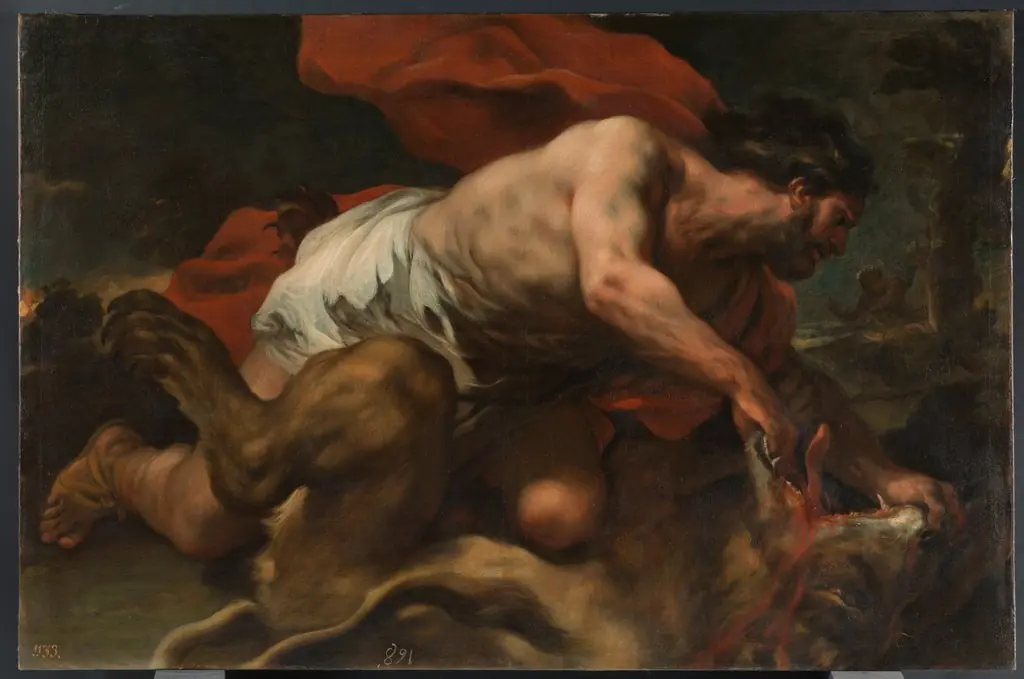 Samson and the Lion
 El Bautismo de Cristo
- Aparición de los ángeles a San Jerónimo