Artwork
Caritas
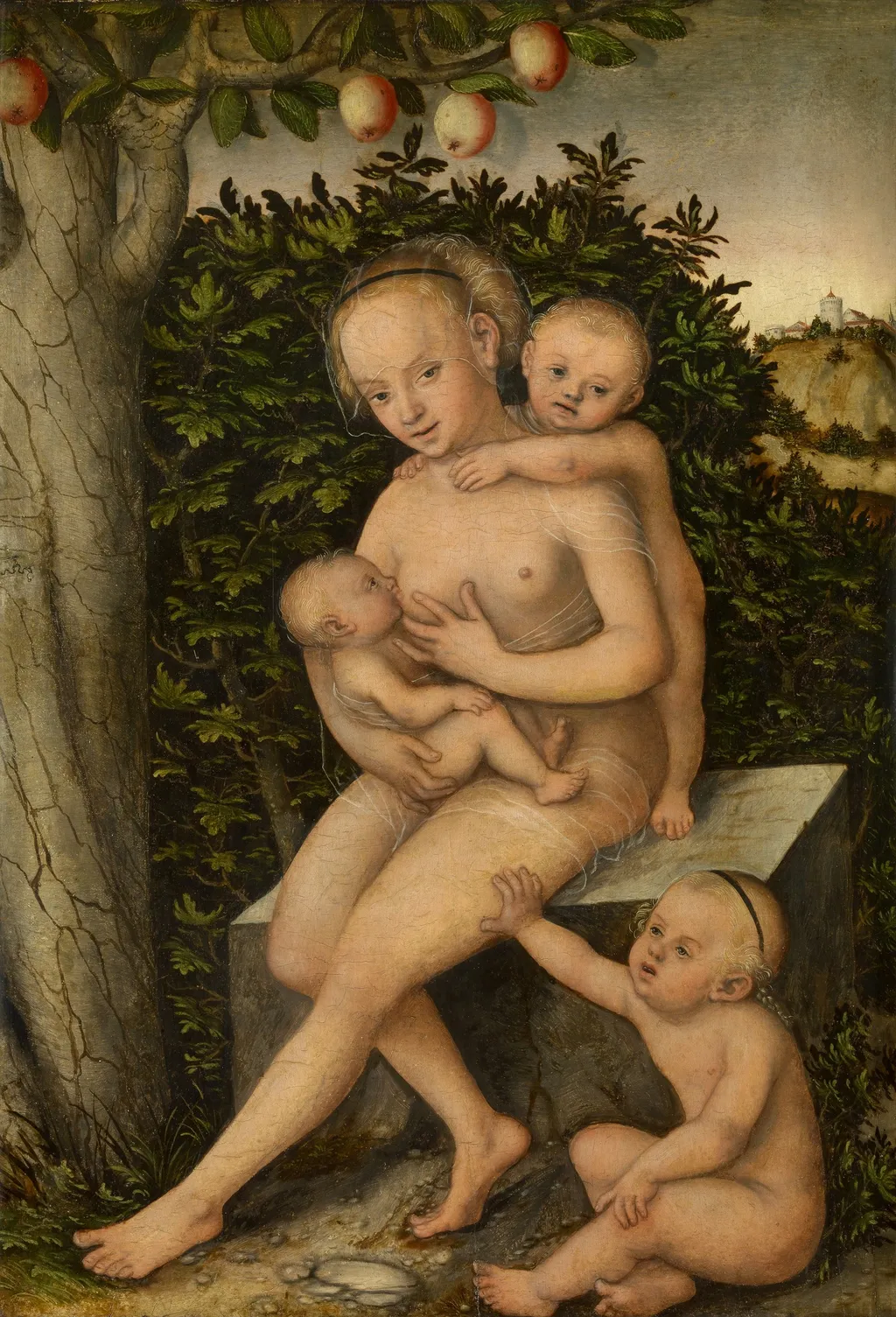
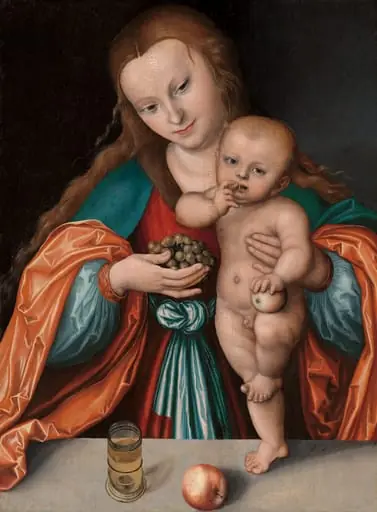
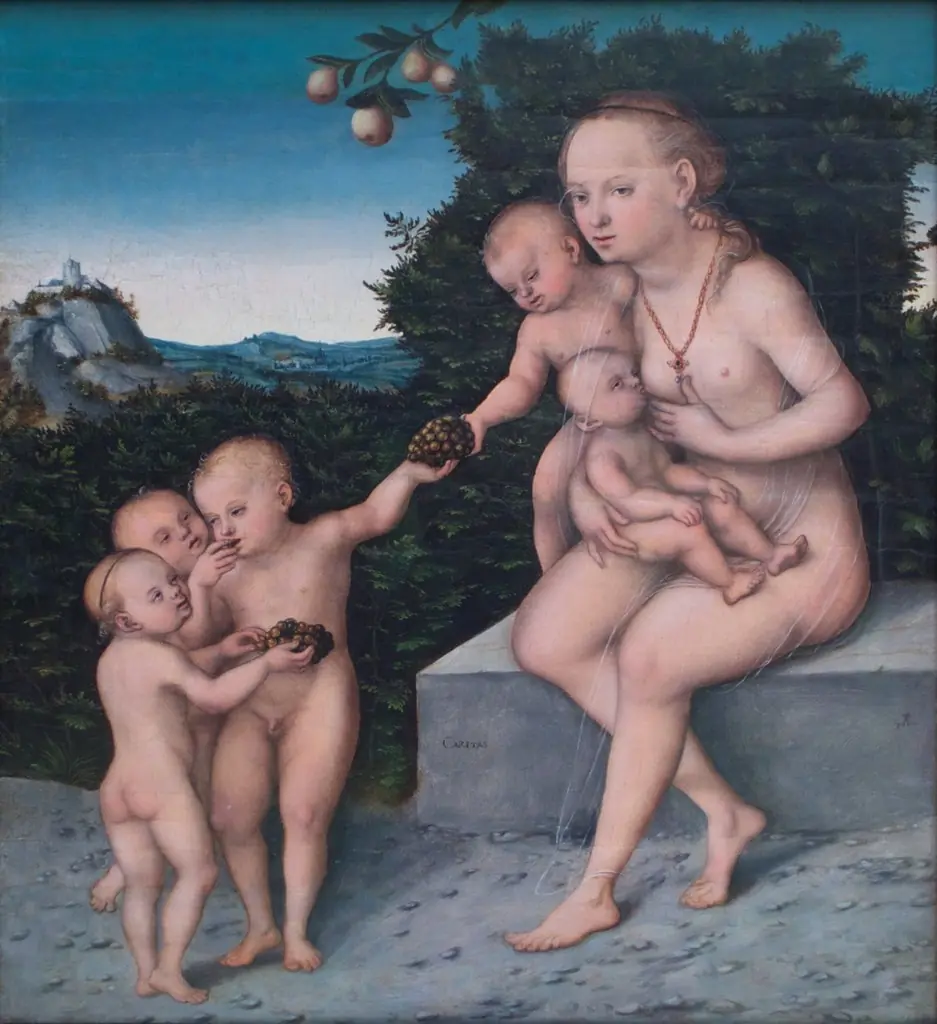
Caritas is a paint painting by the Northern Renaissance artist Lucas Cranach the Elder. It dates from 1540 and is held in the collection of the Royal Museum of Fine Arts Antwerp.
About this work
Overview
This specific iconography, where the mother tends to multiple children simultaneously, serves as a visual metaphor for selfless love and nurturing.
Painted in 1540, Lucas Cranach the Elder's Caritas is a late allegorical work depicting the Christian virtue of charity as a maternal figure. The composition centers on a nude woman seated on a wooden bench within a dense, wooded landscape, distinguished by a tree bearing red apples. She is draped only by a thin white cloth around her waist, emphasizing her physical form while maintaining the dignity of the subject.
The figure actively nurses an infant at her breast while simultaneously holding a second child on her lap. A third child sits on the ground at her feet, reaching upward to touch her leg, creating a dynamic triangular arrangement of limbs and gazes. This specific iconography, where the mother tends to multiple children simultaneously, serves as a visual metaphor for selfless love and nurturing.
Created during the final decade of Cranach's life, the work reflects his mature style, characterized by smooth, porcelain-like skin tones and a flattened spatial depth typical of the German Renaissance. The painting synthesizes religious symbolism with the artist's signature aesthetic, transforming the theological concept of Caritas into an intimate, domestic scene that underscores the virtue's active and abundant nature.
Subject & Meaning
The central figure is a partially clothed woman seated on a bench, breastfeeding one infant while cradling another. A third child kneels on the ground, reaching toward her leg. The composition evokes the Christian virtue of charity (caritas), emphasizing maternal love and generosity amid a natural, pastoral setting.
Technique & Style
Cranach employs a refined oil technique that renders the flesh tones with subtle chiaroscuro, while the surrounding foliage is depicted with delicate, almost botanical precision. The use of a thin white drape creates a modest veil, and the background features a softly graduated sky that recedes into a distant horizon, characteristic of Northern Renaissance realism.
History & Provenance
Created by the German painter Lucas Cranach the Elder in the early 16th century, the panel eventually entered the Royal Museum of Fine Arts, Antwerp, where it remains on display. The museum’s records trace its acquisition to the early 20th century, though earlier ownership details are not fully documented.
Context
Caritas reflects Cranach’s broader interest in genre scenes that blend devotional themes with everyday life. The painting aligns with contemporary Northern Renaissance depictions of the Virgin Mary as a nurturing figure, yet Cranach’s treatment is secularized, focusing on the universal act of maternal care within a natural environment.
Own this work as a print
Artist & collection
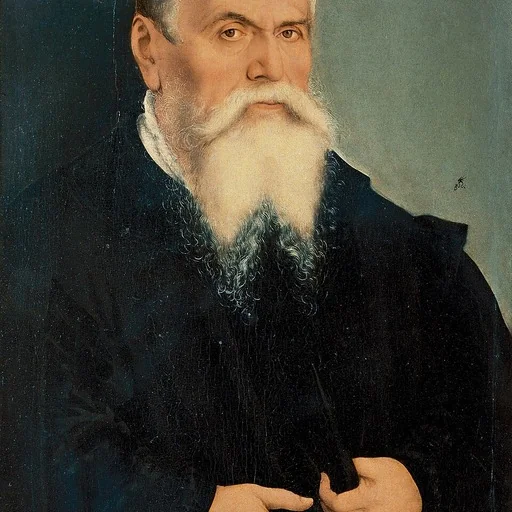
Artist
Lucas Cranach the Elder was a German Renaissance painter and printmaker in woodcut and engraving.