Artwork
Eve with Cain and Abel
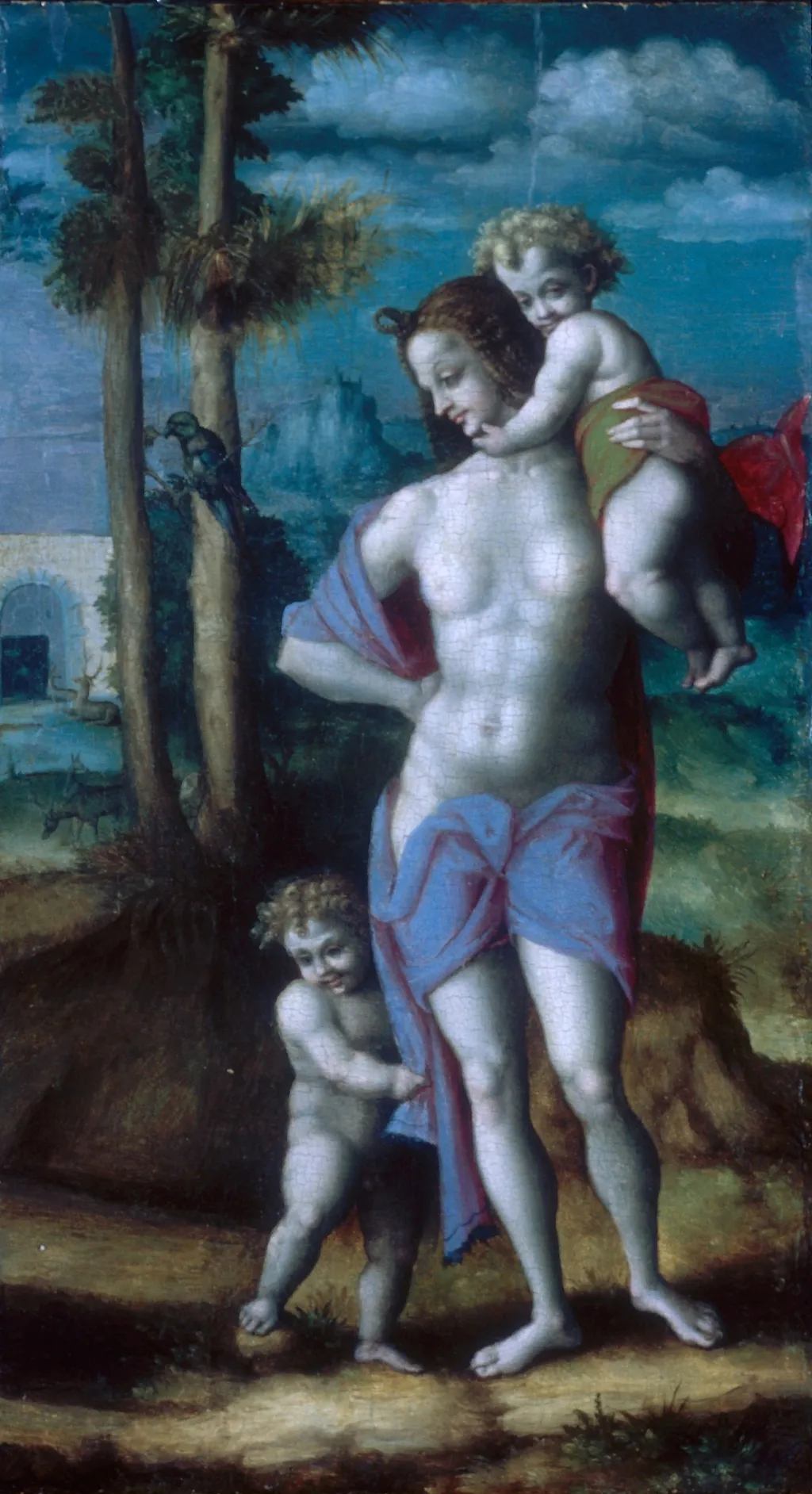
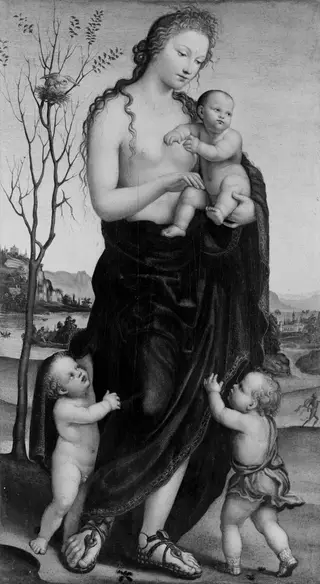
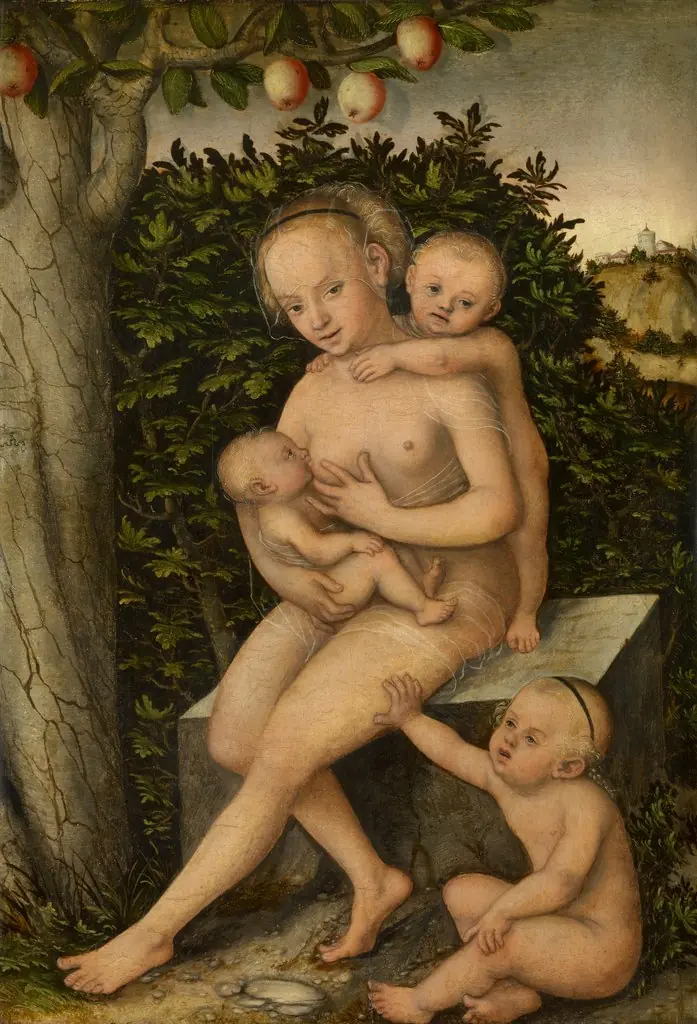
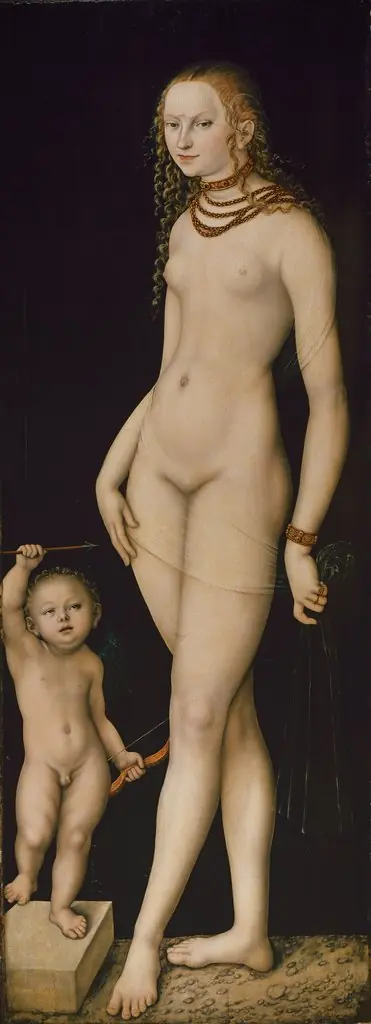
Eve with Cain and Abel is an oil painting by the Early Renaissance artist Francesco Bacchiacca. It dates from 1520 and is held in the collection of the Metropolitan Museum of Art.
About this work
Subject & Meaning
By showing Eve alongside her two sons, the work brings together the mother of humanity with the first brothers whose rivalry culminated in fratricide.
The painting depicts the biblical figures of Eve, Cain, and Abel, presenting a religious subject drawn from the early chapters of Genesis. By showing Eve alongside her two sons, the work brings together the mother of humanity with the first brothers whose rivalry culminated in fratricide. The composition thus unites themes of maternal lineage, original sin inherited through Eve, and the violent consequences of that fall as embodied in Cain's act against Abel.
Rendered in tempera on a small panel, the intimate scale and religious genre invite close contemplation of these foundational figures and the moral drama they represent.
Technique & Style
Created around 1520 by Francesco Bacchiacca, this religious panel painting utilizes a mixed medium of tempera and oil paint. The work is executed on a wooden panel support, measuring approximately 40 cm in height and 23.5 cm in width. As a piece classified within the genre of religious art, the composition depicts the biblical figures of Eve alongside her sons, Cain and Abel.
The combination of tempera and oil suggests a transitional approach to material handling characteristic of the early sixteenth century, allowing for specific textural qualities on the rigid panel surface. The artwork is currently held in the collection of the Metropolitan Museum of Art.
History & Provenance
The panel Eve with Cain and Abel is attributed to Francesco Bacchiacca and dated to circa 1520, aligning with the artist’s early career and stylistic development. The work entered the collection of the Metropolitan Museum of Art, where it remains housed on a poplar panel support measuring 40 × 23.5 cm. Its religious subject, depicting Eve with her sons Cain and Abel, suggests a commission for private devotional use, likely produced in Florence during a period marked by renewed interest in narrative religious imagery. The medium of tempera, combined with later oil additions, reflects contemporary Florentine practices in panel painting.
Overview
Bacchiacca, also known as Francesco d’Ubertino Verdi, completed Eve with Cain and Abel in 1520. This tempera painting, now housed at The Metropolitan Museum of Art, depicts the biblical matriarch Eve with her two young sons. The work reflects the Florentine artist's engagement with religious themes during the early 16th century, bridging the High Renaissance and the emerging Mannerist style.
Context
As a Florentine painter, Bacchiacca was active in a city renowned for its artistic innovation during the Renaissance. His career spanned a period when the High Renaissance was giving way to Mannerism, a style that emphasized artificiality and grace over the naturalism of earlier periods. This painting exemplifies his engagement with traditional religious subjects while subtly incorporating the stylistic shifts of his era.
Artist & collection
Artist
Francesco d'Ubertino Verdi, called Bachiacca (say "bah ki ah cka"). He is also known as Francesco Ubertini, il Bacchiacca (1494–1557). He was an Italian painter of the Renaissance whose work is characteristic of the…