Artwork
Venus with Cupid the Honey Thief
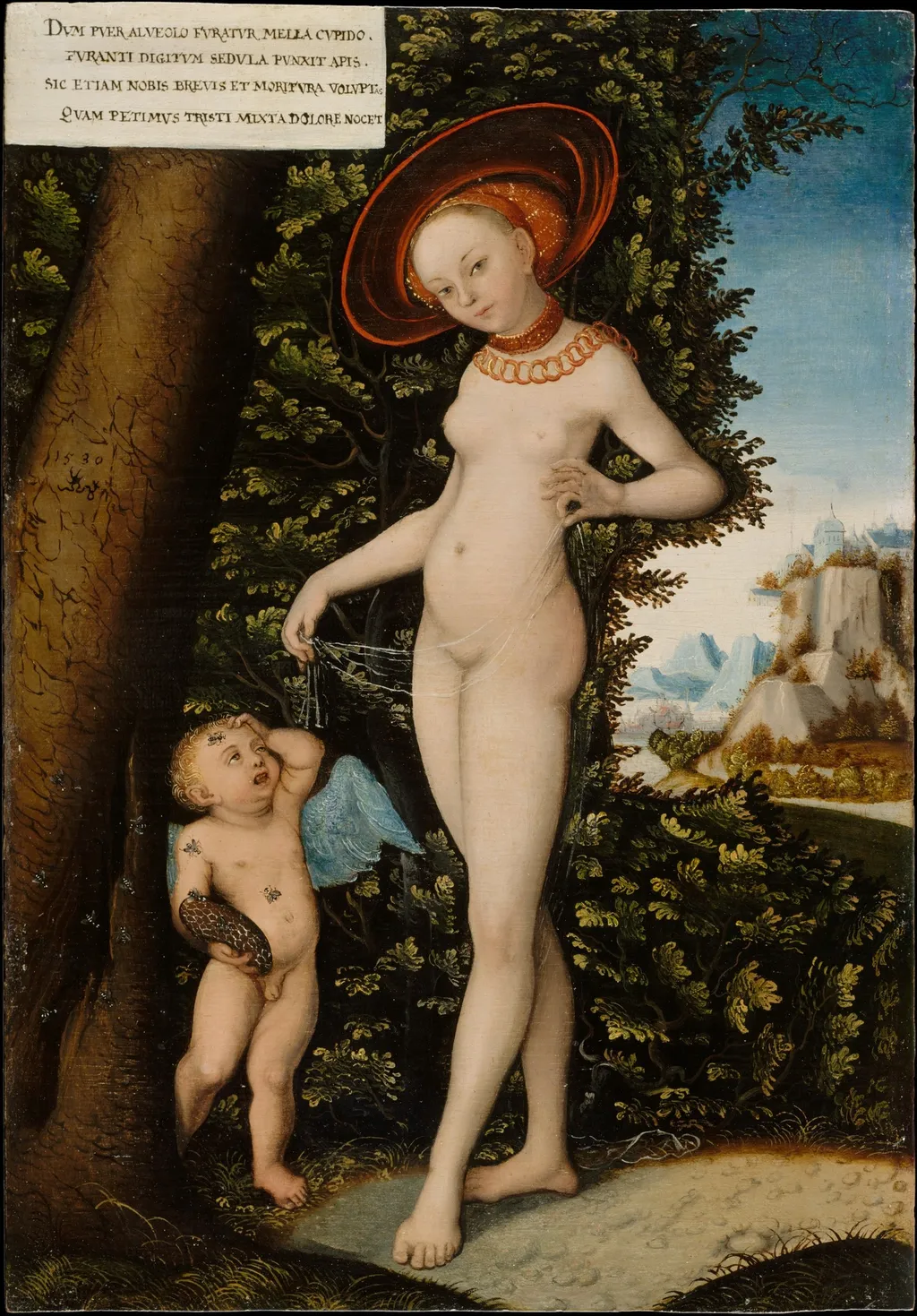
Venus with Cupid the Honey Thief is an oil painting. It dates from 1529 and is held in the collection of the Metropolitan Museum of Art.
About this work
Subject & Meaning
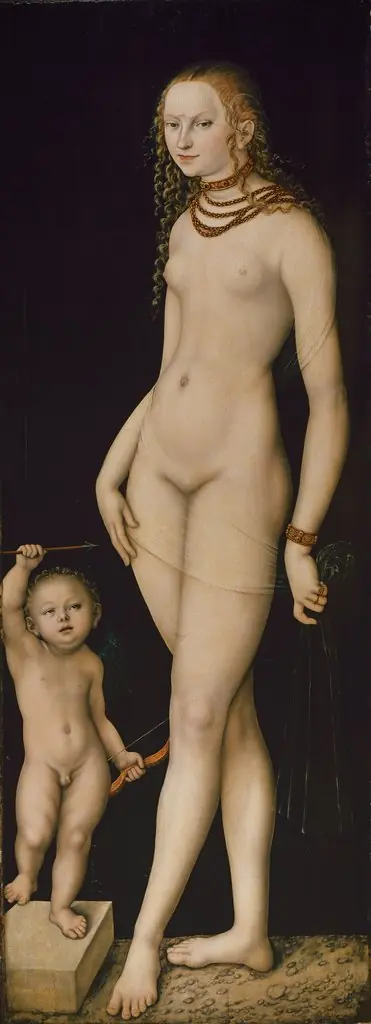
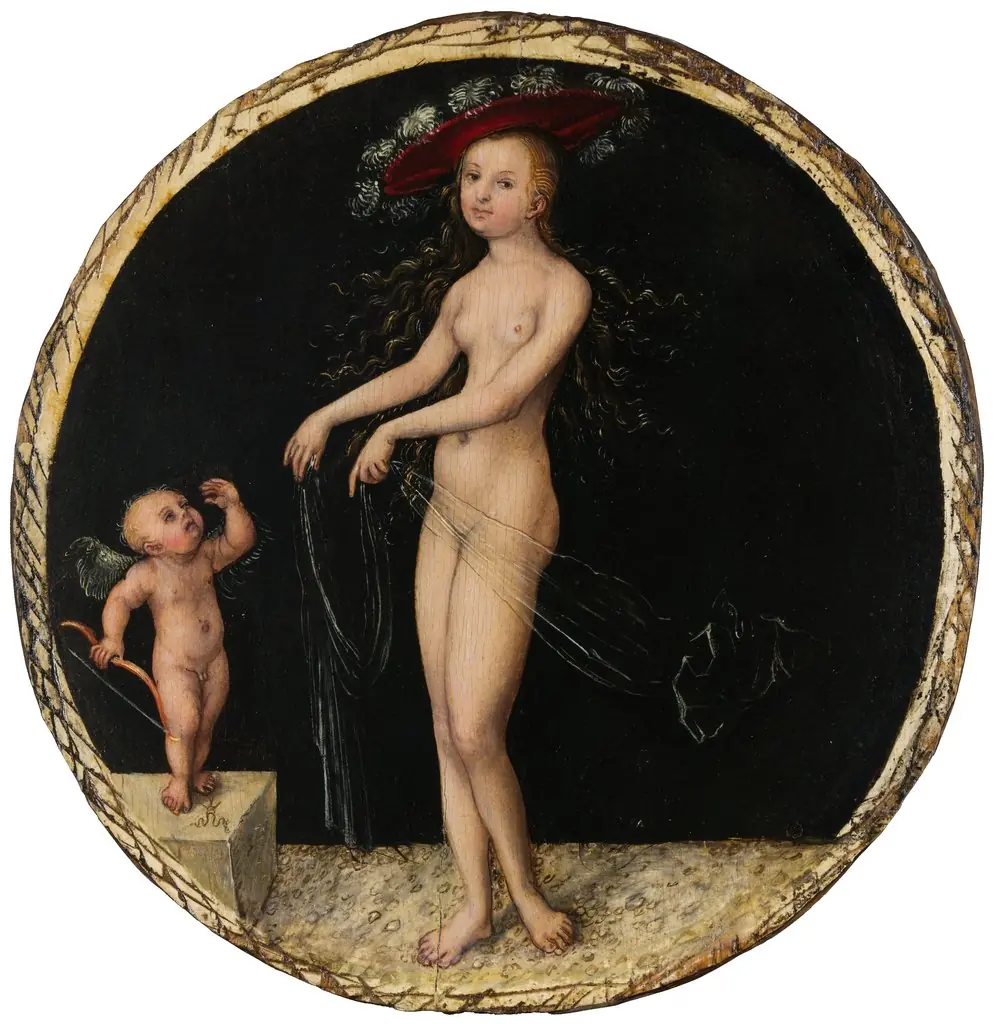
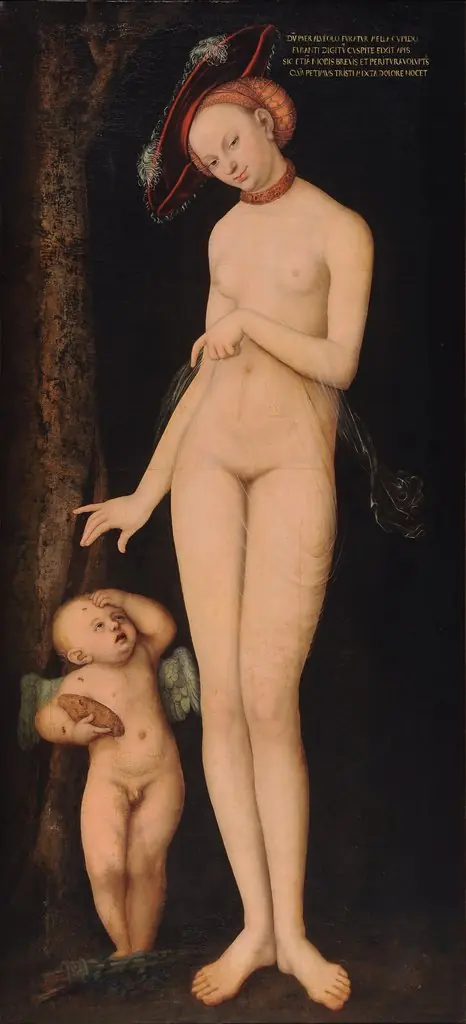
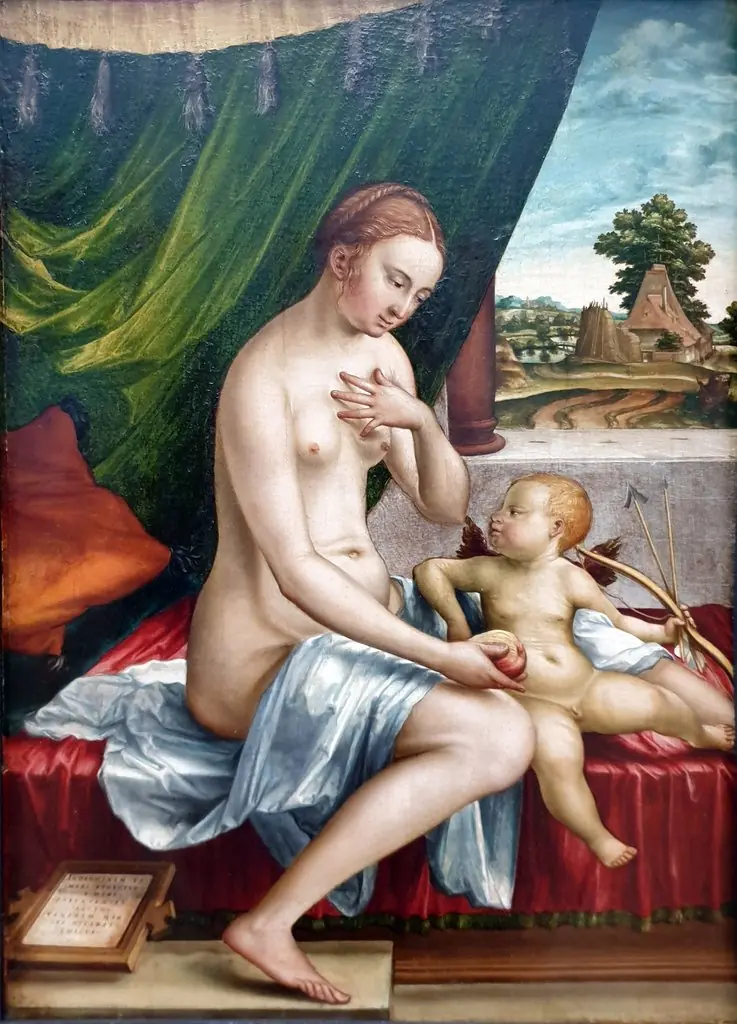
The work shows the mythological scene of Venus, the goddess of love, accompanied by her son Cupid who is depicted as a honey thief, reaching for a bee.
The work shows the mythological scene of Venus, the goddess of love, accompanied by her son Cupid who is depicted as a honey thief, reaching for a bee. The bee, a traditional emblem of love and sweetness, underscores the playful, erotic tone of the composition. The painting, dated 1529 and executed in oil on panel, follows the style of Lucas Cranach the Elder and was later owned by Robert Lehman.
The juxtaposition of the divine couple with the humble bee conveys an allegory of amorous desire that is both tender and mischievous, embodying the Renaissance fascination with love's sweetness and its potential for transgression.
Technique & Style
Venus with Cupid the Honey Thief is an oil work on wooden panel, measuring approximately 36.3 cm in height by 25.2 cm in width and dated to 1529. Executed in oil paint, the piece belongs to the mythological genre and reflects the style of Lucas Cranach the Elder's workshop, combining soft modeling of flesh with a luminous palette and delicate linear detail. The support is a single panel, and the composition presents Venus and Cupid in an intimate, closely observed interaction, with subtle chiaroscuro that models the figures against a muted background.
The work is currently held in the Metropolitan Museum of Art as part of the Robert Lehman Collection.
History & Provenance
Venus with Cupid the Honey Thief is dated to 1529 and is executed in oil paint on panel. The work is recorded as a painting after Lucas Cranach the Elder, indicating it was produced by a follower or copyist rather than directly by the artist himself. It is held in the collection of the Metropolitan Museum of Art, where it forms part of the Robert Lehman Collection.
The sources do not specify a commissioning patron, an original creation site, or a documented chain of prior ownerships before its acquisition by the Lehman holdings.
Context
Venus with Cupid the Honey Thief is a 1529 oil on panel work classified as a mythological painting, reflecting the influence of Lucas Cranach the Elder. The composition, featuring the goddess Venus alongside Cupid and a bee, aligns with Northern Renaissance motifs of love and temptation. Held in the Metropolitan Museum of Art and formerly part of the Robert Lehman Collection, the piece exemplifies the period's interest in classical mythology rendered in oil, and it has been referenced in scholarship on Cranach's impact on subsequent European art.
Overview
This oil painting, titled "Venus with Cupid the Honey Thief," presents a mythological scene set within a vibrant natural landscape. The composition centers on a female figure, identified as Venus, interacting with a winged boy, Cupid. Their encounter, involving a string of pearls and a honeycomb, unfolds against a backdrop of trees and a rocky cliff under a clear sky, drawing the viewer's attention to the central narrative.
Artist & collection