Artwork
Johann (1498–1537), Duke of Saxony
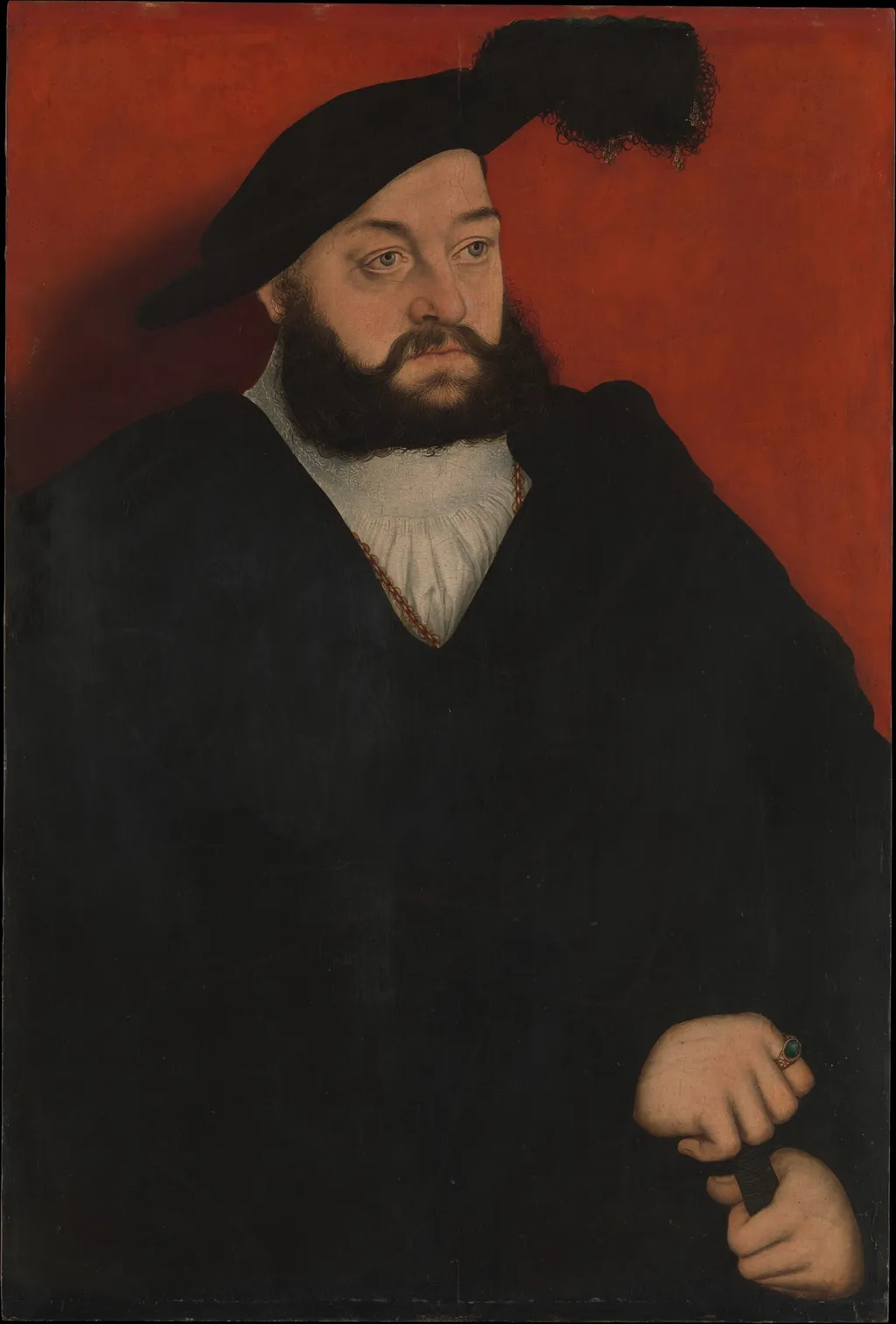
Johann (1498–1537), Duke of Saxony is an oil painting by the Northern Renaissance artist Lucas Cranach the Elder. It dates from 1534 and is held in the collection of the Metropolitan Museum of Art.
About this work
Subject & Meaning
The portrait genre itself carries symbolic weight, communicating status, dynastic legitimacy, and political authority through the sitter's bearing and attire.
The painting is a portrait of John, Hereditary Prince of Saxony, rendered by Lucas Cranach the Elder in 1534. The subject is identified as John, Hereditary Prince of Saxony, a man depicted in the conventional format of a courtly portrait. As a representation of Saxon nobility, the work functions as an official likeness of the heir to the duchy, situating him within the lineage of the Ernestine branch of the Wettin dynasty.
The portrait genre itself carries symbolic weight, communicating status, dynastic legitimacy, and political authority through the sitter's bearing and attire. Cranach's role as court painter to the Saxon electors meant such portraits served diplomatic and representational purposes, projecting the prestige of the ruling house. The work thus operates both as a personal record of John's appearance and as an emblem of ducal authority, embodying the visual conventions by which early sixteenth-century German princes were memorialized.
Technique & Style
Executed in 1534 by Lucas Cranach the Elder, this portrait of Johann, Duke of Saxony, is realized in oil paint applied to a wooden panel support. The work measures approximately 65.1 cm in height and 44.1 cm in width, conforming to the standard scale for single-figure portraits of the period. As a painted representation, the piece utilizes the medium's capacity for detailed facial rendering typical of Cranach's workshop production during the mid-1530s.
The classification remains strictly within the genre of portraiture, focusing on the depiction of the sitter as a man of noble status. While specific details regarding the current surface condition, varnish layers, or evidence of later handling are not provided in the available records, the fundamental material construction consists of pigment bound in oil on a rigid panel substrate.
History & Provenance
The portrait of John, Hereditary Prince of Saxony, was executed in 1534 by Lucas Cranach the Elder using oil on panel. It was conceived as a likeness of the prince, reflecting contemporary court portraiture. The work entered the collection of the Metropolitan Museum of Art, where it has been preserved since its acquisition, making the museum the current owner.
The painting’s creation is documented in contemporary records of Cranach’s output, and its date aligns with the sitter’s known period of activity. No earlier owners are recorded, and the piece remains part of the museum’s European portrait holdings.
The portrait is held by the Metropolitan Museum of Art, according to the Wikidata record for the work. The painting is part of that institution's collection and is inventoried there. Both the collection and location fields in the associated Wikidata entry identify the Metropolitan Museum of Art as the holding institution. No specific exhibition history, loan records, or accession number details are documented in the available sources.
Overview
Painted in 1534 by Lucas Cranach the Elder, this portrait depicts Johann, Duke of Saxony (1498–1537), also known as John the Steadfast. The work presents the ruler in a three-quarter view against a flat, deep red background, a stylistic choice characteristic of Cranach's portraiture that isolates the sitter to emphasize his status and character. Johann is shown wearing a voluminous black robe over a white shirt, topped with a black hat featuring a wide brim and a dark feather.
His face is framed by a thick beard and mustache, conveying a sense of gravity and resolve appropriate for the Elector who succeeded his brother Frederick the Wise. The composition focuses on the upper body, with the Duke's right hand visible, adorned with a ring and holding a small, indistinct object. Executed during the height of the Reformation, this painting reflects Cranach's close alliance with the Saxon court and his role as the primary visual propagandist for the Lutheran cause.
The work serves as a formal record of the Elector's authority and piety, utilizing the artist's signature linear style and rich color palette to create a dignified and enduring image of the Saxon ruler.
Own this work as a print
Artist & collection
Artist
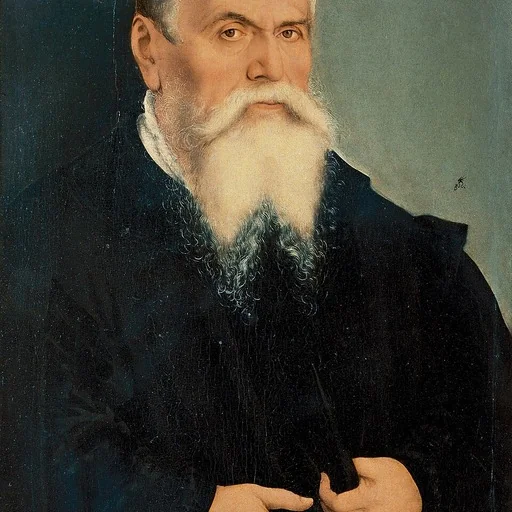
Lucas Cranach the Elder was a German Renaissance painter and printmaker in woodcut and engraving.

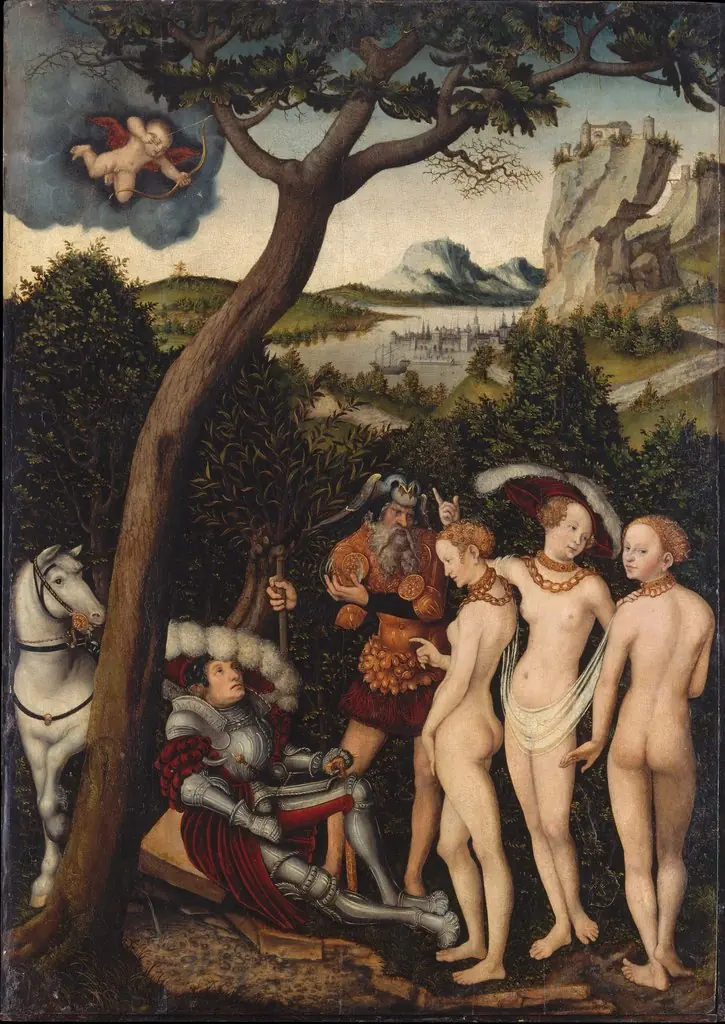
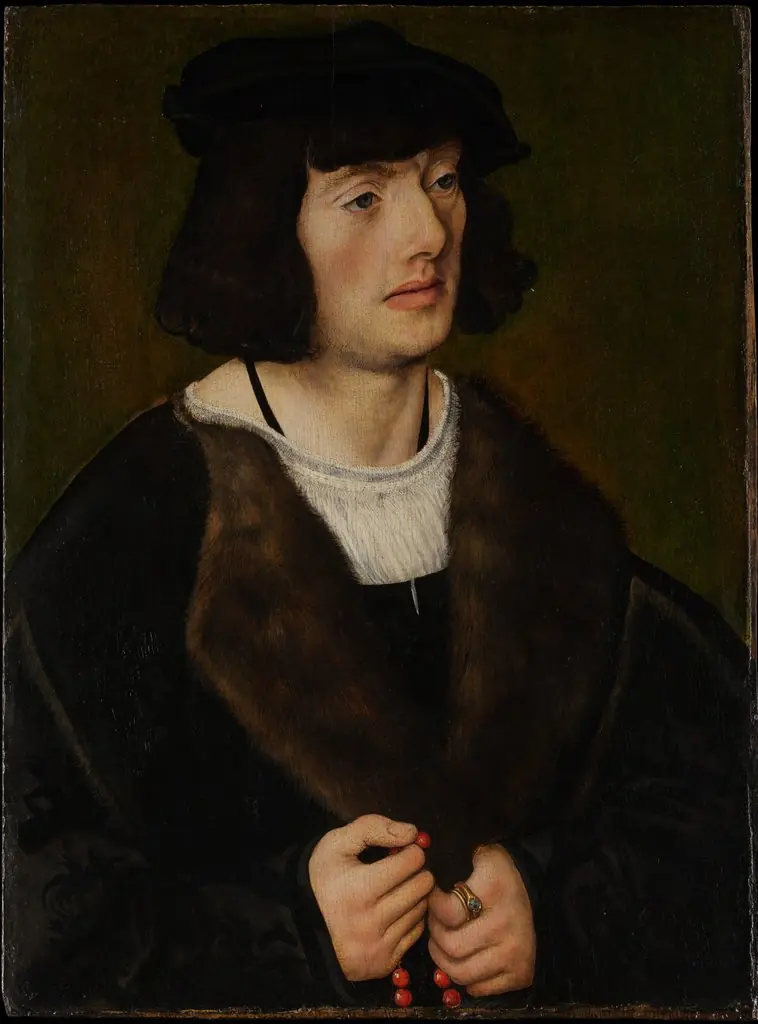
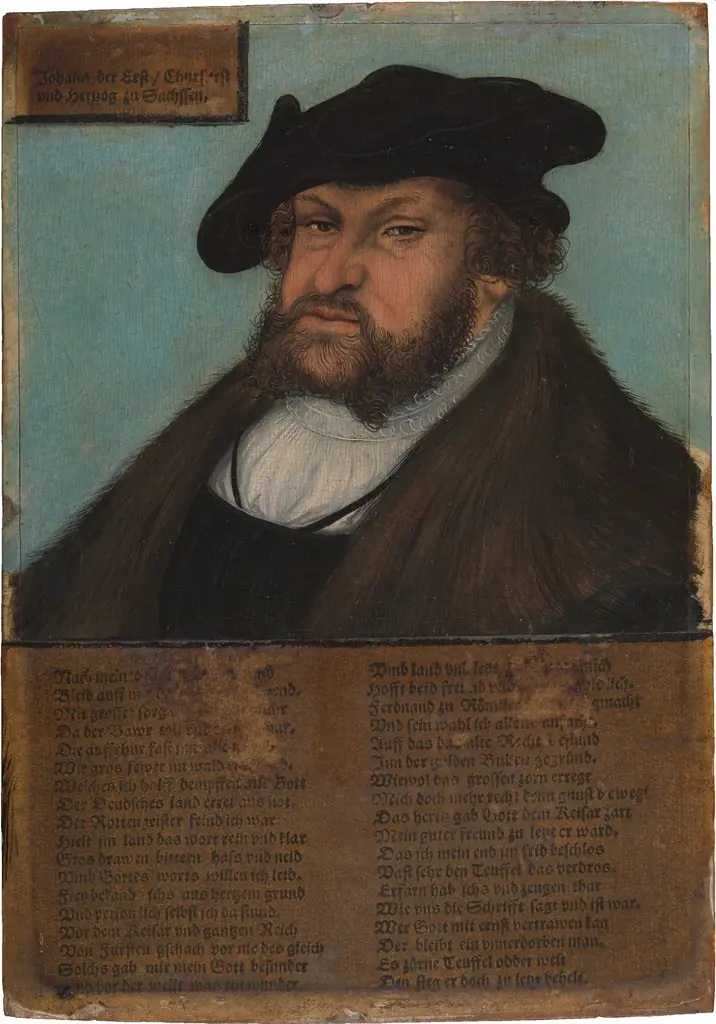
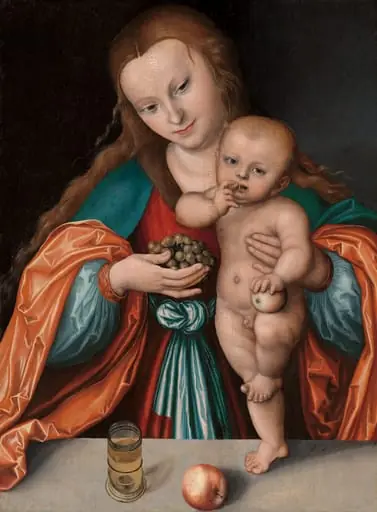
- Portrait of Johannes the Steadfast, Elector of Saxony
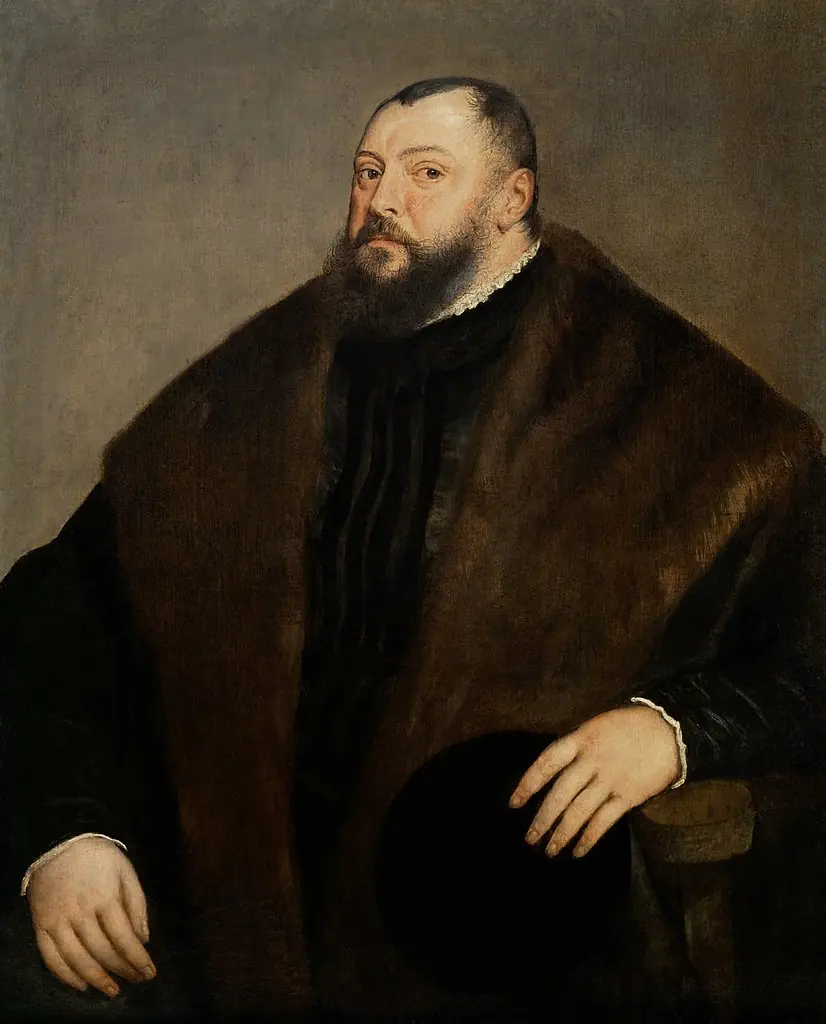 John Frederick, Elector of Saxony
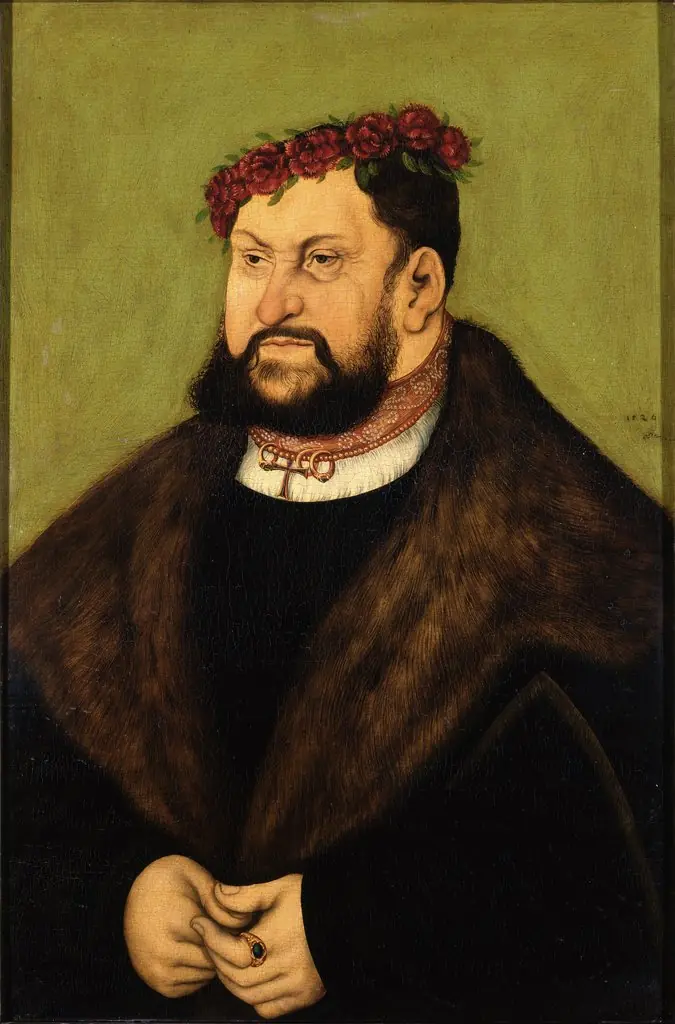 Johann the Steadfast, Elector of Saxony
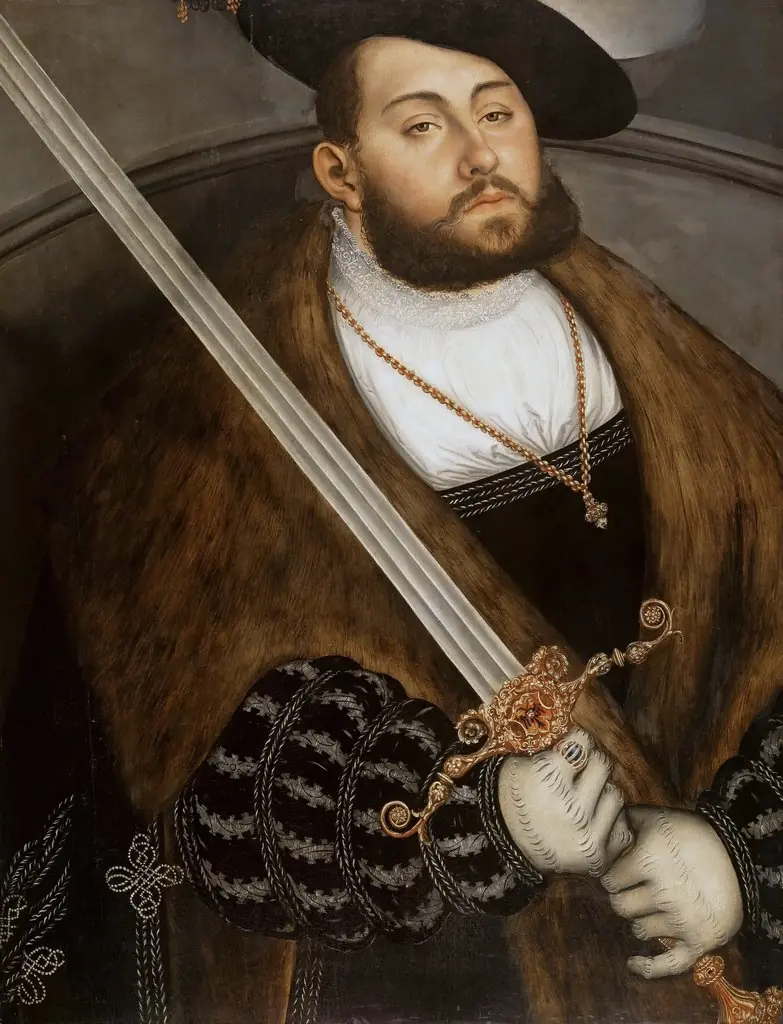 Johann Friedrich I, the Magnanimous, Elector of Saxony
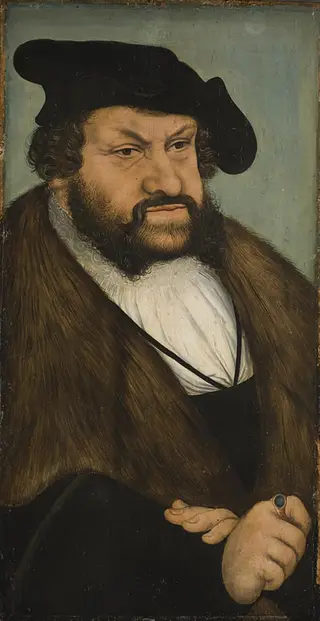 Portrait of the Elector John the Steadfast of Saxony (1468-1532)
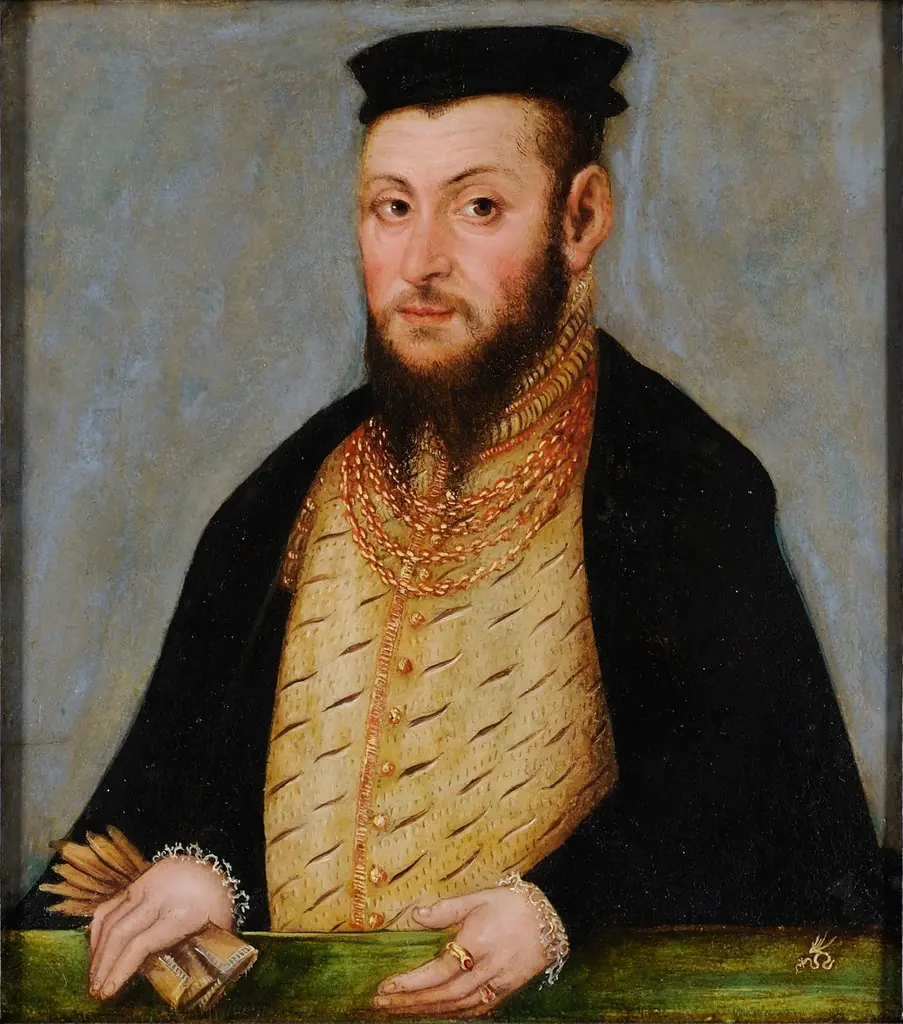 Sigismund II. August, King of Poland
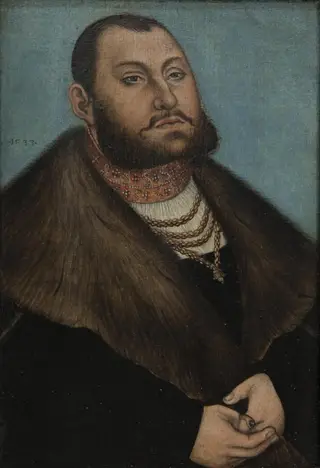 Portrait of the Elector John Frederic the Magnanimous of Saxony (1503-1554)
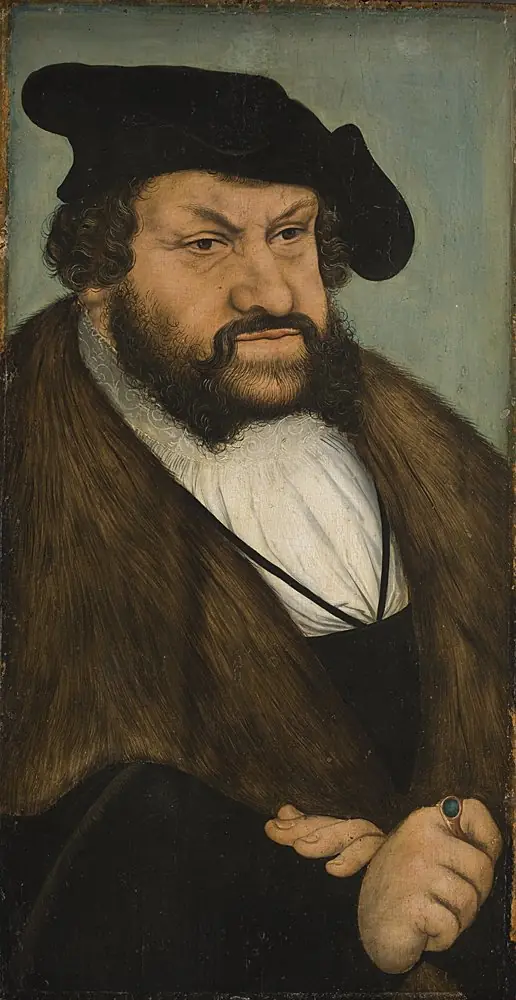 Portrait of the Elector John the Steadfast of Saxony (1468-1532)
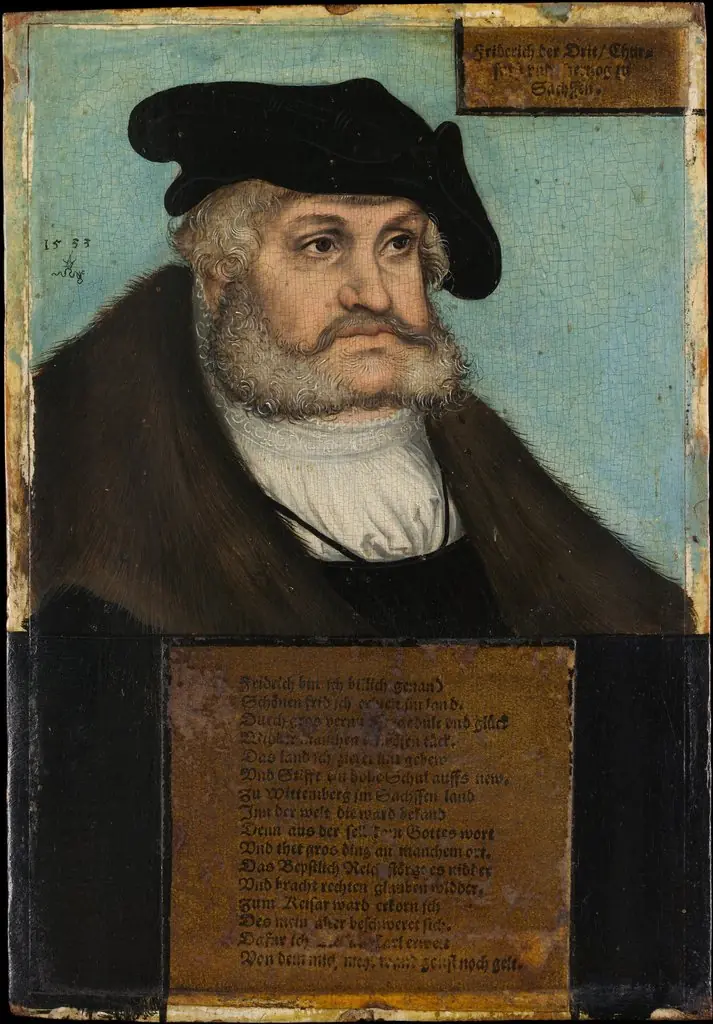 Friedrich III (1463–1525), the Wise, Elector of Saxony