Artwork
John Frederick, Elector of Saxony
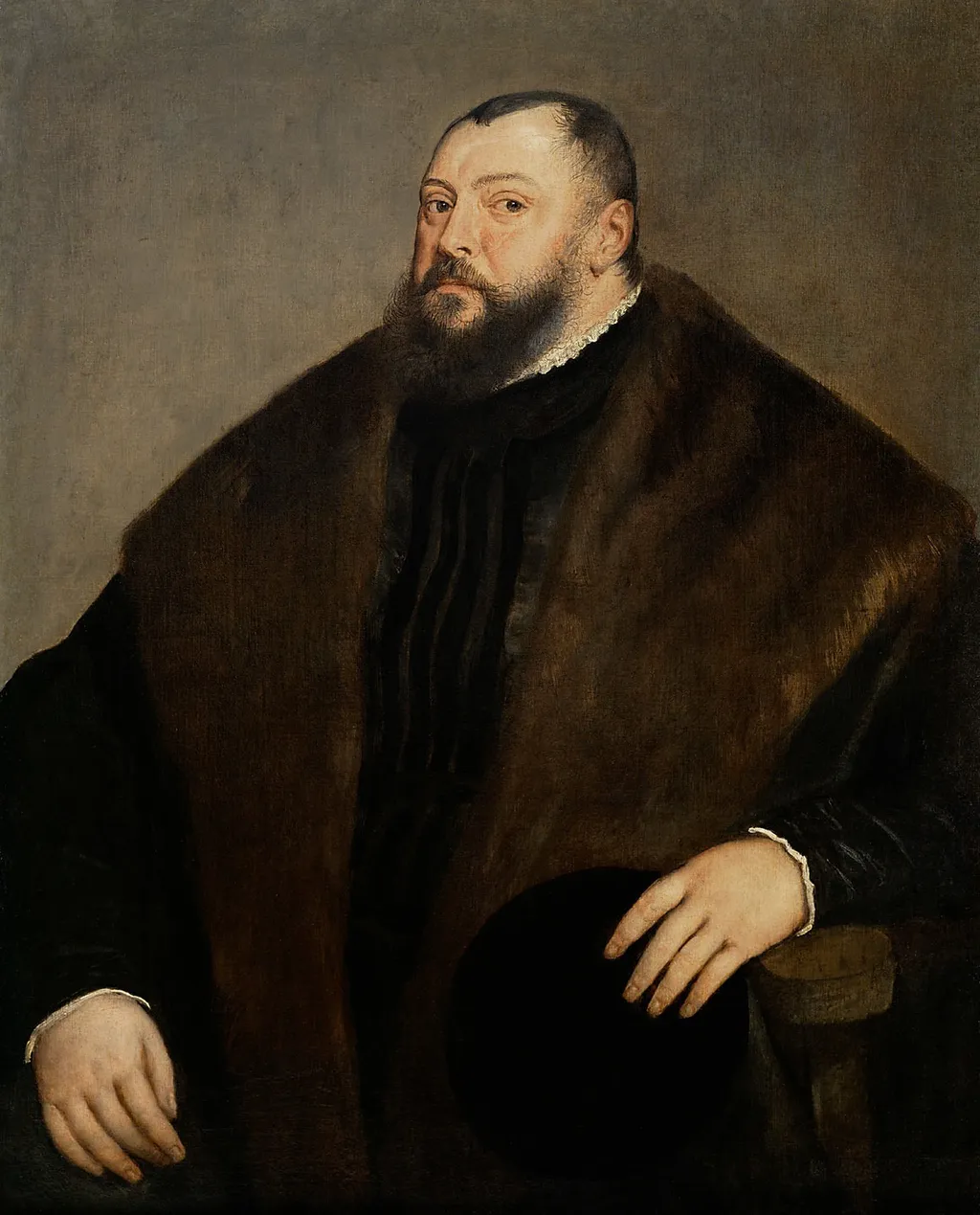
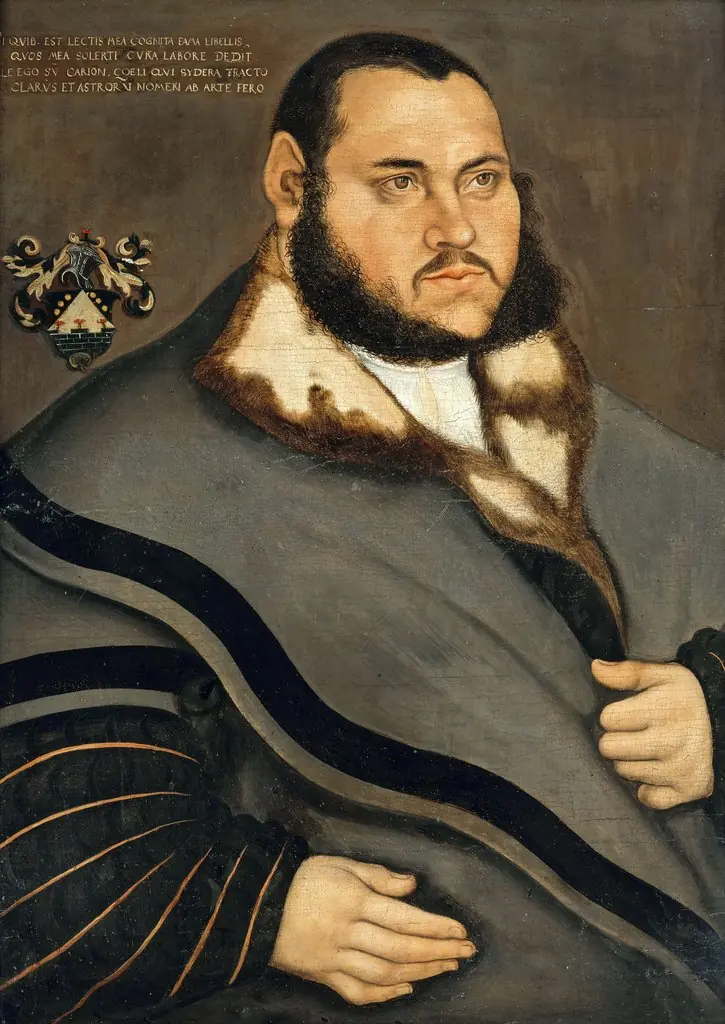
John Frederick, Elector of Saxony is an oil painting by the High Renaissance artist Titian. It dates from 1550 and is held in the collection of the Kunsthistorisches Museum. This portrait is an oil painting on canvas depicting John Frederick I, Elector of Saxony.
About this work
Subject & Meaning
The work depicts John Frederick I, Elector of Saxony, portrayed as a captive figure during Titian's second stay in Augsburg.
The work depicts John Frederick I, Elector of Saxony, portrayed as a captive figure during Titian's second stay in Augsburg. Unlike a previous version showing the subject in armor with a facial scar, this iteration presents him seated in an armchair wearing a black robe edged with sable. The painting serves as a historical record of the Elector's imprisonment, distinguishing itself from contemporary royal portraits by focusing on a detained monarch rather than a reigning one.
The composition captures the specific dignity of the prisoner through his formal attire and seated posture, reflecting the artist's engagement with the political realities of the Imperial court at the time.
Technique & Style
The work is an oil on canvas portrait painted by Titian in Augsburg around 1550–1551. The canvas supports a composition showing John Frederick I in a black robe edged with sable, seated in an armchair, with a scar visible on his face. The surface bears serious damage, yet the brushwork remains evident, reflecting Titian’s handiwork throughout.
The painting measures 103.5 cm in height and 83 cm in width, and it has been part of the Kunsthistorisches Museum collection in Vienna since the seventeenth century, having been acquired through the patronage of Archduke Leopold Wilhelm of Austria.
Formal analysis notes the restrained palette, the delicate rendering of fabric, and the psychological depth conveyed through the sitter’s expression, while stylistic comparisons highlight Titian’s evolving approach to portraiture during his second stay at the Augsburg court.
History & Provenance
Titian created this oil on canvas portrait during his second stay in Augsburg, likely in late 1550 or early 1551, while the Elector John Frederick of Saxony was a captive there. The painting depicts the subject in a black robe edged with sable, seated in an armchair, distinguishing it from a second, armored portrait Titian also made of him.
The work was historically misdated to 1548 or 1550. By 1558, a picture of the prince alongside the armored version was recorded in the collection of Queen Mary. Philip IV of Spain later presented the painting to the Marquis de Leganes.
It subsequently entered the collection of Archduke Leopold Wilhelm of Austria and is first documented in Vienna in the seventeenth century. It now resides in the Kunsthistorisches Museum.
The painting is held in the collection of the Kunsthistorisches Museum in Vienna, where it has been located since at least the seventeenth century. While the specific inventory or accession number is not provided in the available records, the work's provenance traces back to the collection of Queen Mary in 1558 and later to the Marquis de Leganes, who received it as a gift from Philip IV of Spain. The museum currently displays the oil on canvas portrait, which depicts John Frederick I in a black robe edged with sable.
Historical records indicate the work was created in Augsburg during Titian's second stay there, likely in 1550 or early 1551. The provided sources do not list a specific exhibition history or a chronological list of public showings for this piece, focusing instead on its creation and ownership trajectory from the Spanish court to its permanent residence in Vienna.
Context
Scholarly assessment of the portrait has acknowledged its attribution to Titian despite the work's compromised physical state. Georg Gronau asserted that the artist's handiwork remains evident throughout the composition, even in the presence of serious damage. Conversely, Charles Ricketts argued that photographic reproductions fail to capture the painting's qualities satisfactorily.
The work occupies a specific niche within Titian's broader output from his stays in Augsburg, where he painted numerous monarchs and electors, many of which are now lost. While portraits of Charles V survive in Munich and Madrid, this depiction of the captive Elector John Frederick represents a key surviving record of the prince, who was painted by Titian at least twice in different guises.
Legacy
Titian painted the Elector John Frederick of Saxony during his second visit to Augsburg, likely in late 1550 or early 1551, depicting him in a black robe edged with sable, seated in an armchair while held captive after the Schmalkaldic War. The work, an oil on canvas portrait, entered the collection of the Archduke Leopold Wilhelm of Austria and was later housed in the Kunsthistorisches Museum in Vienna, where it remains today. Contemporary accounts, including a letter of 11 November 1550, reference its creation alongside other imperial portraits, and by the seventeenth century it was documented in Vienna.
Georg Gronau noted the painting's clear attribution to Titian's hand despite damage, while Charles Ricketts later criticized the quality of its photographic reproductions. The portrait was recorded in Queen Mary's collection by 1558 and transferred to Philip IV of Spain before reaching its current location. Its legacy endures as a key example of Titian's imperial portraiture and his engagement with Saxony's political figures.
Overview
This portrait is an oil painting on canvas depicting John Frederick I, Elector of Saxony. Created by Titian, a prominent Venetian artist, it is now part of the Kunsthistorisches Museum's collection in Vienna.
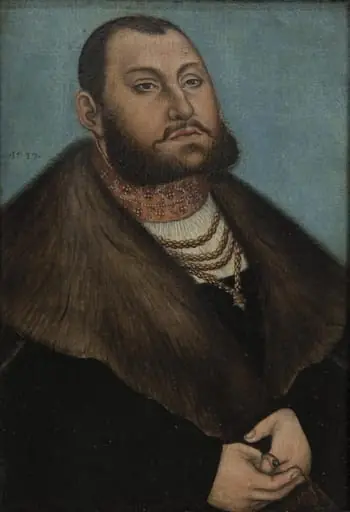
Artist & collection
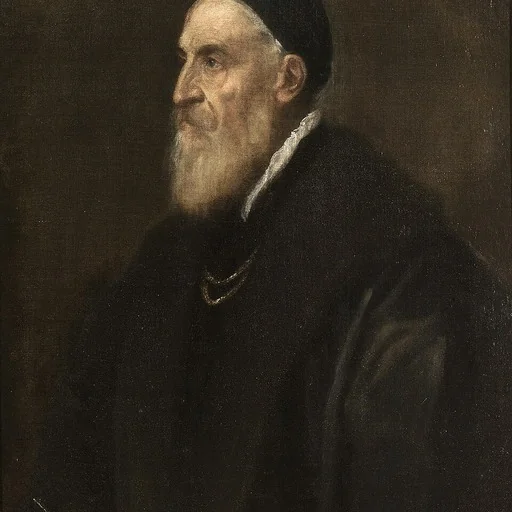
Artist
Tiziano Vecellio (Italian:; c. 1488/1490 – 27 August 1576), Latinized as Titianus, hence known in English as Titian ( TISH-ən), was an Italian Renaissance painter. The most important artist of Renaissance Venetian…